
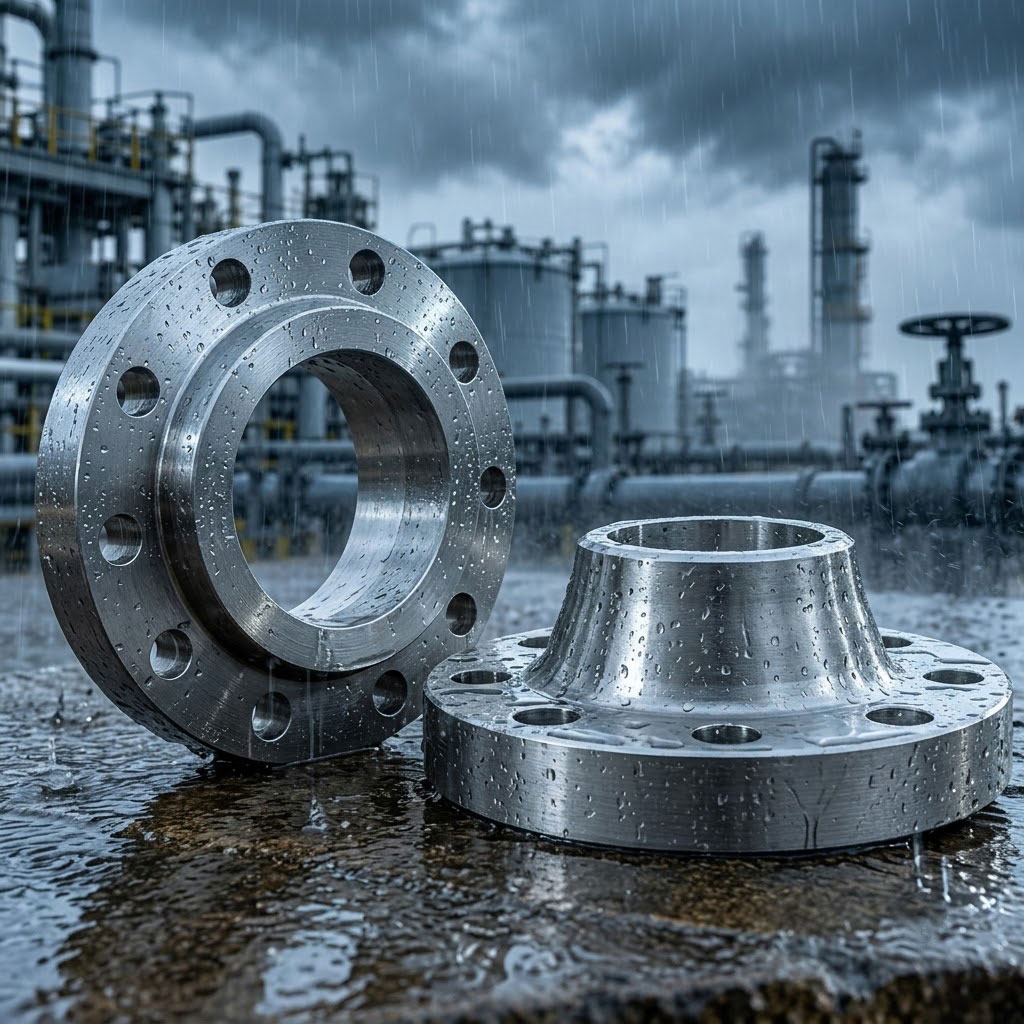
Forged Flanges Manufacturer in India: Stainless, Duplex and Nickel Alloy in Bulk
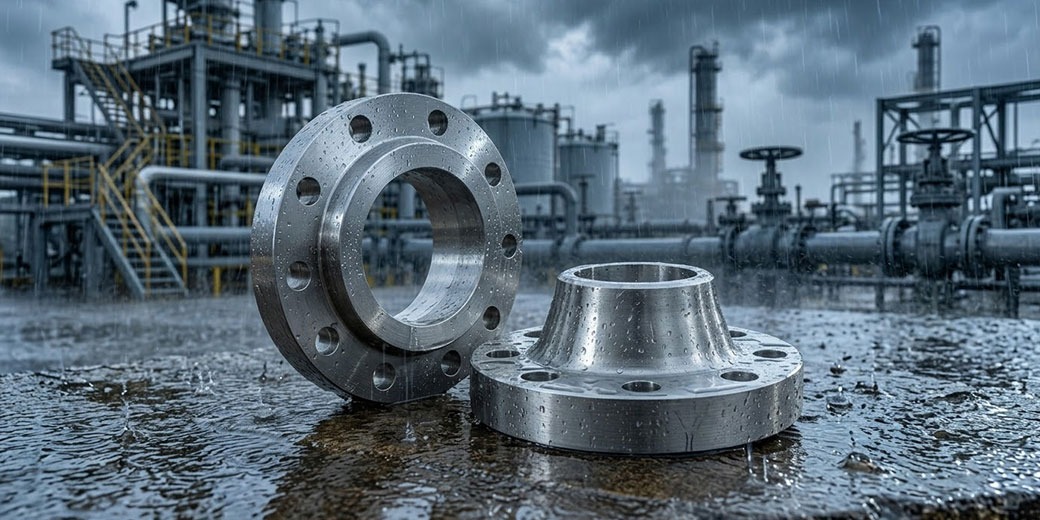
Forged flanges are flanges made from forged or ring-rolled material rather than cut from plate or cast, giving them dense, defect-free structure and continuous grain flow around the bore. They are required by most piping codes for pressure service. Indian manufacturers supply standard ASME B16.5 and B16.47 flanges, API flanges and custom large-diameter flanges in carbon steel, low-alloy steel, stainless, duplex, super duplex and nickel alloys — for bulk distribution orders and project-specific requirements.
At a Glance: Forged Flange Materials and Specifications
Material | Common Specification | Typical Service |
| Carbon steel | ASTM A105 | General piping, oil & gas |
| Low-temperature carbon steel | ASTM A350 LF2 | Cold climates, LNG, offshore |
| Alloy steel | ASTM A182 F11, F22 | High-temperature power and refinery |
| Stainless steel | ASTM A182 F304/F316L | Chemical, food, water |
| Duplex | ASTM A182 F51 | Offshore, desalination |
| Super duplex | ASTM A182 F53, F55 | Subsea, seawater, sour service |
| Nickel alloys | Inconel 625, 825, Hastelloy | Corrosive and high-temperature service |
Flange Types
- Weld neck, slip-on, blind, socket weld, threaded and lap joint
- Large-diameter flanges to ASME B16.47
- API 6A and API 17D flanges for wellhead and subsea service
- Tower flanges for wind turbines
- Custom flanges and nozzles to drawing
Forged vs Ring-Rolled Flanges
Ring Rolling manufacturer in India
For larger flanges, ring rolling produces seamless rings with circumferential grain flow, using material efficiently and reducing machining. Smaller flanges are typically closed die or open die forged.
Duplex and Super Duplex Flanges
Duplex and super duplex flanges need careful hot working, solution annealing and rapid quench to keep the right ferrite-austenite balance and avoid sigma phase. Ferrite content testing, corrosion testing (ASTM G48) and PREN verification are common requirements.
Nickel Alloy Flanges
Inconel and Hastelloy flanges are used in highly corrosive or high-temperature service. These alloys are harder to forge and need precise temperature control.
Bulk and Project Supply
Distributors and EPC contractors buying in volume need consistent quality across many heats, clear marking and full traceability. Key requirements:
- Heat-number traceability on every flange
- EN 10204 3.1 certificates, with 3.2 available for project orders
- NACE MR0175 compliance for sour service where specified
- Third-party inspection by agencies such as BV, Lloyd’s, TÜV or DNV
- Export packing and marking
Why Buyers Choose Vinir Engineering for Forged Flanges
Supply to Indian EPCs and export markets in the US, Middle East and Europe
Ring rolling, open die and closed die forging in-house
Carbon, alloy, stainless, duplex, super duplex and nickel alloy experience
In-house solution annealing, machining, NDT and NABL-accredited testing
API and ABS approvals, plus AS9100D across all four units