
AISI 4340 Radial Forging Supplier for USA from India: High-Strength Shaft Applications
AISI 4340 is one of the best-known nickel-chromium-molybdenum low-alloy steels used for high-strength mechanical components.
Its combination of hardenability, strength and toughness has made the 4340 family relevant to aircraft, defence, power-transmission, heavy-equipment and other demanding applications.
For long shafts and axial components, radial forging can provide an efficient manufacturing route.
Understanding 4340
4340 is a medium-carbon Ni-Cr-Mo alloy steel.
The combination of nickel, chromium and molybdenum provides substantially greater hardenability than ordinary carbon steels.
That means appropriately heat-treated sections can develop high strength deeper below the surface rather than producing a hard exterior and comparatively soft centre.
This is important for larger shaft sections.
Why Hardenability Matters
A thick component cools unevenly during quenching.
The surface loses heat quickly while the centre cools more slowly.
A steel with inadequate hardenability may therefore develop the required structure near its surface but fail to achieve comparable properties internally.
4340’s alloy content helps address this problem, although achievable properties still depend on section size and heat-treatment conditions.
Radial Forging 4340
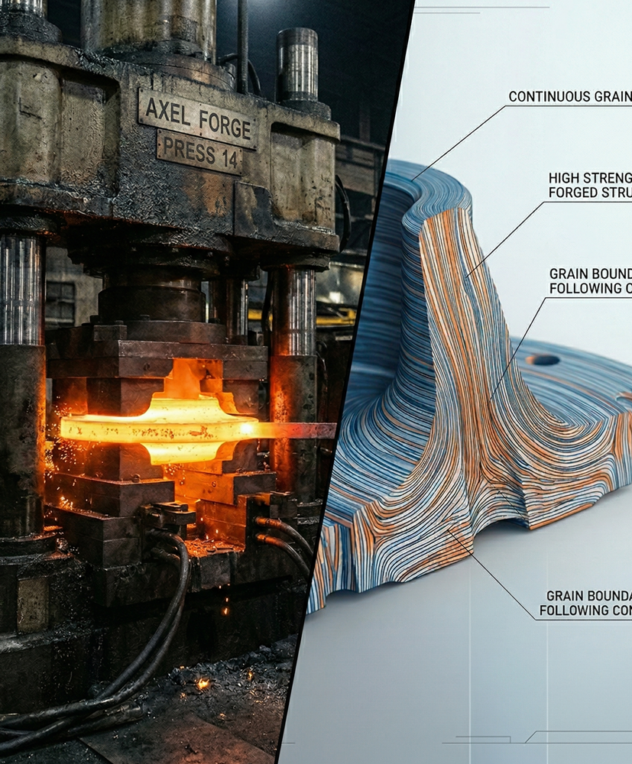
The forging process begins with suitable starting stock and controlled heating.
The billet is progressively reduced through the radial forging machine.
For a stepped shaft, the process can distribute material according to the final diameter profile.
After forging, the component is heat-treated according to the required specification and property level.
Heat Treatment
4340 can achieve a broad range of mechanical properties depending on heat treatment.
Quenching develops a hard transformed microstructure, while tempering adjusts strength and toughness.
Increasing strength generally requires careful consideration of toughness, fatigue behaviour and environmental susceptibility.
The engineering target should therefore be the required balanced property set, not simply the highest possible hardness.
4340 vs 300M
300M is often described as a modified 4340-type ultra-high-strength steel.
It uses chemistry modifications – most notably increased silicon along with other compositional contro to support extremely high strength levels used in demanding aerospace applications.
The two materials should not be treated as interchangeable.
A component specified as 300M must be manufactured to its governing material specification rather than substituted with conventional 4340 based on perceived similarity.
Shaft Applications
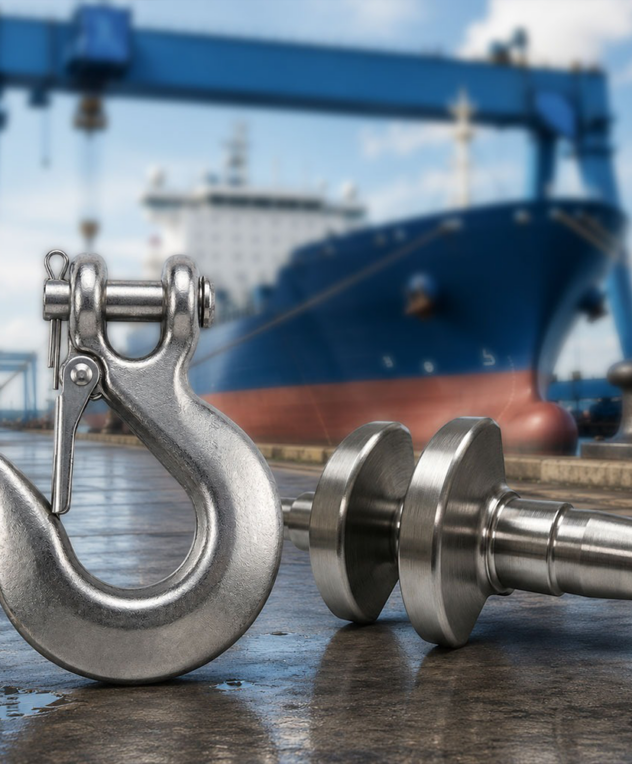
4340 can be relevant to transmission shafts, heavy-duty mechanical shafts, aircraft components, defence components, tooling and high-load machinery.
Whether it is appropriate depends on design requirements and applicable standards.
NDT
High-strength components deserve particular attention to discontinuities.
Ultrasonic testing can evaluate internal integrity.
Magnetic particle inspection can be used to identify relevant surface and near-surface discontinuities because 4340 is ferromagnetic.
Inspection requirements should be established from the drawing and specification rather than added informally after production.