
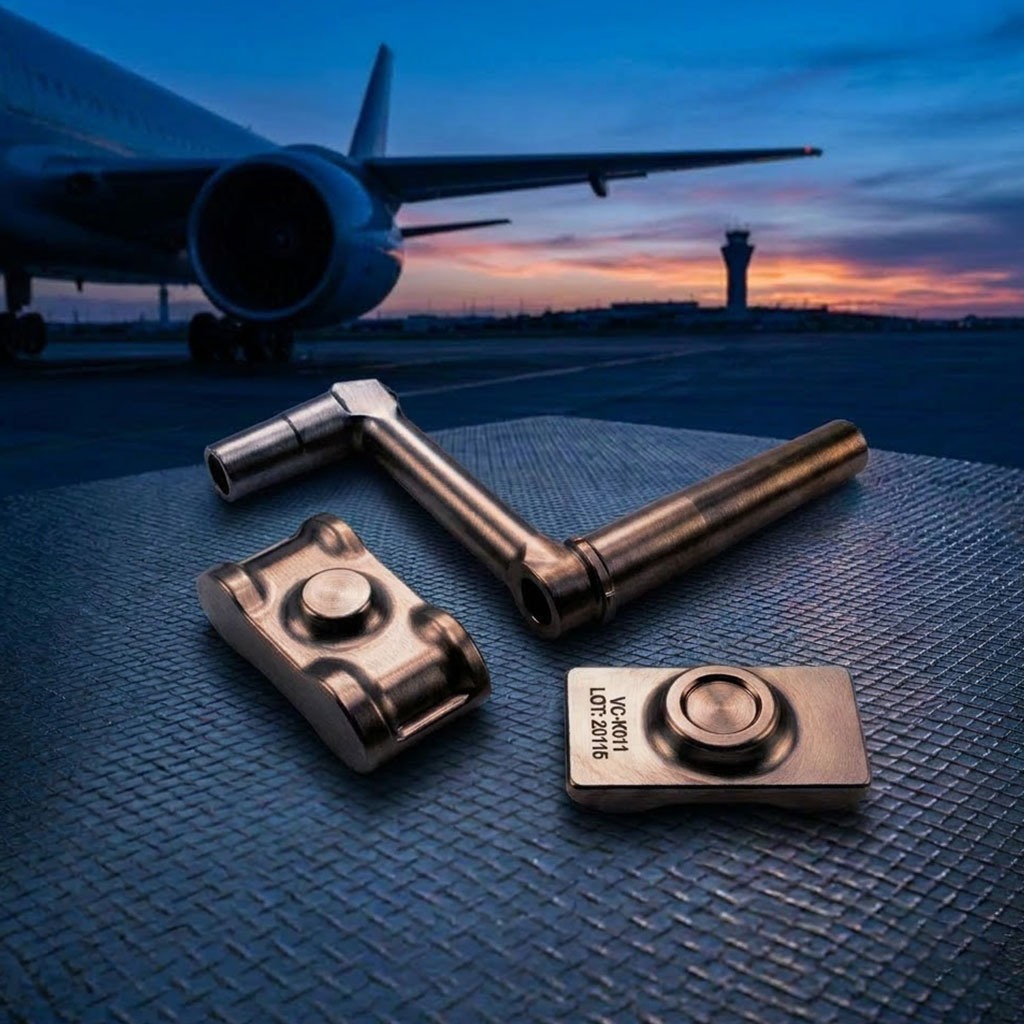
300M Steel Radial Forging Supplier for US Aerospace from India
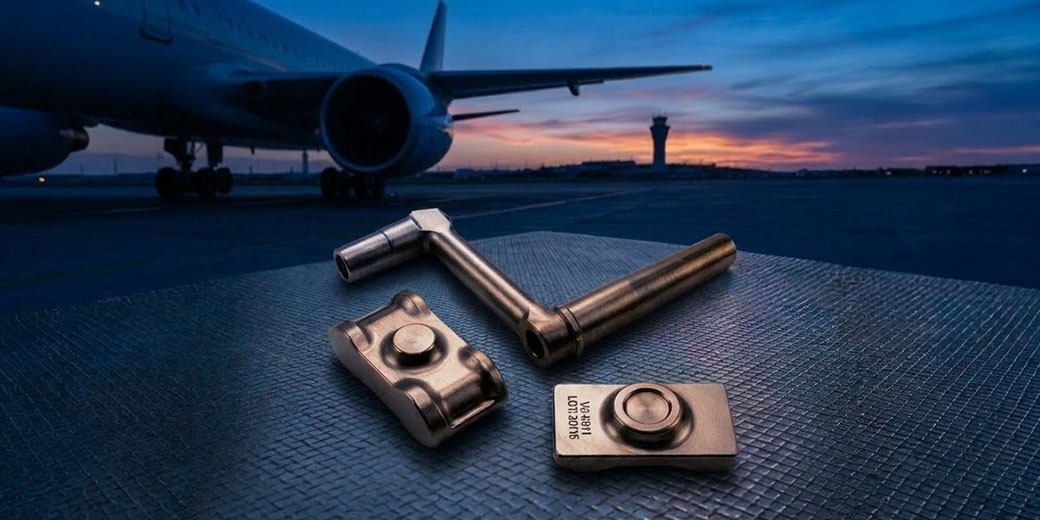
300M is an ultra-high-strength steel associated with some of the most heavily loaded structures in aerospace engineering.
Landing gear is its most recognisable application.
Published aerospace literature identifies 300M among the steels used in aircraft landing gear, alongside advanced titanium alloys and other high-strength materials.
For US aerospace companies considering a 300M radial forging supplier from India, the challenge is not simply shaping the steel.
The supplier needs to control material pedigree, forging, heat treatment, surface integrity, NDT and aerospace documentation.
What Is 300M?
300M is a modified low-alloy steel developed from the 4340 family.
Its chemistry and processing allow very high strength to be achieved after appropriate heat treatment.
Published aerospace references report ultimate tensile strength for 300M in landing-gear contexts around the 1.9 GPa range, although actual acceptance values must always come from the applicable material and component specification.
That strength allows highly loaded components to remain relatively compact.
Why Landing Gear Needs Such High Strength
Landing gear supports aircraft weight on the ground and absorbs substantial loads during touchdown.
It also experiences braking, turning and side loads.
These events repeat over the aircraft’s service life.
The component therefore needs strength, toughness and fatigue resistance rather than one exceptional tensile-test number.
Where Radial Forging Fits
Not every landing-gear component is radial forged; complex components are commonly produced using other forging routes, including closed die forging. Aerospace literature notes closed die forging and machining as established routes for landing-gear components.
Radial forging becomes particularly relevant to long cylindrical or stepped preforms and shaft-like components where circumferential incremental deformation aligns with geometry.
Process selection should therefore be based on the actual part rather than assuming all 300M aerospace forgings belong on one type of machine.
Cleanliness
At very high operating strength, internal material quality becomes particularly important.
Inclusions can act as local stress raisers and potential fatigue initiation sites.
Aerospace material specifications can therefore impose controlled melt practices and cleanliness requirements.
The forging supplier must maintain full traceability to the approved starting material.
Forging Temperature
300M needs controlled hot working.
Temperature must remain suitable for deformation without creating undesirable grain growth or other metallurgical problems.
The process route should also deliver sufficient reduction through relevant sections.
After forging, heat treatment establishes the required final strength and toughness.
Surface Integrity
High-strength steels can be sensitive to surface defects.
Laps, seams, grinding damage or machining marks in highly stressed regions can reduce fatigue performance.
The manufacturing route must therefore control surface condition throughout forging and machining.
NDT does not replace good manufacturing practice; it verifies the result.
NDT
Magnetic particle inspection is particularly useful for detecting relevant surface and near-surface discontinuities in ferromagnetic steel.
Ultrasonic testing can evaluate internal integrity.
Aerospace programmes may define detailed inspection procedures and acceptance criteria beyond general industrial standards.
Aerospace Documentation
US aerospace buyers may require AS9100 controls, material certification, heat-treatment records, NDT documentation, dimensional inspection and AS9102 First Article Inspection.
Special-process approvals can also apply depending on programme requirements.
Supplier qualification therefore evaluates the complete manufacturing system.