
Titanium Radial Forging Supplier for USA from India: Ti-6Al-4V Aerospace Components
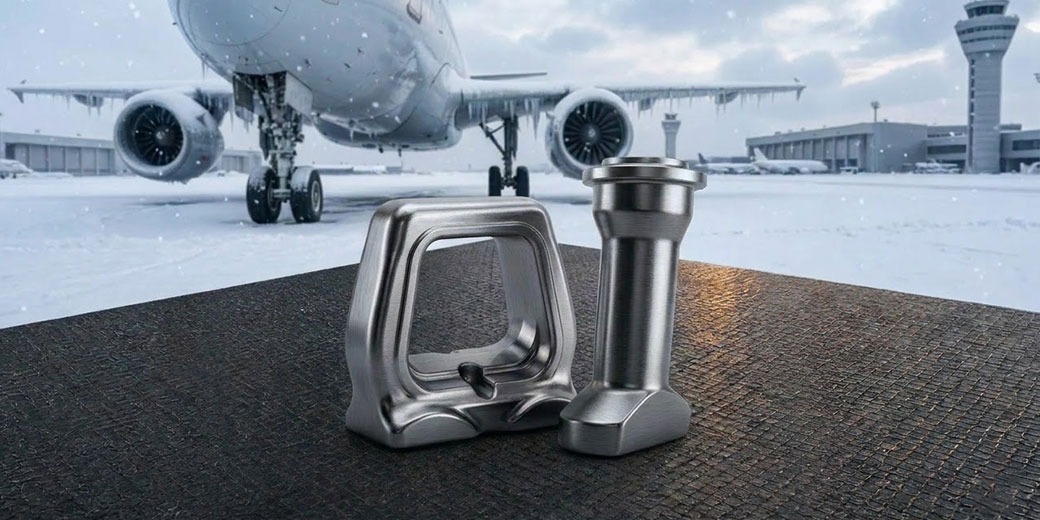
Titanium changed aerospace engineering because it offers a combination that is difficult to obtain from conventional steels: high specific strength, low density and excellent corrosion resistance.
Ti-6Al-4V is the most widely recognised titanium alloy in aerospace applications.
Research literature describes Ti-6Al-4V as approximately 90% titanium, 6% aluminium and 4% vanadium and highlights its strength-to-weight ratio and corrosion resistance as key reasons for aerospace use.
Radial forging can provide an efficient route for suitable titanium shafts, bars and cylindrical preforms but titanium demands far more process discipline than ordinary steel.
Why Titanium Is Valuable in Aerospace
Aircraft design constantly trades structural performance against mass.
Every kilogram removed from a component can influence aircraft payload, range, fuel consumption or system-level design.
Titanium provides high strength at significantly lower density than steel.
It also offers strong corrosion resistance, which is valuable in aircraft structures exposed to moisture and aggressive environments.
Ti-6Al-4V
Ti-6Al-4V is an alpha-beta titanium alloy.
The aluminium stabilises the alpha phase while vanadium stabilises beta.
Its two-phase nature gives manufacturers the ability to modify microstructure and properties through thermomechanical processing and heat treatment.
That flexibility is useful but also makes process history important.
Radial Forging Titanium
Titanium’s flow behaviour is strongly temperature dependent.
The billet must be heated into an appropriate forging range, transferred and deformed under controlled conditions.
As the component cools, deformation resistance rises.
The radial forging sequence therefore needs to balance reduction, feed and thermal management.
Research on aerospace titanium alloys emphasises that their strength and ductility depend strongly on precise thermomechanical processing and heat treatment.
Surface Contamination
Hot titanium has a strong affinity for oxygen.
At elevated temperatures, oxygen enrichment can create a hardened surface layer commonly associated with alpha-case formation.
This surface condition can be detrimental to fatigue-sensitive components and may need to be removed through controlled downstream processing.
Heating practice and atmosphere management therefore matter.
Machining Titanium
Titanium is valuable but not easy to machine.
Its relatively low thermal conductivity means heat can remain concentrated near the cutting zone, contributing to tool wear and manufacturing difficulty. Published research identifies low thermal conductivity as one of the factors behind Ti-6Al-4V’s machining challenges.
That makes near-net-shape forging particularly interesting.
Every kilogram that does not need to be machined away can save both material and machining effort.
Aerospace Applications
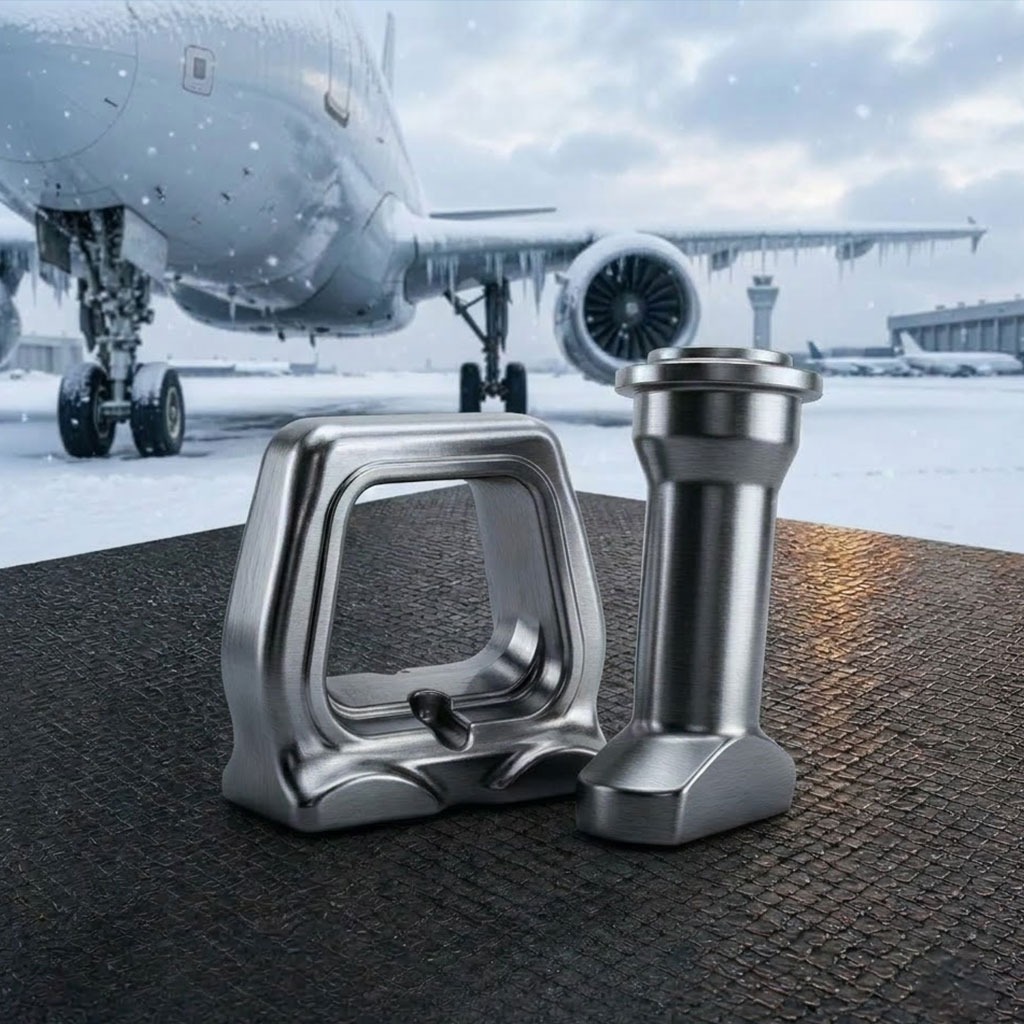
Titanium alloys are used in airframes, engine systems and landing gear.
Landing-gear literature identifies Ti-6Al-4V as well as higher-strength titanium alloys such as Ti-10V-2Fe-3Al and Ti-5Al-5Mo-5V-3Cr among relevant aerospace materials.
Not all of these components are radial forged, but long shaft-like geometries can be candidates where the process fits the design.
Heat Treatment
The final microstructure of titanium depends on both forging and heat treatment.
Annealing, solution treatment and ageing can be used depending on grade and target properties.
The heat-treatment route should be specified by the applicable aerospace material and component requirements.
Inspection
Titanium components may require ultrasonic inspection and liquid penetrant examination.
Because titanium is non-ferromagnetic, magnetic particle inspection is not applicable.
Aerospace programmes can also require microstructure verification and detailed material traceability.