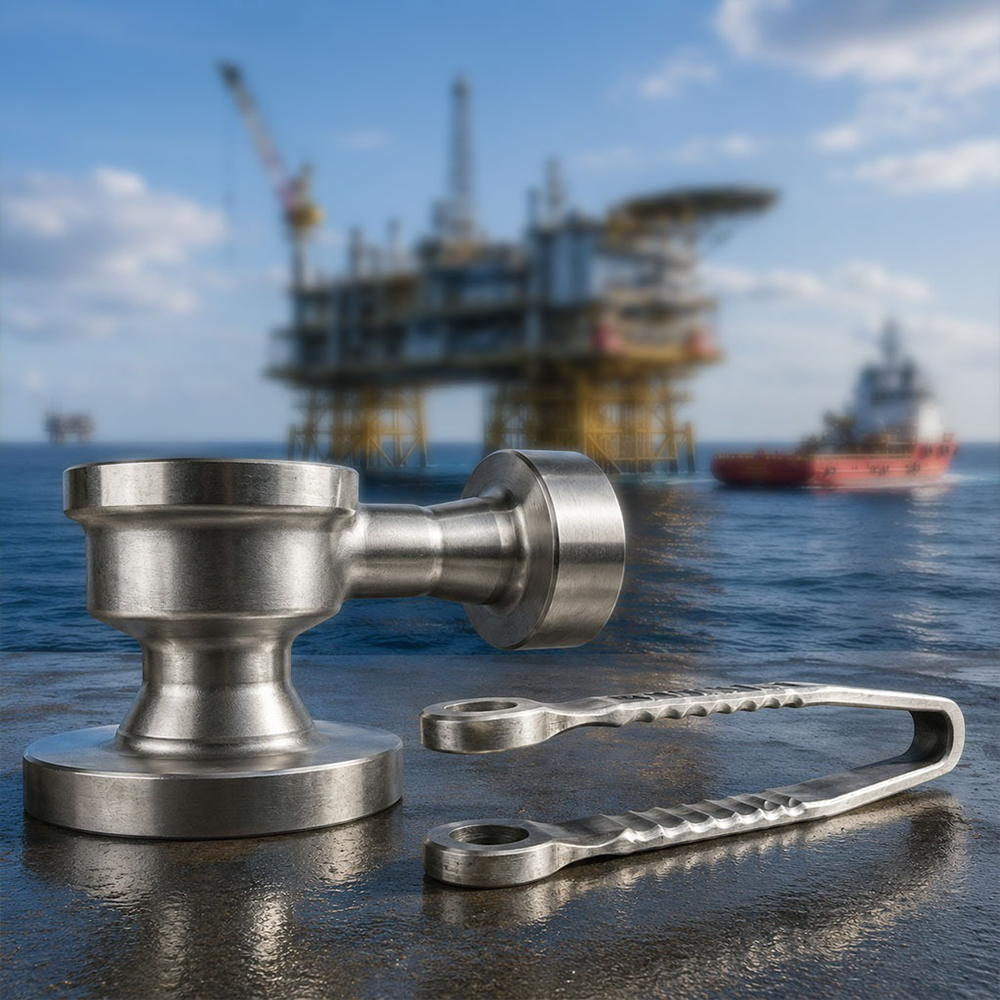
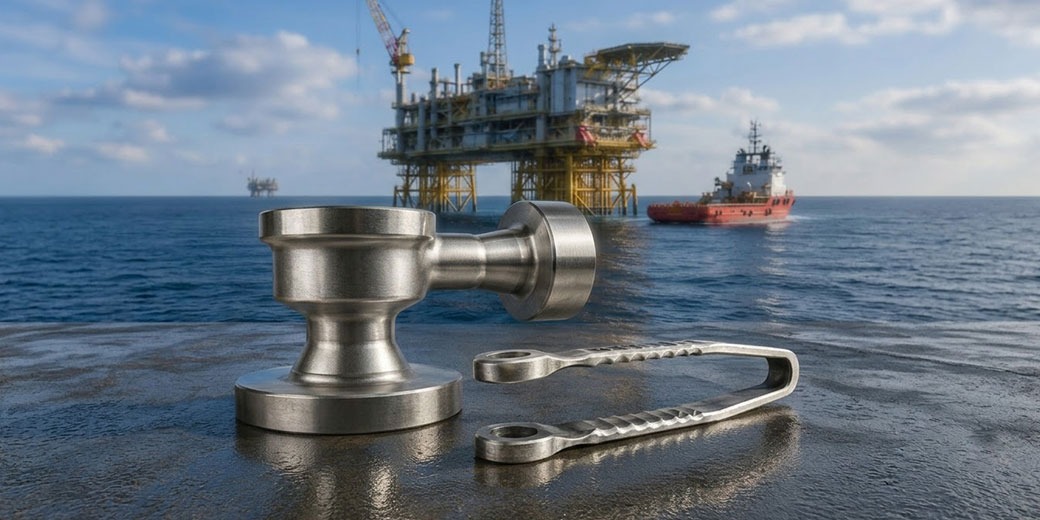
The UK North Sea – comprising the UKCS (UK Continental Shelf) in the Northern, Central, and Southern gas basins is operated by BP, Shell UK, TotalEnergies UK, Harbour Energy, Ithaca Energy, and a growing portfolio of independent operators. Though in a mature production phase, the UKCS generates sustained demand for API 20B certified valve body forgings, subsea structural forgings, and piping flanges for well maintenance, tie-back developments, and life extension programmes. Indian API 20B certified forging manufacturers are positioned to supply UK North Sea operations.
Operator
Field Area
Key Forging Category
Standard
BP UK
Clair, Andrew, ETAP
Topside valve bodies, subsea structural
API 20B PSL 2/3, NORSOK M-630
Shell UK
Gannet, Shearwater, Penguins
Topside piping flanges, valve bodies
API 20B PSL 2/3, Shell MESC
TotalEnergies UK
Culzean, Elgin-Franklin (HPHT)
HPHT pressure housings, valve bodies
API 20B PSL 3/4, NACE MR0175
Harbour Energy
Tolmount, Acorn CCS
Topside flanges, CCS wellhead components
API 20B PSL 2
Wood plc / Petrofac
Multiple UKCS EPC
Topside structural fittings, flanges
API 20B, NACE where specified
The UKCS produced approximately 1.4 million barrels of oil equivalent per day in 2024 still significant production from mature fields combined with ongoing development of new tie-backs and satellite fields. UK North Sea operators apply a mix of API and NORSOK standards for forging procurement as many fields straddle the UK/Norway maritime boundary and share subsea infrastructure between the two national sectors.
TotalEnergies UK’s Culzean field — one of the UK’s most significant recent gas developments is a High Pressure High Temperature (HPHT) field with reservoir pressure exceeding 14,000 psi and temperature above 175°C. HPHT North Sea wells require PSL 3 or PSL 4 API 20B forgings with NACE MR0175 sour service compliance where H₂S is present. The Culzean subsea wellhead and tree equipment uses Inconel 625 and 4130M alloy steel forgings with NORSOK M-630 compliance the same specification as Norwegian HPHT North Sea forgings.
The UKCS’s North Sea Transition Authority (NSTA) formerly the Oil and Gas Authority regulates UK North Sea operations including supply chain management. The NSTA’s Supply Chain Action Plan encourages North Sea operators to consider the supply chain’s sustainability and resilience, which in practice encourages operators to diversify their forging supply chains beyond the traditional UK and Norwegian suppliers. This policy environment is supportive of qualified Indian forging manufacturers entering the UKCS supply chain.
Carbon Capture and Storage (CCS) is emerging as a new category of UKCS infrastructure investment with projects including the Acorn CCS (Aberdeenshire) and East Coast Cluster (Humberside) targeting CO₂ injection into depleted UKCS fields. CCS wellhead and injection system forgings have similar API 20B requirements to standard oil and gas wellhead equipment but with CO₂-specific material considerations (CO₂-resistant alloys for components in direct CO₂ contact, standard alloy steel for external structural components). This emerging CCS market represents new UKCS forging demand extending well beyond traditional hydrocarbon operations.
A182 F51 duplex 2205 and F53 super duplex 2507 for UKCS seawater service.
4130M NACE MR0175 for HPHT North Sea sour service.
Inconel 625 for Total Energies HPHT Culzean-type applications.
NORSOK M-630 documentation package.
G48 corrosion test for duplex grades.
NABL Charpy at -46°C.
TPI by Bureau Veritas and DNV both recognised by UK North Sea operators.
Shell MESC compliance documentation.
Ocean freight Chennai to Aberdeen or Teesside: 24–30 days.
Frequently Asked Questions
1.How does the UKCS procurement framework differ from Norwegian NCS procurement for Indian forging manufacturers?+–
Both the UKCS and NCS apply API 20B as the base forging quality standard and NORSOK M-630 for subsea CRA forgings. The primary differences are regulatory authority (UK NSTA versus Norwegian Petroleum Directorate), operator-specific requirements (Shell MESC for Shell UK operations versus Equinor Technical Requirements), and some differences in approved TPI companies (Lloyd’s Register has stronger UK North Sea presence; DNV has stronger Norwegian presence). Indian forging manufacturers who are established for Norwegian NCS supply can adapt relatively easily to UK North Sea supply the technical requirements are essentially the same; the administrative adaptation is manageable.
2.What is HPHT and what additional forging requirements does it impose beyond standard North Sea specifications?+–
HPHT (High Pressure High Temperature) in the UK North Sea context typically means reservoir pressure above 10,000 psi or temperature above 150°C at the wellhead. HPHT conditions require API 20B PSL 3 or PSL 4 forgings, NACE MR0175 sour service qualification where H₂S is present, and materials capable of maintaining adequate strength at elevated temperature which drives the use of Inconel 625 and 718 for tree components above 150°C where standard 4130M alloy steel loses strength. HPHT fields in the UK North Sea include Culzean (TotalEnergies), Elgin-Franklin (TotalEnergies), and several Clair Ridge developments (BP) all requiring the most demanding forging specifications applied anywhere on the UKCS.
3.What is the UK North Sea Transition Authority (NSTA) Supply Chain Action Plan?+–
The NSTA’s Supply Chain Action Plan encourages UK North Sea operators to: extend payment terms for small and medium suppliers, provide longer-term contract visibility to enable supply chain investment, and consider the resilience and sustainability of their supply chains including geographic diversification. While the plan is not prescriptive about specific source countries, its emphasis on supply chain resilience and diversity is supportive of operators considering qualified international suppliers (including India) as alternatives to concentrated European supply. The plan also encourages operators to engage with potential supply chain participants early giving Indian forging manufacturers an explicit channel to approach UKCS operators about qualification.
4.What are the CCS (Carbon Capture and Storage) forging requirements and how do they differ from standard oil and gas?+–
CCS wellhead and injection system forgings have API 20B requirements broadly similar to conventional oil and gas equipment. The primary material difference is that CO₂ injection systems use CO₂-resistant alloys for components in direct contact with supercritical CO₂ typically duplex stainless or high-alloy stainless steel rather than carbon and alloy steel because supercritical CO₂ in the presence of trace water forms carbonic acid that corrodes carbon steel rapidly. For structural external components, standard carbon and alloy steel with appropriate coating is acceptable. Indian forging manufacturers with duplex stainless capability are well positioned for CCS wellhead and injection system forging supply, as this is the same material family used for conventional UKCS seawater service.
5.Can Indian forging manufacturers supply to UK North Sea operations directly to operators or only through EPC contractors?+–
Both direct operator supply and EPC contractor supply are possible for UKCS forging procurement, depending on the procurement model used for each project. For new field development projects (EPC model), the operator (BP, Shell, TotalEnergies) appoints an EPC contractor (Wood, Petrofac, TechnipFMC) who manages forging procurement through their own qualified supplier lists. For brownfield maintenance and life extension, the operator’s own procurement team may source replacement forgings directly from qualified manufacturers. Indian forging manufacturers should pursue both EPC contractor qualification (Wood, Petrofac UK) and direct operator qualification (BP, Shell UK) to maximise UK North Sea procurement access.