
Duplex Stainless Steel Forgings: Grades, Properties, Heat Treatment and Oil & Gas Applications
Duplex stainless steel forgings combine characteristics of austenitic and ferritic stainless steels through a mixed-phase microstructure.
This metallurgical structure can provide a valuable combination of strength and corrosion resistance, making duplex stainless steels important for offshore, oil & gas, chemical-processing, marine and other aggressive-service environments.
However, duplex stainless steel is highly process sensitive.
A component cannot be treated as “duplex” simply because its chemistry falls within the nominal alloy range. Forging temperature, cooling and subsequent solution heat treatment all influence whether the required phase balance and corrosion performance are achieved.
What Is Duplex Stainless Steel?
Conventional austenitic stainless steels are predominantly austenitic in structure.
Duplex stainless steels are engineered to contain significant proportions of both austenite and ferrite.
The resulting two-phase structure gives the alloy family its name.
Compared with many conventional austenitic stainless steels, duplex grades can provide higher strength together with strong resistance to several forms of corrosion.
Common Duplex and Super Duplex Forging Grades
| UNS Grade | Common Designation | General Category |
| UNS S31803 | Duplex stainless steel | Duplex |
| UNS S32205 | 2205 | Duplex |
| UNS S32750 | 2507 / F53 in applicable forging specifications | Super duplex |
| UNS S32760 | F55 in applicable forging specifications | Super duplex |
The exact ASTM/ASME material designation needs to match the product form and customer specification.
Why Duplex Forgings Are Used in Oil & Gas
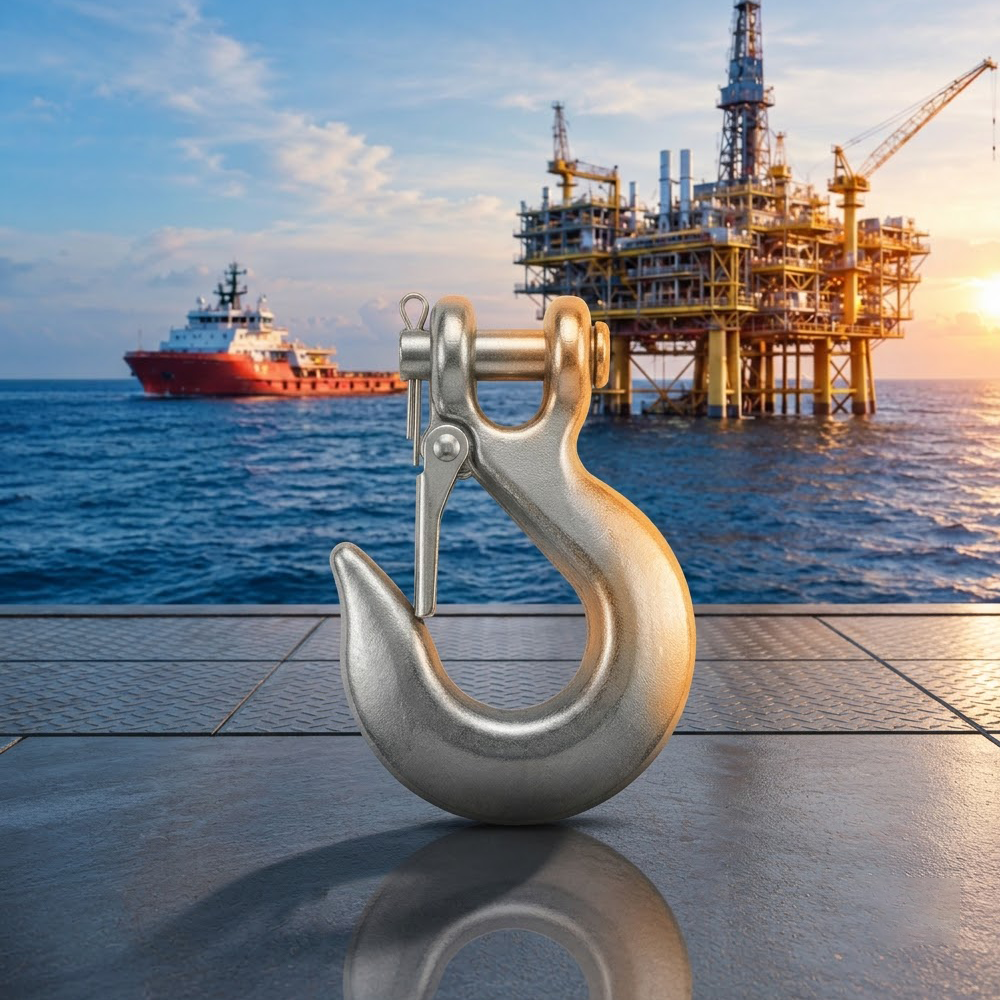
Offshore and subsea equipment can experience chloride-rich environments, high pressure and demanding mechanical loads.
Duplex and super duplex alloys are therefore used for selected components where corrosion resistance and mechanical strength need to coexist.
Potential forged component categories include:
- flanges
- hubs
- valve components
- connectors
- rings
- shafts
- pressure-containing preforms
- offshore and subsea hardware
Actual suitability depends on the specific service environment and material specification.
Why Heat Treatment Is Critical for Duplex Forgings
The desired duplex microstructure exists within a controlled processing window.
Incorrect thermal history can create an unsuitable phase balance or promote unwanted intermetallic phases.
This can damage corrosion resistance and toughness even when basic chemistry remains correct.
For this reason, duplex forging should be followed by the specified solution heat treatment and cooling route rather than an improvised generic stainless-steel cycle.
Duplex vs Super Duplex
Super duplex grades generally contain alloying additions designed to provide greater resistance to severe chloride-containing environments than standard duplex grades.
However, increased alloying can also make thermal processing more demanding.
The choice should therefore be based on the actual corrosion environment and engineering specification, not the assumption that “super” automatically means better for every component.
PREN and Corrosion Resistance
The Pitting Resistance Equivalent Number (PREN) is commonly used as an approximate indicator of resistance to chloride pitting based on alloy chemistry.
It is useful for comparing stainless-steel families, but PREN alone does not establish real-world component performance.
Final corrosion resistance also depends on:
- microstructure
- heat treatment
- surface condition
- fabrication history
- actual service environment
Duplex Forging for US Offshore and Industrial Buyers
For US buyers sourcing duplex stainless steel forgings from India, the RFQ should clearly identify the exact UNS/material specification, heat-treatment requirement, mechanical properties, corrosion-related testing where required, NDT and machining scope.
This is particularly important because apparently similar duplex grades are not automatically interchangeable.