
Nuclear Forging Supplier for Canadian CANDU Reactors: CNSC Requirements
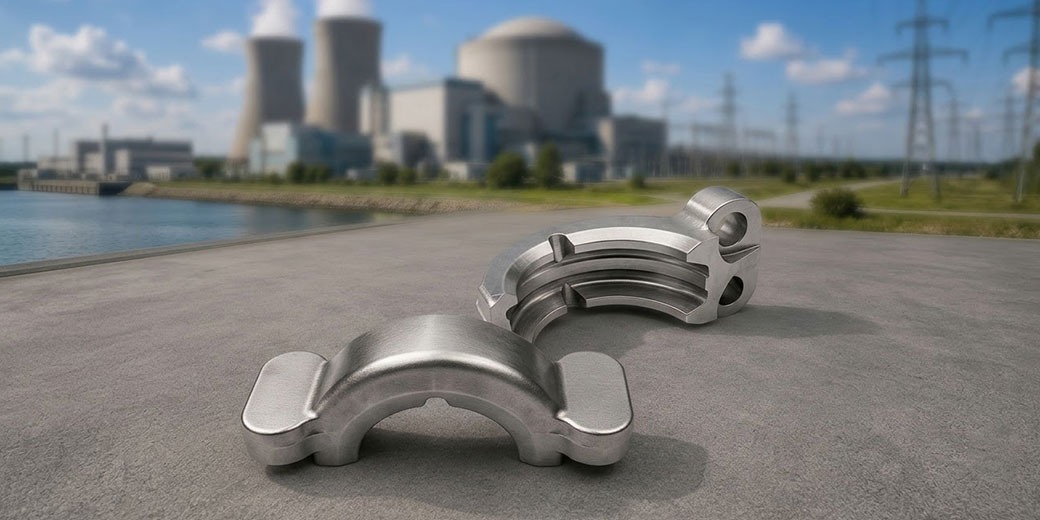
Canada’s CANDU (Canada Deuterium Uranium) reactor technology — operated at Ontario Power Generation’s Pickering and Darlington stations and Bruce Power’s Bruce nuclear generating station uses a unique pressurised heavy water reactor design that imposes distinct forging requirements compared to US PWR and BWR reactors. Canadian Nuclear Laboratories (CNL) and Atomic Energy of Canada Limited (AECL) support ongoing CANDU fleet operation and the development of the Advanced CANDU Reactor (ACR) and CANDU 6 export programmes. Indian forging manufacturers with NQA-1-equivalent quality systems and pressure tube forging awareness are positioned to supply the Canadian nuclear forging market.
| Reactor / System | Operator | Key Forging | Material / Standard |
| CANDU 6 (Darlington) | Ontario Power Generation | End fitting forgings, feeder pipe nozzles | A-106 Gr.B, SA-182 F304L — ASME III equivalent |
| Bruce Power Units | Bruce Power | Steam generator nozzles, heat exchanger | SA-508 Gr.3 equivalent, CNSC N-299 qualified |
| CANDU 6 Export (Romania) | SNN Cernavoda | Calandria end shield forgings | Carbon steel, CNSC qualified |
| ACR (Advanced CANDU) | AECL/Candu Energy | Reactor vessel structural forgings | SA-508 Gr.3, ASME Section III |
The CANDU reactor’s unique design — horizontal pressure tubes containing natural uranium fuel bundles through which pressurised heavy water flows as the primary coolant creates forging requirements that differ significantly from PWR or BWR designs. CANDU end fittings (the forged components at each end of the 380+ pressure tubes in a full-size CANDU reactor) are one of the highest-volume precision forging categories in any nuclear reactor type. Each CANDU 6 reactor has 380 pressure tube channels, each with two end fittings 760 end fitting forgings per reactor. End fitting replacement is part of the CANDU major refurbishment programme (retubing) that extends reactor operating life.
The Canadian Nuclear Safety Commission (CNSC) is Canada’s nuclear regulator equivalent to the US NRC. CNSC’s nuclear quality assurance requirements are codified in CAN/CSA N286 (Management System Requirements for Nuclear Facilities) the Canadian equivalent of NQA-1/10CFR50 Appendix B. Indian forging manufacturers seeking to supply CANDU programme forgings must demonstrate a quality management system compliant with CAN/CSA N286.
Bruce Power — Canada’s largest private nuclear generator is undergoing a major component replacement (MCR) programme at its 8 operating CANDU 6 units through 2033. The MCR programme involves replacement of steam generators, feeders, and associated structural components — generating substantial forging demand for steam generator nozzle forgings and pressure system structural forgings. Bruce Power’s supply chain quality requirements include N299 qualification the Canadian nuclear product quality standard.
SNC-Lavalin (now AtkinsRéalis) and Candu Energy are the primary engineering organisations supporting CANDU fleet maintenance and new build programmes internationally (Romania, Argentina, South Korea, India). CANDU reactors operating in India at Rajasthan Atomic Power Station (RAPS) – create a unique opportunity: Indian forging manufacturers who are qualified for CANDU component supply can supply both Canadian programmes and the Indian CANDU fleet through a single qualification pathway.
Vinir Engineering — Capability for this Market
- IBR certification — the Indian nuclear quality discipline most directly relevant to CAN/CSA N286 witness inspection requirements.
- AS9100D full scope providing the quality management foundation for N286 programme development.
- SA-182 F304L stainless and carbon steel forgings with nuclear material certification capability.
- NABL-accredited OES chemistry and mechanical testing.
- Open die forging to 15,000 kg covers CANDU steam generator nozzle and structural forging range.
- Awareness of CANDU-specific standards (CAN/CSA N286, N299) and qualification pathway development for Bruce Power MCR programme.