

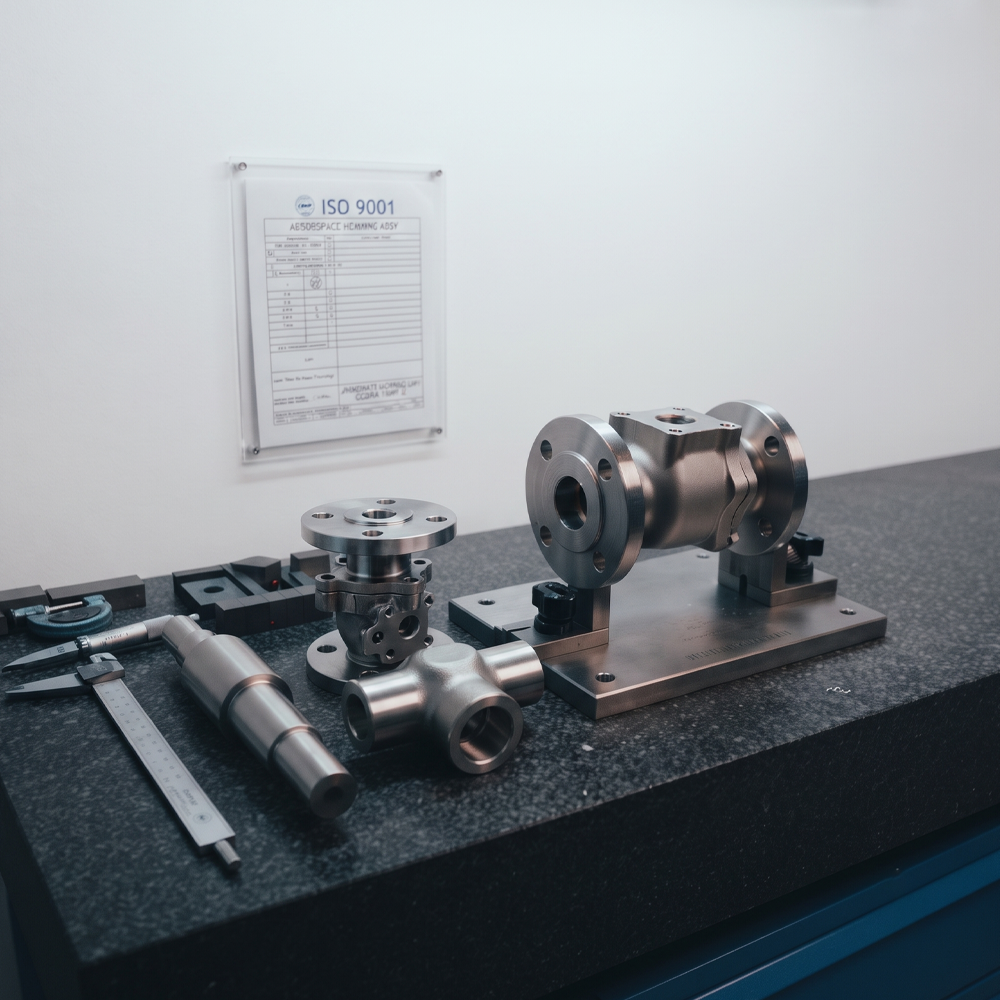
How Oil & Gas OEMs Qualify Indian Forging Suppliers: The Complete Process
Oil and gas forging supplier qualification is the structured process by which operators, EPC contractors, and equipment OEMs evaluate and approve Indian forging manufacturers to supply pressure-retaining and structural forged components for oil and gas programmes. The process is distinct from aerospace and defence qualification in its emphasis on API certification, third-party inspection integration, and […]
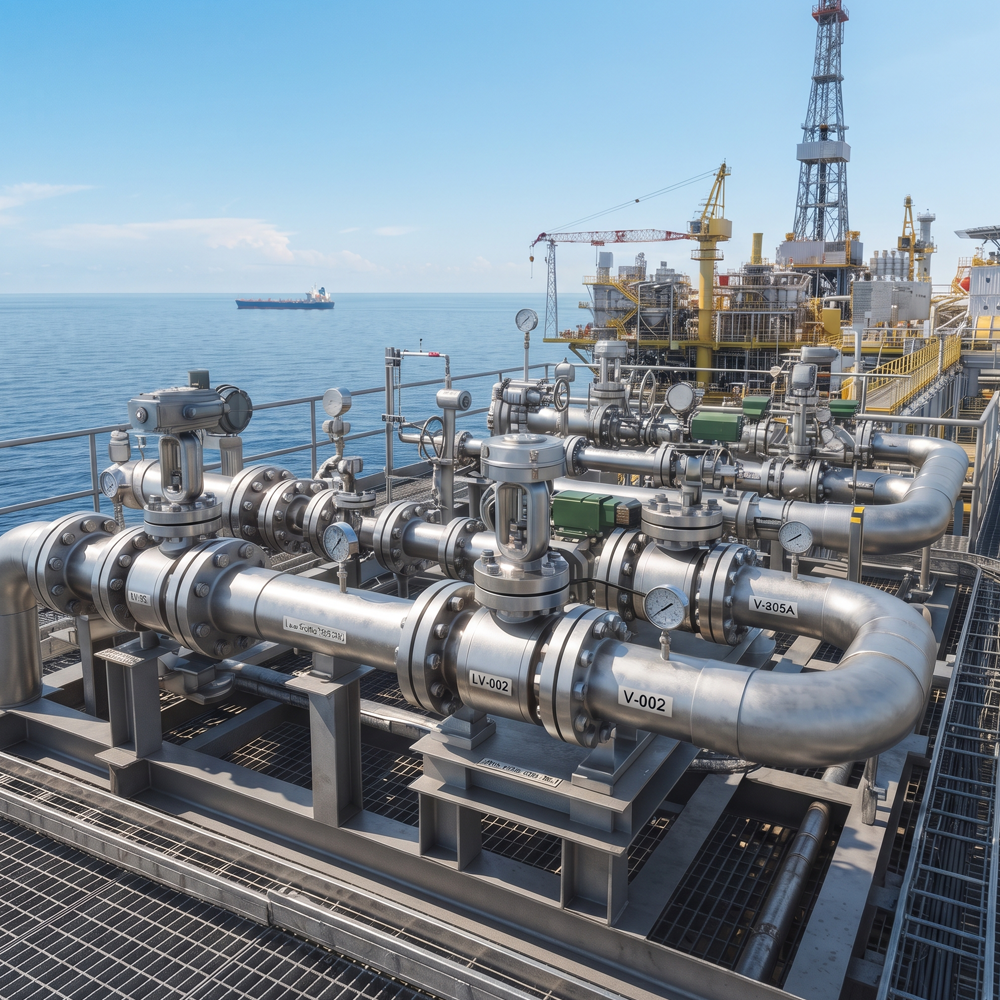
Duplex and Super Duplex Forgings for Offshore and Oil & Gas Applications in India
Duplex and super duplex forgings are forged components manufactured from two-phase stainless steels — containing approximately equal proportions of austenite and ferrite — specifically designed for offshore and oil and gas applications where standard austenitic stainless steels fail due to chloride stress corrosion cracking, pitting, or inadequate strength. India’s growing offshore oil and gas sector, […]
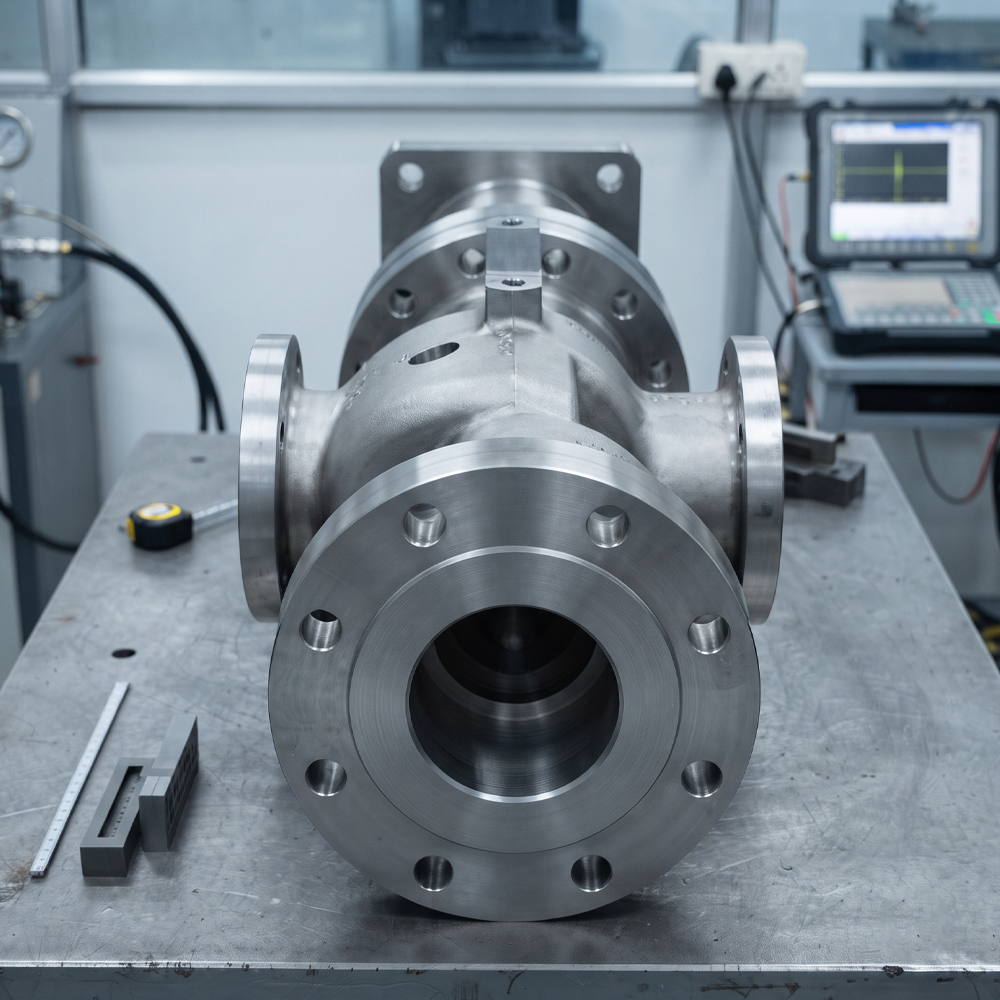
Valve Body Forgings for Oil & Gas in India: Materials, Tolerances, and API Compliance
Valve body forgings are pressure-retaining forged components that form the structural envelope of gate valves, ball valves, check valves, globe valves, and choke valves used throughout oil and gas production, processing, and transmission systems. The valve body must contain the full working pressure of the system without leakage or structural failure across the valve’s service […]
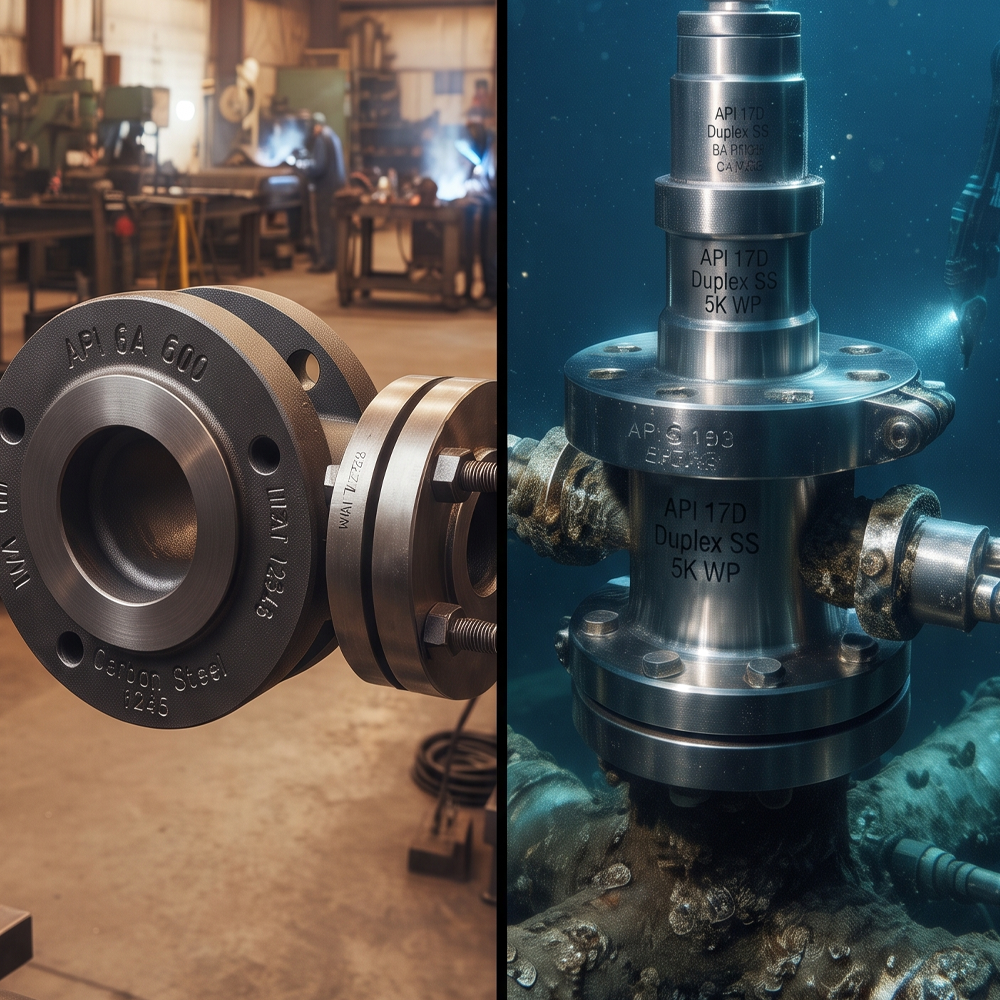
API Certification for Forgings: API 20B vs API 20C and What Each Covers
API forging certification refers to the manufacturer qualification requirements defined by the American Petroleum Institute for forged components used in oil and gas pressure-retaining applications. Two primary standards govern forging manufacture for the oil and gas industry — API 20B for carbon and low alloy steel forgings and API 20C for corrosion-resistant alloy forgings. Understanding […]
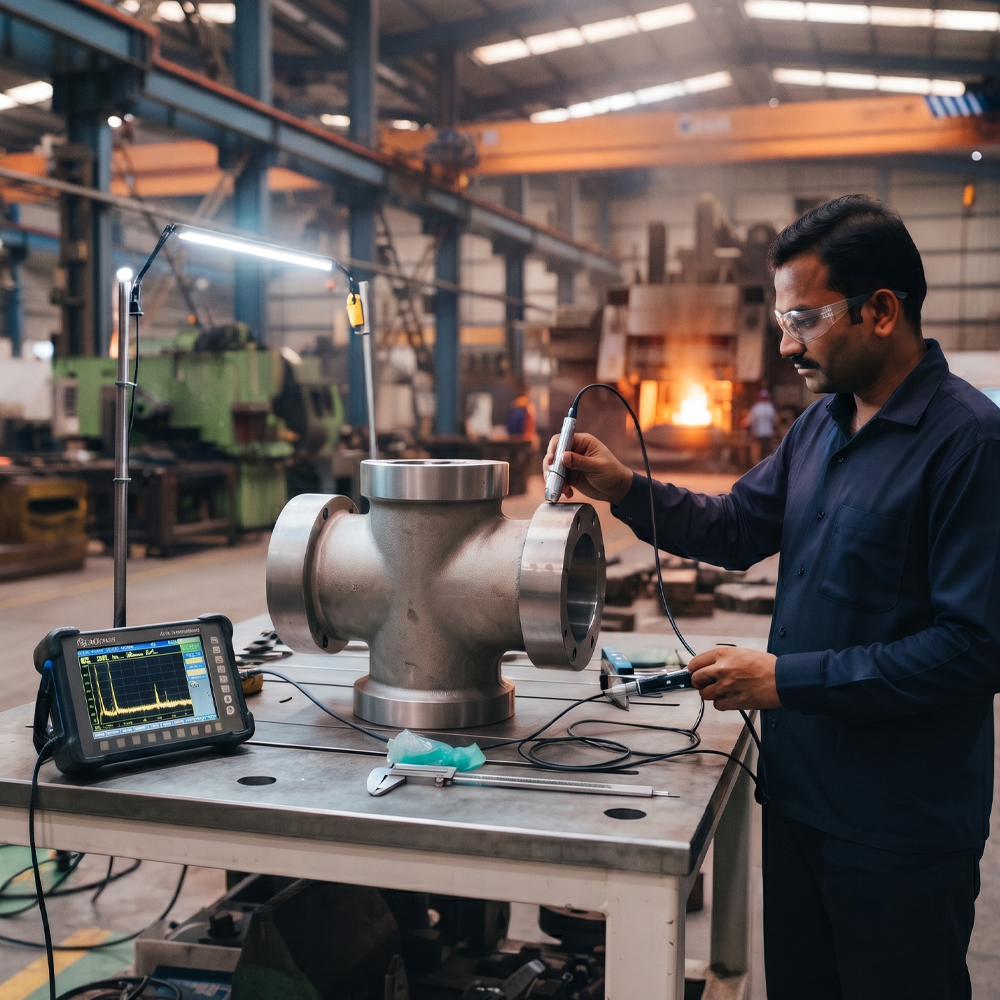
API 20B Forging in India: What Oil & Gas Buyers Actually Audit
API 20B forging audit is the process by which oil and gas operators, EPC contractors, and procurement teams verify that a forging manufacturer genuinely meets the requirements of the API 20B specification — not just that they hold the license. The gap between holding an API 20B license and actually manufacturing forgings that satisfy a […]
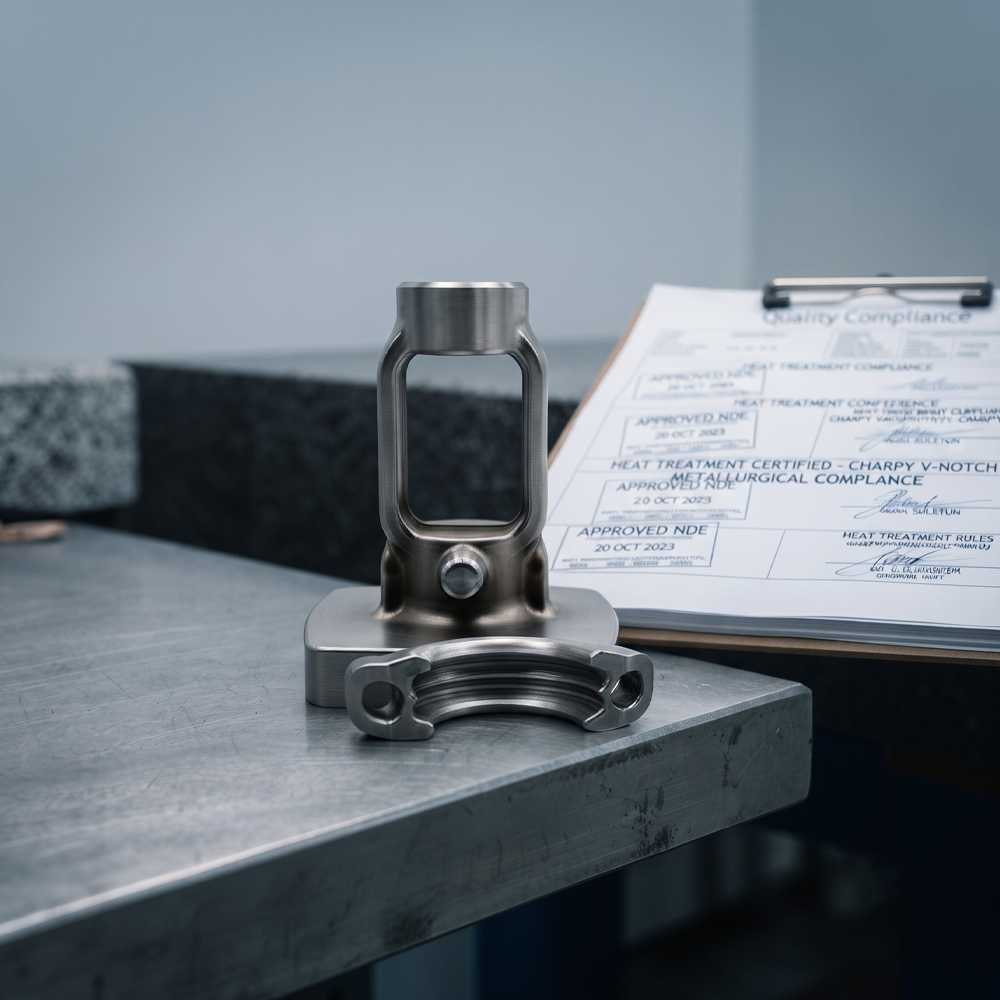
Oil & Gas Forging in India: API 20B Certified Manufacturer Guide
Oil and gas forging is the manufacture of structurally critical forged metallic components for upstream, midstream, and downstream petroleum applications — wellhead assemblies, choke bodies, valve bodies, subsea pressure housings, pipeline flanges, and pressure-retaining fittings. Unlike general industrial forging, oil and gas forging operates under API certification requirements, full material traceability from mill heat
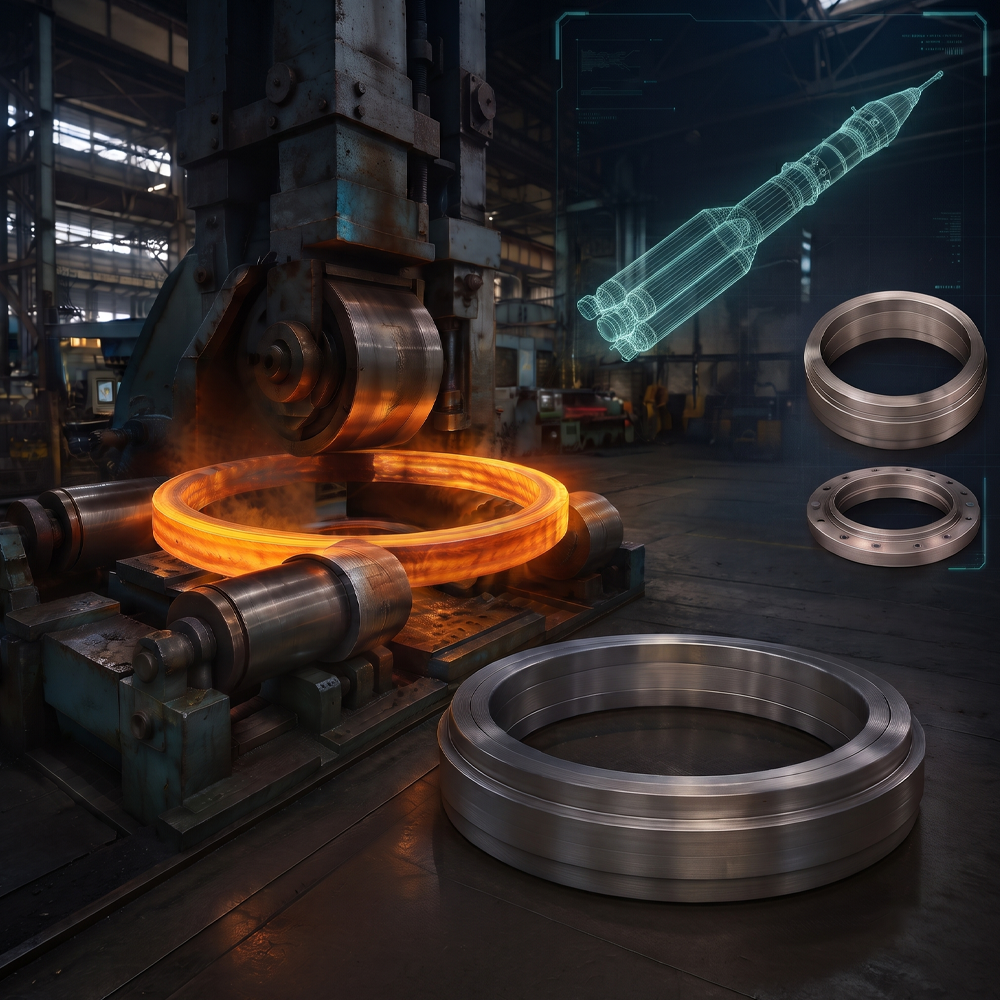
Missile Forging in India: Structural Components, Materials, and Qualification Requirements
Missile forging refers to the manufacture of structurally critical forged components for guided missile and rocket systems — body section rings, fin roots, warhead housings, propulsion system components, nozzle assemblies, and launch mechanism structural parts. India’s indigenous missile programme — DRDO’s Agni, Prithvi, Astra, Akash, and the BrahMos joint venture — has created a growing […]
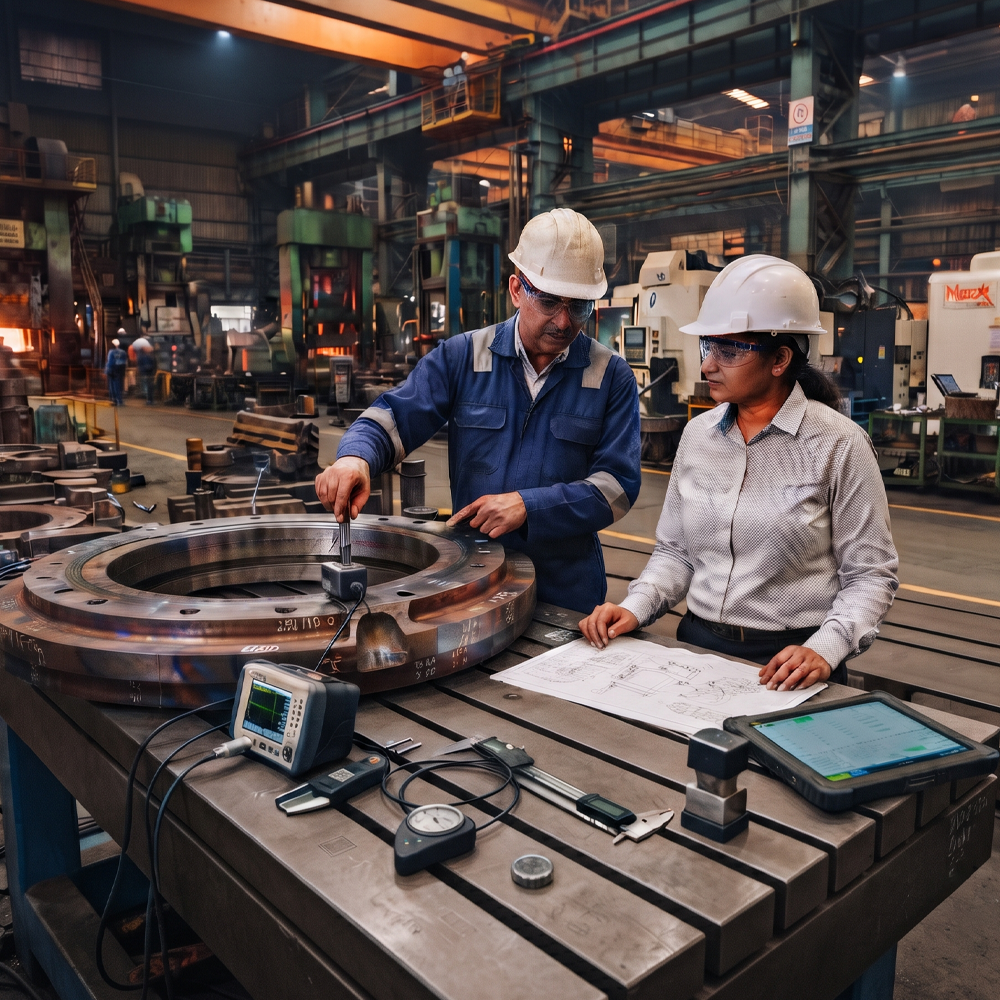
How to Evaluate Defence Forging Companies in India: A Buyer’s Qualification Guide
Evaluating defence forging companies in India involves far more than comparing quotations or checking that a supplier has a quality certificate on the wall. Defence forging is a regulated, long-term supply chain activity. The evaluation criteria that matter — certification scope, in-house process coverage, production history depth, quality system maturity — are largely invisible in […]
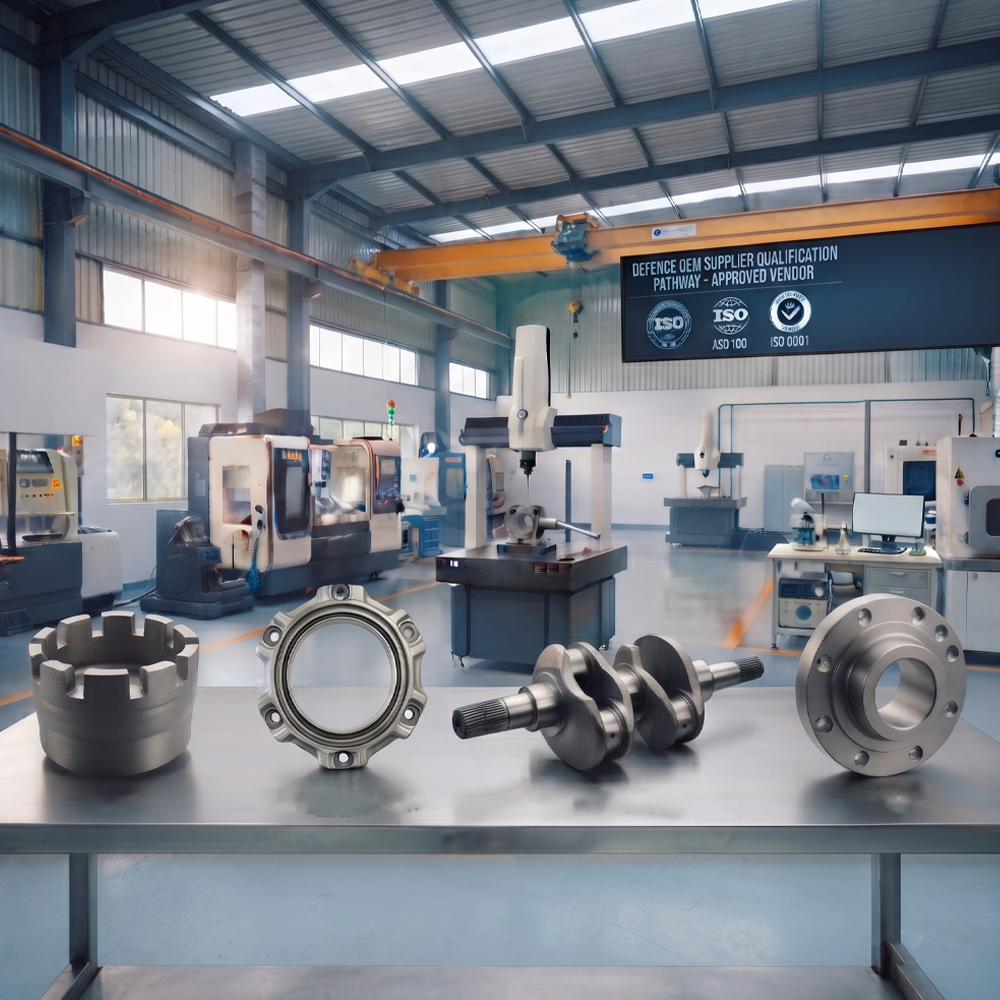
How Defence OEMs Qualify Indian Forging Suppliers: The Complete Process
Defence forging supplier qualification is the structured process by which defence OEMs — domestic and international — evaluate, approve, and onboard Indian forging manufacturers into their supply chains. It is not a single audit or a certificate check. It is a multi-stage process covering quality systems, shop floor capability, material process controls, first article production, […]
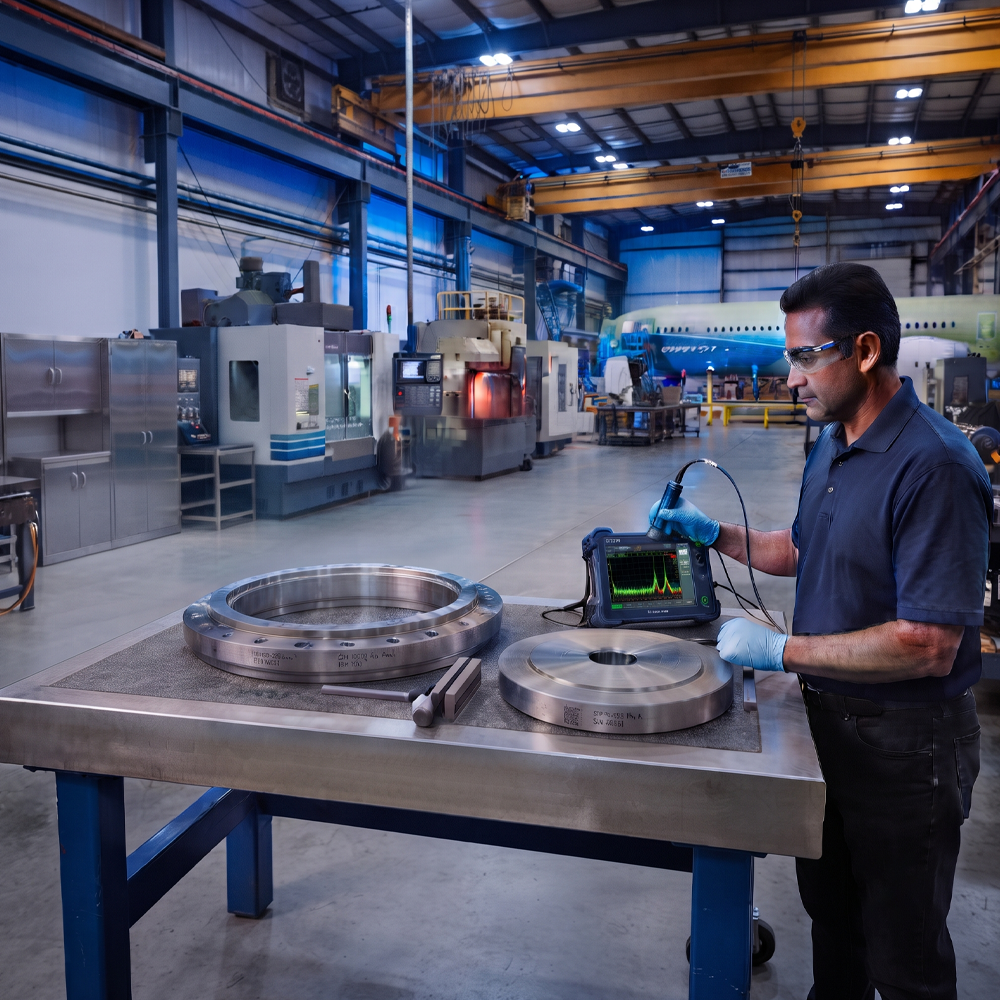
Aerospace Forging Defects: Common Failure Modes, Inspection Methods, and Prevention
Forging defects in aerospace components are far more than manufacturing imperfections—they are potential airworthiness risks. A microscopic internal discontinuity, an improperly closed forging lap, or an undetected inclusion may remain invisible throughout production, yet become the origin of a fatigue crack after thousands of flight cycles. This is why aerospace forging quality is built around […]
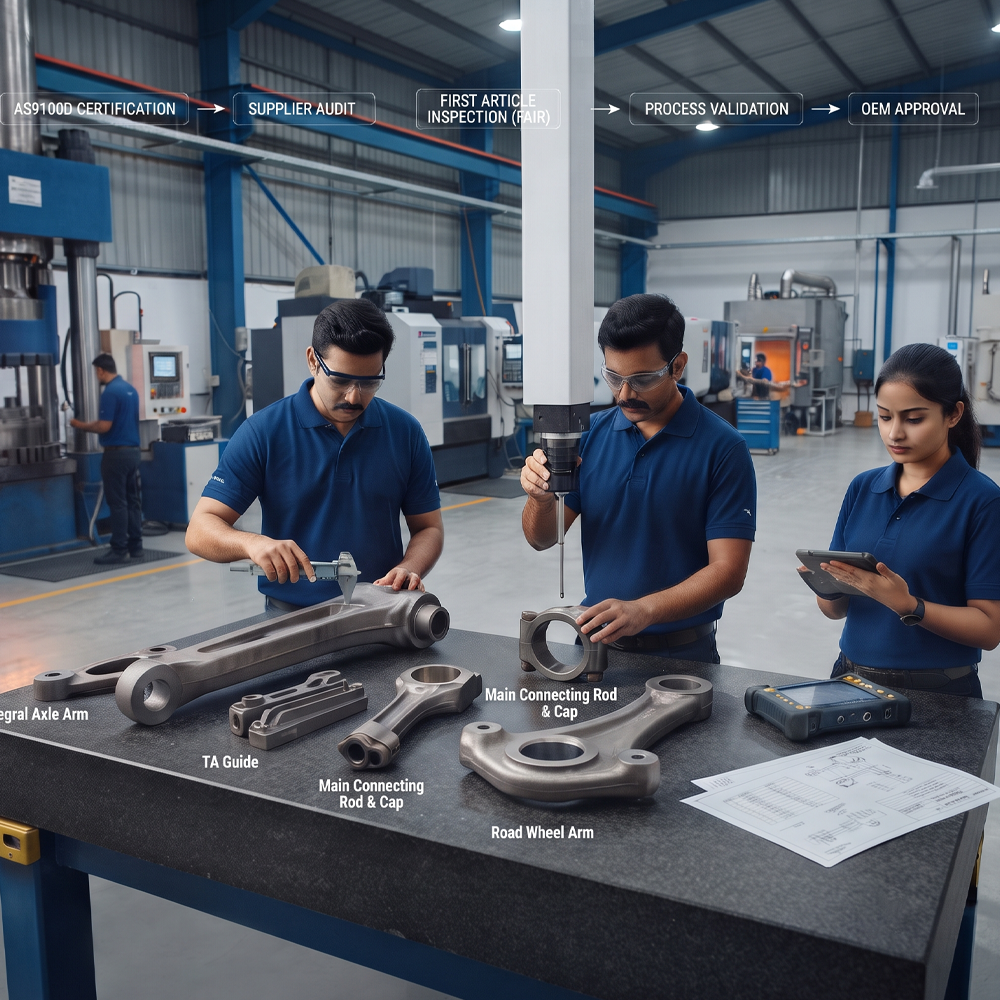
AS9100D Aerospace Forging Qualification in India: What the Certification Process Really Involves
AS9100D aerospace forging qualification is the process by which an aerospace OEM evaluates, tests, and approves an Indian forging manufacturer to supply structural components for a specific aircraft, helicopter, or aeroengine programme. It is not the same as obtaining AS9100D certification — the certificate is the entry gate, not the destination. Qualification is what happens […]
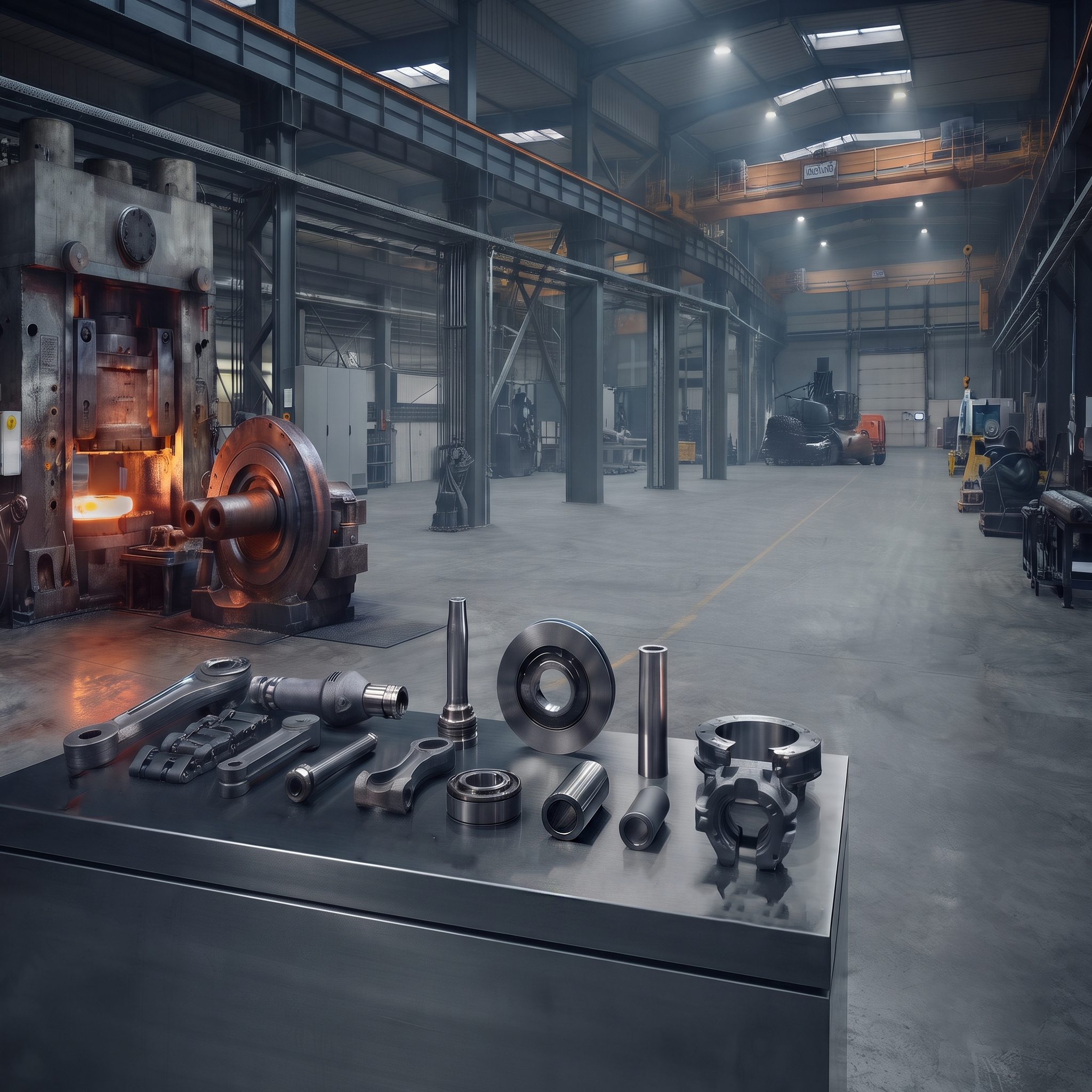
Land Defence Forging in India: Components, Materials, and Standards for Ground Combat Platforms
Land defence forging covers forged components for all ground combat and support platforms — main battle tanks, infantry fighting vehicles, armoured personnel carriers, self-propelled artillery, towed gun systems, logistic vehicles, and engineer equipment. India’s land forces operate one of the largest mechanised fleets in the world, creating sustained demand for forged components across new production, […]