Germany’s rail industry centred on Siemens Mobility (Munich), Alstom Deutschland (Berlin), Knorr-Bremse (Munich), and Voith (Heidenheim) is among the most technically advanced and highest-volume rail equipment manufacturing ecosystems in the world. ICE high-speed trains, Velaro platforms operating across Europe and internationally, S-Bahn suburban electric trains, and freight locomotives all require forged axles, bogie frame structural components, traction motor shaft forgings, and draw gear components. IRIS certified (ISO 22163) Indian forging manufacturers with EN 13261 axle steel production experience are well positioned to supply this market.
OEM / Tier-1
Product
Key Forging
Standard
Siemens Mobility
ICE 3 / Velaro
EA4T high-speed axle
EN 13261
Alstom Deutschland
Coradia, TGV-M
EA4T passenger axle
EN 13261
Knorr-Bremse
Brake systems
Brake disc hub, caliper body
EN 13260
Voith
Cardan shaft coupling
Coupling flange, hollow shaft
DIN 10083
Bombardier / Alstom
TRAXX locomotive
Bogie bolster, side frame
EN 13749
DB Cargo
Freight wagons
EA1N freight axle
EN 13261
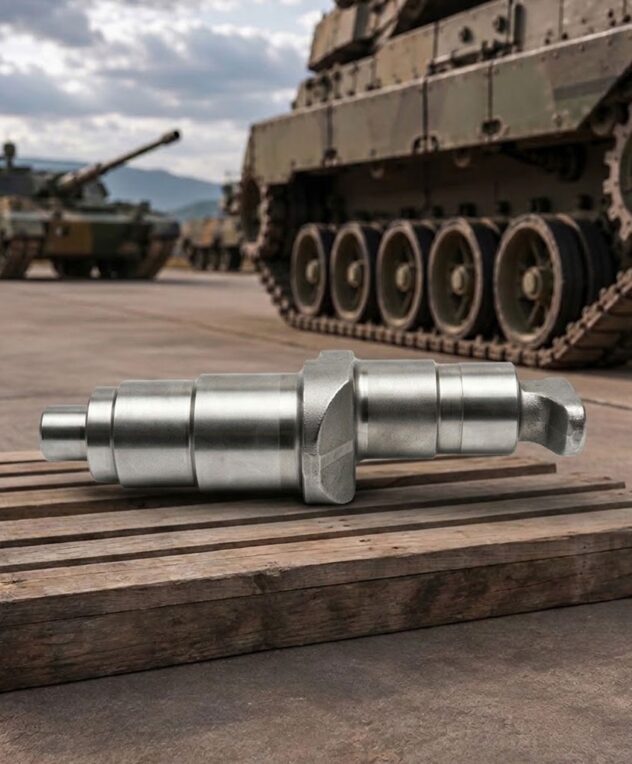
Siemens Mobility’s Velaro platform — operating as ICE 3 in Germany, AVE S103 in Spain, and Sapsan in Russia is the most widely deployed high-speed train platform in the world. Velaro bogies use EA4T axle forgings produced to EN 13261, with 100% UT inspection per EN 15313 and magnetic particle inspection of the finished axle surface. Axle forging qualification for Siemens Mobility programmes follows the IRIS certification process the supplier must hold ISO 22163 certification verified in the IRIS database.
Deutsche Bahn (DB) — Germany’s national rail operator and one of the largest rail operators in the world influences forging requirements across the German rail supply chain. DB’s technical standards (DB TL specifications) define axle material and inspection requirements that supplement the EN 13261 base standard. DB TL 918065 (for passenger car axles) and DB TL 918066 (for locomotive axles) are the specific technical delivery conditions that DB applies. Indian forging manufacturers supplying to the German rail supply chain should be familiar with these DB TL specifications.
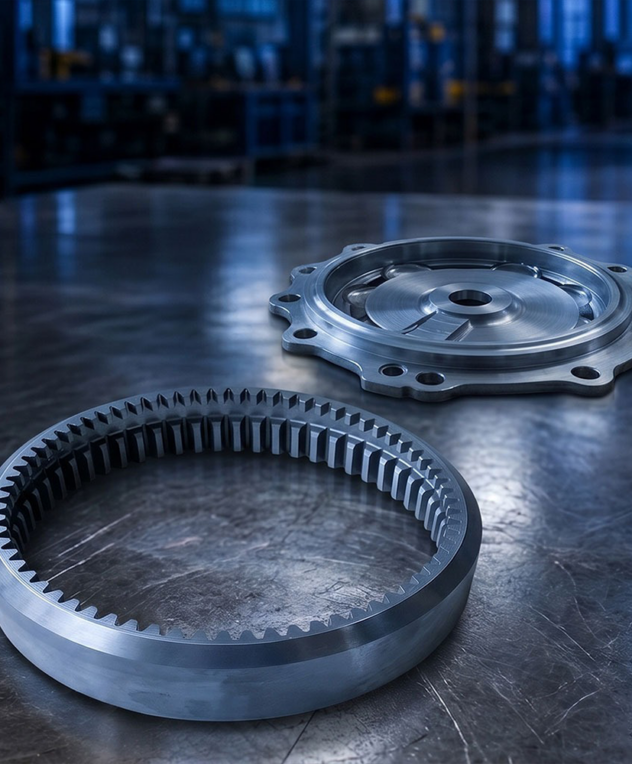
Knorr-Bremse — the world’s largest manufacturer of braking systems for rail vehicles, headquartered in Munich — uses forged brake disc hubs and caliper body forgings in alloy steel. Brake system components are safety-critical they fall within the scope of EN 15227 (crashworthiness) and EN 13260 (brake components) and require IRIS-certified quality management.
The German freight rail sector — DB Cargo and private operators uses EA1N carbon steel axle forgings for freight wagon bogies. EA1N is less demanding than EA4T (no alloying elements, lower strength) but still requires EN 13261 documentation and 100% UT. Freight axle forging represents the highest-volume entry point for Indian forge shops entering the German rail market.
EA4T and EA1N axle forgings, 150–400 kg, open die on 3,000T hydraulic press.
100% UT with EA4T-specific calibration standard.
Full MT of finished axle.
EN 13261 complete documentation package including DB TL supplement where specified.
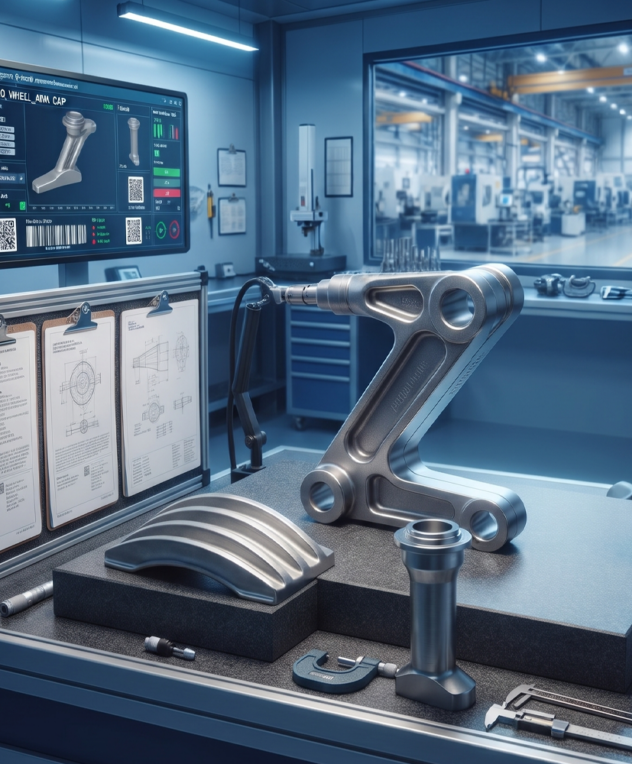
Bogie structural forgings in S355NL and 4340, 100–800 kg, closed and open die.
NABL Charpy at -20°C standard.
Ocean freight Chennai to Hamburg: 22–28 days.
Frequently Asked Questions
1.What is EA4T axle steel and why is it the standard for high-speed rail in Germany?+–
EA4T is a nickel-chromium-molybdenum alloy steel defined by EN 13261 specifically for railway axle applications. The designation means: E = unalloyed or alloyed steel, A = axle steel, 4 = minimum tensile strength class 700 MPa, T = tough (heat treated). EA4T achieves minimum 700 MPa tensile strength and minimum 550 MPa yield after quench and temper, with guaranteed Charpy impact at -20°C. The alloy composition provides good hardenability in large axle sections (250–350mm diameter) ensuring consistent mechanical properties through the full axle cross-section. German high-speed rail specifies EA4T because the combination of strength, toughness, and hardenability is optimised for the fatigue loading profile of ICE axles.
2.What does EN 13261 require beyond material properties for railway axle forging supply?+–
EN 13261 defines: material grades and their mechanical property requirements, surface finish requirements for the axle body, ultrasonic testing — 100% volumetric UT of every axle before machining — to acceptance criteria defined in the standard, magnetic particle inspection of the finished axle surface, dimensional tolerances for the axle profile, and material marking requirements. Beyond the standard, Siemens Mobility and Alstom apply their own supplementary specifications. The documentation package for each axle lot must include: MTR with heat-specific chemistry, independent chemistry analysis, tensile and Charpy results, heat treatment record, 100% UT report, MT report, dimensional report, and certificate of conformance.
3.How does the IRIS certification database work and how does a German rail OEM verify an Indian supplier?+–
IRIS (International Railway Industry Standard, now ISO 22163) is administered by UNIFE (Union of the European Railway Industry). Certified organisations appear in the IRIS Portal at irisrailway.org searchable by company name, country, and certification scope. German rail OEM procurement teams verify IRIS certification in the Portal before qualification assessment. The Portal shows the certification body, scope of certification (which products and processes), and the certificate validity date. An Indian forging manufacturer certified by a UNIFE-recognised certification body with scope covering railway axle and structural forging production appears in the Portal and is verifiable by Siemens Mobility or Alstom procurement teams in Germany.
4.What DB TL (Technische Lieferbedingungen) specifications apply to axle forging supply for Deutsche Bahn programmes?+–
The primary DB TL specifications for axle forging are DB TL 918065 (passenger car axles) and DB TL 918066 (locomotive axles). These supplement EN 13261 with additional requirements including: specific surface finish classes for the axle body after final machining, more stringent ultrasonic acceptance criteria than EN 13261 baseline for some axle classifications, and DB-specific documentation format requirements. For Indian suppliers, the DB TL specifications are obtained through the German rail OEM or their German tier-1 supplier they are not publicly available. Indian forging manufacturers should confirm with their German customer which DB TL supplements apply to their specific axle order.
5.What is the cost advantage of Indian railway axle forgings versus European domestic supply for German OEMs?+–
EA4T railway axle forgings from Indian manufacturers are typically 20–30% lower landed cost in Germany versus equivalent European domestic supply from Polish, Czech, or Romanian forge shops, and 30–40% below German or French domestic axle forging supply. The cost advantage comes from lower Indian labour and overhead costs the raw material (EA4T billet) is sourced from the same European steel mills at comparable prices. Ocean freight from Chennai to Hamburg adds approximately 3–5% to the Indian ex-works price. The total landed cost advantage justifies Indian sourcing for German OEMs when the qualification timeline (typically 12–18 months) is accommodated in the programme planning horizon.