
Subsea Forging Supplier for US Deepwater Operations: API 17D and Deepwater Standards
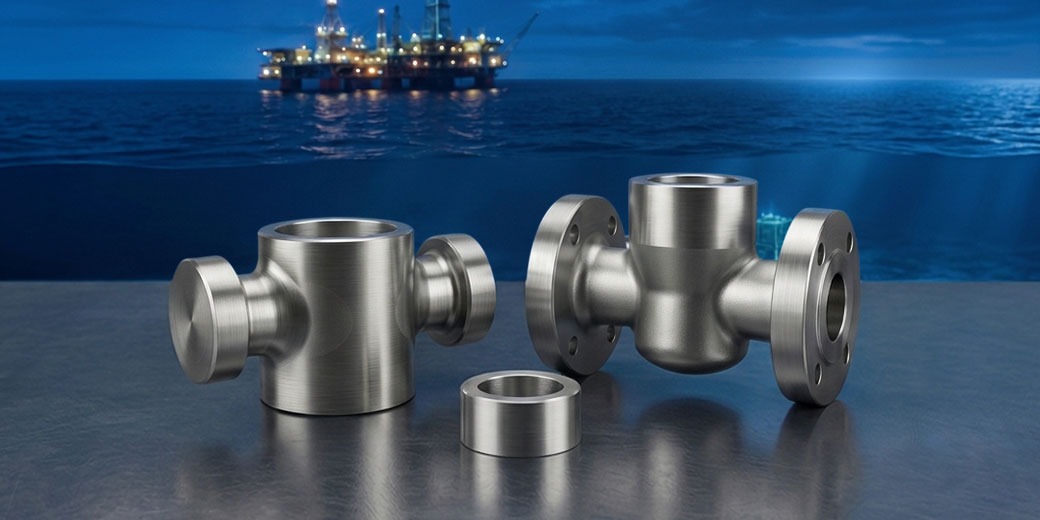
US deepwater subsea operations represent the most technically demanding forging application in the American oil and gas industry. The combination of extreme water depth, high reservoir pressure, sour and corrosive production fluids, continuous seawater immersion, unmaintained service for 20–25 years, and the catastrophic consequence of any failure creates a forging specification environment that goes beyond what any other oil and gas application requires. Indian API 20B certified forging manufacturers who understand the specific requirements of US deepwater subsea supply — API 17D, NORSOK M-630, subsea-specific NDE, HPHT material requirements — and have built the process capabilities to meet them are qualified to serve this highest-value segment of the US oil and gas forging market.
At a Glance: US Deepwater Subsea Forging Requirements
| Component | Standard | Material | Water Depth | Key Requirement |
| Subsea Christmas tree body | API 6A / API 17D | 4130M / Inconel 625 | Up to 3,000m | PSL 4, NACE MR0175, HPHT |
| Subsea manifold valve bodies | API 6A / API 17D | Super duplex 2507 | Up to 3,000m | NORSOK M-630, G48 at 40°C |
| Subsea connector bodies | API 17D | F22 alloy steel | All depths | Full penetration geometry |
| Flowline end termination flanges | ASME B16.47 / API 17D | F53 super duplex | All depths | Ring-rolled, RTJ precision |
| Riser base spool bodies | API 17J | A694 F65 | Catenary zone | Fatigue NDE, DNV certified |
| Wellhead housing forgings | API 6A | 4130M | All depths | SSC, HIC, 100% UT |
| Tubing hanger structural body | API 6A / API 17D | 4130 / Inconel 718 | HPHT fields | Double aged, AMS 2154 UT |
The US Deepwater Subsea Market: Scale and Geography
Gulf of Mexico Deepwater Lease Areas
The US deepwater oil and gas production base is concentrated in the Gulf of Mexico, with active production in several distinct lease area provinces:
Mississippi Canyon — the most prolific deepwater GoM production area. Fields at 450–2,000 metre water depths including Thunder Horse (BP, 1,850m), Mars/Ursa (Shell, 900m), and Atlantis (BP, 1,300m). Reservoir pressures in Mississippi Canyon fields range from 8,000 to 12,000 psi. H₂S concentrations vary by field – Mars/Ursa production contains H₂S requiring NACE MR0175 compliance.
Green Canyon — includes Lucius (Aethon Energy, 2,100m), Big Foot (Chevron, 1,600m), and Shenandoah (Navitas Petroleum, 1,850m). Higher average water depths than Mississippi Canyon. Several Green Canyon fields produce high-H₂S gas that requires PSL 4 sour service qualification for all wellhead and tree forgings.
Garden Banks and Walker Ridge — deepwater fields at 1,500–2,400 metre water depths. Whale (Shell/Chevron, 2,900m) in Walker Ridge is one of the deepest producing GoM fields and uses full HPHT-rated equipment.
Keathley Canyon — ultra-deepwater. Kaskida (BP) at 1,800 metres has a reservoir pressure of 20,000 psi the highest in the GoM – requiring 20,000 psi rated wellhead and tree equipment. Anchor (Chevron) at Keathley Canyon 823 has a reservoir pressure of 17,500 psi. These HPHT fields define the upper end of US subsea forging requirements.
US Atlantic Deepwater — The Emerging Frontier
The US Mid-Atlantic and South Atlantic outer continental shelf has been largely undeveloped for offshore oil and gas until recent years. Lease sales in the Atlantic OCS and the ongoing development of existing permits – combined with the long-term potential of the Carolinas, Virginia, and New England offshore basins – represent a medium-term expansion of US deepwater subsea demand beyond the GoM.
API 17D: The Governing Standard for Subsea Equipment
API 17D — Specification for Subsea Wellheads and Trees — is the primary standard governing the design, material selection, testing, and documentation of subsea wellhead and Christmas tree equipment. For forging manufacturers, API 17D defines the material requirements and quality standards for all forged pressure-containing and structural components within the subsea tree and wellhead system.
What API 17D Adds to API 6A for Subsea Applications
API 6A covers wellhead and tree equipment generally — both surface and subsea. API 17D adds subsea-specific requirements:
Seawater immersion design — components must be designed for continuous seawater immersion at the specified water depth. External pressure from the hydrostatic water column is a structural load that surface tree components do not experience. At 3,000 metre depth, the external hydrostatic pressure exceeds 300 bar — a significant compressive load on the tree body that must be accommodated in the design and demonstrated in hydrostatic testing.
Cathodic protection compatibility — subsea tree bodies are protected from external corrosion by aluminium alloy sacrificial anodes. The anode design must provide adequate protection throughout the 25-year design life. The tree body material must be compatible with the cathodic protection potential — high-strength steels above approximately 550 MPa yield are susceptible to hydrogen embrittlement under cathodic protection, limiting the maximum strength of carbon steel tree structural components.
ROV accessibility — all subsea tree components that require intervention (valve actuator connections, chemical injection ports, monitoring connections) must be accessible to remotely operated vehicles (ROVs) operating at depth. This creates geometric constraints on tree body forging design — not a material or process requirement but a design consideration that affects the forging geometry and the die design.
Function testing at pressure — completed subsea trees are function-tested at rated working pressure with all valves cycled through their full stroke. Individual forged components that are pressure-retaining must pass shell pressure tests before assembly into the tree. The test pressure and duration requirements are specified in API 17D.
Documentation retention — API 17D requires documentation retention for the life of the equipment — typically 25 years for deepwater GoM subsea trees. For forged components incorporated in subsea trees, the original material certification, heat treatment records, and NDE reports must be retained and retrievable for this period.
Subsea Forging Categories in US Deepwater Systems
Subsea Christmas Tree Body Forgings
The subsea Christmas tree body — the main structural forging that carries the master valve, wing valve, crossover, and swab valve bodies — is the largest and most complex forging in any subsea tree assembly. For GoM deepwater trees:
Material for non-HPHT deepwater trees (to 15,000 psi WP): AISI 4130M alloy steel — modified chemistry with restricted sulphur (maximum 0.010%), phosphorus (maximum 0.012%), and controlled carbon equivalent for NACE MR0175 compliance. Quench and temper to achieve 75,000 psi minimum yield with maximum hardness 22 HRC (250 HBW) at all locations.
Material for HPHT deepwater trees (15,000–20,000 psi WP, above 150°C): Inconel 625 for tree structural body components at Anchor, Kaskida, and similar ultra-deepwater HPHT fields. Maintains adequate strength at elevated temperature. NACE MR0175 Part 3 compliant. External cathodic protection compatible without hydrogen embrittlement risk.
Geometry: Tree bodies are among the most geometrically complex forgings in oil and gas — multiple valve body ports, actuator mounting bosses, chemical injection ports, and connector interfaces must all be accommodated in the single integral forging. Die design requires FEM simulation to ensure metal fills all sections adequately and that the parting line placement does not create structural weaknesses.
Weight range: 500–3,000 kg for deepwater GoM tree bodies depending on working pressure rating and tree configuration (vertical vs horizontal, number of valves).
NDE: 100% UT volumetric inspection before any machining. 100% wet fluorescent MT of all surfaces after heat treatment. After machining: 100% FPI or MT of all machined surfaces including valve bore, actuator ports, and connector faces. API 17D requires NDE documentation to be retained for the tree service life.
Subsea Manifold and Gathering System Forgings
Deepwater GoM production manifolds — which consolidate production from 4–8 subsea wells before routing to the FPSO or platform — contain extensive forged components:
Manifold isolation valve bodies — super duplex 2507 for seawater-wetted applications, Inconel 625 for HPHT applications. Sizes from 2-inch NPS through 10-inch NPS in Class 2500 or API 6A rated. Quantities: 20–80 valve body forgings per manifold depending on configuration.
Manifold piping spool flanges — ring-rolled super duplex 2507 or alloy steel flanges in large diameter (NPS 8–24) at API 6A or ASME B16.47 dimensions. RTJ face configuration mandatory for subsea service — the metal ring gasket provides reliable sealing at the high bolt loads achievable with subsea torque tools.
Manifold structural connector bodies — the mechanical connectors that attach flowlines and jumpers to the manifold use forged connector bodies in alloy steel or super duplex. These connectors must function reliably after years of seawater immersion — the sealing and latching mechanisms must maintain dimensional integrity across the full temperature range from installation ambient to operating temperature.
Pigging loop valve bodies — manifolds designed to accommodate pipeline inspection gauges (pigs) for flowline integrity inspection include pig launcher and receiver valve bodies. These are large, complex forgings in alloy steel with full-bore geometry to pass the pig without damage.
Subsea Wellhead Housing Forgings
The subsea wellhead housing — the primary pressure-containing structure at the seabed wellhead — supports all subsequent casing strings, the Christmas tree, and ultimately all the production from the well. Wellhead housing forgings for GoM deepwater are among the most safety-critical forgings in any US oil and gas programme.
Material: AISI 4130M for standard deepwater GoM wellheads. Ultra-low sulphur (0.010% maximum), controlled CE, NACE MR0175 compliant heat treatment. For HPHT fields: Inconel 718 for the primary pressure-containing body where reservoir temperatures exceed 150°C.
Dimensions: Large-bore wellhead housings for 30-inch conductor casing — the largest subsea wellhead size — have outside diameters up to 900mm and weights up to 2,500 kg. Open die forging on a 3,000+ tonne hydraulic press.
Critical dimensions: The landing shoulder inside the wellhead housing — where the casing hanger lands to support the casing string weight — must be machined to extremely tight concentricity and squareness tolerances. The landing shoulder geometry is the most critically dimensioned feature in the wellhead housing forging, and the forging must provide adequate material in this location for machining to tolerance while maintaining the minimum wall thickness requirement.
SSC and HIC testing: For deepwater GoM wells producing H₂S at concentrations above the NACE threshold, wellhead housing forgings must be qualified to API 20B PSL 4 with SSC testing per NACE TM0177 and HIC testing per NACE TM0284. The ultra-low sulphur requirement (0.010% maximum) for HIC resistance must be verified from the actual MTR chemistry — not assumed from the specification limit.
Subsea Flowline and Jumper End Termination Forgings
Subsea flowlines carry production from wellheads to manifolds, and from manifolds to risers. At each end of the flowline, a forged end termination provides the connection to the wellhead tree or manifold connector. For US GoM deepwater:
Material: Super duplex 2507 for most GoM deepwater flowline end terminations. The external seawater environment, combined with the internal production fluid (potentially hot, sour, high-chloride), makes super duplex the standard material for GoM subsea flowline fittings.
Connection system geometry: GoM subsea flowline connections use proprietary connector systems from OEMs including TechnipFMC, Aker Solutions, and GE Oil and Gas. The end termination forging geometry must match the OEM’s connector hub or clamp hub dimensions to micron-level tolerances. Forging manufacturers must receive the OEM’s hub drawing and dimensional tolerance sheet before producing end termination forgings.
Ring-rolled hubs: Large-diameter flowline end termination hubs – NPS 8 through 16 are ring-rolled to produce the connector flange geometry with circumferential grain flow that maximises hoop stress resistance at the connection.
NORSOK M-630 for US Deepwater Subsea: Complete Requirements
Although NORSOK M-630 originates from the Norwegian offshore industry, major GoM deepwater operators — Shell, BP, Chevron — universally apply it for subsea CRA forging qualification. The complete NORSOK M-630 requirements for super duplex 2507 subsea forgings are:
Chemistry Requirements
Beyond the standard ASTM A182 F53 chemistry specification, NORSOK M-630 restricts:
- Sulphur: maximum 0.010%
- Tungsten: maximum 0.10% (for weldability)
- PREN minimum: 40.0 (calculated from actual heat chemistry)
- PRE_N = %Cr + 3.3×%Mo + 16×%N — must be calculated from each heat’s actual OES analysis
Mechanical Property Requirements
- Yield strength: minimum 550 MPa (80,000 psi)
- Tensile strength: minimum 795 MPa
- Elongation: minimum 25%
- Charpy impact at -46°C: minimum 45 J average, minimum 32 J individual
- Hardness: maximum 310 HV10 at all locations
Corrosion Testing Requirements
ASTM G48 Method A — Ferric Chloride Pitting Corrosion Test:
- Test solution: 6% ferric chloride (FeCl₃·6H₂O) in water
- Test temperature: 40°C ± 0.5°C for super duplex 2507
- Immersion duration: 72 hours minimum
- Acceptance: no pitting visible at 20× magnification; weight loss below threshold
- Specimen preparation: machined to 100mm × 25mm × 5mm from the forging section
ASTM A923 Method C — Ferric Chloride Corrosion Test (alternative): Some operators accept A923 Method C in place of G48 as an alternative sigma phase detection method. However, G48 is more widely specified for US GoM deepwater because it provides a quantitative pitting resistance measurement in addition to sigma phase detection.
Microstructural Requirements
- Ferrite content: 35–65% by ferritescope measurement (multiple locations) or ASTM A562 point count
- No sigma phase visible at 400× magnification on etched cross-section (A923 Method A criterion)
- Grain size: ASTM 5 or finer
Weld Procedure Qualification Requirements
NORSOK M-630 requires that welding procedures for super duplex forgings in subsea service are qualified per NORSOK M-601.
The weld procedure qualification must demonstrate:
- Ferrite content 25–65% in weld metal and HAZ
- G48 corrosion test at 40°C passed on weld cross-section
- Impact properties meeting M-630 minimums at -46°C in weld metal and HAZ
This is the EPC contractor’s or fabricator’s responsibility — not the forging manufacturer’s — but Indian forging manufacturers who supply certificate data in the format required for weld procedure qualification documentation accelerate the downstream process.
HPHT Subsea Forging Requirements for Anchor and Kaskida Class Fields
Defining HPHT for US GoM Subsea
HPHT in the GoM deepwater context is typically defined as:
- Reservoir pressure above 10,000 psi, or
- Reservoir temperature above 300°F (150°C)
Fields classified as HPHT include Chevron’s Anchor (17,500 psi reservoir pressure), BP’s Kaskida (20,000 psi), and Shell/Chevron’s Whale. Several other GoM fields approach HPHT classification.
Forging Material Requirements at HPHT
For HPHT tree bodies and structural components: Standard AISI 4130M alloy steel loses significant yield strength at temperatures above 150°C — approaching 30–40% reduction at 200°C. For wellhead and tree components that will experience reservoir temperature fluids, Inconel 718 is specified for its combination of:
- High-temperature strength retention to above 650°C
- NACE MR0175 Part 3 compliance for H₂S service
- Resistance to CO₂ and chloride corrosion at elevated temperature
- Adequate toughness at the low ambient temperatures of the deepwater wellhead environment
For HPHT downhole tool pressure housings: MWD, LWD, and completion tool pressure housings for HPHT GoM wells — operating at wellbore temperatures exceeding 175°C and pressures above 15,000 psi — are produced in Inconel 718 solution annealed and double aged. The pressure housing must maintain its structural integrity and sealed condition at the maximum operating temperature while providing the electrical and fluid isolation of the internal tool.
Inconel 718 Double Ageing for HPHT Subsea Applications
The double ageing procedure for Inconel 718 HPHT subsea components is the same as described for aerospace applications — 718°C / 8 hours, furnace cool to 621°C at ≤55°C per hour, hold 8 hours — but with additional requirements:
Traceability to weld filler metal compatibility: GoM HPHT subsea assemblies that incorporate Inconel 718 forgings welded with Inconel 625 or 82/182 filler metals require documented compatibility between the forging heat chemistry and the filler metal lot. The Indian forging manufacturer provides the forging chemistry data in the format required for the welding engineer’s heat-to-heat compatibility record.
Post-weld heat treatment restriction: Inconel 718 forgings that are welded in the HPHT tree assembly cannot undergo post-weld heat treatment (PWHT) at ageing temperatures — this would age the weld filler metal and HAZ inconsistently. The forging is supplied in the fully heat-treated condition before any welding operations. This requires the forging to be produced, heat treated, and inspected before the tree assembly sequence begins.
Subsea Forging Supply Chain Integration for US Deepwater Projects
Qualification Lead Time for GoM Subsea OEMs
The major GoM subsea equipment OEMs — TechnipFMC, Baker Hughes Vetco Gray, Aker Solutions, SLB — maintain their own approved forging supplier lists and conduct their own supplier qualification programmes independent of operator vendor lists. Indian forging manufacturers seeking access to GoM subsea supply must qualify with these OEMs.
OEM qualification for subsea forging supply typically follows a more structured programme than operator direct qualification:
Stage 1: Quality system assessment — AS9100D scope review, API 20B license verification, NABL scope confirmation, production capability confirmation. 4–6 weeks.
Stage 2: Technical survey — on-site assessment by the OEM’s supply chain quality engineer. Full shop floor walkthrough, heat treatment area inspection, NDT assessment, traceability live test. 6–10 weeks to arrange and execute.
Stage 3: Qualification test forgings — production of representative test forgings in the materials and configurations used in the OEM’s subsea tree designs. Full NORSOK M-630 qualification for CRA grades. Full PSL 4 qualification for alloy steel grades. TPI witness by the OEM’s approved inspection company. 12–16 weeks.
Stage 4: Engineering review — OEM materials and engineering teams review all qualification data. 4–6 weeks.
Stage 5: AVL listing — approved for supply of the specific forging categories demonstrated in qualification.
Total: 9–15 months from initial engagement to first production order.
Programme Integration: Long-Range Planning for Subsea Forgings
GoM deepwater subsea projects — from project sanction to first oil — typically take 4–7 years. Within this timeline, forging procurement for subsea trees and manifolds occurs 18–30 months before first oil production. The forgings must be manufactured, inspected, and delivered to the tree or manifold assembly yard with adequate time for assembly, testing, and integration into the overall subsea system before installation.
Indian forging manufacturers who are pre-qualified with the relevant subsea OEMs and included in the bid list for a deepwater GoM project have lead times that fit the project schedule — procurement of critical path forgings at the 18-30 month mark before first oil accommodates Indian supply lead times of 16–22 weeks.
Indian forging manufacturers who begin subsea OEM qualification only after project award — when procurement has already started — cannot supply critical path forgings on the programme schedule. The qualification timeline (9–15 months) combined with production lead time (16–22 weeks) means that first forgings from a newly qualified Indian supplier will not arrive until 20–26 months after initial contact. For most GoM deepwater projects, this is after the critical procurement window has passed.
The strategic implication: Indian forging manufacturers serious about the US deepwater subsea market must pursue OEM qualification proactively – during project FEED and concept select phases not reactively after project award.
Vinir Engineering’s Subsea Forging Capability
Vinir Engineering’s capability for US deepwater subsea forging programmes covers the material and process range required for GoM depths to 3,000 metres.
4130M alloy steel forgings for subsea wellhead and tree components: Ultra-low sulphur sourcing (0.010% maximum), controlled CE, NACE MR0175 qualified heat treatment procedures at section sizes up to 400mm equivalent diameter. 100% hardness testing at multiple locations. SSC and HIC testing coordination with NACE-qualified test laboratories. 100% UT and wet fluorescent MT.
Super duplex 2507 forgings for subsea manifold and flowline components: Solution annealing at 1,060–1,120°C with immediate rapid water quench. Ferrite content 35–65% verified by ferritescope. G48 corrosion testing at 40°C available. Charpy at -46°C from NABL-accredited laboratory with specific scope at this temperature. FPI in-house. UT with 2507-specific calibration standard. PMI by in-house XRF on all deliveries.
Inconel 625 forgings for HPHT tree components: Solution annealing at 1,093–1,204°C with rapid quench. Immersion UT with Inconel 625 calibration standard. ASNT Level II certification for nickel alloy UT.
Ring rolling to Ø4,500mm — large diameter subsea flowline end termination hubs and structural rings.
TPI coordination — Bureau Veritas, DNV GL, SGS, and Intertek available for GoM operator and OEM-specified witness inspection. Standard notification: 7 working days for heat treatment witness, 5 days for NDE and final inspection.
For GoM subsea programme procurement teams and subsea OEM qualification teams evaluating Indian forging sources, Vinir provides a complete Stage 1 qualification package within 5 working days and can participate in TechnipFMC, Baker Hughes Vetco, and Aker Solutions supplier qualification programmes.
Frequently Asked Questions – Subsea Forging Supplier for US Deepwater
What is API 17D and how does it differ from API 6A for subsea forging requirements?
API 6A covers wellhead and Christmas tree equipment broadly — both surface and subsea applications. It defines pressure ratings, material classes, and quality requirements that apply to both. API 17D covers subsea wellheads and trees specifically, adding requirements for the subsea environment: external hydrostatic pressure design, cathodic protection compatibility, ROV accessibility requirements, and documentation retention for the subsea equipment service life. For forging manufacturers, the most significant API 17D additions are the documentation retention requirements (25 years for deepwater GoM subsea trees) and the requirement that all materials meet both the API 6A material class and the NORSOK M-630 requirements for CRA grades in subsea service. The material and process requirements are set by API 6A and API 20B; API 17D adds the subsea-specific application layer.
Why do GoM deepwater operators apply NORSOK M-630 when it is a Norwegian standard?
NORSOK M-630 was developed by the Norwegian offshore industry to address the specific failure modes of CRA materials in subsea service — sigma phase formation in duplex and super duplex causing pitting corrosion failure, and the inadequacy of room-temperature property testing alone to verify fitness for seawater service. Major GoM operators adopted NORSOK M-630 because it represents the most rigorous and specifically subsea-relevant qualification for CRA forgings available as a published standard. API does not have an equivalent standard that mandates the G48 corrosion test and the -46°C Charpy requirements that NORSOK M-630 specifies. GoM operators applying NORSOK M-630 are leveraging the Norwegian industry’s extensive deepwater subsea experience regardless of project location.
What is the maximum water depth for which Indian forging manufacturers can supply components?
There is no technical water depth limit imposed by the forging manufacturer’s capabilities — the forging specification is driven by the working pressure rating and material requirements, which are set by the reservoir conditions and the API 6A pressure class, not by the water depth per se. A 4130M alloy steel forging qualified to API 20B PSL 4 with NACE MR0175 sour service compliance and 100% UT meets the material and quality requirements for GoM deepwater at any depth. The water depth affects the hydrostatic external pressure design (an OEM engineering responsibility) and the cathodic protection system design (also an OEM responsibility) but does not create additional manufacturing requirements for the forging manufacturer beyond what API 6A and API 17D already specify.
How does cathodic protection affect material selection for deepwater GoM subsea tree body forgings?
Subsea tree bodies are protected from external seawater corrosion by sacrificial aluminium alloy anodes attached to the tree structure. These anodes maintain the steel body at a cathodic potential that prevents corrosion but also generates atomic hydrogen at the steel surface from seawater reduction. High-strength steels — above approximately 550–620 MPa yield strength — are susceptible to hydrogen embrittlement under this cathodic potential, a failure mode called HECP (Hydrogen Embrittlement by Cathodic Protection). This limits the maximum yield strength of alloy steel tree body forgings to approximately 550–620 MPa (80,000–90,000 psi) in cathodically protected deepwater service — which corresponds to the API 6A standard service yield strength requirement of 75,000 psi minimum. Higher yield strength grades that are acceptable for surface service are not acceptable for cathodically protected subsea service.
What is the documentation retention requirement for subsea forging components in GoM deepwater service?
API 17D requires documentation retention for the service life of the subsea equipment — typically 25 years for GoM deepwater production installations. For forging manufacturers, this means the complete manufacturing record — MTR, independent chemistry analysis, mechanical test report, heat treatment record with furnace chart, UT and MT/PT reports, dimensional inspection report, TPI release certificate, and CoC — must be retained for 25 years from equipment delivery. Indian forging manufacturers supplying to GoM subsea programmes must have a documented records retention procedure that addresses both physical and electronic record storage for this period, with backup systems and retrieval capability. This retention requirement should be confirmed as part of the supplier qualification process — a supplier who destroys quality records after 10 years cannot supply to GoM deepwater subsea programmes that specify 25-year retention.