
Forge-to-Finish for Defence: Why Single-Source Manufacturing Matters
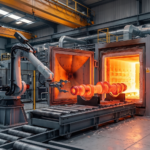
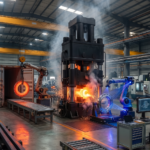
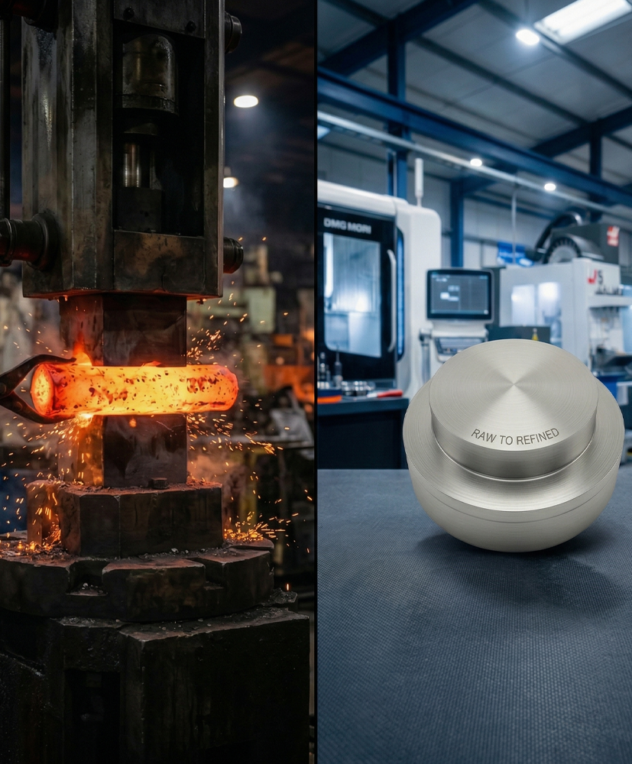
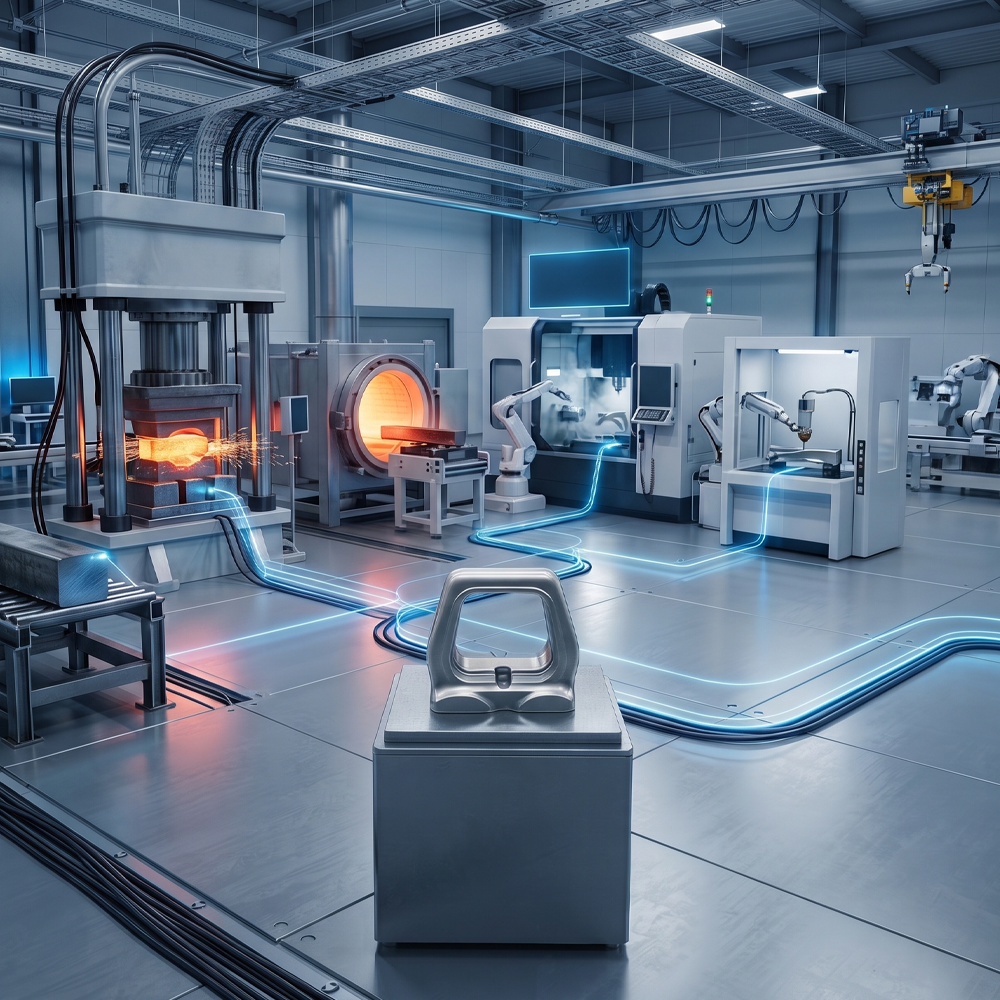
Forge-to-finish in defence manufacturing means all production operations — die design, forging, heat treatment, CNC machining, NDT inspection, and assembly — are performed under one roof, under one AS9100D quality management system, with one organisation responsible for every stage. For defence programmes, this is not a convenience feature. It is a quality and traceability requirement that directly determines whether DGQA source inspection is manageable, whether material traceability is unbroken, and whether a quality escape can be traced and contained within hours rather than weeks.
What Forge-to-Finish Eliminates
Consider a defence component manufactured through a fragmented supply chain — a model more common in Indian defence forging than most buyers realise:
- Forging at Company A in Rajasthan
- Heat treatment at a sub-contractor in Pune
- NDT at a third-party lab in Bangalore
- Machining at a job shop in Hosur
- Final inspection and certification back at Company A
In this model the AS9100D certificate covers only what Company A does inside its own facility. The heat treatment subcontractor has its own quality system — which may or may not be AS9100D, and which Company A cannot fully audit on every lot. The NDT lab is NABL-accredited but applies its own written procedures, which may not be the programme-specific procedures the customer has approved. The machining job shop may have no formal quality management system at all.
When the DGQA inspector arrives for source inspection, they are looking at a supply chain that cannot be fully audited in one visit. The traceability chain passes through four different facilities with four different record-keeping systems. The probability of a gap — a heat treatment record that doesn’t reference the correct component batch, an NDT report with a procedure number not on the approved procedure list — multiplies with every additional party involved.
Forge-to-finish eliminates this complexity entirely. One facility. One AS9100D quality system. One set of records. One DGQA visit covering every operation.
Why Traceability Is the Core Argument
For defence programmes, full material traceability from raw material to finished component is not a documentation preference — it is a contractual requirement. Every component must be traceable back to the original mill certificate through every operation performed.
In a forge-to-finish facility this traceability is maintained within one quality management system. The heat number from the raw material flows through the forging traveller, the heat treatment furnace chart, the NDT report, the machining record, and the final certificate of conformance without ever leaving the organisation. Every record is retrievable from one document control system. Every record references the same heat number and component serial number.
When a quality escape occurs — and in defence programmes, even the best suppliers occasionally have quality escapes — the response requires tracing every component from the affected heat across all delivered lots. In a forge-to-finish facility this takes hours. Quality records for every batch are in one system. Component locations by batch are known. Customer deliveries by batch are documented.
In a fragmented supply chain the same exercise takes weeks. Heat treatment records are at a subcontractor in Pune. NDT records are at a lab in Bangalore. Machining records may be at a job shop that has since changed ownership. The OEM’s quality team, the DGQA, and the programme office are all waiting while the primary contractor attempts to reconstruct the supply chain history across multiple organisations.
The Source Inspection Argument
DGQA and defence OEM source inspection is a resource-constrained activity. DGQA inspectors manage multiple supplier relationships simultaneously. OEM supplier quality engineers have programme portfolios that span dozens of suppliers. The ability to complete source inspection of all critical operations in a single site visit is not just convenient — it is operationally significant.
At a forge-to-finish facility a source inspection visit covers:
- Forging traveller review against approved process documentation
- Heat treatment furnace calibration records and current furnace chart
- NDT procedure and operator qualification verification and inspection witness
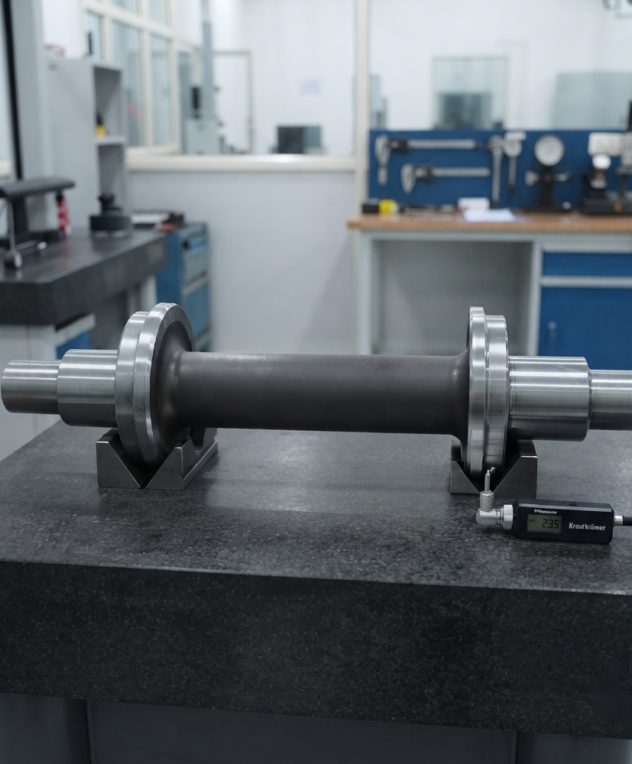
- Machining dimensional inspection witness
- Complete documentation package review before release
A single inspector. One day. All operations covered.
At a fragmented supplier the source inspector must coordinate with multiple sub-contractors, schedule separate visits to each facility, and rely on the primary contractor’s oversight of operations at sites the inspector has not visited. Hold points at heat treatment cannot be witnessed without a separate visit to the Pune subcontractor. NDT witness requires coordinating with the Bangalore lab’s schedule. The practical result is that source inspection in a fragmented supply chain is either incomplete — not all operations are witnessed — or impractical — the programme schedule cannot absorb the time required for multiple site visits per lot.
Most DGQA source inspection programmes are structured around the assumption of a forge-to-finish supplier precisely because the alternative is unmanageable at scale.
The Special Process Control Argument
AS9100D classifies heat treatment and NDT as special processes — operations whose output cannot be fully verified by subsequent inspection alone. A forging can pass dimensional and hardness inspection and still have an incorrect microstructure from a heat treatment deviation. A forging can pass visual inspection and still have an internal defect that was missed by a poorly calibrated UT setup.
Because special processes cannot be fully verified after the fact, AS9100D requires that the processes themselves are qualified — documented, controlled, and verified to produce the correct output when executed correctly. The qualification covers the equipment, the procedures, and the operators.
When heat treatment is outsourced to a subcontractor, the subcontractor’s furnaces, procedures, and operators are the ones that must be qualified. The AS9100D certificate holder — the forging manufacturer — is responsible for ensuring the subcontractor’s special process qualification meets the requirements. This requires:
- Initial assessment and approval of the subcontractor’s quality system and process capability
- Periodic re-assessment — typically annually
- Review of the subcontractor’s furnace calibration records on a lot-by-lot basis
- Verification that the subcontractor is using the approved heat treatment procedure, not a generic procedure
In practice this level of subcontractor control is rarely maintained consistently. It is the most common finding in AS9100D audits at forging manufacturers who outsource heat treatment — the subcontractor management records are incomplete or outdated.
At a forge-to-finish facility the special process qualification is internal. The company’s own furnaces are calibrated to AMS 2750 equivalent standards. The company’s own heat treatment procedures are controlled documents under the AS9100D document control system. The company’s own operators are trained and qualified to the procedures. No subcontractor management records required.
The Lead Time Argument
Coordinating heat treatment, NDT, and machining between multiple subcontractors introduces scheduling complexity and lead time uncertainty that is qualitatively different from the uncertainty in a single-facility operation.
In a fragmented supply chain:
- Heat treatment subcontractor has a scheduled run date — if the forging arrives late, the run date is missed and the next slot may be two weeks away
- NDT lab has a booking queue — urgent NDT requires premium pricing or a wait
- Machining job shop has its own customer portfolio — a priority DGQA hold point may not be a priority for the job shop
- Any non-conformance at any stage causes a hold that cascades downstream through multiple organisations
In a forge-to-finish facility:
- Production scheduling is internal — heat treatment can be scheduled immediately after forging without external dependency
- NDT is available on the same site — no transport, no booking queue
- Machining is scheduled within the same production system
- A non-conformance at any stage is resolved within the same organisation without inter-company communication delays
For urgent programmes — replacement components for a platform in service, first article runs with programme office pressure — the lead time difference between forge-to-finish and fragmented supply is measured in weeks, not days.
The Documentation Consistency Argument
A defence forging documentation package must be internally consistent — every document referencing the same heat number, the same component serial number, the same drawing revision. Inconsistencies within the package are automatic findings in DGQA review.
In a fragmented supply chain, documentation is generated by multiple organisations using different systems, different formats, and different referencing conventions. The forging manufacturer issues a traveller and heat treatment record. The NDT lab issues an inspection report on its own format referencing its own job number. The machining job shop issues a dimensional report on its own format. The primary contractor assembles these into a package and submits it to DGQA.
The probability that every cross-reference is consistent — that the NDT report heat number matches the forging traveller heat number, that the machining dimensional report drawing revision matches the current approved drawing — drops significantly when four separate organisations are generating documents independently.
In a forge-to-finish facility all documents are generated within one quality management system. Traveller, heat treatment record, NDT report, and dimensional report are all generated under the same document control, referencing the same internal job number which links to the heat number and component serial number. Consistency is designed into the system, not assembled at the end.
What Forge-to-Finish Does Not Mean
A common misunderstanding is that forge-to-finish means everything including raw material must be produced internally. It does not.
Raw material sourcing from approved international and domestic mills is standard practice even for forge-to-finish manufacturers. For specialised alloys — titanium, Inconel, VAR-quality steels — the raw material must come from specific international mills with the applicable AMS or ASTM certification. This is appropriate and expected.
Tooling consumables — forge shop lubricants, die materials, furnace refractory — are sourced externally as standard commercial items.
Calibration services for measuring equipment and furnace thermocouples are performed by NABL-accredited calibration laboratories — external suppliers who calibrate equipment on-site.
Forge-to-finish refers specifically to the manufacturing value-add operations: die design, forging, heat treatment, NDT, machining, assembly. These are the operations that must be in-house. External sourcing of raw material, consumables, and calibration services is controlled under AS9100D supplier management but does not compromise the forge-to-finish model.
How Vinir’s Four-Unit Structure Extends Forge-to-Finish
Vinir Engineering’s forge-to-finish model operates across four manufacturing units in Bangalore and Hosur. This multi-unit structure adds a dimension beyond forge-to-finish that single-facility suppliers cannot offer — manufacturing continuity.
A forge-to-finish supplier with a single facility is a single point of failure. Equipment breakdown, fire, flood, or labour disruption can halt production entirely. For a defence programme with delivery commitments and DGQA inspection schedules, a supplier who cannot deliver because their single press is down for six weeks creates a programme problem that cannot easily be resolved.
Four units across two cities mean that when one unit faces an operational challenge — planned maintenance, equipment repair, a quality investigation that requires a production hold — capacity across the remaining units provides continuity. The same AS9100D quality system and the same procedures operate across all four units. Moving a programme from one unit to another is an internal scheduling decision, not a supplier change.
For long-term defence programme managers evaluating forge-to-finish suppliers, the number of production units is a meaningful risk differentiation — not just a scale indicator.
Frequently Asked Questions — Forge-to-Finish Defence Forging
What does forge-to-finish mean in defence manufacturing?
Forge-to-finish in defence manufacturing means all value-add manufacturing operations — die design, forging, heat treatment, NDT inspection, CNC machining, and final assembly — are performed under one roof by a single organisation under one AS9100D quality management system. It means the DGQA inspector can complete source inspection of all critical operations in a single site visit. It means material traceability is maintained within one document control system without inter-company handoffs. It means one organisation is accountable for the finished certified component.
Is forge-to-finish more expensive than using specialised subcontractors for heat treatment and NDT?
Not necessarily over the full programme lifecycle. Forge-to-finish eliminates subcontractor coordination costs, inter-company logistics, documentation assembly effort, and the schedule risk associated with subcontractor availability. While the capital investment required to maintain in-house heat treatment and NDT capability is significant, the operational cost per component and the programme risk profile are both improved compared to fragmented supply chains. For defence programmes where DGQA source inspection at multiple sites would be required, the subcontractor model is often operationally impractical regardless of per-unit economics.
Can a defence OEM audit all operations at a forge-to-finish supplier in one visit?
Yes — this is the primary audit efficiency advantage of the forge-to-finish model. An OEM supplier quality audit at a forge-to-finish facility covers forging process documentation and equipment, heat treatment furnace calibration and procedure records, NDT equipment calibration and operator qualifications, machining dimensional control, and the complete quality management system — all in one visit, typically two to three days. The same audit scope at a fragmented supplier requires coordinating and conducting separate visits to each subcontractor facility, typically taking two to three weeks of elapsed time.
Does AS9100D require all processes to be in-house?
AS9100D does not require all processes to be in-house. It requires that outsourced processes are controlled — assessed suppliers, approved procedures, and ongoing monitoring. However, the standard of control required for special processes (heat treatment, NDT) when outsourced is high — initial assessment, periodic re-assessment, lot-by-lot record review. In practice, maintaining this standard for outsourced special processes consistently over a multi-year programme is the most frequently failed requirement in AS9100D surveillance audits at forging manufacturers who use subcontractors for heat treatment.
What is the minimum in-house capability to claim forge-to-finish status for defence programmes?
For a credible forge-to-finish claim in a defence context: forging (the primary process), in-house heat treatment with calibrated furnaces meeting AMS 2750 equivalent pyrometry standards, in-house NDT with ASNT Level II certified operators and NABL-accredited testing, and in-house dimensional inspection with a calibrated CMM or equivalent measuring capability. CNC machining in-house is strongly preferred but may be outsourced to an AS9100D-approved subcontractor for specific operations in some programmes. Die design in-house is a significant capability differentiator — it eliminates the external tooling dependency that extends programme lead times and creates intellectual property risks.