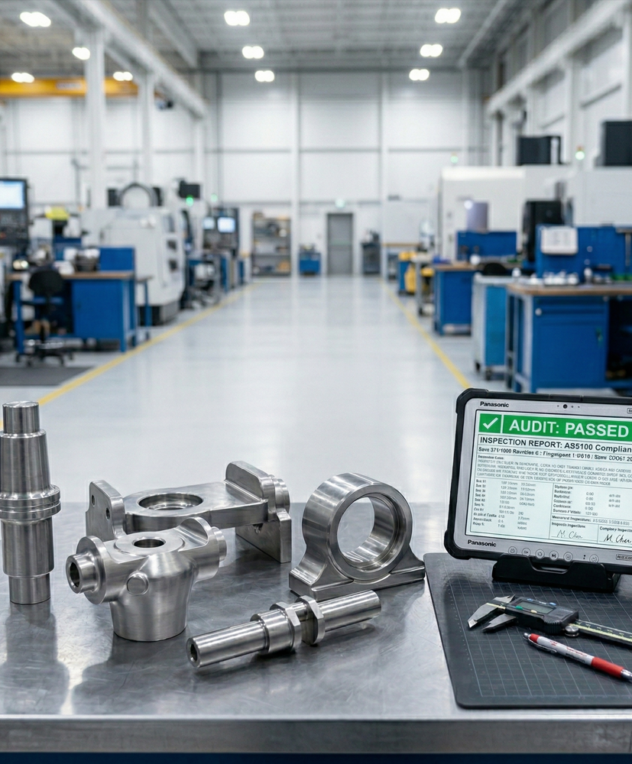

Import Substitution in Defence Forging: Replacing European and US Imports with Indian Manufacture
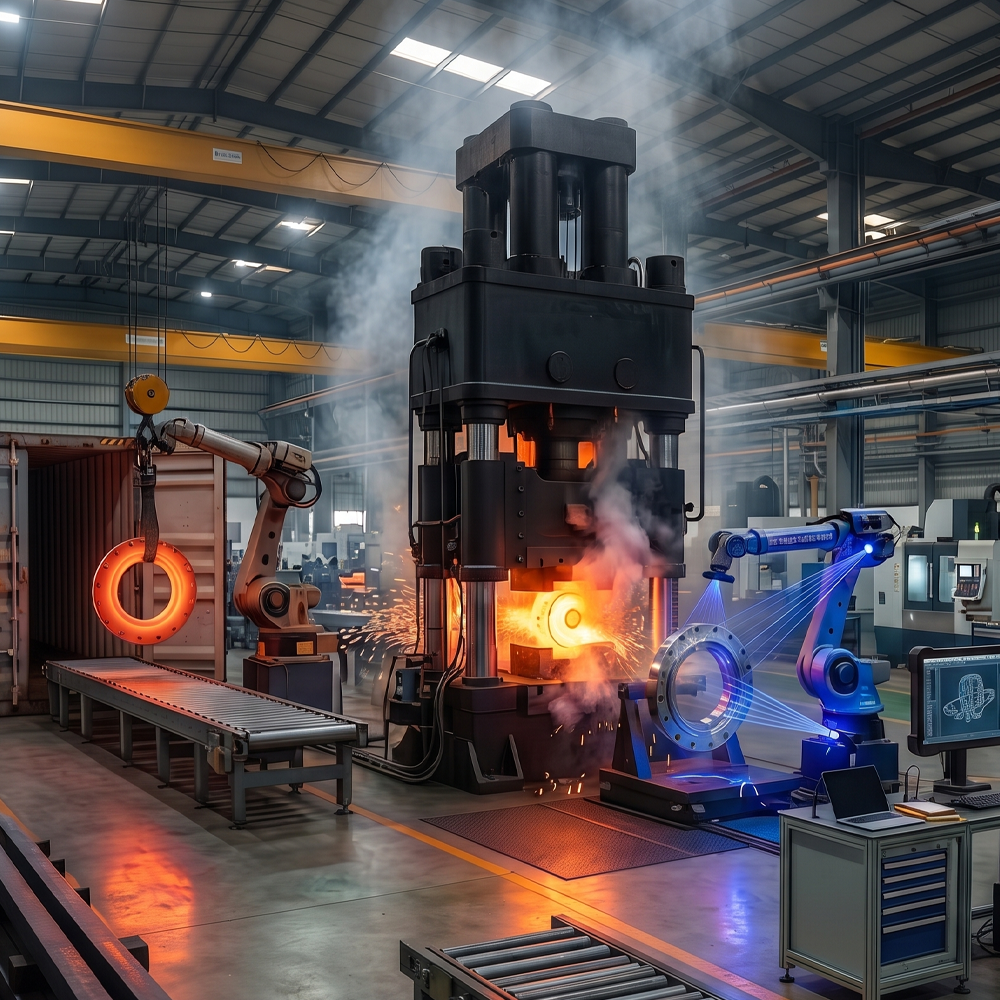
Import substitution in defence forging is the process of identifying forged components currently imported from Germany, UK, Sweden, France, USA, or Russia, qualifying an Indian manufacturer to produce them to the same or equivalent specification, and transitioning supply from international to domestic sources. Under India’s Positive Indigenisation List and the Defence Acquisition Procedure, this is now a contractual requirement with published cutoff dates — not a future aspiration.
Why Critical Defence Forgings Were Imported
For decades, Indian defence programmes imported critical forgings for reasons that were largely practical at the time — established quality systems in European and US suppliers, long-standing OEM relationships, specifications written around international standards, and the absence of qualified domestic sources for specialised materials and processes.
The most consistently imported defence forging categories were:
| Category | Previous Import Source | Reason for Import |
| Titanium airframe forgings | USA, France | No domestic AMS-certified titanium forging capability |
| Ultra-high-strength steel forgings | Germany, Sweden | D6AC, 300M — limited domestic VAR melting and forging |
| Inconel engine component forgings | USA, UK | Narrow process window, few Indian manufacturers qualified |
| Naval propulsion shaft forgings | Germany, UK | Large open die capability, ABS witness process established |
| Armour steel hull forgings | Sweden, Germany | ARMOX grade availability, established qualification |
| Artillery barrel blanks | Germany, France | Bore tolerance, 100% UT to demanding acceptance criteria |
| Submarine structural forgings | UK, France | HY80/HY100 — specialised steel and process requirements |
What the Policy Now Requires
The Defence Acquisition Procedure (DAP) 2020 and its amendments established a Positive Indigenisation List — multiple editions published, each expanding the scheduled items. For forged components the policy means:
Hard cutoff dates — after which import licences are no longer issued for listed items. The Ministry of Defence enforces these dates. OEMs and DPSUs who have not qualified an Indian source by the cutoff face procurement disruption.
Indigenous content requirements — new platform programmes must achieve progressive indigenous content percentages in total component value. Forgings are typically a significant percentage of this value, making them a priority indigenisation category for programme managers trying to meet IC targets.
Contractual obligations — indigenisation requirements are written into procurement contracts, not left to the OEM’s discretion. Non-compliance creates contract performance issues.
What Import Substitution Requires from an Indian Supplier
Replacing an imported defence forging is not simply having a press and ordering the same material. The substitution process imposes specific requirements that separate capable Indian suppliers from those attempting the category for the first time.
Material Equivalency — Not Just Chemistry
The original imported forging was manufactured to a specific international standard — AMS, ASTM, DIN, EN. The specification defines chemistry limits, mechanical property minimums, melting practice requirements, and cleanliness levels. The Indian substitute must meet the same standard — not an Indian equivalent that is nominally similar.
This requires sourcing raw material from mills whose certificates reference the applicable AMS or ASTM standard. A billet that meets IS 1570 Part 4 chemistry may or may not meet AMS 6415 for 4340 alloy steel — the testing methods and minimum requirements are not identical. The substitution programme tests this directly through comparative mechanical testing.
For specialised grades — D6AC, 300M, HY80, ARMOX 500T — the raw material may not be available from Indian mills to the required specification. The forging must be manufactured from imported raw material from an approved international mill, with full material certification, while the forging manufacturing value-add is performed in India.
Specification Compliance — Testing to the Original Standard
The comparative test compares the Indian forging against the original specification, not against a domestic equivalent. This means:
- Mechanical testing performed to ASTM E8 (tensile) and ASTM E23 (Charpy impact) — not to IS methods
- UT acceptance to AMS 2154 or customer-specific criteria — not to a more permissive standard
- Chemical analysis reported to the element list and limits in the applicable AMS or ASTM
Suppliers unfamiliar with international testing standards often find that their mechanical test values meet the requirement but their test method does not — which invalidates the result in the OEM’s review.
Traceability Matching
International defence forgings — particularly from German and UK suppliers — typically carry complete documentation: material certificate to AMS or EN standard, heat treatment record with furnace charts, UT report to the applicable acceptance level, dimensional report with every characteristic, and a certificate of conformance signed by an authorised quality representative. The Indian substitute must carry equivalent documentation.
Some Indian suppliers produce excellent forgings but inadequate documentation — the forging passes mechanical testing but the documentation package does not satisfy DGQA review because furnace charts are missing, the UT report references a generic procedure rather than the programme-specific one, or the dimensional report is incomplete.
First Article to the Original Specification
Before production approval is granted, the Indian substitute must pass a first article inspection against the original imported component specification. The OEM or DGQA may additionally conduct functional testing — hardness profiles through the cross-section, fatigue testing for cyclically loaded components, ballistic testing for armour forgings, proof pressure testing for pressure-bearing components.
The comparison is not pass/fail against Indian standards. It is pass/fail against the specification that the imported forging was qualified to. This raises the bar significantly above what most general industrial forging qualifications require.
The Import Substitution Process Step by Step
Step 1 — Drawing and Specification Release
The OEM or DPSU releases the original drawing, material specification, quality plan, and existing supplier qualification data to prospective Indian suppliers. Registered suppliers with the relevant AS9100D scope and demonstrated material capability receive the package.
At this stage, many suppliers self-eliminate — the specification requires titanium or VAR-quality high-strength steel that they cannot forge, or the UT acceptance criteria require immersion UT capability they do not have. This is the correct outcome. Self-elimination is far less costly than failing the first article.
Step 2 — Feasibility Assessment
The supplier reviews the complete package and responds with a technical feasibility assessment covering: proposed process route, raw material source (including mill name and applicable material standard), lead time for development forgings, proposed heat treatment procedure, proposed NDT procedure, and the documentation package that will accompany delivery.
The quality of the feasibility assessment tells the OEM a great deal about the supplier’s genuine capability. A superficial one-page response suggesting nothing more than the material family and a delivery date reflects limited understanding of the programme. A detailed response covering each element of the specification reveals a supplier who has actually read and understood the requirements.
Vinir Engineering provides technical feasibility assessments within 24 hours of receiving a complete drawing and specification package.
Step 3 — Development Order
A small development order — typically 3 to 10 components — is placed with one or two suppliers selected from the feasibility assessment stage. The development order is manufactured to drawing with full documentation. First article inspection is performed by the supplier, with the complete documentation package submitted to the OEM.
Step 4 — Comparative Testing
The OEM’s quality team reviews the FAI documentation and conducts or witnesses independent comparative testing:
Chemical analysis — verified against the imported component’s material specification Mechanical properties — tensile, yield, elongation, reduction of area, Charpy impact — compared to specification minimums and to typical values from the previous imported component Hardness profile — particularly for case-hardened or through-hardened components where hardness at depth is critical UT cleanliness — compared to the acceptance criteria applied to the original imported component Dimensional comparison — every key dimension compared to drawing
For some programme types, additional testing beyond the above:
- Fatigue testing — for torsion bars, drivetrain shafts, suspension components
- Ballistic testing — for armour steel hull and turret forgings — the hardest test to pass and the one that has most often exposed inadequate armour steel forging process capability in Indian suppliers
- Proof pressure testing — for motor cases, pressure vessels, naval valve bodies
Step 5 — Approval and Production Transition
Successful comparative testing leads to domestic source approval. The OEM formalises the Indian supplier on the approved vendor list for that specific component. Commercial discussions for ongoing supply are concluded — pricing, delivery schedule, packaging, documentation requirements.
The transition from imported to domestic supply is typically phased — a parallel qualification run alongside continued imports, then progressive increase in domestic supply as confidence builds, then full transition.
Common Failure Points in Indian Import Substitution Programmes
Wrong melting practice assumed: VAR-quality steels (D6AC, 300M, HY80) require vacuum arc remelt to achieve the cleanliness levels required for the UT acceptance criteria applied to these grades. Air-melt material of the same nominal chemistry will fail UT to AMS 2154. Suppliers who order air-melt material because it is cheaper and more readily available will fail the substitution programme at UT inspection.
Forging temperature outside specification: Armour steel and titanium forgings have narrow forging temperature windows. Suppliers without temperature monitoring and logging during forging — relying on colour judgment by operators — cannot demonstrate that the temperature was within the required range. This becomes a fatal finding when the development samples are reviewed by OEM engineers familiar with the material.
Inadequate UT sensitivity: European defence forgings are UT inspected to stringent cleanliness levels. Indian suppliers using contact UT with 2MHz probes cannot achieve the sensitivity of immersion UT at 5–10MHz required to match those acceptance criteria. The development samples pass the supplier’s UT but fail the OEM’s independent re-test.
Incomplete or incorrectly formatted documentation: The OEM’s quality plan specifies exactly what documents are required and in what format. A furnace chart that does not include continuous temperature recording, or a UT report that does not reference the specific calibration block used, fails the documentation review regardless of how good the forging is.
Solution annealing errors for duplex grades: Duplex and super duplex naval forgings require rapid quench after solution annealing. Suppliers with slow-acting cooling systems — large water tanks with inadequate agitation, air cooling — allow sigma phase precipitation during the cooling stage. The forging passes room-temperature mechanical testing but fails corrosion testing or impact testing at low temperature where sigma phase embrittlement is most damaging.
Where Vinir Engineering Has Delivered Import Substitution
Vinir Engineering has completed defence forging import substitution programmes across multiple categories:
Alloy steel structural forgings replacing German and UK imports — propulsion system structural components, drivetrain heavy forgings, structural transition sections. Full documentation packages matching the original import specification.
Duplex steel naval fittings replacing European sources — valve body forgings, structural flange rings for seawater systems. ABS-witnessed heat treatment and testing.
Large open die structural forgings replacing UK supplier forgings — shaft forgings and structural blocks for defence applications in the 2,000–8,000 kg range.
The combination of AS9100D, IBR, and ABS certifications; NABL-accredited in-house testing; multi-material capability including titanium and Inconel; and 42 years of documented production history creates the profile required for demanding import substitution programmes where first article failure wastes 6–12 months of programme schedule.
Frequently Asked Questions — Import Substitution in Defence Forging
What is the Positive Indigenisation List and how does it affect forging procurement?
The Positive Indigenisation List is a schedule of defence items notified by the Ministry of Defence that cannot be imported after specified cutoff dates. Multiple editions have been published, progressively expanding the range of items including forged components. After the cutoff date for a listed item, import licences are no longer issued. OEMs and DPSUs must source from Indian suppliers or face procurement disruption. The list forces timeline discipline on indigenisation programmes — OEMs cannot delay qualification until after the cutoff and then seek import waivers as a routine fallback.
Does the Indian substitute forging need to be made from Indian-origin steel?
Not always. For specialised alloys — titanium, D6AC, 300M, ARMOX, HY80 — Indian-origin raw material may not be available to the required specification or melting practice. In these cases, the forging is manufactured from imported raw material sourced from approved international mills with full AMS or equivalent certification. The indigenous content credit applies to the manufacturing value-add performed in India. The indigenisation requirement is met by domestic forging, heat treatment, testing, and qualification — not by domestic raw material.
How long does a typical defence forging import substitution programme take?
From initial drawing and specification release to domestic source approval: 12–24 months for standard alloy steel and duplex grades; 18–30 months for titanium and ultra-high-strength steels where raw material lead time and process development add complexity; 24–36 months for programmes requiring ballistic testing or fatigue qualification in addition to standard first article. Timeline extensions typically result from first article failures requiring additional development iterations or raw material sourcing delays for specialised grades.
What happens if no Indian supplier passes the import substitution comparative test?
If no Indian supplier passes after multiple development iterations, the OEM may apply to the Ministry of Defence for a time-limited import waiver — permission to continue importing for a defined period while domestic qualification continues. Waivers are granted on a case-by-case basis and are not automatic. The OEM must demonstrate that a credible domestic qualification programme is active and progressing. Waivers are typically granted for one to two years, after which the import restriction is enforced regardless.
Can an Indian forging manufacturer start the import substitution process before a formal development order is issued?
Yes — and this is good practice. Suppliers who identify that their capability matches the category of components on the Positive Indigenisation List should proactively approach the relevant DPSU vendor development department and register capability. When a development order is issued, registered and assessed suppliers receive it first. Suppliers who wait for a formal approach and then begin capability assessment and AS9100D certification are typically 18–24 months behind those who prepared in advance.