
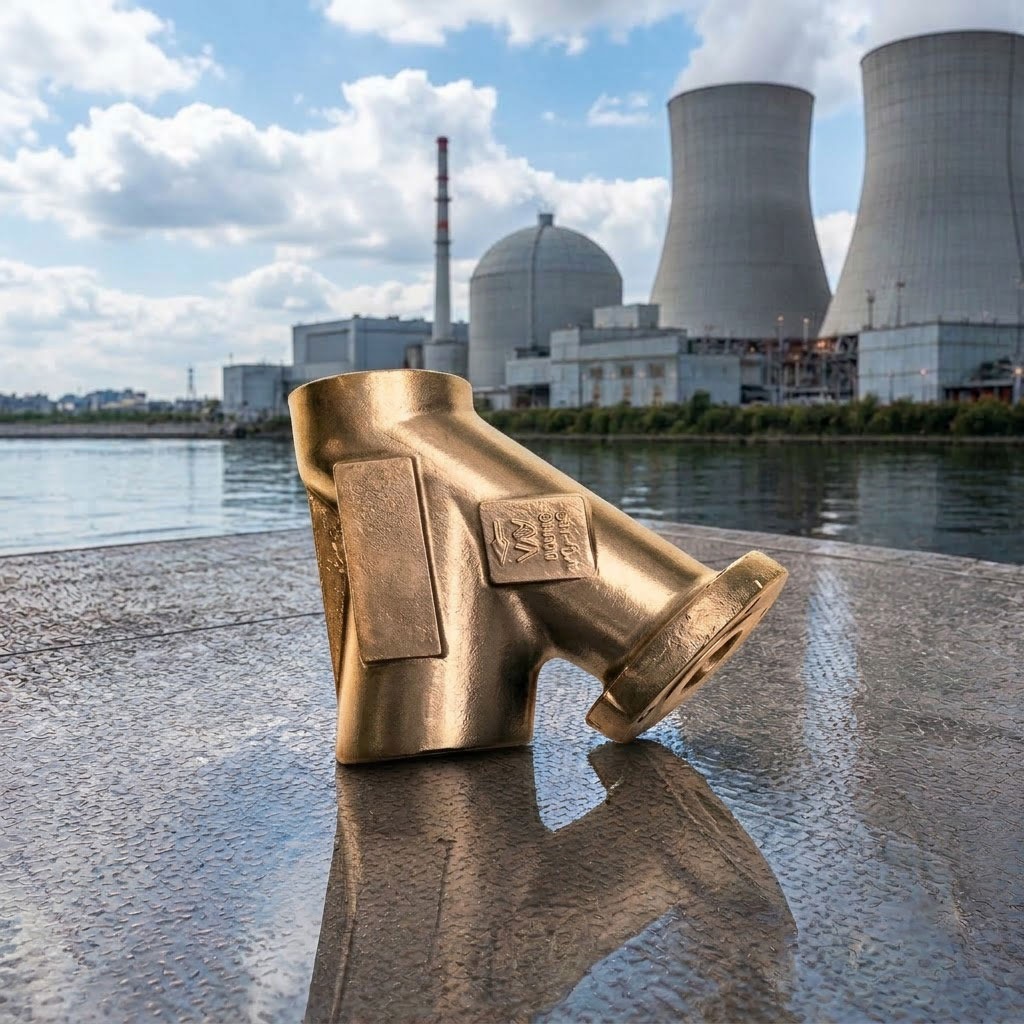
Steam Generator and Nuclear Nozzle Forging Supplier for USA from India: ASME Section III Requirements
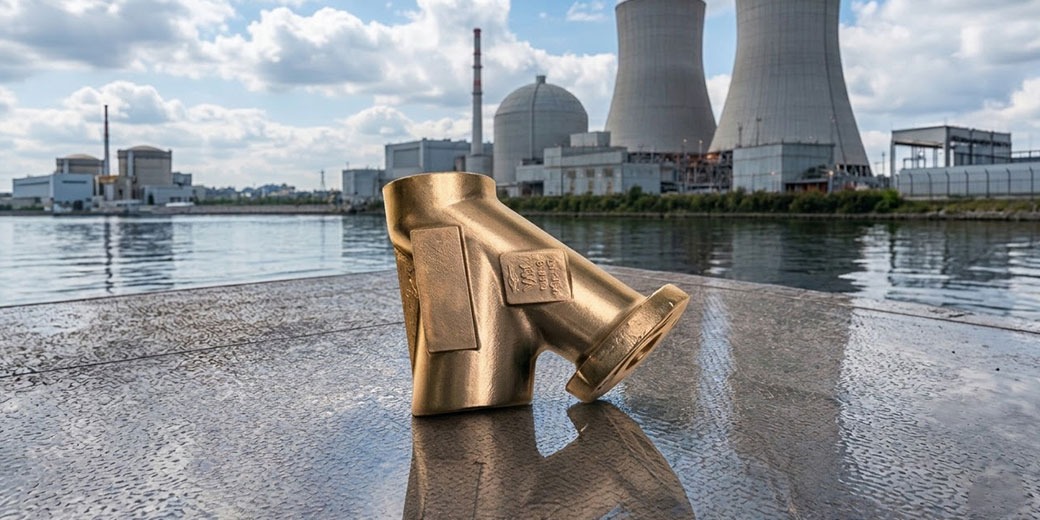
Nuclear nozzles appear small when compared with the enormous reactor pressure vessel or steam generator shell around them.
From an engineering perspective, however, they are anything but minor components.
A nozzle creates an opening in a pressure boundary. It connects piping systems, coolant circuits, instrumentation or other equipment to a vessel operating under pressure and thermal cycling.
That geometry creates local stress concentrations and makes material integrity, forging quality and weld-interface properties particularly important.
For US nuclear OEMs evaluating a steam generator and nuclear nozzle forging supplier from India, nozzle forgings can offer a realistic but demanding pathway into the US nuclear component supply chain.
Why Nuclear Nozzles Are Forged
A nozzle often contains a transition from a thick vessel attachment region to a smaller neck or piping interface.
This change in geometry produces complex stress distribution.
Forging allows the component to be formed from a consolidated billet with controlled deformation rather than assembling the entire nozzle geometry from multiple pieces.
The resulting forging can then be machined to the precise attachment and weld-preparation geometry required by the vessel manufacturer.
For large or safety-related nozzles, internal soundness and fracture toughness are particularly important because the component forms part of a pressure boundary.
Where Nozzle Forgings Appear
Nuclear plants contain multiple nozzle categories.
Reactor pressure vessels require inlet, outlet, instrumentation and safety-system penetrations.
Steam generators require primary and secondary-side nozzle connections.
Pressurisers contain surge, spray and safety-related nozzle interfaces.
Pumps, accumulators and other pressure vessels can also contain forged nozzle components.
The safety classification and material requirements vary by system.
This means “nuclear nozzle forging” is not a complete purchasing specification.
ASME Section III Classification
The component’s classification determines much of the manufacturing burden.
ASME identifies Subsection NB for Class 1 nuclear components and NCD for Class 2 and Class 3 components.
A nozzle forming part of the reactor coolant pressure boundary can fall into the most demanding Class 1 category.
Other system nozzles can be governed by different classes depending on their safety function.
For procurement teams, classification must therefore be communicated to the forging supplier at the beginning of qualification.
SA-508 Grade 3 Nozzle Forgings
SA-508 Grade 3 Class 1 is widely associated with heavy nuclear pressure-vessel forgings.
ASME technical documentation lists SA-508 Grade 3 Class 1 among reactor pressure-vessel forging materials used under Section III Subsection NB.
The grade is designed around the fracture-resistance requirements of thick pressure-boundary sections.
Nuclear procurement may impose chemistry, toughness, heat-treatment and inspection requirements that go beyond what a supplier encounters in commercial pressure-vessel steel.
Stainless Steel Nozzle Forgings
Not every nuclear nozzle uses SA-508.
Stainless steel forgings may be selected in parts of primary and auxiliary systems depending on reactor design and coolant environment.
ASME SA-182 stainless grades are therefore also relevant to nuclear supply.
Material selection is controlled by the nuclear equipment design, and suppliers need production procedures dedicated to the exact grade and Code requirement.
Why Fracture Toughness Matters
A nuclear pressure boundary is expected to operate reliably through many years of pressure and thermal cycling.
A simple tensile-strength value cannot fully describe resistance to brittle fracture.
Nuclear pressure-vessel steels are therefore qualified with considerable attention to toughness and transition behaviour.
Heat treatment, grain structure, chemistry and section thickness all affect those properties.
For an Indian supplier accustomed to commercial alloy-steel forgings, developing nuclear nozzle capability can therefore require new testing procedures and acceptance criteria even if the basic forging equipment already exists.
Quench and Temper Control
Heavy SA-508 nozzle forgings require carefully controlled heat treatment.
The challenge is producing the required properties throughout a thick and geometrically complex section.
Austenitising, transfer to quench, cooling severity and tempering all influence final performance.
The forging supplier needs enough quench capacity to handle the component mass.
A furnace large enough to physically hold the part is not sufficient if the quenching system cannot achieve the required cooling response.
Simulated Post-Weld Heat Treatment
Many nuclear nozzle forgings will later be welded into larger pressure-boundary assemblies.
Those fabrication welds can require post-weld heat treatment.
The nozzle’s material properties therefore need to remain acceptable after the thermal exposure associated with subsequent vessel fabrication.
This is why nuclear procurement specifications may require test coupons to undergo simulated post-weld heat treatment before mechanical tests are completed.
The test programme is intended to demonstrate the properties of the component after its expected fabrication history, not simply immediately after the forge shop’s heat treatment.
Ultrasonic Examination
Internal discontinuities in a nuclear nozzle can become significant under cyclic thermal and pressure loading.
Volumetric examination is therefore critical.
ASME Section V provides nondestructive examination requirements used throughout Code construction, while the applicable Section III component rules determine how examinations are applied and accepted. ASME lists Section V alongside Section III among required nuclear code books.
A supplier must have qualified procedures, suitable calibration standards and appropriately qualified personnel.
Commercial ASTM UT experience is useful groundwork but should not automatically be represented as nuclear qualification.
Material Traceability
A nuclear nozzle’s heat identity needs to remain linked to the component through forging, heat treatment, machining, NDT and delivery.
This means component identification needs to survive manufacturing operations that remove the original surface markings.
The manufacturing traveller and physical marking system must therefore work together.
Any break in traceability can jeopardise acceptance even when the metal itself is technically sound.
Machining Nozzle Forgings
Nuclear nozzles are often delivered with significant precision machining.
Critical features can include vessel attachment geometry, bore diameter, flange or weld-prep geometry and surfaces used for subsequent fabrication.
The machining operation also needs to preserve enough material where later customer machining or weld preparation is planned.
Close coordination between the nuclear equipment manufacturer and forging supplier is therefore important.
Why Smaller Nuclear Nozzles Can Be an Entry Point for India
Primary vessel shells and very large rings require enormous ingots, presses and specialised nuclear production histories.
Smaller nozzles can fit within the capacity of a broader set of heavy-forging manufacturers.
They remain difficult enough to establish meaningful nuclear credentials but do not necessarily require the largest forging equipment in the world.
For an Indian supplier building toward US nuclear qualification, smaller pressure-boundary and structural forgings can therefore provide a logical progression.
Vinir Engineering for Nuclear Nozzle Supply
Vinir’s heavy forging, heat treatment, machining and testing infrastructure creates a technical base for nuclear component development.
The important next step for US nuclear supply is always programme-specific qualification.
A prospective buyer should define component classification, material, ASME Code requirements, NQA-1 requirements, hold points, inspection, machining and documentation expectations before production capability is represented as qualified.