
Forged Valve Body Supplier for USA from India: API Oil & Gas Components from Forge to Finish
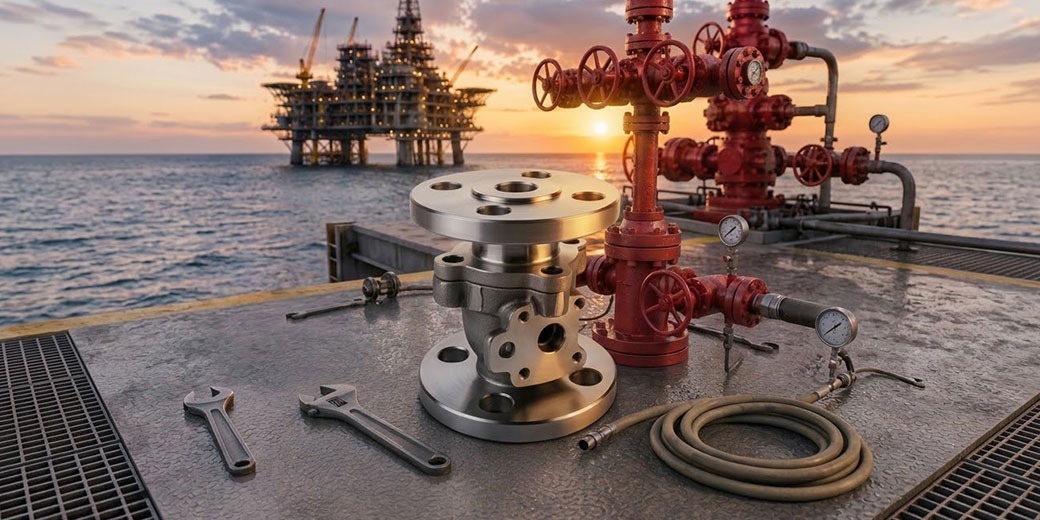
Valves sit at critical control points throughout the oil & gas industry.
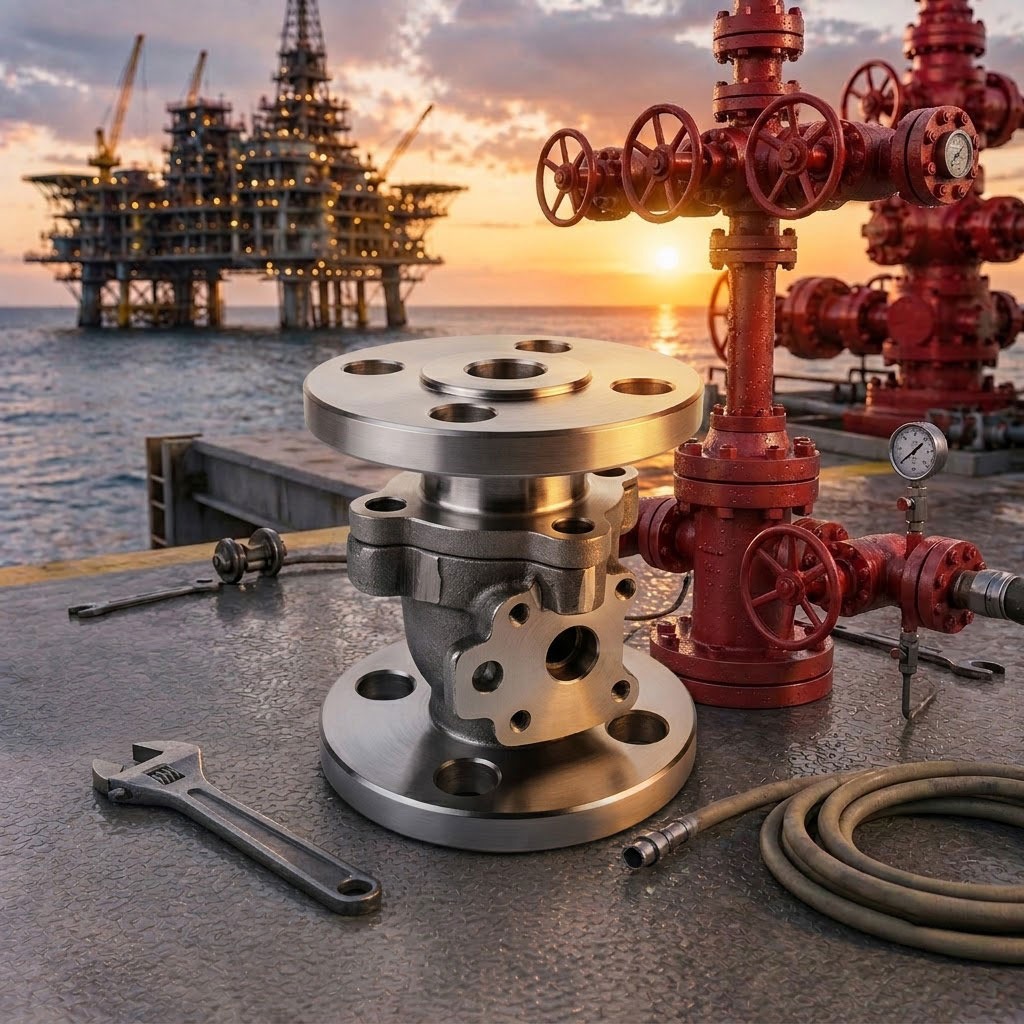
Whether installed on a wellhead, pipeline, processing facility, refinery or offshore platform, a valve may be responsible for controlling fluids under substantial pressure and potentially severe temperature, corrosion or sour-service conditions.
The valve body is therefore not simply a structural housing. It forms part of the pressure boundary.
For US valve manufacturers and oilfield equipment companies, sourcing a forged valve body supplier from India requires confidence in material quality, forging integrity, heat treatment, NDT, machining and documentation.
Why Valve Bodies Are Forged
Valve bodies can be produced through several manufacturing routes depending on design, size, pressure class, material and service requirements.
Forging is particularly attractive for critical applications because deformation can refine the material structure and provide a dense pressure-containing component.
A forged body can also be produced near net shape, reducing the amount of material that must subsequently be removed during machining.
For complex valve geometries, closed die forging can direct material into important sections of the body while maintaining sufficient machining allowance around sealing surfaces, bores and flange interfaces.
Large or low-volume bodies may instead begin as open die forgings.
Materials for US Oil & Gas Valve Forgings
Material selection depends on pressure, temperature, fluid composition and applicable specification.
Carbon steels, low-alloy steels, stainless steels, duplex grades, super duplex grades and nickel alloys may all be used.
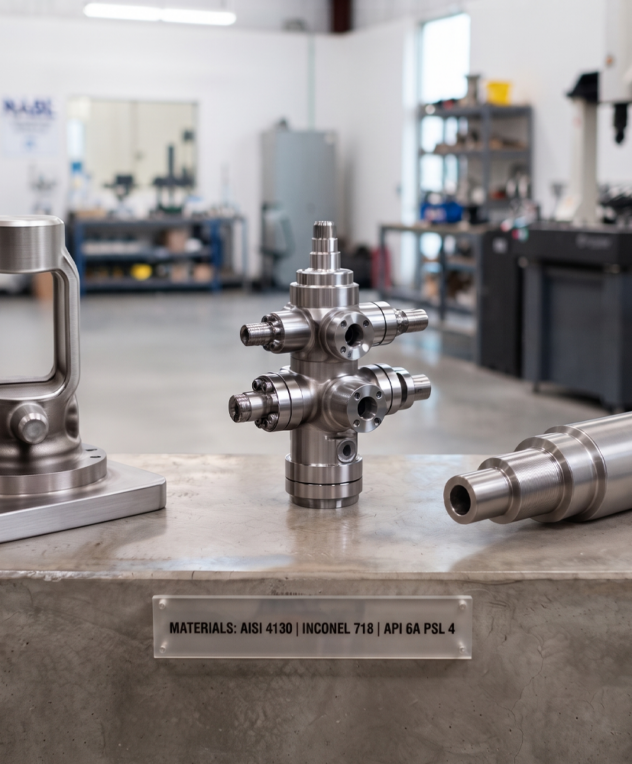
For upstream pressure-control applications, chromium-molybdenum alloy steels such as 4130 can be particularly relevant.
Corrosive and offshore applications may require stainless, duplex, super duplex or nickel-based materials.
The supplier must therefore understand not only forging but also the very different thermal and metallurgical behaviour of each material family.
Forging Integrity and Pressure Boundaries
A pressure-containing component must remain structurally sound throughout service.
Internal discontinuities, laps, seams or process-related defects can become unacceptable when a component is repeatedly pressurised.
The forging process must therefore establish adequate deformation throughout the section while controlling surface quality and geometry.
For critical bodies, ultrasonic inspection may be used to assess internal integrity, while magnetic particle or liquid penetrant examination can identify relevant surface-breaking discontinuities depending on material.
Heat Treatment
Heat treatment controls mechanical properties after forging.
For alloy steel valve bodies, this may involve normalising, quenching and tempering or another specified route.
Duplex and super duplex stainless steels require very different treatment because corrosion performance depends strongly on phase balance and avoidance of detrimental precipitates.
A supplier working across multiple material families must therefore maintain material-specific heat-treatment procedures rather than using a generic furnace recipe.
Machining Valve Bodies
Valve bodies can be machining-intensive.
Critical operations may include internal bores, flange faces, seat pockets, bonnet interfaces, bolt patterns, seal grooves and threaded features.
Errors introduced at this stage can make an otherwise sound forging unusable.
Integrated machining therefore provides an important advantage for buyers seeking a finished or semi-finished component.
The forging manufacturer can plan machining allowance during die design rather than allowing the forging and machining stages to be engineered independently.
API Requirements and Buyer Specifications
US oil & gas buyers frequently reference API standards alongside material and customer specifications.
The exact standards applicable to a valve body depend on the equipment category and end use.
A supplier should therefore never claim that a generic “API forging” is suitable for every oil & gas application.
The correct approach is to review the customer’s drawing, equipment specification, material grade, product specification level where applicable, NDT requirements and documentation clauses before developing the manufacturing plan.
Traceability
For pressure-critical oil & gas components, traceability generally begins with the raw-material heat.
The heat identity should remain connected to the forging as it moves through heat treatment, testing, machining and final inspection.
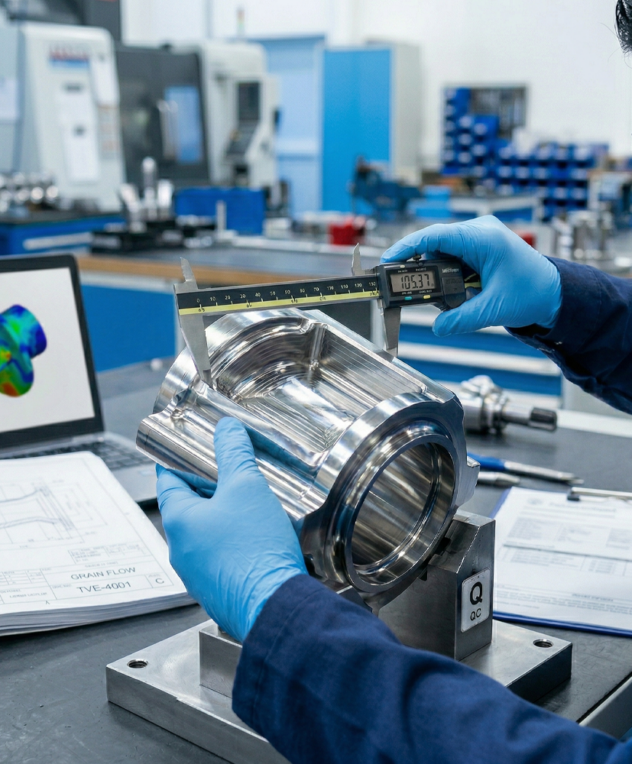
The resulting documentation package may contain material certificates, heat-treatment records, mechanical test results, NDT reports and dimensional inspection documentation.
For US buyers sourcing from India, a structured digital documentation package can substantially simplify incoming inspection and supplier audits.
Vinir Engineering for Forged Valve Bodies
Vinir manufactures forged and machined components for oil & gas and other critical sectors using a forge-to-finish manufacturing model.
Closed die forging, open die forging, heat treatment, machining and testing can be coordinated within the manufacturing system, reducing external handoffs.
This model is particularly relevant to custom valve bodies where quantities may be modest but material and documentation requirements are demanding.