
Aeroengine Disc and Shaft Forging Supplier for USA from India: Inconel & Titanium Components
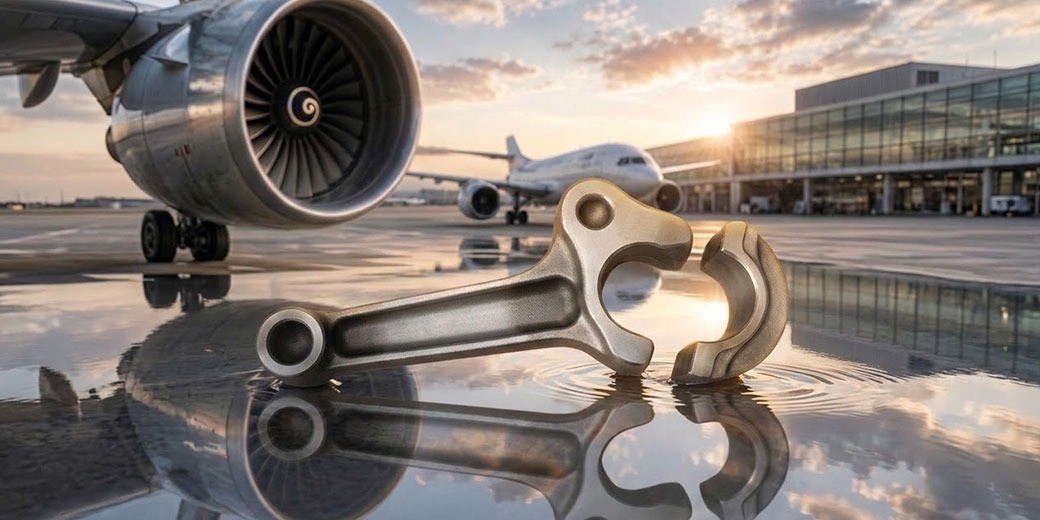
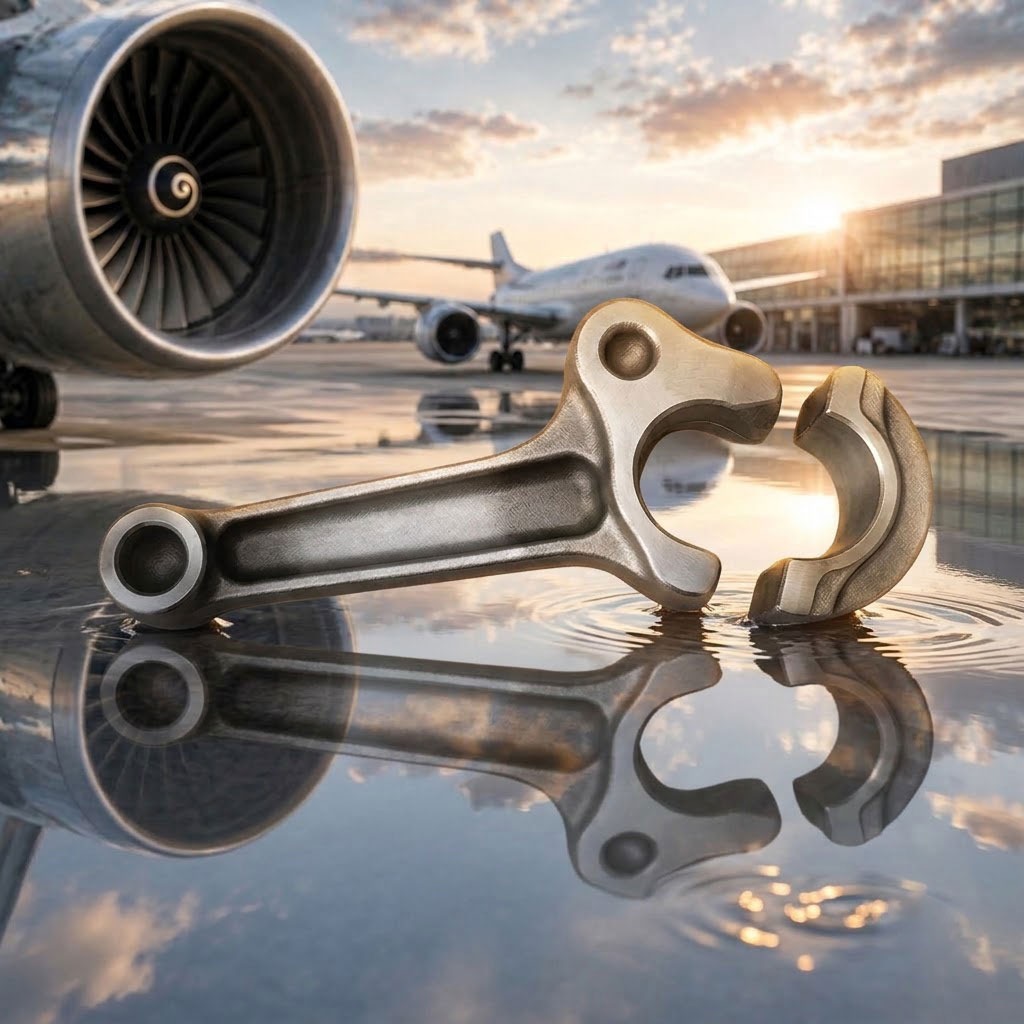
Modern aeroengines operate at extraordinary combinations of rotational speed, temperature and mechanical stress. Components inside the engine must survive thousands of thermal and mechanical cycles while maintaining dimensional and metallurgical integrity.
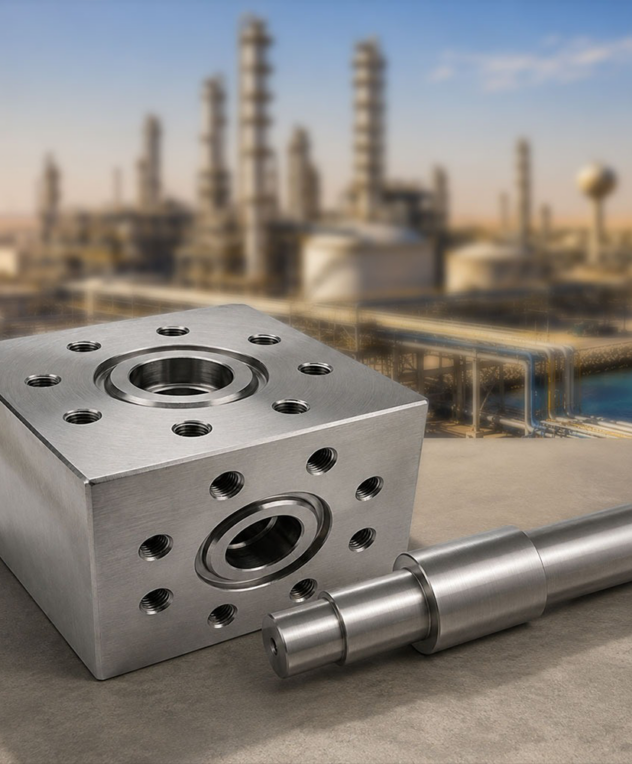
Among the most demanding components are forged discs, rings and shafts used throughout compressor and turbine systems.
For US aerospace companies evaluating an aeroengine forging supplier from India, these components represent a very different qualification challenge from conventional industrial forgings.
Aeroengine forging requires control not only over dimensions and mechanical properties but also over raw-material pedigree, grain structure, thermal history, NDT sensitivity, process repeatability and lifetime traceability.
Why Aeroengine Components Are Forged
A rotating disc stores enormous kinetic energy while operating.
Even a relatively small material discontinuity can become significant under repeated centrifugal and thermal loading.
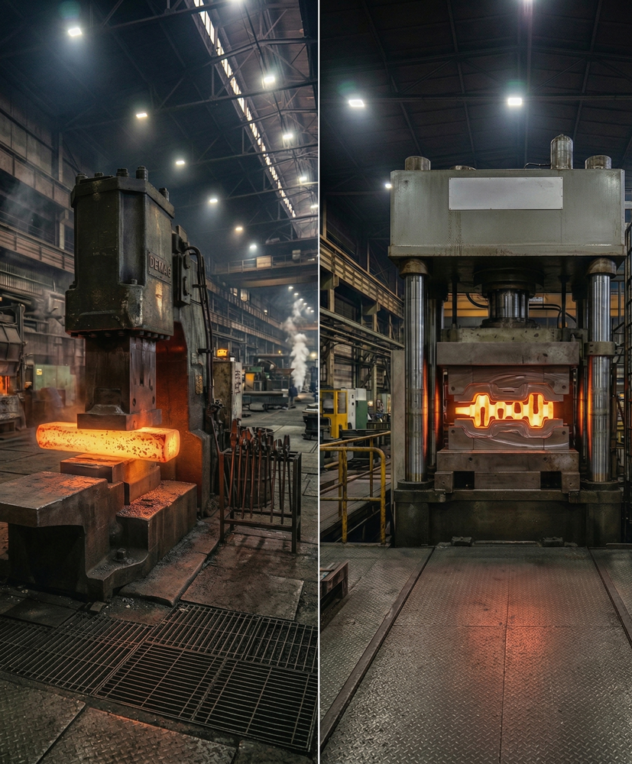
Forging is used because controlled deformation can establish a dense, engineered microstructure and provide the structural integrity required for rotating applications.
The process must nevertheless be tightly controlled. Excessive temperature can alter grain size, insufficient deformation can leave undesirable structural characteristics, and improper heat treatment can prevent the alloy from achieving its intended properties.
For critical rotating components, process history becomes part of the component’s engineering definition.
Inconel 718 Aeroengine Forgings
Inconel 718 is one of the most recognised nickel-based superalloys in aerospace manufacturing.
Its ability to retain useful mechanical strength at elevated temperatures makes it suitable for compressor and turbine-related applications, discs, rings, shafts and other demanding engine components.
Unlike conventional alloy steel, Inconel 718 has a relatively demanding forging window.
The alloy’s resistance to deformation means high forming loads are required, while temperature must remain controlled to avoid undesirable microstructural outcomes.
Forging engineers must therefore manage billet heating, transfer time, deformation sequence, reheating and final forging temperature as an integrated process.
Titanium Aeroengine Components
Titanium alloys occupy a different portion of the engine environment.
Their high strength-to-weight ratio makes them attractive where reducing rotating mass is valuable and operating temperatures remain within the alloy’s usable range.
Ti-6Al-4V is particularly important in aerospace, although the exact titanium grade depends on application.
Titanium forging requires control over temperature, deformation and surface condition.
Exposure to oxygen at elevated temperature can alter the surface layer, while inappropriate thermal processing can create undesirable microstructures.
The supplier must therefore understand titanium as a metallurgical system rather than treating it like another steel grade.
Grain Structure and Rotating-Part Integrity
Grain size and microstructure can strongly influence fatigue, creep and crack-growth behaviour.
This makes microstructure control particularly important for aeroengine discs.
Forging schedules may therefore be designed around specific deformation and temperature ranges to achieve the required recrystallisation behaviour.
For a buyer, this means two suppliers with presses of identical tonnage may have very different capabilities.
Equipment capacity tells the buyer whether a component can physically be forged. Process-development expertise determines whether it can be forged correctly.
Heat Treatment
Both nickel-based superalloys and titanium alloys rely on carefully controlled thermal processing.
Inconel 718 obtains much of its strength through precipitation hardening. The solution and ageing sequence therefore has a direct influence on final properties.
Titanium likewise requires heat-treatment conditions appropriate to the required microstructure and mechanical properties.
For US aerospace programmes, furnace control can be subject to demanding pyrometry and special-process requirements.
Complete thermal records may become part of the component’s manufacturing documentation.
Ultrasonic Testing of Aeroengine Forgings
Volumetric inspection is especially important for rotating components.
A discontinuity inside a disc or shaft may experience millions of cyclic load events during service.
UT requirements can therefore be significantly more stringent than those used for ordinary industrial forgings.
The effectiveness of inspection also depends on the material’s grain structure. Coarse or inconsistent grain structures can make ultrasonic examination more difficult.
This creates a direct connection between forging process control and inspectability.
A high-quality aeroengine forging must not only achieve the required properties; it must also be capable of being reliably inspected to the required acceptance standard.
Traceability for Critical Rotating Parts
Traceability requirements can extend throughout the component’s life.
The finished part may need to remain connected to its original raw-material heat, forging batch, heat-treatment cycle, inspection reports and dimensional records.
This level of documentation is necessary because aerospace quality investigations can occur years after the component was manufactured.
For US buyers sourcing internationally, digital document control and long-term record retention therefore become important supplier-selection criteria.
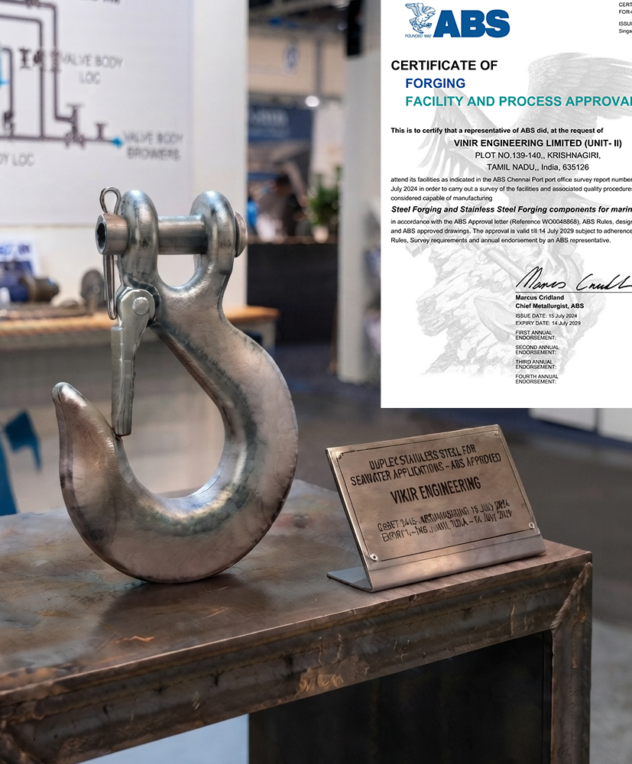
Vinir Engineering for Aeroengine Forgings
Vinir’s capabilities in Inconel, titanium, alloy steel forging, heat treatment, machining and inspection provide a manufacturing foundation for aerospace component programmes.
For US buyers, qualification should begin with the exact component classification and specification package so that material, special-process, NDT and documentation requirements can be reviewed before a production route is proposed.