
What makes a forging supplier audit-ready for global certifications
Why “Audit-Ready” Is Not the Same as “Certified”
Many forging suppliers hold certifications. Far fewer are audit-ready.
Global certifications such as API, AS9100D, PED AD2000, ABS, and IRIS are not static approvals. They require suppliers to demonstrate continuous compliance under real operating conditions.
Buyers and auditors do not ask: “Do you have the certificate?”
They ask: “Can your system withstand scrutiny on any given day?”
What Global Auditors Are Actually Evaluating
Audits are designed to stress-test systems, not paperwork.
Auditors assess whether:
- Processes are repeatable across batches
- Controls remain effective during changeovers
- Documentation reflects real execution
- Deviations are managed systematically
Audit readiness is therefore an operational capability, not an administrative one.
1. Process Control Must Be Embedded, Not Explained
Audit-ready forging suppliers operate with:
- Defined forging routes per part family
- Controlled parameters for deformation, heating, and handling
- Revision-controlled process sheets used on the shop floor
Auditors verify:
- Whether operators follow current instructions
- Whether undocumented changes exis
- Whether process logic is consistent across similar part
If a process needs verbal explanation, it is already a risk.
2. Traceability Must Survive Stress, Not Just Documentation
Global certifications demand unbroken material identity.
Audit-ready suppliers demonstrate:
- Heat-level traceability from raw material to finished component
- Batch and lot segregation at every stage
- Clear linkage between MTCs, forging, machining, heat treatment, and inspection
Auditors physically trace components backward.
Any gap, even administrative, can invalidate compliance.
3. Special Processes Are Treated as Approval Gatekeepers
Heat treatment and NDT carry disproportionate audit weight because they are irreversible.
Audit-ready suppliers maintain:
- Validated heat treatment cycles per material grade
- Furnace calibration and uniformity surveys
- Certified NDT personnel and procedures
- Clear linkage between special process records and part IDs
Strong forging capability does not compensate for weak special process control.
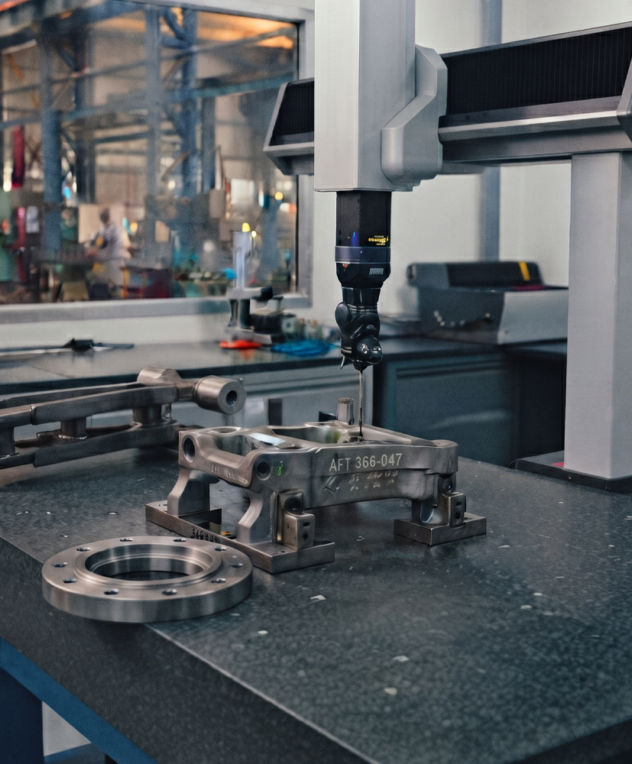
4. Inspection Is Expected to Match Component Risk
Global auditors expect inspection depth to be risk-aligned, not minimal.
This includes:
- UT, MPI, DPI based on component criticality
- Defined acceptance criteria
- Calibration discipline
- Traceable inspection reports
Audit-ready suppliers do not inspect to “pass”, they inspect to detect.
5. Non-Conformance and CAPA Discipline Is Closely Scrutinized
Auditors examine how suppliers behave when things go wrong.
They assess:
- How NCRs ae raised
- Root cause methodology
- Effectiveness of corrective actions
- Recurrence patterns
Repeated minor NCRs signal systemic weakness more than a single major issue.
6. Operator Competence Is an Audit Variable
Certifications are only as strong as the people executing them.
Audit-ready suppliers demonstrate:
- Training linked to specific operations
- Skill continuity despite low volumes
- Operator awareness of process intent
Over-reliance on individuals without documented competence raises sustainability concerns.
7. Subcontracting Must Be Controlled, or Eliminated
Global auditors closely examine outsourced operations.
Audit-ready suppliers either:
- Perform critical operations in-house
- Or enforce strict subcontractor controls, audits, and documentation
Uncontrolled subcontracting introduces traceability and accountability gaps.
Common Reasons Suppliers Fail Global Audits
Even capable forging suppliers fail audits due to:
- Documentation drifting away from execution
- Traceability breaks during handoffs
- Weak special process governance
- Ineffective CAPA closure
- Audit preparation replacing daily discipline
These failures are systemic, not technical.
How Buyers Recognize an Audit-Ready Forging Supplier
From a buyer’s perspective, audit-ready suppliers:
- Answer questions with data, not explanations
- Demonstrate consistency across jobs
- Maintain clean audit histories
- Show confidence without defensiveness
Audit readiness is visible long before formal audits begin.
How Vinir Operates Audit-Ready for Global Certifications
Vinir structures its operations around continuous audit readiness by integrating:
- Engineering-led forging processes
- Forge-to-finish accountability
- Heat- and batch-level traceability
- Validated special processes
- Risk-aligned inspection
- Certification-linked documentation systems
This allows Vinir to support global supply chains where approval must be sustained, not staged.
FAQ
Is audit readiness only relevant during certification audits?
No. Buyers often conduct their own audits outside certification cycles.
Can suppliers lose certification after approval?
Yes. Repeated NCRs or system failures can lead to suspension or withdrawal.
Is documentation enough to be audit-ready?
No. Auditors validate documentation against real execution.
Which certifications are most demanding for forging suppliers?
AS9100D, API, PED AD2000, ABS, and IRIS all impose strict system expectations.