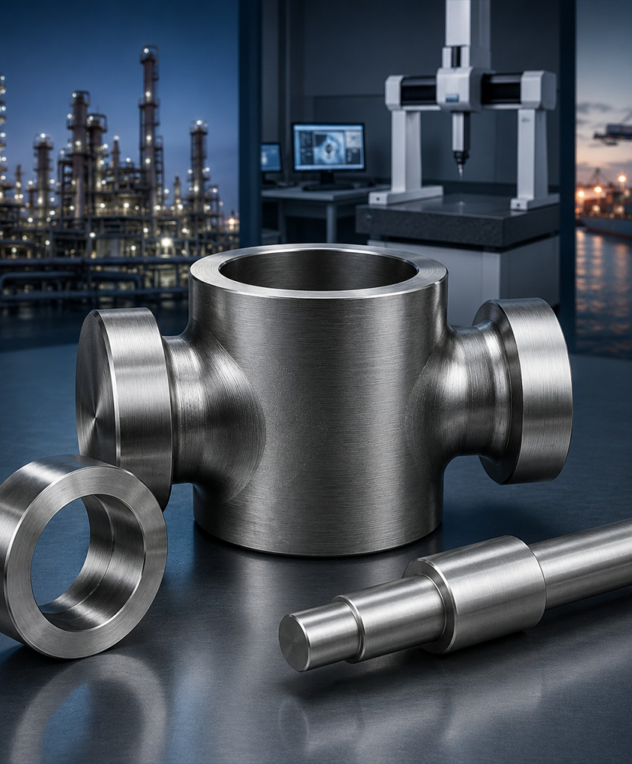

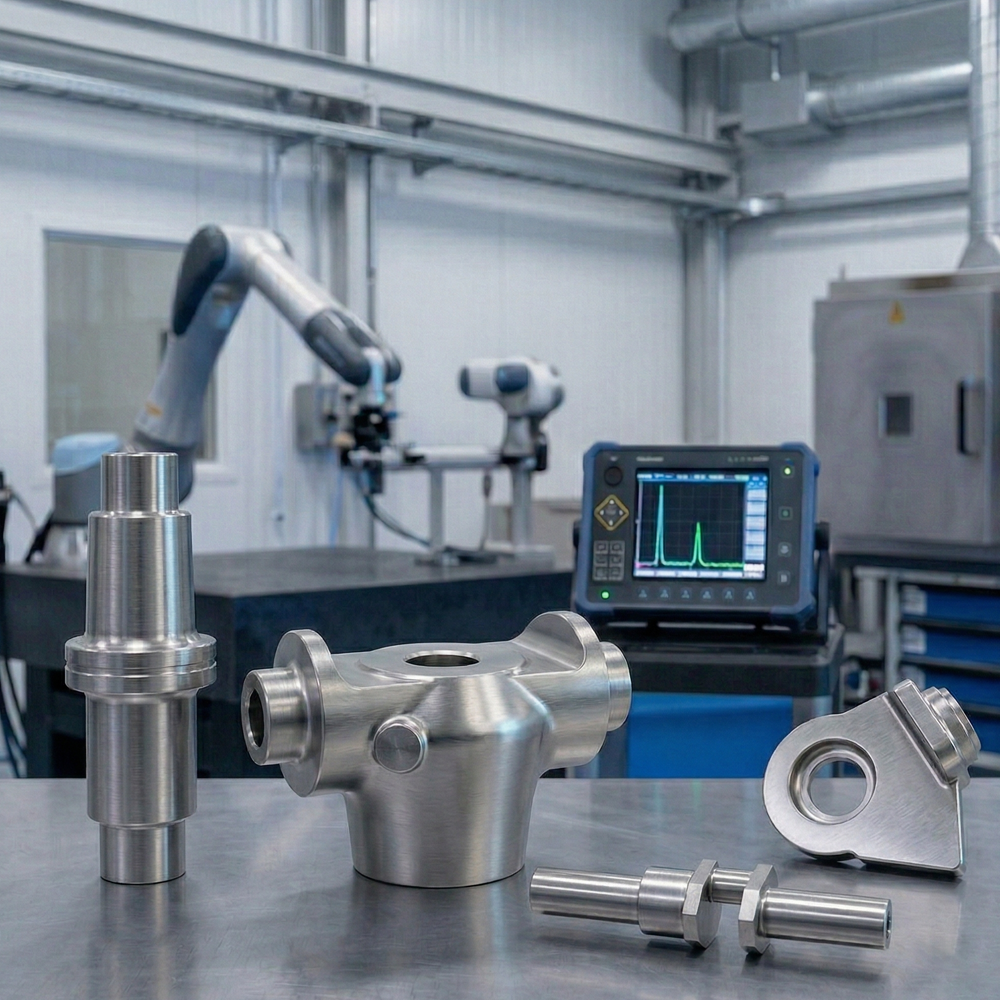
Stainless steel forgings in corrosive industrial environments
Corrosion Is a Structural Threat — Not Just a Surface Problem
In many industrial systems, corrosion is treated as a maintenance issue. In critical environments, it is a structural risk.
Forged components operating in chemical processing plants, marine systems, offshore platforms, food-grade installations, desalination facilities, and aggressive industrial atmospheres are continuously exposed to:
- Chlorides
- Acids
- Alkaline media
- High humidity
- Temperature fluctuations
When corrosion interacts with mechanical stress, the result is not gradual wear — it can be stress corrosion cracking, pitting-induced fatigue, or sudden fracture.
Stainless steel forgings are often specified in such environments because they combine corrosion resistance with structural strength. However, performance depends heavily on grade selection, forging discipline, and heat treatment control.
Why Forging Stainless Steel Instead of Casting or Machining from Plate?
Forging offers structural advantages that are particularly valuable in corrosive environments.
Compared to casting, forging provides:
- Improved density
- Refined grain structure
- Reduced porosity
- Better fatigue performance
Compared to machining from plate or bar, forging allows:
- Grain flow alignment
- Optimized geometry for stress paths
- Improved mechanical homogeneity
In corrosive environments where fatigue and stress corrosion cracking are concerns, structural continuity matters as much as chemical resistance.
Forging enhances that continuity.
Austenitic vs Martensitic vs Ferritic Stainless Steel Forgings
Not all stainless steels behave the same in service.
Austenitic Stainless Steels (e.g., 304, 316)
These are widely used for:
- Chemical processing
- Food-grade systems
- Moderate chloride exposure
They offer excellent corrosion resistance and ductility but lower yield strength compared to duplex grades.
Martensitic Stainless Steels (e.g., 410, 420)
Used where higher hardness and strength are required.
However, they are more susceptible to corrosion compared to austenitic and duplex grades.
Ferritic Stainless Steels
Provide moderate corrosion resistance and lower cost but limited toughness in some conditions.
Selecting the appropriate grade depends on:
- Chloride concentration
- Temperature range
- Pressure conditions
- Fatigue loading
- Regulatory requirements
Material choice must be application-driven.
Pitting and Stress Corrosion Cracking Risks
In chloride-rich environments, localized corrosion becomes a primary concern.
Pitting corrosion creates small cavities that act as stress concentration points.
Under cyclic or tensile stress, these pits can evolve into:
- Stress corrosion cracks
- Fatigue cracks
- Rapid fracture zones
Forged components with refined and homogeneous microstructure are more resistant to crack propagation compared to cast structures with internal porosity.
However, heat treatment and surface condition play decisive roles.
Heat Treatment Sensitivity in Stainless Steel Forgings
Improper heat treatment can compromise corrosion resistance even if mechanical strength appears acceptable.
Risks include:
- Sensitization due to improper cooling
- Chromium carbide precipitation
- Reduced corrosion resistance in heat-affected zones
- Residual stress imbalance
For austenitic stainless steels, controlled cooling prevents sensitization.
For martensitic grades, tempering must balance hardness with toughness.
Heat treatment must align with both mechanical and corrosion performance expectations.
Surface Integrity and Corrosion Resistance
Surface condition significantly influences corrosion behavior.
Improper surface handling may introduce:
- Grinding burns
- Surface contamination
- Iron contamination
- Oxide scale
- Microcracks
In corrosive environments, surface defects accelerate localized corrosion.
Proper finishing, passivation where required, and contamination control are critical in stainless steel forgings.
Corrosion resistance is both metallurgical and surface-dependent.
Mechanical Performance in Corrosive Service
Stainless steel forgings in industrial environments must often withstand:
- Moderate cyclic loading
- Pressure variation
- Thermal fluctuation
- Vibration
While corrosion resistance is primary, mechanical reliability cannot be compromised.
Forging reduction ratio, grain flow control, and internal soundness remain fundamental to long-term structural performance.
Corrosion protection without mechanical integrity is insufficient.
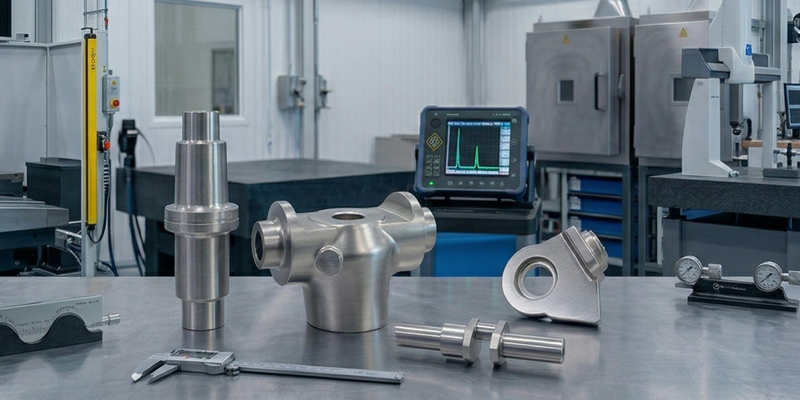
Inspection and Certification in Corrosive Applications
Industrial buyers typically require:
- Chemical composition certification
- Mechanical property validation
- Ultrasonic testing (where applicable)
- Hardness testing
- Surface inspection
In regulated industries such as oil & gas or energy, additional documentation may be required to validate corrosion resistance expectations.
Traceability continuity ensures material grade integrity throughout production.
Stainless Steel Forgings at Vinir Engineering
Vinir Engineering manufactures stainless steel forged components for corrosive industrial environments within a high-mix, non-automotive forging framework.
Our systems emphasize:
- Material grade verification
- Controlled forging temperature management
- Heat treatment discipline aligned with corrosion resistance
- Surface integrity management
- Continuous traceability
- Audit-ready documentation systems
Serving chemical, marine, offshore, energy, and industrial sectors requires balancing corrosion resistance with structural reliability.
If your project involves stainless steel forged shafts, flanges, connectors, housings, or pressure components for corrosive service, Vinir’s engineering team can review application conditions and material specifications.
Connect with Vinir Engineering to discuss stainless steel forging solutions for corrosive environments.