
Radial Forging for Defence Components: High-Strength Shafts, Tubular Preforms and Mission-Critical Hardware
Defence equipment frequently combines three characteristics that make forging particularly relevant: high mechanical loading, comparatively low production quantities and an exceptionally low tolerance for unpredictable failure.
Unlike consumer or automotive products manufactured in millions of units, a defence programme may require tens or hundreds of specialised components over a production cycle while still expecting documentation, traceability and process control comparable to much larger programmes.
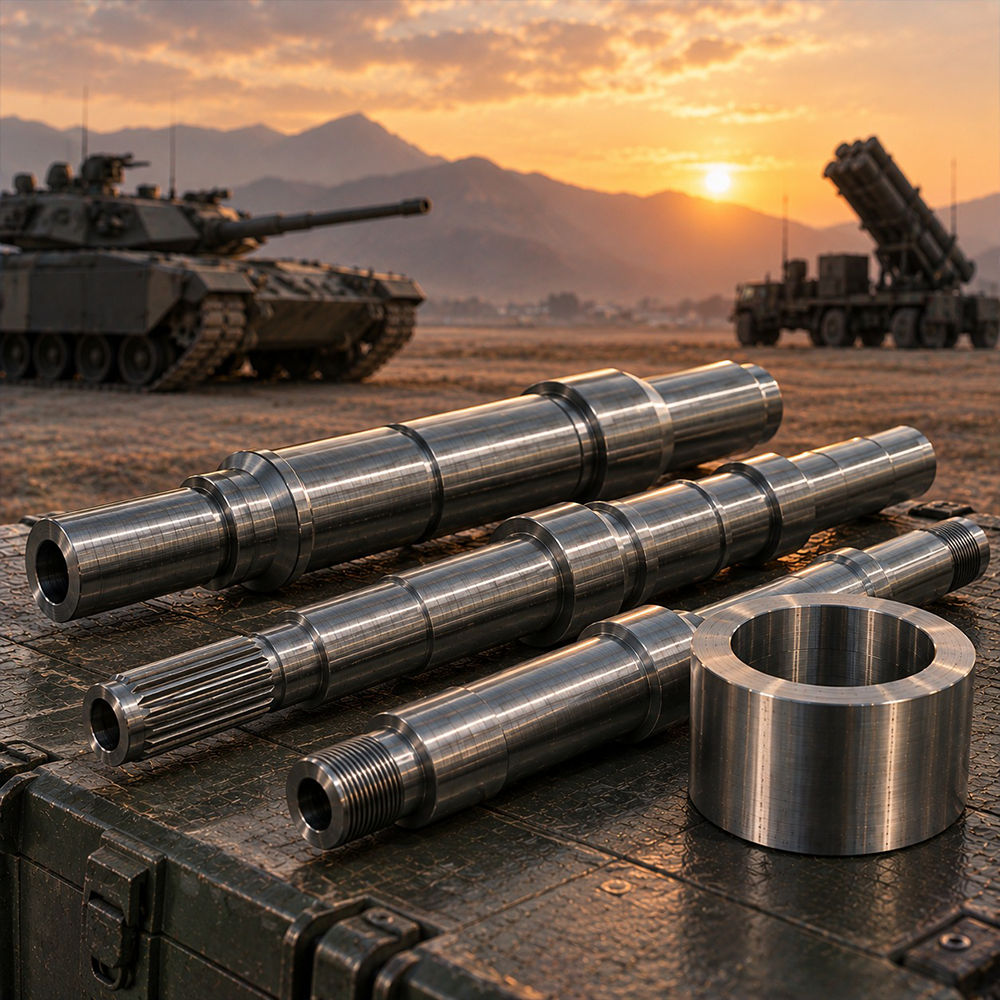
Radial forging is well suited to some of these applications because it can produce long solid and hollow preforms without requiring a fully enclosed impression die for every geometry.
The Geometry That Makes Radial Forging Attractive
The process is most naturally suited to elongated components.
Multiple dies work around the circumference while the component is moved through the forging machine. Diameter can be varied along the length, enabling solid or hollow stepped preforms.
Academic literature describes radial forging as a process used for shafts, axles, tubes, stepped components and specialised internally profiled tubular products.
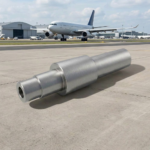
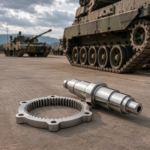
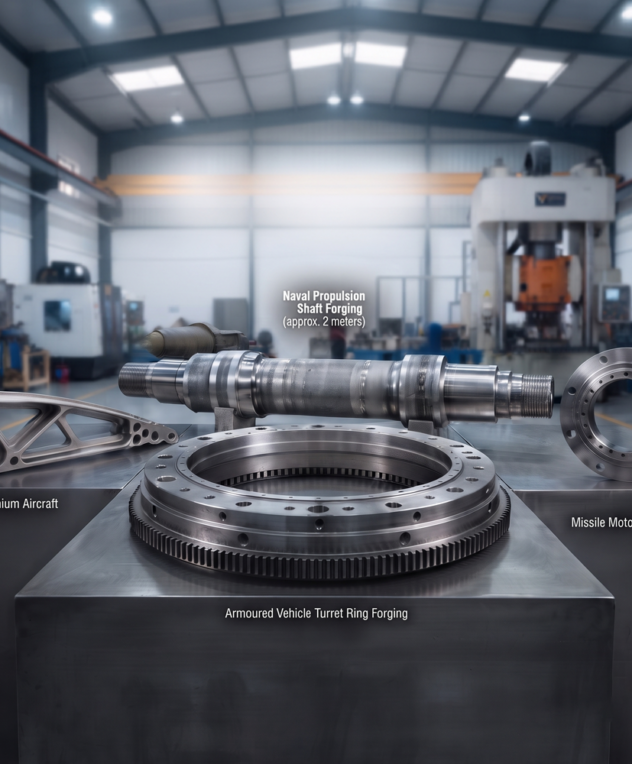
For defence procurement, these capabilities can translate into preforms for drive systems, vehicle systems, aerospace structures, tubular hardware and other mechanically loaded axial components.
Why Defence Components Are Often High-Mix and Low-Volume
A defence OEM can operate multiple vehicle, naval, aviation and weapon-system programmes simultaneously.
Each programme may contain relatively small quantities of highly specialised hardware, and production can extend for years through initial manufacture, upgrades, maintenance and spares.
This creates a supply problem.
A forging supplier optimised only for massive automotive batches may find the setup economics unattractive, while a high-mix manufacturer can build processes around smaller quantities and repeated engineering changes.
Radial forging can support this model because geometry changes can often be generated through programmed reduction and manipulation rather than entirely new closed-die tooling.
High-Strength Materials and the Cost of Waste
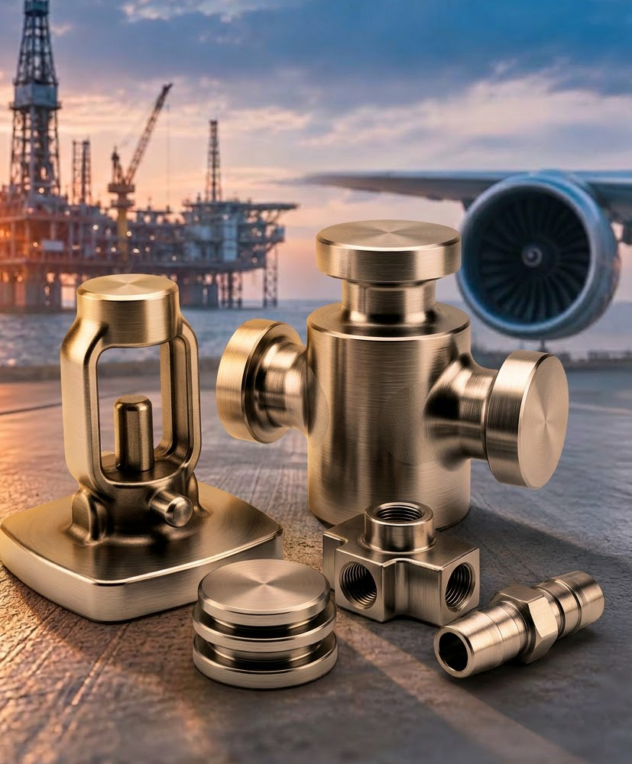
Defence components can use alloy steels, stainless steels, titanium and nickel alloys depending on application.
As material cost rises, near-net forging becomes economically more important.
Removing 50 kg of inexpensive steel during machining is one problem. Removing 50 kg of premium remelted aerospace steel, titanium or nickel superalloy is a very different cost event.
Radial forging can reduce starting stock closer to the required axial geometry, thereby reducing the amount of expensive certified material that becomes chips.
Defence Quality Is More Than Mechanical Strength
A defence component can meet tensile and hardness requirements and still be unacceptable.
Why?
Because material identity may be wrong, process revision may not match the approved configuration, NDT may have been performed to an outdated procedure or heat-treatment records may be incomplete.
This is why defence supplier qualification frequently examines configuration control and traceability as seriously as press capacity.
What Defence Buyers Typically Evaluate
| Qualification area | What the buyer wants to establish |
| Material pedigree | Correct grade, heat, mill and certification |
| Forging route | Sufficient deformation and controlled process |
| Heat treatment | Repeatable mechanical properties |
| NDT | Qualified procedures and personnel |
| Configuration control | Correct drawing/specification revision |
| Traceability | Identity maintained through all operations |
| Change management | No uncontrolled material/process substitution |
| Capacity | Ability to support programme quantities and spares |
Tubular Defence Components
One of radial forging’s interesting technical capabilities is the production of hollow components using mandrels or controlled tube-forging routes.
Research literature notes that radial forging can form tubular components with or without a mandrel depending on the geometry and internal-surface requirement.
For defence engineering, hollow structures can offer weight savings while retaining useful section properties.
However, the structural benefit depends entirely on design. Forging suppliers should manufacture to the approved drawing rather than modifying wall thickness or hollow geometry for cost reasons.
Heat Treatment and NDT
High-strength defence steels often rely on quench-and-temper heat treatment.
The manufacturing challenge is to achieve the specified properties through the relevant component section rather than only at the surface.
Critical components may then require ultrasonic and surface NDT.
The acceptance criteria must come from the programme specification.
A supplier’s internal “standard defence inspection” should never replace the actual contractual requirement.