
Heavy Steel Forging Supplier for USA from India: Large Forged Components for Critical Equipment
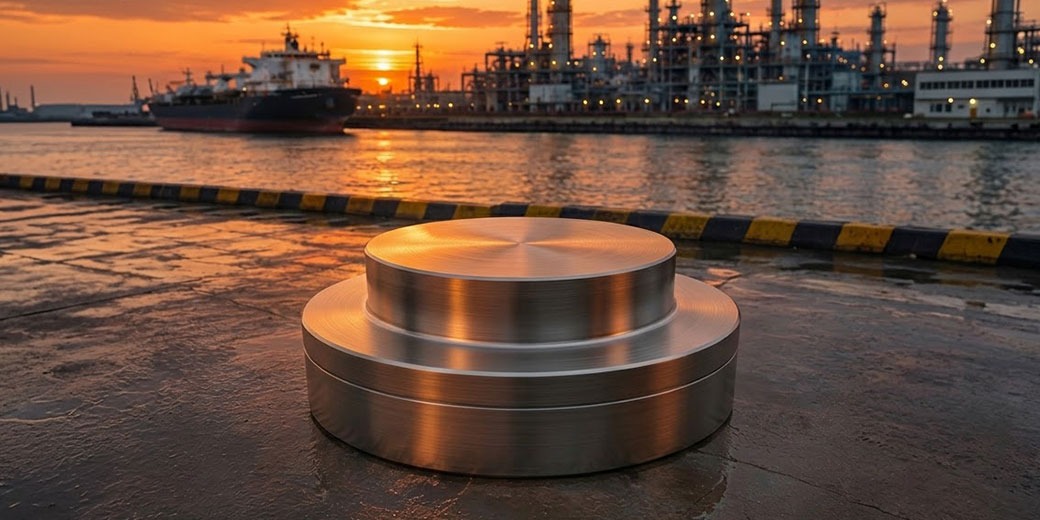
Heavy steel forgings operate in a different risk category from ordinary industrial parts. A multi-ton shaft, disc, block or hub represents a large concentration of material cost, machine time and schedule. If an internal defect is found after final machining, the buyer may lose months rather than days. Supplier qualification therefore has to focus on how quality is built into the section before machining begins.
US equipment manufacturers increasingly evaluate India for heavy forged components because the sourcing case can combine large-section manufacturing, engineering depth and competitive machining. But distance raises the penalty for weak process control. A successful India-to-USA heavy-forging program requires early agreement on material source, forging reduction, heat treatment, ultrasonic inspection, machining sequence, witness points and shipping configuration.
Vinir Engineering’s heavy-forging proposition centers on open die and ring-rolling capability, machining and testing, with a stated upper forging weight of 15,000 kg. The following framework is designed for US buyers evaluating a supplier for critical heavy equipment rather than commodity steel.
Typical Heavy Forging Applications in the United States
- Power-generation shafts, discs and heavy rings
- Oil & gas pressure components and large hubs
- Mining and earthmoving drivetrain components
- Marine propulsion and structural forgings
- Heavy industrial rolls, mandrels and tooling components
- Defence and infrastructure equipment
- Large replacement forgings for aging installed assets
These components often combine high load, long service life and difficult replacement logistics. The procurement objective is therefore reliability over the full component lifecycle, not simply meeting minimum tensile strength at shipment.
Starting Stock Quality and Material Pedigree
Heavy forging quality begins before forging. Large ingots or billets can contain segregation, shrinkage and inclusion populations that must be reduced or managed through steelmaking and subsequent deformation. The applicable material specification may define melting practice, chemistry, heat treatment and testing requirements; the customer may impose additional cleanliness or source restrictions.
ASTM A788/A788M is commonly referenced as a set of general requirements for steel forgings, while application-specific standards define the actual product acceptance criteria. For general industrial carbon and alloy steel forgings, ASTM A668/A668M is one relevant specification. Pressure, turbine, gear, nuclear and other components use their own more specific standards.
US buyers should request the raw material certificate and confirm that the forging supplier’s purchase specification to the mill matches the end-customer requirement. A correct alloy designation alone does not prove the required melting practice, cleanliness or supplementary tests were ordered.
Forging Reduction and Internal Consolidation
The purpose of heavy forging is not to make a large shape look approximately correct. Mechanical working must penetrate the section. Upsetting and drawing sequences are selected to consolidate the center, refine structure and orient material for service. The supplier should be able to demonstrate the relationship between starting stock and final forged dimensions.
A nominal reduction ratio can be useful, but it should not become a box-ticking exercise. Geometry matters. A large disc may need an upset-dominant route; a long shaft may require repeated draw operations; a hollow component may use piercing and mandrel work. The engineering rationale is more important than a single number detached from the forging sequence.
Heat Treatment of Large Sections
As section size increases, thermal gradients become harder to control. The surface reaches furnace temperature before the core, and the core cools more slowly during quenching. This can create variation in microstructure and properties across the section if the heat-treatment route is not matched to the material and ruling thickness.
The supplier should define furnace loading, soak criteria, transfer time, quench medium, agitation and tempering or stress-relief conditions. For large alloy-steel parts, the buyer may also need hardness mapping or test locations designed to demonstrate through-section performance rather than surface-only properties.
Ultrasonic Testing Must Be Designed Into the Route
UT is one of the most important controls for heavy forgings, but its effectiveness depends on geometry, surface condition, material attenuation and the applicable acceptance standard. Rough machining may be needed to create suitable scanning surfaces. Corners, bores and complex transitions can create inaccessible zones if inspection is considered only after forging.
The inspection plan should state the procedure, reference standard, scanning surfaces, coverage, sensitivity, acceptance criteria, operator qualification and reporting format. Buyers should also specify whether UT is required before final machining, after final heat treatment, after proof machining or at multiple stages.
Machining Multi-Ton Forgings
Heavy machining is a manufacturing discipline in its own right. Machine swing, table load, between-center distance, tool reach, workholding and metrology all become constraints. Moving a multi-ton part between unrelated suppliers for rough and finish machining also increases handling risk and schedule exposure.
An integrated supplier can sequence proof machining, NDT and finish machining around common datums. For long-lead components, this integration can be more valuable than a small reduction in forging conversion cost because it protects the critical path.
Packaging and Logistics to the USA
Heavy exports require engineered lifting and preservation. The supplier and buyer should agree center-of-gravity marking, lifting points, skid or cradle design, rust prevention, moisture protection, port handling and any oversize inland transportation constraints in the United States.
Incoterms should reflect who is actually best positioned to manage each leg. The quotation should also state whether export packing is included and whether the finished component can ship in a standard container, open-top, flat rack or breakbulk configuration. Shipping configuration can influence the preferred machining stage before export.
What US Buyers Should Verify Before Approving a Supplier
| Buyer Question | What to Verify | Why It Matters |
Is raw material fit for purpose? | Mill source, melting practice, chemistry, MTR and supplementary requirements. | Large forgings magnify the cost of poor starting stock. |
Does deformation reach the core? | Starting stock dimensions, upset/draw sequence and reduction evidence. | Internal consolidation cannot be inspected into the part later. |
| Can heat treatment handle the ruling section? | Furnace size, soak controls, quench system and test locations. | Large sections are sensitive to thermal gradients. |
| Is UT coverage practical? | Scanning surfaces, rough machining, procedure and acceptance criteria. | Geometry can create blind zones if inspection is planned too late. |
| Can the supplier machine and ship the part? | Machine envelope, handling, metrology, packing and logistics plan. | A forge is not a finished supply chain unless downstream size constraints are covered. |
Frequently Asked Questions
1.What qualifies as a heavy steel forging?
2.Why are open die processes common for heavy steel forgings?
3.How important is reduction ratio for heavy forgings?
4.Which NDT method is most common for large steel forgings?
5.Can heavy forgings be finish machined in India before shipment to the USA?
6.What causes the longest delays in heavy-forging projects?
Why Vinir Engineering Fits This Requirement
Vinir combines a stated 15,000 kg upper forging range with open die, ring rolling, heat treatment, machining and testing capability. For US heavy-equipment programs, the value is the ability to plan material, deformation, inspection, machining and export as one route rather than as isolated purchase orders.