
Defence Forgings in India: AS9100D Certified Manufacturer for Critical Defence Programmes
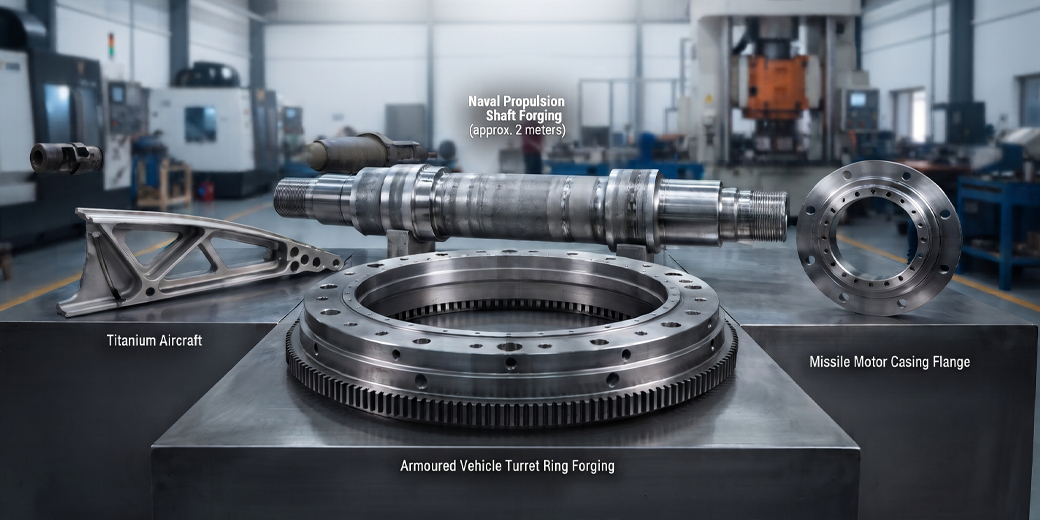
Defence forgings are forged metallic components manufactured for military platforms, weapons systems, naval vessels, and defence infrastructure — armoured vehicle structural members, naval propulsion components, missile structural parts, artillery system forgings, and aircraft structural members. The plural reference to “defence forgings” reflects the breadth of forged component categories that a comprehensive defence forging manufacturer must cover: not a single component type but the full range of structural, propulsion, pressure-retaining, and weapons system forgings that defence programmes require across their complete service life. Vinir Engineering has manufactured AS9100D certified defence forgings in Bangalore and Hosur since 1984, supplying Indian defence programmes and international defence OEMs across armoured vehicles, naval platforms, aerospace, and ordnance categories.
At a Glance: Defence Forgings Requirements by Platform Category
| Platform | Key Forging Categories | Primary Certification |
| Armoured vehicles (MBT, IFV) | Hull structure, drivetrain, suspension, turret ring | AS9100D, DGQA |
| Naval vessels | Propulsion shafts, structural hull fittings, valve bodies | AS9100D, ABS, IBR |
| Aerospace | Airframe structural, engine components | AS9100D, CEMILAC |
| Missiles | Body section rings, fin roots, motor casings | AS9100D, DGQA |
| Artillery | Gun barrel blanks, breech components, carriage structure | AS9100D, DGQA |
| Submarines | Pressure hull fittings, propulsion, structural | AS9100D, ABS, DGQA |
The Scale of Indian Defence Forging Demand
India operates one of the world’s five largest military forces — with over 1.4 million active personnel, 3,500+ tanks and armoured vehicles, 130+ naval vessels, 1,600+ aircraft, and a ballistic missile programme covering ranges from 350 km to 5,000+ km. The forging content of this force — the number of distinct forged components across every platform, the annual replacement and spares demand, and the new programme procurement — represents a procurement market of several thousand crores of rupees annually in forged components alone.
The Aatmanirbhar Bharat defence indigenisation programme is converting this demand from predominantly import-sourced to domestically manufactured. Defence forgings that were imported from Germany, UK, Sweden, Russia, and France are now on the Positive Indigenisation List with cutoff dates after which imports are not permitted. The structural demand exists — the question is which Indian forging manufacturers have the AS9100D certification, multi-material capability, and quality system maturity to qualify and supply.
Defence Forgings by Platform Category
Armoured Vehicle Forgings
India’s armoured vehicle fleet — Arjun MBT, T-90 Bhishma, BMP-II Sarath, and the expanding wheeled protected vehicle programme — requires forged components across five primary categories:
Hull and armour structural forgings — ARMOX 500T, Miilux 400 armour steel for hull plates, turret ring forgings (ring-rolled in alloy steel to Ø800–2,500mm for MBT class), and structural members. These are the most ballistically critical forgings in the armoured vehicle — their failure compromises crew protection.
Drivetrain forgings — final drive gear blanks (EN36, 18CrNiMo7-6 case-hardening steels), drive shafts (EN24, 4340 alloy steel), differential housings, and sprocket assemblies. A single MBT drivetrain contains 40–60 distinct forged components.
Suspension forgings — torsion bars (45CrNiMoVA spring steel, tensile strength above 1,400 MPa), suspension arms (EN24 alloy steel), roadwheel hubs, and return roller components. Torsion bars are among the most fatigue-critical forgings in any land vehicle — they must sustain hundreds of millions of reversed torsional load cycles over the vehicle’s service life.
Weapon system forgings — gun breech components, weapon mount structural forgings, recoil system structural members, and elevation and traverse drive housing forgings. Gun breech forgings require the tightest dimensional tolerances and most comprehensive NDE of any armoured vehicle forging category.
Engine and power plant forgings — engine mount structural forgings, cooling system pump housings, and auxiliary drive system components. These operate in the high-temperature, high-vibration environment of the engine compartment.
Naval Forgings
India’s naval shipbuilding programme — Project 75 submarines, Project 15B destroyers, Project 17A frigates, and the carrier INS Vikramaditya and INS Vikrant — requires naval forgings across propulsion, structural, and weapons system categories:
Propulsion shaft forgings — the most structurally demanding naval forgings. Destroyer-class propulsion shafts at 8,000–12,000 kg in alloy steel, requiring 100% UT before machining and ABS or DNV survey certification.
Rudder stock and steering gear forgings — high-strength alloy steel forgings carrying full steering torque loads at maximum vessel speed. Naval rudder stocks require higher strength specifications than commercial marine equivalents.
Structural hull connection forgings — sea chest frames, hull penetration structural fittings, keel block connection forgings, and bulkhead penetration forgings. Naval specifications are more demanding than commercial marine — higher structural loads, longer design life, shock loading requirements for naval vessels.
Pressure-retaining forgings — steam system flanges and valve bodies (IBR-certified), hydraulic system components, weapons system pressure housings. For nuclear-powered submarines, primary circuit pressure forgings to IBR and nuclear quality programme requirements.
Aerospace Defence Forgings
HAL’s aircraft and helicopter programmes require aerospace defence forgings combining the quality requirements of both aerospace (AS9100D, CEMILAC airworthiness) and defence (DGQA oversight):
Tejas LCA structural forgings — titanium airframe structural members (Ti-6Al-4V), alloy steel landing gear structural components (4340, 300M), aluminium structural fittings (7075-T6), and Inconel engine component forgings for the Kaveri or GE F404 engine.
ALH Dhruv and LCH Prachand — titanium rotor head structural forgings, aluminium transmission housing forgings, alloy steel structural frame members, and Inconel gearbox mounting forgings.
AMCA and future programmes — the Advanced Medium Combat Aircraft programme will require next-generation aerospace defence forgings in titanium, Inconel, and high-strength alloys to specifications that will push Indian forging capability forward.
Missile and Ordnance Forgings
India’s missile programme — Agni, Prithvi, Astra, Akash, BrahMos — and the ordnance sector require the most technically demanding forgings in the defence supply chain:
Missile structural forgings — body section rings (ring-rolled in alloy steel, aluminium, or titanium), fin root forgings (titanium for supersonic missiles), motor case structural flanges, and guidance section housings.
Artillery forgings — gun barrel blanks (high-strength chrome-molybdenum steel, 100% UT to demanding acceptance criteria), breech ring forgings, carriage structural members, and ammunition handling system components. Artillery barrel blanks at 2,000–4,000 kg are among the most challenging forgings in the land defence supply chain.
Ordnance and ammunition — warhead casings (controlled hardness alloy steel for fragmentation behaviour), fuze housing forgings, and bomb body structural components.
Materials Across the Defence Forgings Range
The breadth of materials required across the defence forgings category is wider than any other forging market segment:
Alloy steels (EN24, 4340, EN36, 4130) — the most widely used across all platform categories. Drivetrain, structural, and weapons system components.
Ultra-high-strength steels (300M, D6AC) — missile structural forgings, landing gear analogues, highest-stress defence structural applications. Tensile strength above 1,900 MPa (300M).
Armour steels (ARMOX 500T, Miilux 400) — hull and protective structure forgings. Tight forging temperature window, controlled reduction ratios, post-forge through-hardness verification.
Spring steels (45CrNiMoVA) — torsion bars. Yield strength above 1,400 MPa with high fatigue resistance under reversed torsional loading.
Titanium Ti-6Al-4V — aerospace defence structural forgings. 44% weight saving over steel at comparable strength.
Inconel 625 and 718 — aeroengine hot section forgings, missile propulsion components. Strength to above 650°C.
Duplex and super duplex — naval seawater system forgings, offshore naval platform components. Chloride stress corrosion cracking resistance.
Aluminium 7075, 7050 — aerospace structural secondary members, helicopter structural components. Lowest density structural material in the defence forging range.
The Certification Matrix for Defence Forgings Supply
No single certification covers the full range of defence forgings.
Different platform categories require different combinations :
AS9100D — The Universal Foundation
AS9100D is required for all defence forging supply regardless of platform category. It is the quality management system baseline that defence OEMs verify before any other evaluation step. The scope of the AS9100D certificate must cover all processes performed — a certificate scoped to forging only does not cover heat treatment and NDT.
DGQA — Indian Military Procurement Oversight
DGQA (Directorate General of Quality Assurance) oversight is required for all components entering Indian armed forces procurement programmes — Army, Navy, and Air Force. DGQA conducts its own vendor assessment independent of AS9100D and provides source inspection before every delivery to DGQA-covered programmes.
ABS — Naval Classification
ABS (American Bureau of Shipping) certification is required for structural and propulsion forgings in naval vessels built to ABS class — the standard for most Indian Navy surface vessels and submarines built at MDL, GRSE, and GSL.
IBR — Pressure-Retaining Components
IBR (Indian Boiler Regulations) is required for pressure-retaining forged components in naval steam systems, nuclear systems, and any defence infrastructure pressure system above the IBR pressure threshold.
CEMILAC — Military Aircraft Airworthiness
CEMILAC (Centre for Military Airworthiness and Certification) oversight applies to aerospace defence forgings incorporated in CEMILAC-certified military aircraft. Changes to approved forging suppliers for CEMILAC-certified aircraft require design change notification and CEMILAC approval.
What Comprehensive Defence Forgings Supply Requires
A forging manufacturer seeking to serve the full range of Indian defence forgings requirements — not just one platform category — needs:
Certification breadth — AS9100D (all categories), DGQA registration (all Indian military), ABS (naval), IBR (pressure-retaining), NABL-accredited testing.
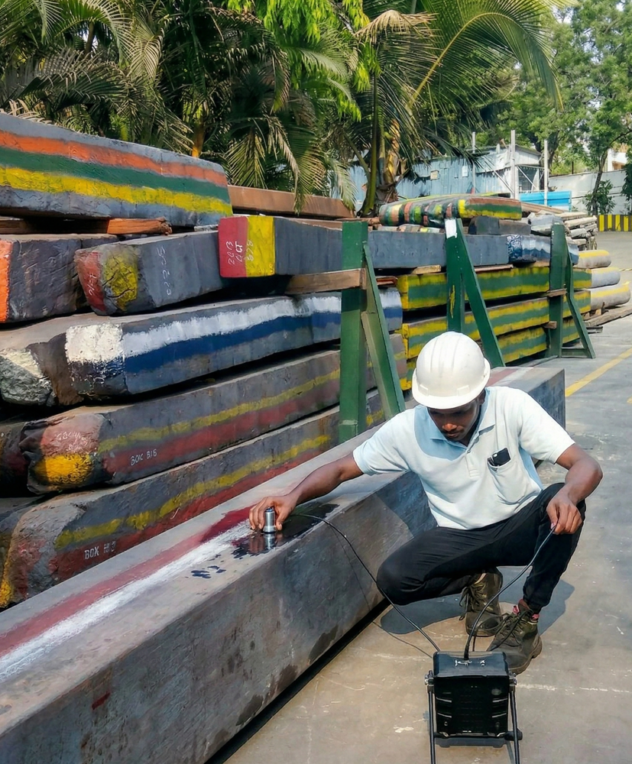
Process breadth — closed die forging (10–1,400 kg), open die forging (up to 15,000 kg), ring rolling (Ø200–4,500mm), radial forging (hollow shafts and cylinders), in-house heat treatment, in-house NDT, in-house CNC machining. All under one AS9100D scope — forge-to-finish.
Material breadth — alloy steels, armour steels, spring steels, ultra-high-strength steels, titanium, Inconel, duplex stainless, aluminium alloys. Validated process capability demonstrated by production records — not just claimed capability.
Volume flexibility — defence forgings range from single first article components to batches of 500. A forging manufacturer who requires minimum batch sizes of 50 cannot serve the missile or artillery programmes. High-mix low-volume capability is essential.
Organisational stability — defence programmes run for 20–40 years. A manufacturer who has served the Indian defence supply chain for 42 years — with documented production history, stable management, and maintained certifications across four manufacturing units — presents a fundamentally lower long-term programme risk than a newer entrant regardless of current technical capability.
Vinir Engineering’s Defence Forgings Profile
Vinir Engineering has manufactured defence forgings across all platform categories since 1984 — before indigenisation was a policy, before AS9100D existed as a standard, and before India’s defence self-reliance ambitions were formalised into procurement requirements.
Certifications: AS9100D (all four units, full forge-to-finish scope), IBR, ABS, API 20B, NABL-accredited in-house testing. DGQA-aligned quality system with source inspection experience across multiple defence programmes.
Processes in-house: Closed die forging (10–1,400 kg), open die forging (15,000 kg), ring rolling (Ø4,500mm), radial forging (hollow shafts), heat treatment (all material families), CNC machining (10,000 kg), NDT (UT, MT, PT, FPI — ASNT Level II operators), sub-assembly.
Materials: EN24, 4340, 300M, 45CrNiMoVA, ARMOX 500T, Inconel 625 and 718, Ti-6Al-4V, Duplex 2205, Super Duplex 2507, 7075-T6 aluminium — all with production history evidenced by MTRs.
Volume flexibility: 1 unit (first article) to 250 units per batch — across all four manufacturing units providing combined capacity and programme continuity.
Frequently Asked Questions — Defence Forgings India
What is the difference between defence forging and defence forgings as procurement categories?
Defence forging (singular) typically refers to the manufacturing process or capability — a manufacturer who performs defence forging. Defence forgings (plural) refers to the components produced — the range of forged parts that enter defence programmes. A comprehensive defence forgings supplier covers multiple component categories across multiple platform types: armoured vehicle drivetrain forgings, naval propulsion forgings, aerospace structural forgings, missile body forgings, and artillery barrel blanks may all be required from a single AS9100D certified forge-to-finish manufacturer serving the full breadth of Indian defence procurement.
How many distinct forged components does a main battle tank contain?
A main battle tank such as the Arjun or T-90 contains between 200 and 350 distinct forged components across the drivetrain, suspension, hull, turret, weapons system, and engine categories. The drivetrain alone — from the engine output shaft through the gearbox, final drives, and sprocket assemblies — uses 40–60 distinct forgings. Each forging has its own drawing, material specification, heat treatment procedure, and NDT requirement. Supplying forgings to an MBT programme requires a manufacturer capable of high-mix low-volume production with the quality management infrastructure to maintain separate documentation for each part number.
What certifications are required to supply forgings to the Indian Navy?
Supply of forged components to Indian Navy vessels built at MDL, GRSE, and GSL requires AS9100D certification from the forging manufacturer covering the relevant processes. ABS or IRS class society certification is required for structural and propulsion forgings incorporated in classification-society-classed vessels. IBR certification is required for pressure-retaining components in steam systems. DGQA oversight applies to Navy procurement programmes. For nuclear submarine programmes, additional nuclear quality assurance programme requirements apply. Vinir Engineering holds AS9100D, ABS, and IBR — the complete certification set for Indian Navy forging supply.
Can Indian defence forging manufacturers export to international defence customers?
Yes. Indian AS9100D certified defence forging manufacturers can export to international defence OEMs subject to applicable export control regulations (SCOMET — Special Chemicals, Organisms, Materials, Equipment, and Technologies — for controlled defence items), buyer-specific qualification requirements, and end-use certification requirements. India’s defence export policy has been progressively liberalised and India has set a target of USD 5 billion in defence exports by 2025. Forged components — not classified as weapons themselves — have a relatively clear export path compared to complete weapons systems. Indian forging manufacturers with AS9100D certification, documented production history in relevant materials, and existing DGQA qualification are positioned to participate in international defence supply chains through offset programmes and direct supply agreements.
What is the Make in India opportunity for defence forgings specifically?
The Positive Indigenisation List published by the Ministry of Defence has scheduled hundreds of forged component categories for domestic sourcing, with cutoff dates after which imports are not permitted. For forging manufacturers, this creates a pipeline of qualification opportunities — each listed item represents a potential supply relationship if the manufacturer can qualify within the programme timeline. The most valuable indigenisation opportunities are in titanium aerospace forgings (previously imported from USA and France), ultra-high-strength steel structural forgings (previously from Germany and Sweden), Inconel aeroengine components (previously from USA and UK), and large naval propulsion shaft forgings (previously from UK and Germany). These categories require AS9100D, multi-material capability, and high-mix low-volume capacity — barriers that are high enough to limit competition but achievable for established manufacturers with the right investments.