
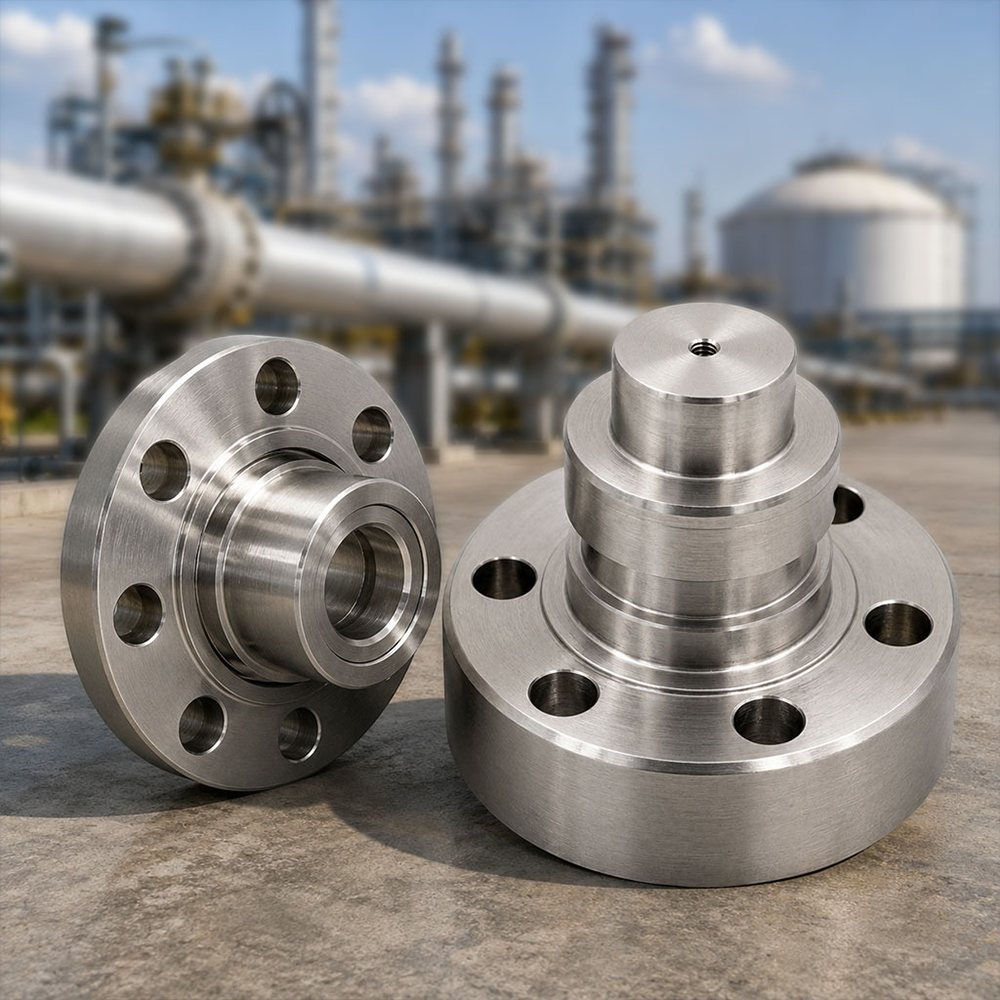
Forged Flanges and Valve Bodies from India: A US Oil & Gas Procurement Guide
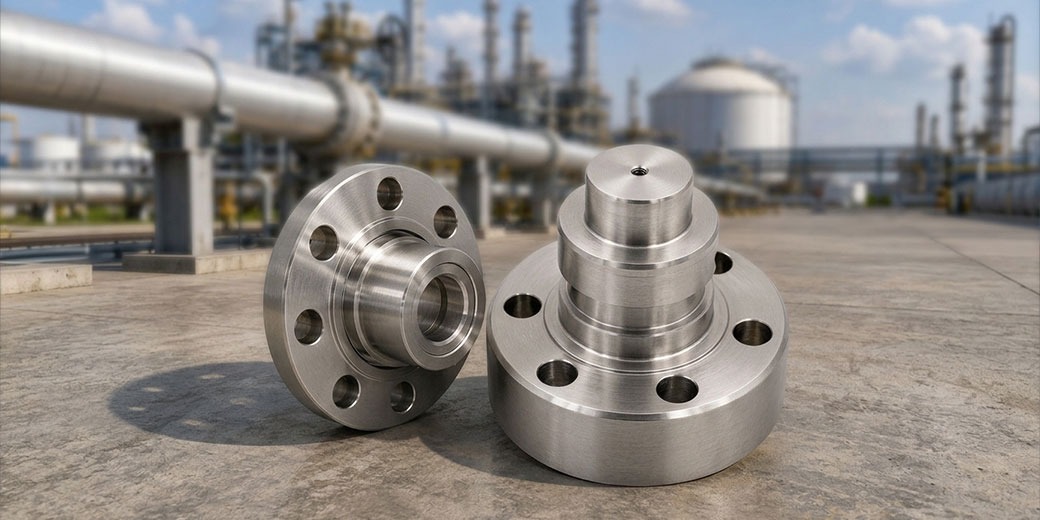
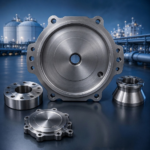
Forged flanges and valve bodies are the two highest-volume forging categories in US oil and gas procurement — representing the bulk of forging spend across upstream wellhead and Christmas tree equipment, midstream pipeline systems, downstream refinery and petrochemical plant piping, and LNG terminal infrastructure. American procurement teams sourcing these components from India for the first time encounter a market that is more developed, more certified, and more capable than many expect but that also requires a structured approach to supplier selection, documentation specification, and supply chain integration that differs from domestic US procurement in important practical ways. This guide covers everything a US oil and gas procurement team needs to know to source forged flanges and valve bodies from India effectively.
At a Glance: Forged Flanges and Valve Bodies – US Procurement Parameters
| Parameter | Forged Flanges | Valve Body Forgings |
| Primary standard | ASME B16.5, ASME B16.47 | API 6A, API 6D, ASME B16.34 |
| Quality standard | API 20B | API 20B / API 20C for CRA |
| Primary material | ASTM A105, A182 F316L, A182 F51 | AISI 4130, A182 F51/F53, Inconel 625 |
| Pressure ratings | Class 150 to Class 2500 | 2,000 to 20,000 psi (API 6A) |
| Face types | RF, RTJ, FF, BW | Flanged, butt-weld, threaded |
| Weight range (Vinir) | 1–2,000 kg | 10–1,400 kg |
| Typical US lead time domestic | 4–8 weeks | 6–12 weeks |
| Typical India lead time landed | 10–16 weeks | 12–18 weeks |
| Cost advantage India | 15–35% for carbon steel | 25–45% for CRA grades |
Part 1: Forged Flanges – The Highest Volume Oil & Gas Forging Category
Why Flanges Are Forged for Oil & Gas Service
Pipeline flanges, pressure vessel nozzle flanges, equipment flanges, and valve end flanges in oil and gas service are forged rather than fabricated from plate or cast for the same reasons that apply to all critical pressure-retaining components forgings are denser, stronger, and free of the porosity that makes castings unreliable in high-pressure service. For flanges specifically, the forging process orients grain flow in the direction that resists the primary loading circumferential hoop stress from internal pressure and axial tensile load from bolting producing flanges with measurably better pressure cycle fatigue life than plate-cut equivalents.
ASME B16.5 Flanges – The US Standard for Pipe Flanges
ASME B16.5 governs pipe flanges and flanged fittings from NPS ½ through NPS 24 in pressure classes 150 through 2500. For US oil and gas procurement, B16.5 flanges are specified for the vast majority of process piping connections from low-pressure production flowlines at Class 150 through high-pressure wellhead and Christmas tree piping at Class 2500.
B16.5 material specification groups:
B16.5 organises flange materials into specification groups — Group 1, 1.1, 1.2, 1.3, 2, 2.1, 2.2, 2.3, and 3.X. The group determines the pressure-temperature rating of the flange at any given temperature. Carbon steel (ASTM A105) is in Group 1.1. 316L stainless (ASTM A182 F316L) is in Group 2.2. Duplex 2205 (ASTM A182 F51) is in Group 3.1. For US procurement, the material group must match the design specification — the pressure-temperature rating of the system determines which material group is required, not just the nominal pipe class.
B16.5 dimensional requirements:
B16.5 defines bore diameter, outside diameter, bolt circle diameter, bolt hole diameter, hub dimensions, and face type geometry for each nominal pipe size and pressure class combination. These dimensions are tightly toleranced flange face flatness, raised face height, and ring groove geometry for RTJ flanges must all be within the B16.5 dimensional tolerances to ensure proper gasket seating and bolt load distribution.
Indian forging manufacturers producing B16.5 flanges must demonstrate that their machined dimensions consistently meet B16.5 tolerances. The critical dimensions raised face height, ring groove depth and width for RTJ flanges, and bore concentricity relative to the bolt circle are the first things US incoming inspection checks.
ASME B16.47 Flanges — Large Diameter for Pipelines
ASME B16.47 covers large diameter steel flanges from NPS 26 through NPS 60. Two series: Series A (formerly MSS SP-44) and Series B (formerly API 605). US pipeline flanges above NPS 24 are almost exclusively B16.47 Series A or Series B.
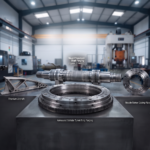
For large diameter flanges – NPS 26 to NPS 60 ring rolling is the manufacturing process. Closed die forging cannot economically produce large diameter flanges in these sizes. Ring rolling produces the circular flange blank from which the raised face or RTJ groove profile is subsequently machined.
Indian manufacturers with ring rolling capability to Ø4,500mm can produce ring-rolled blanks for B16.47 flanges across the full NPS 26–60 range. The rolled ring blank must be produced with sufficient material stock on all surfaces to allow complete machining to B16.47 dimensions while maintaining the required grain flow orientation.
Flange Face Types for US Oil & Gas Service
Raised Face (RF) — the standard face type for most US oil and gas piping flanges. The raised face is the machined ring that contacts the gasket. For Class 150 and 300, the raised face is 0.06 inch (1.5mm) high. For Class 400 and above, 0.25 inch (6.35mm) high. Surface finish: 125–250 µin Ra for spiral wound gaskets, 63 µin Ra for ring-type joints.
Ring Type Joint (RTJ) — specified for high-pressure and high-temperature service. The RTJ groove in the flange face accepts a metal ring gasket that seals by compression when the flange bolts are tightened. RTJ flanges are used for Class 900 and above in high-pressure gas service, for all Classes in sour gas service where spiral wound gaskets may not provide adequate sealing reliability, and for API 6A wellhead flanges. The ring groove dimensions and surface finish are critical the groove must be machined to B16.20 tolerances to ensure proper seating of the API ring gasket.
Full Face (FF) — used with flat-face companion flanges and with non-metallic full-face gaskets for low-pressure non-critical service.
Butt-Weld End (BW) — not a face type but an end preparation. Butt-weld flanges (weld neck flanges with butt-weld bore preparation) are specified where the flange will be welded directly to pipe rather than using a raised face gasket joint.
Carbon Steel Flange Materials for US Procurement
ASTM A105 — the standard carbon steel for ambient temperature pressure flanges. Working temperatures from -20°F (-29°C) without impact testing, down to -50°F (-46°C) with supplementary impact testing. Chemical composition: carbon maximum 0.35%, manganese 0.60–1.05%. Heat treatment: normalise, or normalise and temper, or quench and temper. A105 is the most widely used and most economically priced forging material in US oil and gas procurement.
ASTM A694 F60/F65/F70 — high-yield carbon steel flanges for high-pressure pipelines. F60, F65, F70 denote minimum yield strengths of 60,000, 65,000, and 70,000 psi respectively. Used for API 5L Grade X60, X65, X70 pipeline connections where higher yield strength is required to match the pipe wall design. More stringent CE requirements than A105.
ASTM A350 LF2 — for low-temperature service down to -50°F (-46°C). Mandatory Charpy impact testing at -50°F. Used extensively in US LNG terminal piping and in Arctic and cold-climate applications.
CRA Flange Materials for US Offshore and Corrosive Service
ASTM A182 F316L — 316L austenitic stainless for mildly corrosive service. Standard for water injection piping, produced water handling, and general corrosive service where chloride SCC is not a risk (ambient temperature, low chloride concentration).
ASTM A182 F51 (Duplex 2205) — for offshore and marine seawater service. Higher strength than 316L, excellent resistance to chloride SCC. Standard for GoM offshore platform seawater system flanges, firewater flanges, and produced water handling in high-chloride service.
ASTM A182 F53 (Super Duplex 2507) — for subsea and deepwater service where PREN ≥40 is required. Standard for subsea pipeline flanges, subsea manifold connections, and HPHT tree piping connections in the GOM deepwater.
Part 2: Valve Body Forgings — High-Value Components for US Oil & Gas
Why Valve Bodies Are Among the Most Technically Demanding Oil & Gas Forgings
A valve body forging must simultaneously satisfy pressure containment requirements (wall thickness adequate for working pressure), geometric requirements (bore concentricity, end connection face squareness, internal geometry for valve trim assembly), and in sour service, NACE MR0175 hardness compliance. The combination of these requirements makes valve body forgings more technically demanding than flanges despite often being lighter in weight.
The geometry of a valve body forging with its bore, port connections, bonnet connection boss, and end connections creates a complex internal stress distribution under pressure loading that must be addressed in the forging die design and the heat treatment procedure. A forging die that produces the correct external shape but leaves inadequate wall thickness at the internal bore-to-port intersection produces a valve body that will fail pressure testing.
Gate Valve Body Forgings for US Pipeline Service
Gate valves are the primary isolation valve in US oil and gas pipeline systems used for line isolation, maintenance isolation, and emergency shut-off. US pipeline gate valves are governed by API 6D (pipeline valves) for transmission pipelines and by API 600 (steel gate valves) for plant piping and wellhead service.
Gate valve body forging requirements for US procurement:
API 6D pipeline gate valves:
- Body material: ASTM A105 for carbon steel; A182 F316L for stainless; A182 F51 for duplex
- End connections: butt-weld ends to ASME B16.25 for welded pipeline service, or flanged ends per ASME B16.5
- Shell test: 1.5 × rated working pressure, hydrostatic, minimum 15 minutes
- Seat test: 1.1 × rated working pressure for metal-seated valves
- Body wall thickness: minimum per API 6D formula based on design pressure, material yield strength, and appropriate design factor
Gate valve body geometry for closed die forging: The gate valve body is one of the more complex closed die forgings in oil and gas procurement accommodating the gate, seats, stem, bonnet flange, and two end connections in a single integral body. Die design must ensure adequate wall thickness throughout, particularly at the body interior corners where the gate cavity meets the port bores. These interior corners are the highest-stress locations under internal pressure and are also the most difficult to inspect by UT due to the geometry.
Ball Valve Body Forgings for US Service
Ball valves dominate US pipeline and process plant isolation service in Class 300 and above. API 6D ball valves for pipeline service, ASME B16.34 ball valves for plant service.
US procurement specification for ball valve body forgings:
Forged ball valve bodies in carbon steel (A105) are economically attractive versus castings for Class 600 and above the material density and mechanical property advantages of forging justify the premium over castings at higher pressure classes where the consequence of a casting defect causing in-service leakage is significant.
For Class 150 and 300 general service in standard carbon steel, US procurement teams often accept castings for ball valve bodies as the cost difference versus forgings is significant and the pressure consequence of a minor casting defect at low class is manageable. For Class 600 and above, sour service, and all offshore applications, forgings are specified.
Choke Valve Body Forgings for US Wellhead Service
The production choke – controlling flow rate from the wellbore sits on the wing of the Christmas tree and experiences the most erosive service conditions in any wellhead component. High-velocity multiphase flow (oil, gas, water, sand) through the restricted flow path causes severe erosive wear.
Choke body material selection for US shale wells:
Permian Basin and Eagle Ford choke bodies in H₂S service require NACE MR0175 compliance (22 HRC maximum for alloy steel) while also providing erosion resistance. The conflict between these requirements hardness improves erosion resistance but must be limited for NACE compliance is managed through:
- Replacing the internal wear surfaces with replaceable hard-facing or carbide-insert trim rather than increasing base metal hardness
- Specifying Inconel 625 for the internal bore surfaces where H₂S + erosion is the controlling failure mode Inconel 625 is NACE MR0175 Part 3 compliant and has inherently good erosion resistance
- Using harder alloy steel (AISI 4140 at 28–32 HRC) for non-sour Eagle Ford gas condensate choke bodies where NACE compliance is not required
Part 3: US Procurement Process — Sourcing Flanges and Valve Bodies from India
Step 1: Defining the Procurement Specification
The most important step in sourcing oil and gas flanges or valve bodies from India is writing a complete and unambiguous purchase order specification before soliciting quotes. Vague specifications – “API 20B, A105, ASME B16.5, Class 600, 4-inch” leave too much room for interpretation and lead to documentation gaps and potential rejection at incoming inspection.
A complete US procurement specification for forged flanges from India includes:
Material specification : ASTM A105 (or A182 F316L, A182 F51, etc.)
Dimensional standard : ASME B16.5, Class [600], NPS [4], [RTJ] face
Quality standard : API 20B, PSL [2]
NDE: UT per ASTM A388, MT per ASTM E709
Documentation: MTR, independent chemical analysis (NABL lab), mechanical test report (NABL lab), heat treatment record with furnace chart, UT report, MT report, dimensional inspection report, PMI (for CRA), TPI release certificate (Bureau Veritas), Certificate of Conformance
Sour service: NACE MR0175 compliance required / not required
Additional requirements: [operator-specific supplements if applicable]
Missing any of these elements from the purchase order creates ambiguity that the supplier will resolve in the most economical way for them which may not align with what the buyer needs.
Step 2: Supplier Pre-Qualification
Before requesting quotations from Indian forging suppliers, verify the following in 30 minutes of document review:
API 20B license — pull up the API product directory and search by company name. Confirm the license is current, covers the PSL level specified, and covers the material grades and product types being procured. If the license does not appear in the API directory, the company is not API 20B licensed regardless of what their website claims.
NABL accreditation — request the NABL certificate and verify the scope includes chemistry (OES spectrometry) and mechanical testing (tensile, impact, hardness) at the relevant test methods and temperatures.
TPI track record — ask which internationally recognised inspection companies the supplier has worked with and request a recent TPI release certificate as a sample document.
PMI capability — for CRA flanges and valve bodies, confirm in-house XRF or OES PMI. A supplier without in-house PMI cannot routinely provide 100% PMI as major US operators require.
Step 3: Request for Quotation
A well-structured RFQ to Indian flange and valve body forging suppliers includes :
- Complete purchase order specification as described above
- Drawing (if custom geometry) or explicit reference to B16.5 or API 6A dimensional tables
- Required delivery point (FOB India port, CIF Houston, DAP buyer’s facility)
- Required delivery date and schedule requirements
- Required documentation package contents
- TPI requirements – which company, inspection scope, notification lead time
- Any operator-specific supplementary requirements
- Request for confirmation of: API 20B license number, PSL level coverage, NABL scope, TPI companies available, PMI capability, and lead time for the specified material and size
A professional Indian forging supplier will respond to this RFQ within 24 hours with a complete technical and commercial proposal. A supplier who takes 5 days to respond or who provides an incomplete response to a clearly specified RFQ is demonstrating supply chain management capability that will translate directly into order execution performance.
Step 4: Order Placement and Production Planning
For US procurement teams placing first-time orders with Indian flange and valve body suppliers, the following milestones should be tracked:
| Milestone | Typical timing from PO |
| Order acknowledgement with delivery schedule | 2–3 days |
| Raw material procurement (for CRA grades) | 4–6 weeks |
| TPI inspection plan submitted | 1 week |
| Forging complete | 6–10 weeks |
| Heat treatment complete | 8–11 weeks |
| NDE complete | 9–12 weeks |
| TPI witness and documentation review | 10–13 weeks |
| Export documentation complete | 11–14 weeks |
| Ocean freight (India to US Gulf Coast) | +20–28 days |
| US customs clearance | +3–7 days |
| Total to buyer’s dock | 12–17 weeks |
For project-critical items, US procurement teams should plan Indian forging procurement into the project schedule at the FEED or detailed design stage not during the procurement phase when lead times are on the critical path.
Step 5: Incoming Inspection at US Port of Entry
When Indian-sourced flanges and valve bodies arrive at the US fabrication yard or plant, incoming inspection should cover:
Documentation package review — verify completeness before the physical goods are accepted. Every required document should be present, cross-referenced consistently (heat numbers match, drawing references match, certificate revision levels match), and in English.
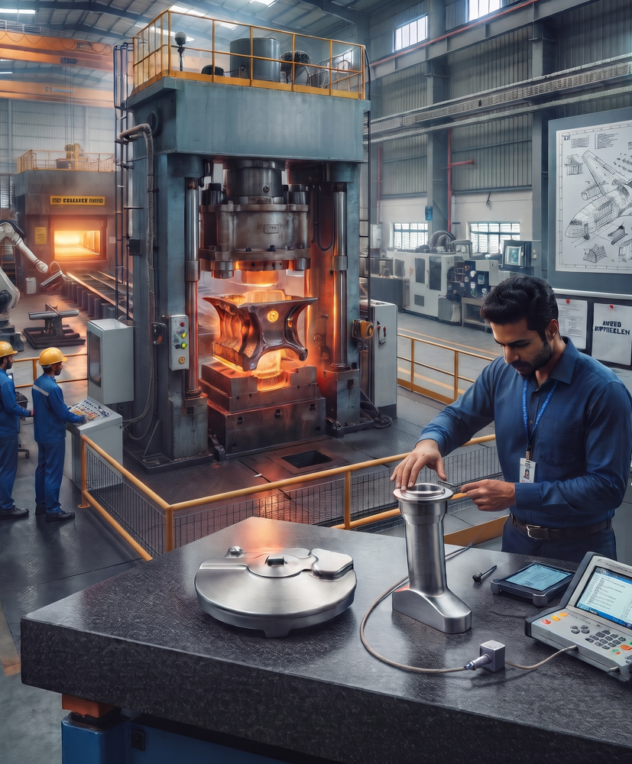
PMI verification — for CRA components, verify PMI results against the material specification. For large lots, perform spot-check PMI using a buyer-owned instrument on a random sample. PMI at incoming is the final check against material mix-up that may have occurred at the manufacturer or during shipping and customs handling.
Dimensional check — verify a sample of components against B16.5 or API 6A dimensional tables. At minimum: bore diameter, outside diameter, bolt circle, bolt hole diameter, face type and dimensions (raised face height for RF; ring groove depth and width for RTJ).
Visual inspection — surface condition of machined faces, bore surfaces, and external surfaces. Acceptable surface finish is a judgement — but obvious tool marks across the gasket face or raised face, handling damage to the RTJ groove, or visible surface indications on bore surfaces are rejectable.
Part 4: Cost and Lead Time Reality for US Buyers
Where the Cost Advantage Is Real
CRA grades (duplex, super duplex, Inconel) — the Indian cost advantage is most pronounced for these materials. US domestic supply of moderate quantities (10–100 pieces) of duplex 2205 or super duplex 2507 flanges carries a significant premium that Indian supply at 25–40% lower landed cost meaningfully reduces.
Moderate to large quantities of carbon steel (>50 pieces) — for quantities above 50 pieces of standard ASTM A105 flanges in Class 600 and above, Indian supply offers meaningful cost savings. For small quantities (<20 pieces) of standard carbon steel flanges, the Indian logistics overhead narrows the cost advantage significantly.
Custom geometry valve bodies — for non-standard valve body geometries that require custom die tooling, Indian die design and manufacture costs are typically 40–60% lower than US die costs. For programmes with repeated orders over multiple years, the die investment economics strongly favour Indian sourcing.
Where the Cost Advantage Narrows
Small quantities of standard items — for quantities of 1–5 pieces of standard B16.5 flanges in A105, the ocean freight, customs clearance, and documentation management costs approach or exceed the manufacturing cost savings. Domestic US distribution stocking of standard flanges is typically faster and comparably priced for small quantities.
Urgent requirements — Indian forging supply is not the right source for urgent replacement components needed in 2–4 weeks. Domestic US supply, or stocking Indian-sourced forgings in a US distribution centre, addresses urgent requirements.
High-volume commodity items — for very high-volume standard B16.5 flanges in A105 (Class 150, standard sizes, RF face) that are available from US distribution stock, the time value of a 12-week lead time from India versus 2-week delivery from stock may outweigh the cost advantage depending on project cash flow and schedule constraints.
Vinir Engineering’s Flange and Valve Body Forging Capability
Vinir Engineering supplies forged flanges and valve bodies to US oil and gas procurement teams with a complete API 20B supply package.
Forged flanges — ASME B16.5 Class 150 through 2500, NPS ½ through 24 in closed die forging. ASME B16.47 Series A and B, NPS 26 through 60 in ring rolling. Materials: ASTM A105, A350 LF2, A182 F316L, F51 (duplex 2205), F53 (super duplex 2507), F22 alloy steel.
Valve body forgings — gate, ball, check, globe, and choke valve bodies in API 6A, API 6D, and ASME B16.34 geometries. Weights 10–1,400 kg. Materials: AISI 4130, 4130M (NACE sour service qualified), A182 F316L, F51, F53, Inconel 625.
API 20B PSL 1 through PSL 3 — current license, verifiable in API product directory. Sour service capability: NACE MR0175 qualified procedures for 4130 and 4130M, 100% hardness testing, SSC and HIC coordination.
TPI — Bureau Veritas, DNV GL, SGS, Intertek. Standard 5-working-day advance notification for heat treatment witness. Documents prepared before each TPI visit. Track record of single-visit lot releases.
Documentation — MTR from approved mills, NABL independent chemistry and mechanical testing, complete heat treatment records with furnace charts, UT and MT/PT reports, PMI by in-house XRF (CRA components), dimensional inspection report, TPI release certificate, CoC.
Lead times — standard A105 flanges: 8–12 weeks to US port. Duplex and super duplex: 12–16 weeks. Valve bodies in alloy steel: 10–14 weeks. All timelines include ocean freight to US Gulf Coast ports (Houston, New Orleans, Corpus Christi).