
Defence Barrel-Blank and High-Strength Tubular Forging Supplier from India: Radial Forging, NDT and Material Traceability
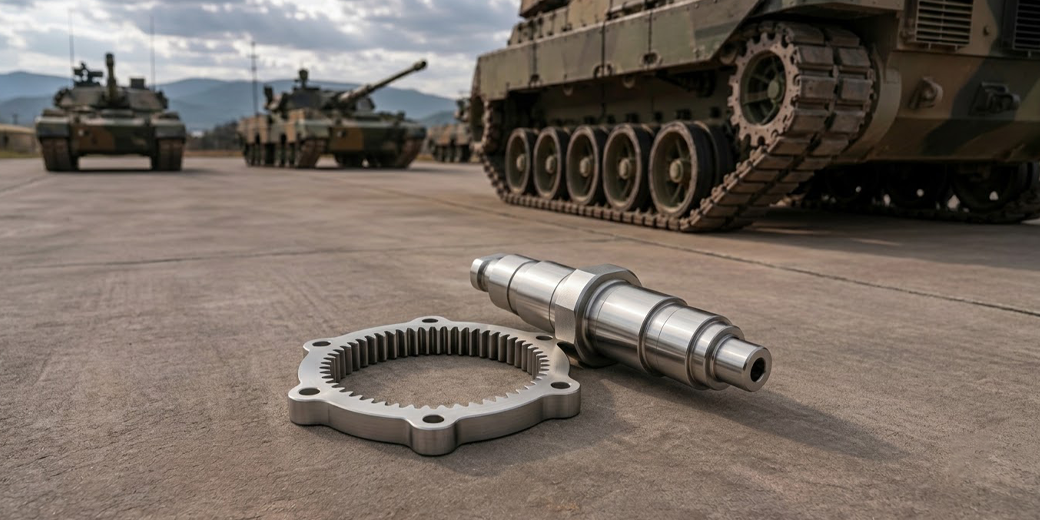
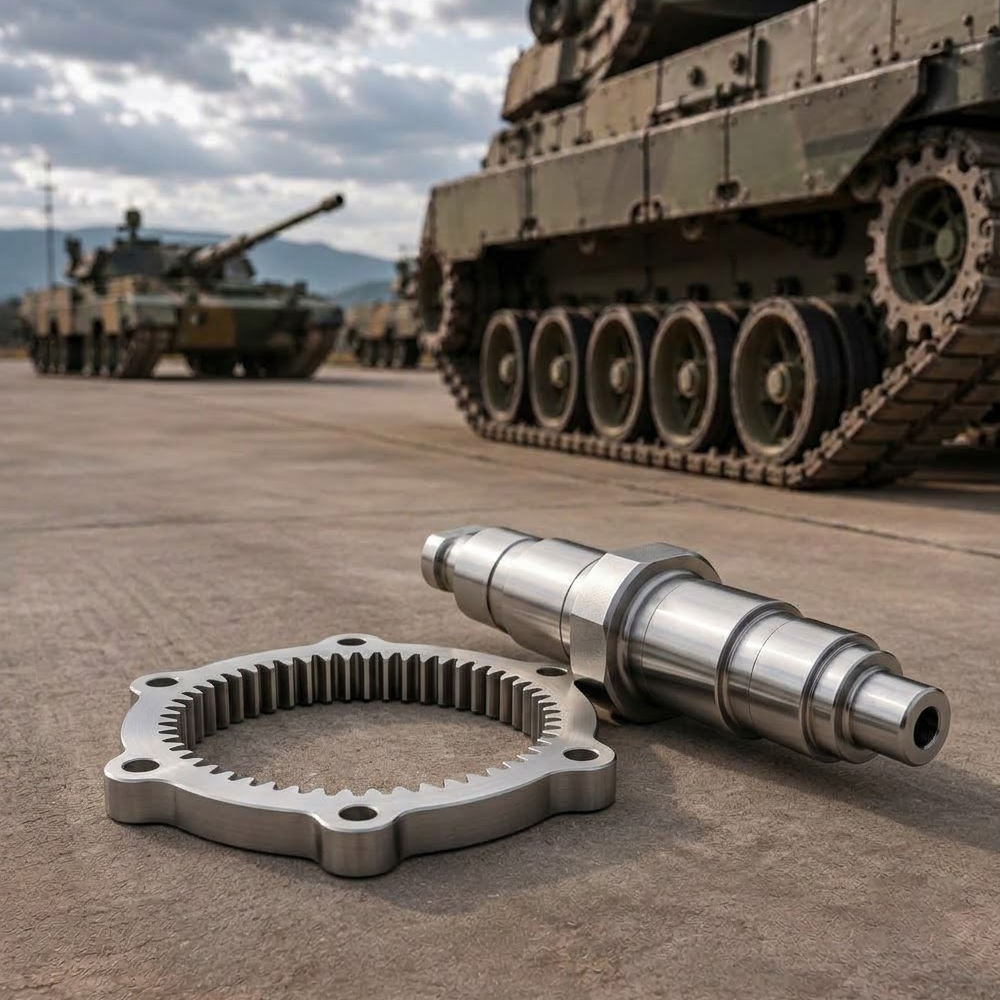
Long high-strength tubular defence components present an unusual manufacturing problem. They require dimensional consistency over substantial length, strong internal soundness, carefully controlled material properties and documentation robust enough to preserve component identity through multiple manufacturing operations.
Radial forging has historically been used for specialised tubular products because its multiple dies progressively work the component around the circumference while it is translated axially.
Technical literature on radial forging identifies tubes and specialised defence tubular preforms among established application classes.
For security and engineering reasons, the value of a professional supplier is not in providing a recipe for producing a finished weapon component. It lies in controlled metallurgical manufacture of approved blanks and tubular preforms to customer drawings, material specifications and inspection requirements.
Why Long Tubular Forgings Are Difficult
Length magnifies manufacturing errors.
A small amount of eccentricity near one end of a short component may be manageable. Over a long tubular forging, similar variation can produce meaningful differences in wall thickness, machining stock and straightness.
Heating also becomes more difficult because the complete component must remain within the permissible forging temperature range while deformation progresses.
A radial forging programme therefore needs coordinated control over thermal conditions, workpiece manipulation, reduction and intermediate geometry.
Solid Blank or Hollow Preform?
The optimal starting route depends on the approved component design.
A supplier can manufacture a solid axial preform that is subsequently bored by an approved downstream process, or a tubular starting form can be worked using an appropriate hollow-forging route.
The commercial trade-off involves material utilisation, machining, inspectability and process qualification.
For critical defence hardware, the lowest material-consumption route is not automatically the preferred one if the programme’s qualified manufacturing route requires a different sequence.
Internal Soundness Matters
Long high-strength components can be exposed to repeated mechanical and thermal stresses during service.
Internal discontinuities therefore matter.
Ultrasonic testing provides a way of evaluating volumetric integrity without destroying the forging.
The customer specification should define inspection technique, coverage and acceptance criteria.
The phrase “100% UT” is incomplete unless the governing inspection standard and allowable indications are also identified.
Material Families
Defence tubular forgings can use chromium-molybdenum and nickel-chromium-molybdenum alloy steels, stainless steels or other programme-specific alloys.
The exact grade should always come from the controlled drawing and material specification.
Substitution based on apparent equivalence can be unacceptable because small chemistry differences can materially change hardenability, toughness and heat-treatment response.
Why Straightness Is Not Just a Machining Problem
Straightness begins in forging and continues through heat treatment.
Uneven deformation can bend a long component. So can non-uniform heating or quenching.
Machining can correct some dimensional variation but cannot economically compensate for unlimited distortion.
A supplier therefore needs to control handling, support and thermal processing across the complete route.
Quality Controls for Long Defence Tubular Forgings
| Stage | Primary concern |
| Raw material | Grade, heat identity and cleanliness |
| Heating | Uniform temperature over long section |
| Radial forging | Concentric deformation and controlled reduction |
| Heat treatment | Through-section properties and distortion |
| UT | Internal integrity |
| Surface NDT | Detection of relevant surface discontinuities |
| Straightness inspection | Machining feasibility and geometry |
| Documentation | Complete material/process traceability |
Full-Length Traceability
A long forging can pass through descaling, straightening, heat treatment and machining operations that may remove original surface markings.
A robust traceability system therefore cannot depend on one chalk mark or temporary stamp.
Process travellers, controlled re-identification procedures and heat/batch records must preserve identity throughout manufacture.
That is especially important in defence programmes where parts can remain in inventory or service for many years.