
AMS 5663 Inconel 718 Forging Supplier for USA from India: Aeroengine & Gas Turbine Components
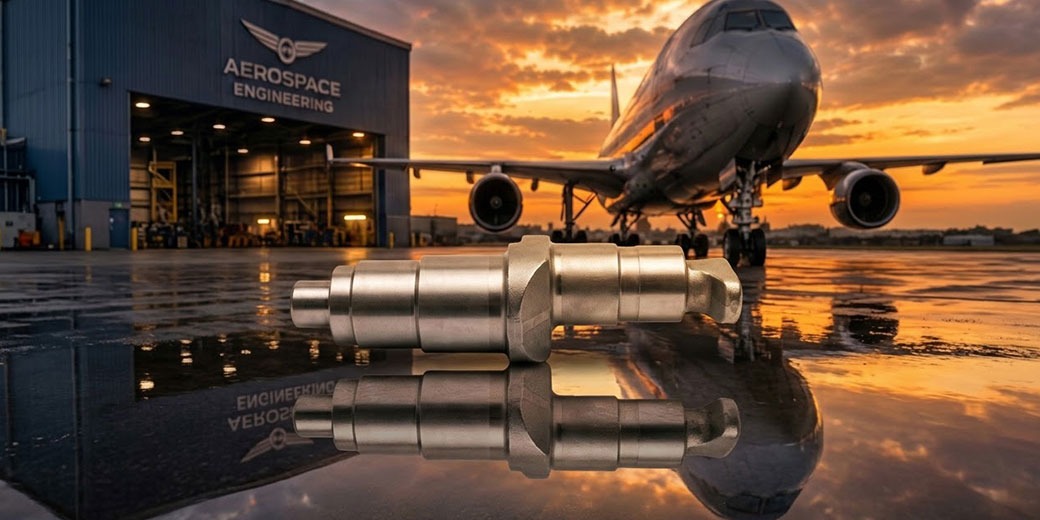
Few alloys illustrate the difficulty of critical forging better than Inconel 718.
The nickel-based superalloy is used where ordinary steels lose strength or corrosion resistance at elevated temperatures.
Its combination of high-temperature strength, oxidation resistance, fatigue performance and corrosion resistance makes it central to aerospace engines, industrial gas turbines and other high-temperature machinery.
For American buyers seeking an AMS 5663 Inconel 718 forging supplier from India, manufacturing capability must be evaluated at a metallurgical level.
Why Inconel 718 Is Used
Inconel 718 is a precipitation-hardenable nickel-based alloy. Its advantages include:
- Excellent high-temperature strength
- Good fatigue resistance
- Creep resistance
- Oxidation resistance
- Corrosion resistance
- Strong mechanical properties across demanding temperature ranges
Typical forged applications include:
- Compressor discs
- Turbine-related discs
- Shafts
- Rings
- Engine structural components
- Gas turbine parts
- High-temperature fastener and structural components
Your existing US aerospace content identifies Inconel 718 as one of the most important nickel alloys for aeroengine discs and rotating components.
Why Inconel 718 Is Difficult to Forge
Inconel 718 has a narrower processing window than common alloy steels. Forging temperature influences:
- Grain size
- Recrystallisation
- Flow stress
- Phase distribution
- Final mechanical properties
If temperature is too low, forging loads increase sharply and cracking risk can rise.
If temperature is too high or held too long, excessive grain growth can occur. The supplier must therefore control:
- Billet heating
- Furnace temperature
- Transfer time
- Die temperature
- Deformation sequence
- Reduction
- Reheating
- Final forging temperature
Grain Size Control
Aeroengine components require exceptionally controlled microstructures. Grain size affects:
- Fatigue performance
- Tensile properties
- Creep behaviour
- Crack growth resistance
Process development may therefore involve controlled deformation in specific temperature ranges to generate the desired recrystallised structure.
This is one reason Inconel forging capability cannot be assessed solely by hammer or press capacity.
AMS 5663
AMS specifications are widely used throughout the US aerospace supply chain.
AMS 5663 is commonly associated with Inconel 718 bar, forgings and related wrought forms in a precipitation-treated condition. However, the engineering drawing and procurement specification remain the governing documents. A supplier should always confirm:
- Exact AMS revision
- Material condition
- Heat treatment
- Mechanical requirements
- Grain-size requirements
- NDT class
- Customer-specific requirements
Heat Treatment of Inconel 718
The final properties of Inconel 718 depend heavily on precipitation strengthening.
Heat treatment typically involves controlled solution treatment followed by ageing. The thermal cycle controls the formation of strengthening phases within the alloy. Poor control can result in:
- Incorrect hardness
- Reduced strength
- Grain-boundary issues
- Inconsistent properties
- Reduced fatigue capability
For aerospace work, furnace calibration and pyrometry requirements therefore become critical.
Rotating Aeroengine Components
Rotating components represent some of the most demanding applications for Inconel 718. Potential components include:
- Compressor discs
- Turbine discs
- Shafts
- Rotating rings
Failure of a high-speed rotating component can have catastrophic consequences. As a result, buyers frequently require enhanced control over:
- Raw-material pedigree
- Serialisation
- Forging history
- Heat treatment
- Grain size
- UT
- Mechanical testing
- Dimensional inspection
- Record retention
Your existing aerospace framework highlights the particularly demanding inspection and documentation requirements applied to rotating components.
Ultrasonic Testing of Inconel 718
Inconel 718 aeroengine forgings often require sophisticated UT. Inspection quality is influenced by:
- Grain structure
- Component geometry
- Calibration standards
- Surface condition
- Acceptance class
Where required, reference blocks should be suitable for the material and inspection specification.
Ring Rolling for Inconel 718
Many engine and turbine components begin as seamless rolled rings. Ring rolling is attractive because it can produce:
- Circumferential grain flow
- Reduced machining allowance
- Efficient material utilisation
- Large-diameter ring geometries
The process requires tight control because nickel-based alloys generate high forming loads.
Inconel 718 for US Gas Turbines
The material is also widely relevant to industrial gas turbines. Gas turbine components must withstand:
- Elevated temperatures
- Rotational stresses
- Start-stop cycles
- Thermal gradients
- Oxidising environments
This creates demand for forged rings, shafts, discs and structural components capable of retaining mechanical performance under thermal loading.
Qualification Questions for US Buyers
A US procurement team should ask an Inconel 718 forging supplier:
- Which Inconel 718 product forms have you forged?
- What weight and diameter ranges can you handle?
- What forging-temperature controls are documented?
- How is grain size verified?
- What heat treatment is performed in-house?
- What pyrometry controls apply?
- What NDT capability is available?
- Do you have material-specific UT calibration blocks where required?
- What aerospace quality certifications apply?
- Can you provide complete traceability through machining?
Vinir Engineering for Inconel 718 Forgings
Vinir’s manufacturing capabilities include alloy and superalloy forging, heat treatment, ring rolling, machining and testing.
The company’s forge-to-finish approach is designed for high-mix, low-volume critical components where multiple controlled operations must remain connected under one traceability system.
US buyers can submit Inconel 718 drawings, AMS requirements and testing specifications for an engineering-led feasibility review.