
How US Oil & Gas Buyers Qualify Indian Forging Manufacturers
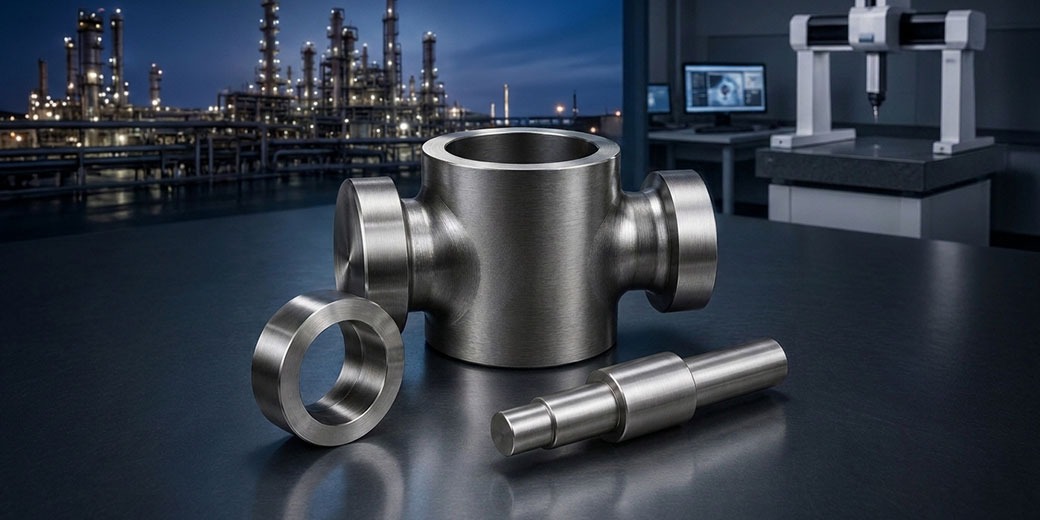
American oil and gas procurement teams evaluating Indian forging manufacturers for the first time face a qualification challenge that is structurally different from qualifying a domestic US supplier. The physical distance, unfamiliarity with Indian industrial geography, and absence of existing relationships with Indian quality management teams create uncertainty that domestic US procurement does not involve. At the same time, the technical qualification requirements — API 20B, NACE MR0175, ASME material specifications, TPI integration — are identical whether the supplier is in Houston or Hosur. This guide gives US oil and gas procurement and supply chain quality teams the complete process for qualifying an Indian forging manufacturer from first contact through first production order delivery.
At a Glance: US Oil & Gas Indian Forging Supplier Qualification Process
| Stage | Activity | Who Leads | Typical Duration |
| 1 | Supplier identification and document review | US procurement | 2–3 weeks |
| 2 | Technical screening questionnaire | US supply chain quality | 1–2 weeks |
| 3 | On-site capability assessment | US quality engineer + Indian supplier | Site visit 3 days + travel |
| 4 | Qualification test order with TPI witness | Both parties | 10–14 weeks |
| 5 | Documentation package review | US materials engineering | 2–3 weeks |
| 6 | Commercial terms and AVL listing | US procurement + Indian supplier | 3–4 weeks |
| Total | First contact to approved vendor | 6–12 months |
Why Qualifying an Indian Supplier Is Different – And Why It Is Not More Difficult
The instinct among US procurement teams encountering Indian forging suppliers for the first time is often to treat the qualification as requiring additional rigor compared to a domestic US supplier. This instinct is understandable but misdirected. The qualification process for an Indian forging supplier serving US oil and gas programmes is not more difficult than qualifying a domestic US supplier — it is differently structured.
What is different:
- The site visit requires international travel and advance scheduling — typically 6–8 weeks lead time to arrange
- Documentation review requires confirming that NABL accreditation scope covers the specific tests required — not just that NABL accreditation exists
- TPI integration requires confirming which internationally recognised inspection companies operate in the specific Indian manufacturing location
- Material sourcing requires confirming which raw material mills the supplier uses and whether those mills are on operator-approved lists
What is identical:
- API 20B license verification — same process, same API directory
- Technical capability assessment — same questions about press capacity, furnace calibration, NDT equipment, and QMS maturity
- Qualification test forging requirements — same material specification, same dimensional requirements, same NDE acceptance criteria
- Documentation package expectations — same content, same cross-referencing requirements
US procurement teams who approach Indian forging qualification as a variation of their standard supplier qualification process — adapted for geographic realities but not fundamentally different in technical content — execute it efficiently. Those who treat it as a uniquely complex international procurement activity with special scrutiny requirements create unnecessary delays without additional quality assurance value.
Stage 1: Supplier Identification and Initial Document Review
Finding API 20B Licensed Indian Manufacturers
The starting point for any US oil and gas procurement team is the API product directory — the public database of all API-licensed manufacturers globally. The directory is searchable by country, by standard (API 20B or API 20C), and by product type.
Searching “India” and “API 20B” in the product directory returns the current list of API 20B licensed Indian forging manufacturers.
For each returned result, the directory shows:
- Company name and facility address
- License number
- Product categories covered (flanges, valve bodies, fittings, etc.)
- PSL levels covered for each product category
- License expiry date
The first filter: does the PSL level on the license match what the programme requires? If a US deepwater GoM programme requires PSL 3 and the Indian supplier’s license covers only PSL 1 and PSL 2, that supplier cannot supply the programme regardless of any other credentials. This filter eliminates suppliers from the list before any further engagement.
The second filter: does the product category scope match? A license covering flanges does not extend to valve bodies. Confirm that every product type being procured is explicitly within the license scope.
Initial Document Request Package
After the API license pre-screening, US procurement teams request an initial document package from shortlisted Indian suppliers. A well-structured initial document request covers:
1. API 20B license copy — confirmed as matching the API directory entry
2. AS9100D certificate — current, scope covering all processes relevant to the programme
3. NABL accreditation certificate — with explicit scope listing:
– OES spectrographic chemical analysis
– Tensile testing (ASTM E8)
– Charpy impact testing — specifically at -46°C if cryogenic service is relevant
– Hardness testing (Brinell, Vickers, Rockwell)
4. Company capability statement including:
– Press capacities (tonnes) and year of manufacture
– Hammer bank specifications
– Ring rolling mill specifications (max diameter, max height, max weight)
– Heat treatment furnace inventory with AMS 2750 calibration status
– NDT equipment list with calibration status
5. Recent MTRs in the relevant material grade — minimum 3 lots from the past 12 months
6. TPI track record — list of internationally recognised inspection companies with which
the supplier has conducted witness inspections in the past 24 months
7. Reference customer list (confidential names acceptable if programme names are given)
8. PMI capability statement — in-house XRF or OES spectrometer, model and calibration
A well-organised Indian forging supplier will provide all of this within 5 working days. Response time and document organisation quality are themselves early indicators of quality system maturity — the same discipline that produces complete, accurate documents quickly is the discipline that produces complete, accurate quality records in production.
Red Flags in Initial Document Review
API license not found in the API directory.
If the supplier presents a certificate that does not match an entry in the API product directory, the certificate is invalid. Do not proceed.
NABL scope does not cover required tests.
If the NABL scope lists “Charpy impact testing” without specifying the temperature range and the programme requires -46°C testing, the supplier cannot provide NABL-accredited low-temperature Charpy results. Confirm explicitly.
AS9100D scope excludes key processes.
If the AS9100D certificate covers “forging” but excludes heat treatment, NDT, or machining — and the programme requires all processes to be in-house — the quality management system coverage is inadequate.
No TPI track record with recognised international companies.
Bureau Veritas, DNV GL, SGS, Intertek, Lloyd’s Register. If the supplier cannot name at least one of these companies from direct experience in the past 24 months, TPI integration for a US oil and gas programme will be the supplier’s first experience — a risk that affects programme execution.
MTRs from unrecognised mills.
If the material test reports provided come from mills that are unfamiliar to the US procurement team’s materials engineers, this warrants follow-up. It does not disqualify the supplier — but confirmation that the mill’s quality system has been audited and that the mill is not on any operator’s disapproved list is appropriate.
Stage 2: Technical Screening Questionnaire
After the initial document review, US supply chain quality engineers send a technical screening questionnaire covering the specific process capabilities relevant to the programme. A standard US oil and gas screening questionnaire for an Indian forging supplier covers approximately 40–60 questions across these areas:
Quality Management System Questions
- Date of last AS9100D surveillance audit — result and any open findings
- NCR rate for the past 12 months — number of NCRs opened and percentage closed within target closure time
- SCAR response time — average days from SCAR receipt to initial containment response
- Document control system — electronic or paper-based, backup and retrieval capability
- Key personnel continuity — years of service of quality director and head metallurgist
Process Capability Questions
Forging:
- Maximum closed die forging weight — press capacity and demonstrated production evidence
- Maximum open die forging weight — actual production evidence from past 12 months
- Forging simulation capability — do they use FEM simulation for die design optimisation?
- Flash trimming capability for complex valve body geometries
Heat Treatment:
- Number of production furnaces and their working zone dimensions
- Furnace with highest working temperature — required for Inconel solution annealing at 1,200°C+
- AMS 2750 TUS frequency — are quarterly TUS records current for all production furnaces?
- Quench tank specifications — volume, agitation system, water temperature monitoring
- Continuous data logging on all production cycles — yes/no
NDT:
- UT equipment — make, model, frequency range, phased array capability?
- Immersion UT tank dimensions — can the programme’s largest expected forging fit?
- Calibration standard materials available — list of calibration block alloys held in stock
- FPI system — penetrant type, sensitivity level qualification records
- MT — wet or dry, UV lamp intensity verification records
Testing laboratory:
- OES spectrometer model and element range — can it analyse all required elements for duplex or Inconel?
- Impact testing machine — model, maximum energy, lowest achievable test temperature (requires -46°C minimum for most programmes, -196°C for 9Ni steel)
- Tensile testing machine — load cell capacity for largest expected specimen cross-section
Sour Service Specific Questions (if applicable)
- Validated heat treatment procedure for 4130 at [specific section size] demonstrating ≤22 HRC
- SSC testing — in-house capability or external laboratory? If external, which laboratory?
- HIC testing — same question
- CE verification — on every incoming heat, yes/no, results available per heat?
- Ultra-low sulphur material sourcing — which mills, what sulphur specification?
CRA Specific Questions (if applicable)
- Ferritescope model and calibration reference standard certification
- G48 corrosion test capability — in-house or external? Test temperature range?
- Super duplex quench capability — quench tank volume relative to largest expected forging weight
Stage 3: On-Site Capability Assessment
The on-site visit is the most important single step in qualifying an Indian forging manufacturer. Documents can be prepared selectively; a shop floor cannot be staged.
Logistics of the Site Visit
Getting to Bangalore or Hosur: Major US manufacturing centres — Houston, Tulsa, Pittsburgh, Denver — have direct or single-connection flights to Bangalore (Bengaluru). The typical journey from Houston to Bangalore is 18–24 hours including connection. Hosur is a 45-minute drive from Bangalore Kempegowda International Airport.
Visa: US citizens require a valid Indian visa or e-Visa for business travel. E-Visa applications are processed online and typically granted within 3–5 business days. Business visas are valid for multiple entries and allow stays of up to 180 days per visit.
Site visit duration: A thorough capability assessment of an Indian forging manufacturer covers quality management system review, shop floor walkthrough, heat treatment area inspection, NDT area inspection, and test laboratory inspection. Plan 2 full working days for the assessment plus 1 day for travel and meetings. 3 days total in-country is the minimum for a meaningful assessment.
What to bring: The programme requirements — specific material specification, design code, PSL level, NDE acceptance criteria, and documentation requirements. A written assessment checklist that covers every process area relevant to the programme. The supplier should not know in advance exactly which quality records will be reviewed — the ability to produce any record on short notice is part of what is being assessed.
Shop Floor Assessment: What US Engineers Look For
Press area:
- Physical condition of the main press — hydraulic system cleanliness, control panel condition, operator presence and attitude during forging demonstration if available
- Pyrometer at the press — is it calibrated, functional, and actually used? Ask the operator to demonstrate a temperature reading on a heated billet
- Die storage — are dies identified with die numbers and component reference, stored in controlled racks, protected from damage?
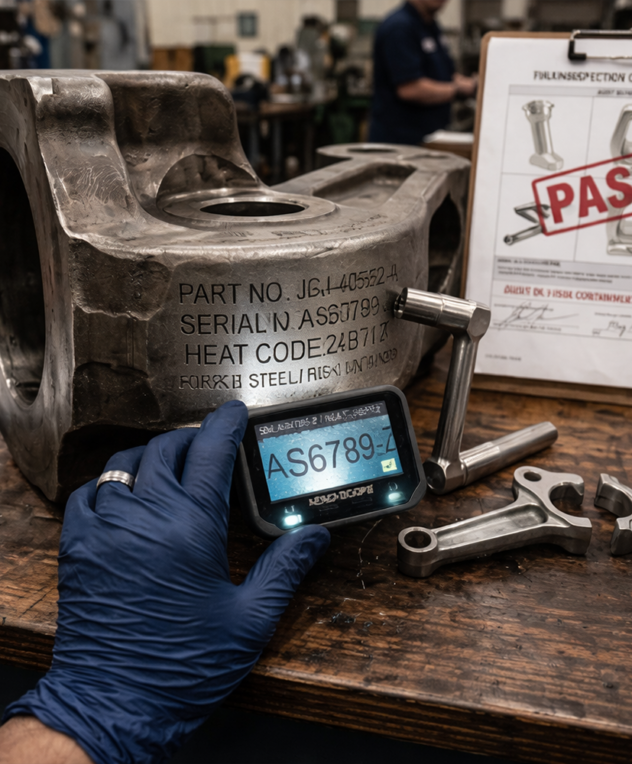
- Billet identification — ask to see a billet currently allocated to a job and trace its heat number to the MTR without advance preparation. This tests the traceability system under operational conditions
Heat treatment area:
- Furnace calibration labels — is the TUS label current? What is the last TUS date and the uniformity achieved?
- Furnace chart from the most recent production cycle — is it complete? Does it show the full cycle including ramp to temperature, soak period with actual temperatures recorded, quench initiation?
- Quench tank for duplex — is there mechanical agitation? Ask to see it operating. What is the tank volume? How is water temperature monitored?
- Thermocouple storage and calibration — are thermocouples stored in protective cases, individually identified, and calibrated certificates filed?
NDT area:
- UT equipment — what calibration standard is used for carbon steel? Is a separate duplex standard available? Is an Inconel standard available if the programme requires Inconel UT?
- Immersion UT tank — dimensions, water clarity, transducer mounting mechanism
- FPI system — is the penetrant system qualified to AMS 2647 equivalent? Are UV lamp intensity records maintained before each inspection session?
- MT equipment — dry or wet? Is the UV lamp intensity verified and recorded?
- Inspector qualifications — ask to see ASNT Level II certificates for both the UT inspector and MT/FPI inspector. What is the certification expiry date?
Test laboratory:
- OES spectrometer — make and model, last calibration date, calibration certificate available on request within 5 minutes
- Impact tester — what is the lowest test temperature the cooling bath achieves? -20°C? -46°C? -196°C? Ask to see a temperature log from a recent low-temperature test
- Tensile tester — load cell capacity and calibration certificate
Quality management area:
- NCR log — ask to see the NCR log. It should be populated with recent entries — an empty or near-empty NCR log in a busy forge shop means NCRs are not being formally recorded
- Corrective action closure — select 3 NCRs from the log and request the closed corrective action for each. Review the root cause analysis quality. “Operator retrained” is not root cause analysis
- Internal audit schedule — is the current audit cycle on schedule? Show me the last internal audit report and the status of findings
The Live Traceability Test
The single most revealing activity in the shop floor assessment. Ask to trace a forging currently in production back to its raw material MTR in real time — without advance notice, starting from the physical component on the shop floor.
What a functioning traceability system looks like:
- Identify the component — ask the operator for the traveller (job card)
- The traveller shows the heat number assigned to this component at billet cut
- From the heat number, the incoming inspection record is retrieved — showing the heat number was verified against the MTR at goods receipt
- The MTR is retrieved from the filing system — showing the heat number, mill name, chemistry, and mechanical properties
- Total elapsed time: under 10 minutes
What a failing traceability system looks like:
- The traveller is not immediately available or does not show the heat number
- The incoming inspection record has to be searched for by approximate date rather than retrieved by heat number
- The MTR filing system requires extensive manual searching
- Total elapsed time: 30+ minutes, or the trace cannot be completed
US buyers who have experienced supplier quality escapes from Indian forging manufacturers have almost universally found that the escape was preceded by a traceability gap that would have been visible in this live test if it had been performed during qualification.
Stage 4: Qualification Test Order with TPI Witness
Specifying the Qualification Test Order
The qualification test order should be designed to exercise every process step that the production programme will use. A standard US oil and gas qualification test order for an Indian forging manufacturer includes:
Number of test pieces: 3–5 components of the specific forging geometry (or a representative geometry if the production drawing is not yet released)
Material specification: Identical to the production specification. If the programme requires PSL 4 with SSC and HIC testing, the qualification test must be at PSL 4 with SSC and HIC testing — not at PSL 2 “to save time.”
TPI scope: Full witness of:
- Raw material incoming inspection and heat number verification
- Heat treatment — furnace charging, cycle completion, quench observation, hardness testing
- NDT — UT calibration setup and scanning, MT or FPI, including UV lamp intensity for fluorescent methods
- Final dimensional inspection
- Documentation package assembly review before TPI certificate issuance
TPI company: Whichever Bureau Veritas, DNV GL, SGS, or Intertek office the US operator or OEM specifies as their approved inspection company. US buyers should notify the TPI company directly — not rely on the supplier to engage them.
Documentation package review: The complete documentation package is reviewed by the US buyer’s materials engineering team before the qualification is accepted. Every document is reviewed for completeness, cross-reference consistency, and compliance with the programme specification.
Common Qualification Test Failures and Their Meaning
Charpy impact results below minimum at -46°C: Indicates heat treatment optimisation is needed — typically the tempering temperature for carbon steel or the normalising cycle for A350 LF2. Not necessarily a disqualifying finding if the supplier can demonstrate the corrective action and requalify.
G48 corrosion test failure for super duplex: Indicates sigma phase is present — the solution anneal was inadequate in temperature or the cooling rate was insufficient through the sigma phase range. This is a serious finding that requires the supplier to demonstrate understanding of the cause and the corrective heat treatment before requalification.
Documentation package incomplete on first submission: Missing documents, cross-reference errors (heat number on UT report does not match MTR), or superseded specification references. Not disqualifying for a first-time submission — but the pattern of how completely and how quickly the supplier corrects the package predicts how documentation management will function in production.
UT indication above acceptance criteria: A real internal defect in the qualification forging. This is the system working — UT caught what it was supposed to catch. The relevant questions are: was the defect correctly identified and dispositioned? Was a non-conformance report raised? Was the disposition technically sound (scrap or repair within allowed limits)?
Stage 5: Documentation Package Review
The qualification documentation package from the Indian forging manufacturer is reviewed by the US buyer’s materials engineering team before qualification acceptance. The review covers:
Completeness — every required document present. US materials engineers create a document checklist from the programme specification and verify each item is present before reviewing content.
Cross-reference consistency — the heat number on the MTR matches the heat number on the traveller, which matches the heat number on the independent chemistry report, which matches the heat number on the heat treatment record, which matches the heat number on the UT and MT reports, which matches the heat number on the CoC. Any inconsistency is a finding — even if the correct heat number appears on most documents.
Specification currency — the specifications referenced on the CoC are the current revision. A CoC referencing API 20B 4th edition when the 5th edition has been released since order placement is a finding.
TPI certificate compliance — the TPI certificate covers the scope that was specified (heat treatment witness, NDE witness, documentation review) and is issued by the specified company. A TPI certificate that covers only final inspection without heat treatment witness means heat treatment was not independently verified.
Operator-specific supplements — any operator-specific forms or supplements required by the programme are completed and signed.
The typical documentation package review takes 2–5 working days for a US materials engineering team. If the package is complete and consistently cross-referenced, review proceeds smoothly. If multiple return cycles are required to obtain a complete package, that pattern predicts production documentation management.
Stage 6: Commercial Terms and AVL Listing
Standard Commercial Terms for Indian Forging Imports
Payment terms: Irrevocable Letter of Credit against shipping documents for first orders. Documentary Collection (D/P) or open account for established relationships after demonstrated delivery track record.
Incoterms: CIF (Cost Insurance Freight) to the buyer’s specified US port for standard commercial transactions. DAP (Delivered at Place) to the buyer’s facility for buyers who prefer to manage customs clearance internally. DDP (Delivered Duty Paid) to the buyer’s facility for maximum buyer convenience — but this requires the Indian supplier to have a US customs broker relationship.
Lead time commitment: Confirmed production lead time in working days from purchase order receipt, broken down by: material procurement (for CRA grades), forging, heat treatment, testing, TPI, export documentation, and ocean freight. The confirmed lead time should be realistic — not optimistic — and should include a buffer for TPI scheduling variability.
Quality hold: US buyers typically include a quality hold provision — the right to stop production or shipment if a quality concern arises without requiring compensation for supplier production costs incurred up to that point. Indian suppliers familiar with international procurement accept this as standard.
SCAR response times: Agreed in the commercial terms — typically 24 hours for initial containment notification and 30 calendar days for permanent corrective action submission.
Approved Vendor List Maintenance
Once listed, AVL status with Indian forging suppliers requires active maintenance:
API 20B license renewal monitoring — API licenses are renewed on a triennial basis after a re-audit. US buyers set a calendar reminder 6 months before the license expiry date to confirm renewal is in progress.
Delivery performance tracking — on-time delivery percentage tracked per order and per quarter. Most US buyers set a threshold of 85% on-time delivery as the minimum for maintaining AVL status without a performance review.
Quality performance tracking – incoming rejection rate tracked per lot and per quarter. A single quality escape triggers a SCAR. Two quality escapes within 12 months triggers a performance review. Three quality escapes within 12 months triggers temporary AVL suspension.
Periodic re-assessment – most US oil and gas operators conduct supplier re-assessments every 2–3 years. For Indian forging suppliers, this may be conducted by document review and questionnaire rather than site visit if the delivery and quality track record is strong.
Vinir Engineering’s Qualification Support for US Buyers
Vinir Engineering’s qualification support for US oil and gas procurement teams is structured to make the qualification process as efficient as possible.
Stage 1 document package – complete qualification document package (API 20B license, AS9100D certificate, NABL accreditation with scope, capability statement, recent MTRs, TPI track record, PMI capability confirmation) provided within 5 working days of initial request.
Technical screening questionnaire – completed within 5 working days. All questions answered specifically and accurately – including acknowledgement of any capability that the programme requires but that Vinir does not currently hold.
Site visit support – advance scheduling with 4-week notice. Dedicated quality team for the duration of the visit. All requested records produced within 30 minutes. Shop floor demonstration available including heat treatment and NDT operations.
Qualification test order management – TPI notification issued 7 working days before planned heat treatment. All documents prepared before TPI visit. Target: TPI certificate issued within 2 working days of final inspection completion.
Documentation package – formatted to US buyer’s standard if a template is provided. All cross-references verified by Vinir’s quality team before submission. Target: zero return cycles for complete and compliant packages.
Frequently Asked Questions – US Buyers Qualifying Indian Forging Manufacturers
How long does the complete qualification process take for a US oil and gas Indian forging supplier?
The complete process from first contact to first production order delivery takes 6–12 months for a well-organised qualification. Stage 1 document review takes 2–3 weeks. The site visit takes 6–8 weeks to arrange (including travel booking and visa) and 3 days to execute. The qualification test order takes 10–14 weeks including manufacturing, TPI, and documentation review. Commercial terms and AVL listing take 3–4 weeks. US procurement teams who begin Indian forging supplier qualification during project FEED or early detailed design have the qualification complete before project procurement begins – enabling Indian forging to be included in the procurement bid list from the outset.
Is a site visit to India mandatory or can qualification be done remotely?
For programmes involving PSL 3 or PSL 4 forgings, critical sour service components, or CRA materials for offshore service, a site visit is strongly recommended and is required by most major US operators and subsea OEMs as part of their vendor qualification process. Remote qualification – based on document review and questionnaire only – is appropriate for lower-risk procurement (standard carbon steel PSL 1 or 2 flanges in moderate quantities) and for AVL re-assessment when a strong delivery and quality track record exists. The site visit invests approximately $3,000–5,000 per engineer in travel costs and is recovered within the cost savings of a single production order from an Indian-sourced supplier.
What is the most common reason US buyers reject Indian forging suppliers during qualification?
Based on the experience of US oil and gas procurement teams who have evaluated Indian forging manufacturers, the most common disqualification reasons are: API 20B license covering insufficient PSL level for the programme (addresses the GoM deepwater PSL 3 requirement); NABL scope not covering low-temperature Charpy at -46°C (relevant for offshore and LNG programmes); absence of in-house PMI capability (required by major US operators); and documentation package that is incomplete or internally inconsistent on first submission. None of these are fundamental capability limitations – they are specific gaps that can be addressed by the supplier with relatively modest investment. Suppliers who have addressed these gaps before beginning US qualification discussions compress the qualification timeline significantly.
How do US buyers manage the time zone difference when working with Indian forging suppliers?
The time zone difference between US time zones and India Standard Time is 9.5–12.5 hours depending on the US location and time of year. In practice this means that US buyers typically send emails and review documents in the morning (US time) and receive responses from Indian suppliers the following US morning – creating a 24-hour response cycle per exchange. US buyers who have successfully integrated Indian forging suppliers manage this by: establishing a dedicated quality contact at the Indian supplier who is available for direct voice or video calls during the 30-60 minute overlap between US end of day and Indian morning; setting clear written communication expectations (target: responses within 4 working hours of business day start in India); and front-loading information exchange at the beginning of each project phase rather than managing queries sequentially.
What happens if an Indian forging supplier fails the qualification test order and wants to requalify?
A failed qualification test order is not necessarily the end of the supplier relationship. The appropriate response depends on the failure mode. If the failure is in the documentation package – incomplete or inconsistently cross-referenced – the supplier corrects the package and resubmits without remaking the forgings, and the qualification resumes from Stage 5. If the failure is in a physical property – Charpy below minimum, G48 corrosion test failure – the supplier must investigate root cause, implement corrective action, and produce new qualification test forgings at their own cost. A second failure on the same property is typically disqualifying – it indicates a systemic process control gap rather than an isolated occurrence. A failure in TPI coordination – inspection not completed because documents were not ready – requires procedural correction and re-scheduling, not new forgings.