
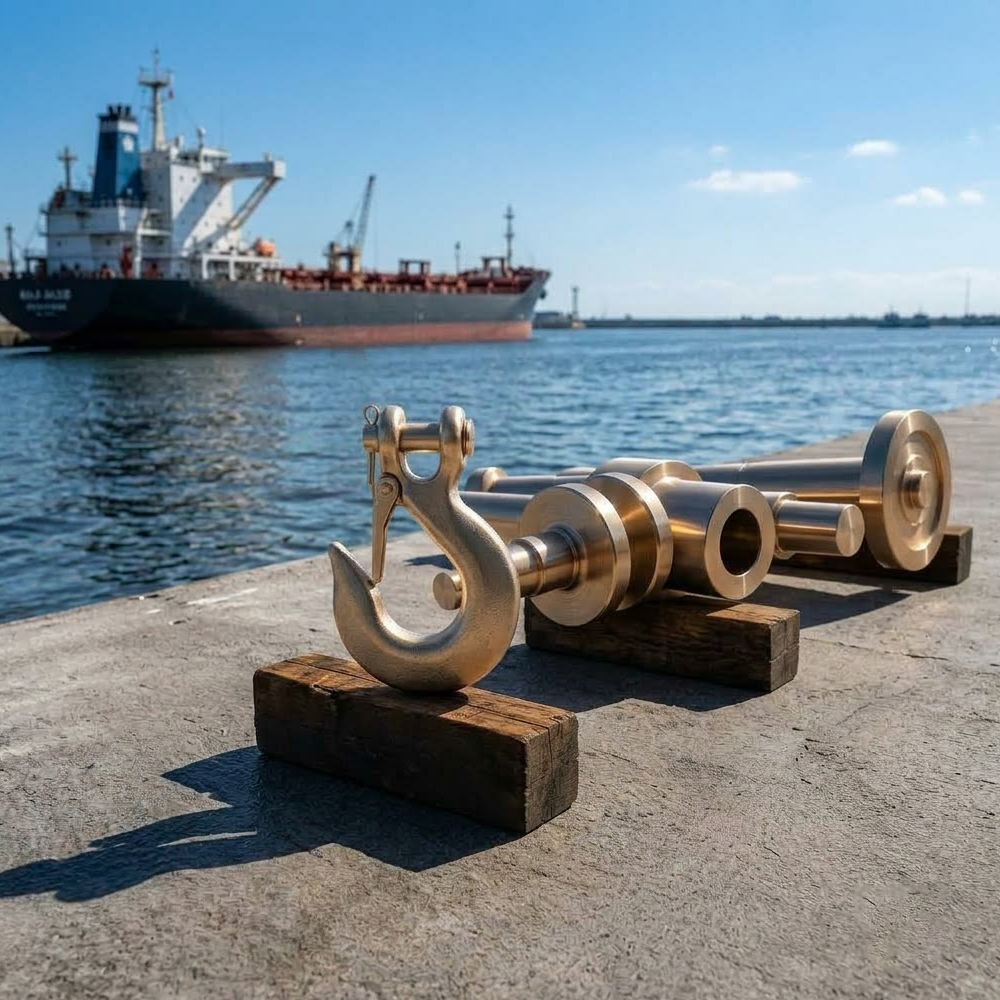
Radial-Forged Marine Shaft Supplier for USA from India: Propulsion, Transmission and Shipbuilding Applications
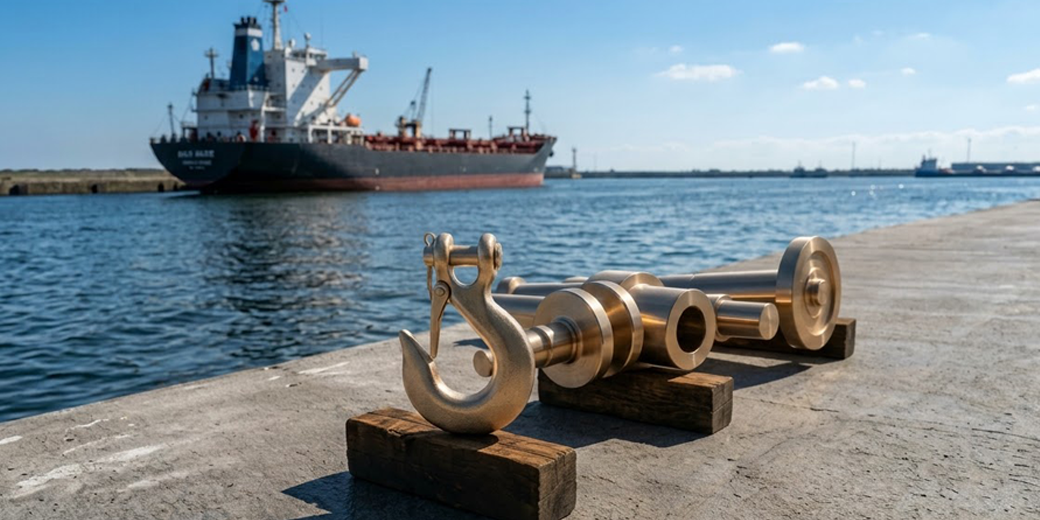
A marine propulsion shaft operates in a deceptively severe environment. It may rotate for thousands of hours, transmit enormous torque from propulsion machinery, experience bending from alignment and bearing loads, and remain exposed to seawater-related corrosion risks throughout its service life.
For shipbuilders and marine equipment OEMs, the shaft is therefore not a commodity steel bar with machined ends.
It is a long-life rotating component whose internal integrity, mechanical properties, straightness, surface finish and traceability all influence vessel reliability.
Why Marine Shafts Are Forged
Propulsion shafts frequently have large diameters and long lengths.
Machining the entire geometry from oversized bar can generate significant waste, particularly where end connections, couplings or bearing regions require larger diameters than the main shaft body.
Forging can redistribute material before machining.
It also introduces thermomechanical working that can develop a more controlled internal structure.
Radial forging is particularly relevant where the component remains largely axisymmetric and contains stepped diameters.
Cyclic Torsion and Bending
A propulsion shaft transmits engine or motor torque continuously.
At the same time, small alignment imperfections, hydrodynamic loads and vessel movement can introduce bending.
This means a shaft can experience combined cyclic stress for extended periods.
Fatigue behaviour therefore matters even when static tensile strength appears comfortably above normal operating loads.
A smooth fillet, properly machined journal and clean material can be more important to fatigue life than increasing nominal tensile strength by a small amount.
Corrosion Adds Another Failure Mechanism
Marine components introduce corrosion considerations that many land-based shafts do not face.
If protective systems fail or surfaces are exposed, seawater can contribute to localised corrosion.
A corrosion pit is not only a material-loss problem; it can also act as a local stress concentrator and accelerate fatigue crack initiation.
Material selection and surface protection must therefore be considered together with mechanical design.
Marine Shaft Procurement Checklist
| Buyer question | Why it matters |
| What classification society rules apply? | Determines material/testing requirements |
| What is the final shaft length and largest diameter? | Drives process feasibility |
| What material grade is specified? | Controls heat treatment and properties |
| Are ends larger than the main body? | Influences radial-forging material savings |
| What UT standard applies? | Establishes internal acceptance |
| Is final machining included? | Affects straightness/tolerance responsibility |
| What documentation is required? | Classification and traceability |
Radial Forging vs Open Die for Marine Shafts
Large marine shafts have traditionally been natural candidates for open die forging because of their length and mass.
Radial forging can provide another route for appropriate sizes and geometries.
The advantage becomes stronger when the shaft has repeated axial transitions that can be forged closer to shape.
For extremely large propulsion shafts, however, open die forging may remain the more practical process.
A supplier with access to both should choose based on the component rather than attempting to maximise utilisation of one machine.
Machining and Alignment
Even a strong forging cannot compensate for poor shaft geometry.
Bearing journals, flange interfaces, tapers and coupling surfaces require precision machining.
Overall straightness and concentricity influence alignment and rotating behaviour.
Heat treatment is therefore followed by careful straightness control and machining planning.