
Alloy Steel Selection for Critical Forgings: EN24, 4340, 4130, 300M, and CrMoV
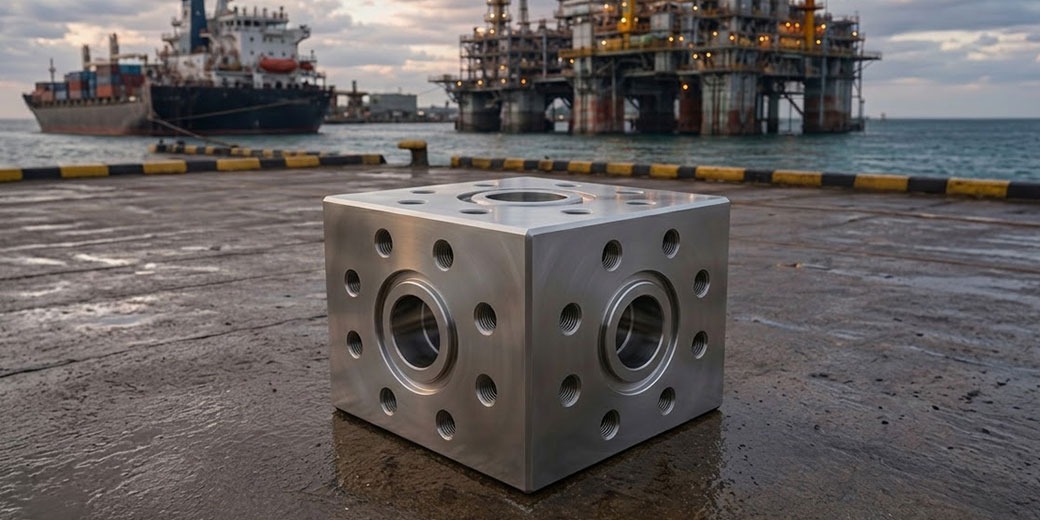
Selecting the correct alloy steel for a critical forging — where failure carries safety consequences in aerospace, defence, nuclear, marine, or oil and gas service — requires understanding the relationship between alloy composition, heat treatment, achievable mechanical properties, and the specific failure modes the component must resist. This technical guide compares the most widely used critical-industry alloy steels: EN24 (817M40), 4340, 4130, 4130M, CrMoV (30CrMoV9), P91, 300M, and 55NiCrMoV6 — explaining when each is appropriate and when substitution is acceptable or unacceptable.
| Steel Grade | UNS / DIN | Typical UTS (Q&T) | Primary Application |
EN24 (817M40) | UK BS970 / 817M40 | 850–1,050 MPa | Marine propulsion shafts, mining equipment shafts |
| 4340 (AMS 6415) | G43400 | 980–1,250 MPa | Aerospace structural, defence components, open die shafts |
| 4130 (AMS 6345) | G41300 | 550–860 MPa | Oil and gas valve bodies, general structural, API 20B |
| 4130M (NACE sour) | G41300 modified | 550–620 MPa (≤22 HRC) | Sour service valve bodies, NACE MR0175 compliance |
| CrMoV (30CrMoV9) | EN 10269 / 1.7701 | 750–950 MPa | Steam and gas turbine rotor discs and shafts |
| P91 (Grade 91) | 9Cr-1Mo-V-Nb | 585–760 MPa | Supercritical boiler nozzles, main steam piping |
| 300M (AMS 6257) | K44220 | 1,930–2,100 MPa | Landing gear, aircraft structural ultra-high-strength |
| 55NiCrMoV6 | DIN 1.2745 VAR | 1,000–1,200 MPa | Artillery barrel blanks, gun components |
EN24 (British Standard 817M40, containing 1.5% Ni, 1.2% Cr, 0.25% Mo) is the most widely used alloy steel for open die shaft forgings in marine, mining, and general heavy industrial applications. EN24 achieves 850–1,050 MPa tensile strength after Q&T — adequate for most propulsion shaft, crusher shaft, and conveyor shaft applications. Its 1.5% nickel content provides adequate toughness at ambient and low temperatures (Charpy typically 40–80 J at -20°C after standard Q&T). EN24 is produced by Indian steel mills (SAIL, Tata Steel, Shyam Steel) in billet form at competitive cost — making it the most economical choice for large-section Indian open die shaft forgings where the higher strength of 4340 is not required.
4340 (SAE/AMS 6415, containing 1.8% Ni, 0.80% Cr, 0.25% Mo) is the primary aerospace and defence structural alloy steel — it achieves 980–1,250 MPa tensile strength after Q&T, with adequate toughness in the 1,100 MPa range (Charpy 40–60 J at -20°C). AMS 6415 specifies 4340 with cleanliness requirements (magnetic particle inspection of billet, restricted sulphur and phosphorus) for aerospace applications. 4340 can be substituted for EN24 in applications requiring higher tensile strength — but EN24 cannot be substituted for 4340 in aerospace structural applications where AMS 6415 is specified. The key distinctions: 4340 has tighter chemistry control and cleanliness requirements; EN24 is a commercial standard with wider chemistry bands and no cleanliness specification.
4130 (SAE 4130, containing 0.28–0.33% C, 0.80–1.10% Cr, 0.15–0.25% Mo) is the workhorse alloy steel for API 20B oil and gas valve body forgings — providing adequate strength (550–860 MPa Q&T depending on section size and temper temperature) with good weldability (the lower carbon content compared to 4340 makes PWHT after welding simpler). API 20B requires 4130 valve body forgings in the annealed or normalised-and-tempered condition with hardness ≤22 HRC (approximately 230 HBW) for NACE MR0175 sour service compliance — this is the 4130M (sour-service modified) condition, where the maximum hardness requirement constrains the heat treatment to a higher tempering temperature that reduces strength but ensures NACE compliance.
CrMoV (30CrMoV9, EN 10269 Grade 30CrMoV9) is the standard alloy steel for steam and gas turbine rotor disc and shaft forgings — its 9% chromium content provides oxidation resistance and creep resistance at temperatures up to 550°C, while molybdenum and vanadium precipitation hardening maintains strength in the elevated temperature creep range. CrMoV is not interchangeable with 4340 or EN24 for structural applications — it is a specific power generation alloy with the elevated temperature properties that general engineering alloys cannot provide. P91 (Grade 91, 9Cr-1Mo-V-Nb) extends the CrMoV approach to supercritical steam conditions above 550°C — with niobium addition for additional precipitation hardening.
Vinir Capability
All standard critical-industry alloy steels in inventory and production capability: EN24 (817M40) open die shaft forgings to 15,000 kg; 4340 (AMS 6415) closed die and open die forgings 1–5,000 kg; 4130 and 4130M NACE MR0175-compliant valve body and structural forgings; CrMoV (30CrMoV9) power generation disc and shaft forgings with EN 10269 and ASTM A470 Class 8 dual certification; P91 (SA-182 F91) open die forgings for supercritical steam applications; 300M (AMS 6257/AMS 6417) closed die forgings for ultra-high-strength aerospace applications; 55NiCrMoV6 VAR open die gun barrel blanks. Material-specific NABL testing for all grades. AMS 2750-calibrated heat treatment for all aerospace and defence alloys.