
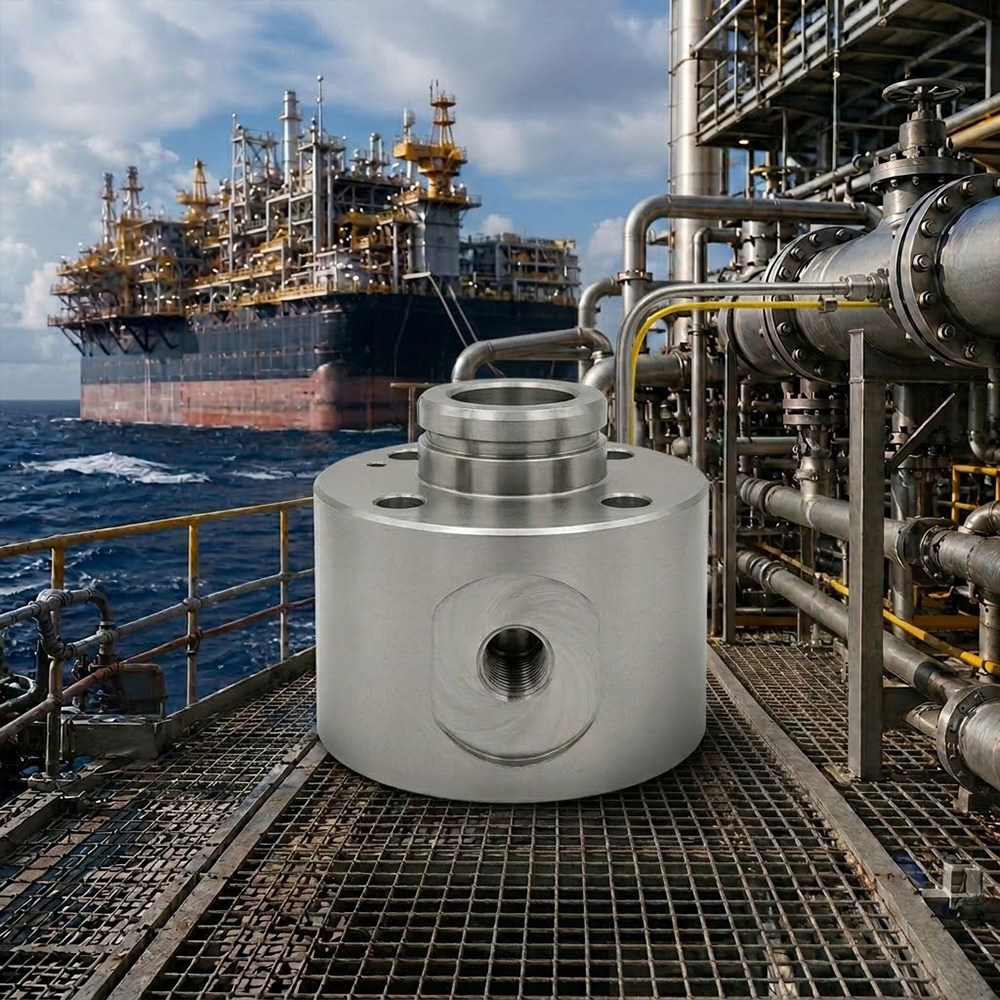
Titanium Forging Supplier for Marine, Offshore, and Chemical Applications
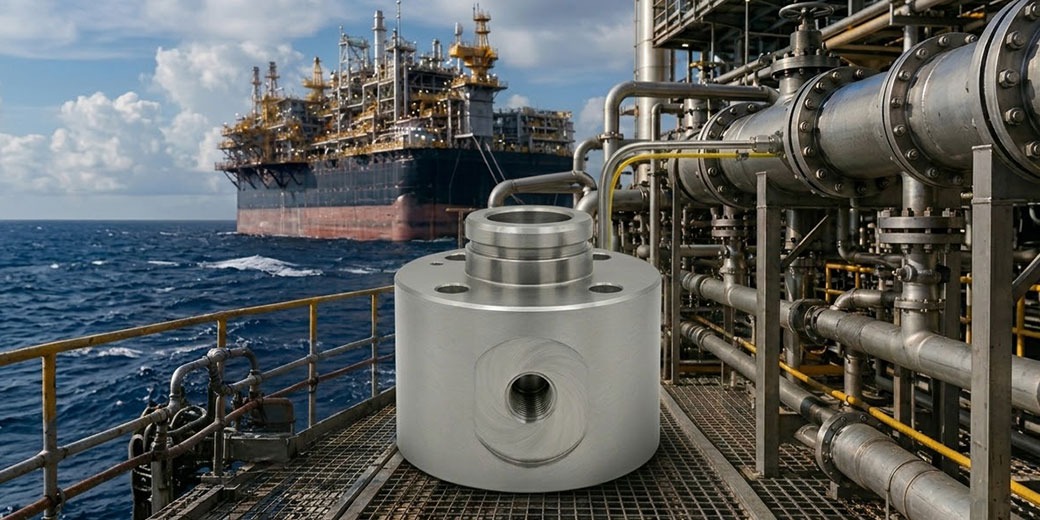
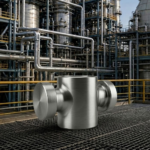
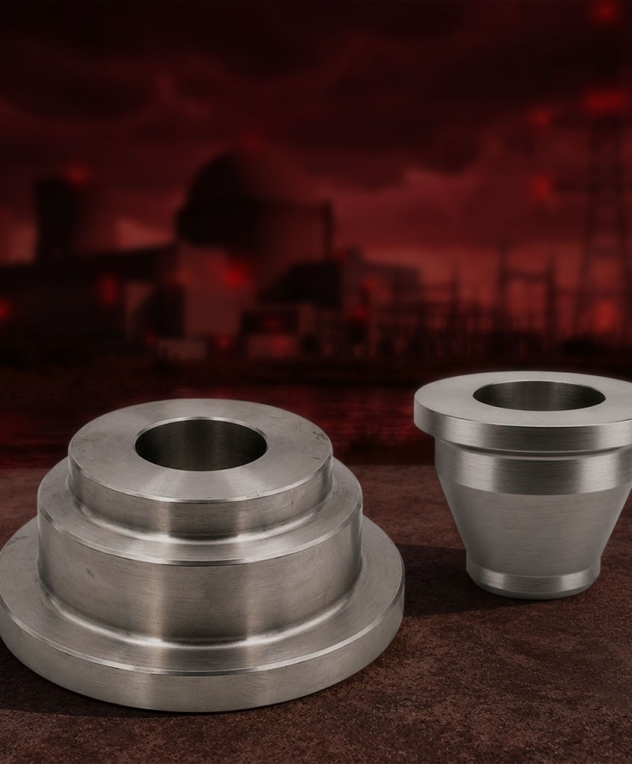
Titanium — specifically commercially pure (CP) grades and Ti-6Al-4V is the material of choice for marine seawater systems, offshore FPSO desalination, chemical processing in oxidising acid environments, and hydrogen electrolyser components. Indian forging manufacturers with titanium forging capability, controlled-atmosphere heating (preventing alpha case), and NABL testing to SB-381 specifications are positioned to supply the global titanium industrial forging market beyond the aerospace sector.
| Grade | UNS | Tensile Strength | Key Advantage | Application |
| CP Grade 1 | R50250 | 240 MPa min | Maximum corrosion resistance, maximum ductility | SWRO desalination, electrolyser, food |
| CP Grade 2 | R50400 | 345 MPa min | Best balance corrosion/strength | Marine heat exchangers, tubesheet, piping |
| CP Grade 4 | R50700 | 552 MPa min | Highest strength CP grade | Marine structural, pump shafts |
| Ti-6Al-4V Grade 5 | R56400 | 895 MPa min (STA) | Highest strength titanium alloy | Offshore structural, subsea, deep sea |
| Ti-6Al-4V ELI Grade 23 | R56401 | Like Grade 5, lower O₂+Fe | Fracture toughness + corrosion | Medical, cryogenic, deep sea pressure |
Commercially pure (CP) titanium’s corrosion resistance mechanism differs fundamentally from stainless steel and nickel alloys: titanium forms an extremely stable TiO₂ (titanium dioxide) passive film that self-heals immediately in the presence of even trace moisture or oxygen. This passive film is stable across a pH range of 0–14 and at temperatures up to approximately 315°C — far exceeding the stable passive film range of any stainless steel. As a result, CP titanium resists corrosion in nitric acid of all concentrations, chromic acid, hypochlorites, wet chlorine, seawater, and most organic acid environments.
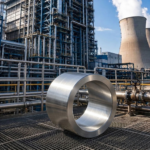
Seawater heat exchangers — particularly in FPSO desalination systems, offshore platform cooling systems, and naval vessel cooling are the largest single application of industrial titanium forgings. The titanium tubesheet forging (typically Grade 2, CP titanium) allows seawater to contact titanium directly without corrosion stainless steel tubesheets would experience biofouling-enhanced pitting corrosion within 2–5 years in warm seawater, while titanium tubesheets remain uncorroded for 25+ years of continuous seawater service.
The offshore subsea environment is driving increasing use of Ti-6Al-4V Grade 5 (STA condition) for structural applications. At 895 MPa minimum tensile strength, Ti-6Al-4V provides strength-to-weight ratio 6× better than structural steel, complete seawater corrosion immunity, and no hydrogen embrittlement susceptibility. Subsea titanium pressure housings, structural connectors, and ROV structural frames use Ti-6Al-4V forgings.
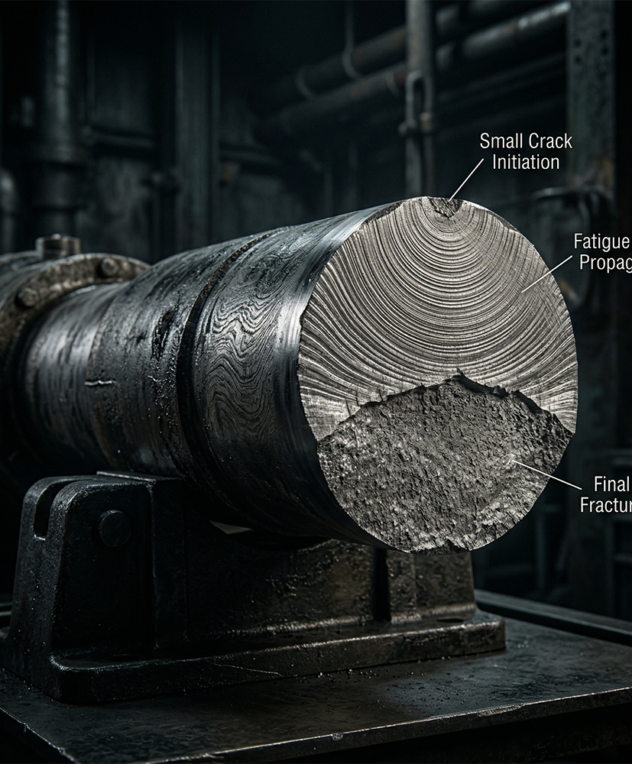
Alpha case prevention the critical quality issue in titanium forging heating applies equally to industrial and aerospace titanium applications: controlled-atmosphere heating (inert gas purge or nitrogen blanket) and post-machining etch inspection. Industrial titanium forgings may not require AMS 2154 Class AA immersion UT ASME SB-381 requires conventional contact UT per ASTM B600, making the cost more competitive for marine and chemical process applications.
Vinir Engineering — Capability for this Market
- AS9100D.
- CP titanium Grade 1, 2, and 4 forgings per ASTM B381 / ASME SB-381.
- Ti-6Al-4V Grade 5 forgings per ASTM B381 for subsea and offshore structural applications.
- Alpha case control: nitrogen gas purge during heating, electrolytic etch and visual inspection at 10× magnification of finished surfaces.
- NABL OES chemistry including oxygen, nitrogen, hydrogen verification.
- NABL tensile and Charpy testing.
- Contact UT per ASTM B600 / ASME SB-381.
- FPI per ASTM E165. PMI on 100% of titanium deliveries.
- Passivation per ASTM A380 / A967.