
Forging Supplier for India Power Plants: NTPC, Adani, BHEL Supply Chain
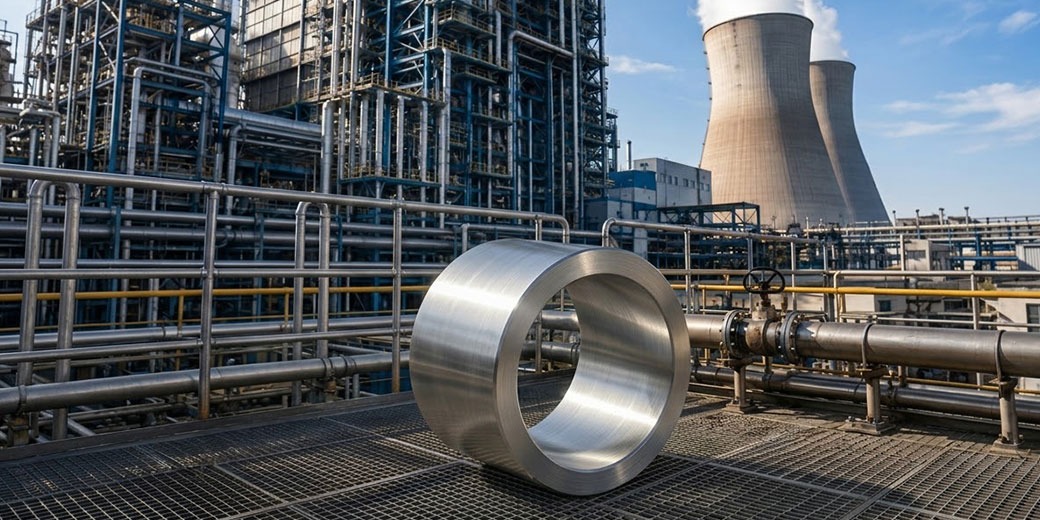
India’s power generation sector — 400+ GW of installed capacity operated by NTPC, Adani Power, Tata Power, CESC, and state utilities — is undergoing simultaneous expansion and maintenance of the existing thermal fleet. Turbine rotor disc forgings, valve body forgings for high-pressure steam systems, pressure vessel nozzle forgings for boilers, and pump shaft forgings for cooling water systems are the primary forging categories. Vinir’s IBR certification, P91 open die forging capability, and proximity to BHEL (Trichy, Haridwar) and Siemens Energy India positions it as a preferred domestic forging supplier for India’s power sector.
| Application | Material | Standard | OEM / Operator |
| Supercritical boiler pressure vessel nozzles | SA-335 P91, SA-182 F91 | ASME VIII, IBR | BHEL, Thermax, L&T Power |
| Steam turbine rotor disc forgings | 30CrMoV9 / CrMoV alloy steel | EN 10269, IS 2004 | BHEL, Siemens India, GE India |
| Main steam stop valve body | P91, F91 alloy steel | ASME B16.34, IBR | NTPC, Adani Power, state utilities |
| Boiler feed pump shaft forging | EN24, 4340, 17-4PH | BS EN 10083, IS 2004 | KSB India, Kirloskar Brothers, WPIL |
| Wind turbine tower flange (onshore) | S355NL | EN 10025-3, IRIS | Suzlon, Inox Wind, Envision |
India’s supercritical and ultra-supercritical power plants — NTPC’s Khargone (1,320 MW), Meja (1,320 MW), Darlipali (1,600 MW), and Adani Power’s Godda (1,600 MW) ultra-supercritical plant operate at steam conditions of 600°C and 250+ bar. At these extreme conditions, the standard P22 (2.25Cr-1Mo) steel used in older subcritical plants is inadequate P91 (9Cr-1Mo-V-Nb) alloy steel is mandatory for main steam piping, steam turbine inlet valve bodies, and superheater header nozzle forgings. P91 forging in India has historically been imported Vinir’s P91 forging capability directly addresses this import dependency.
IBR (Indian Boiler Regulations) certification is the regulatory requirement for all pressure parts in Indian boiler and steam system applications. IBR requires independent inspection of pressure parts by an IBR-authorised surveyor (from agencies like Lloyd’s Register India, Bureau Veritas India, TÜVIR India) who witnesses heat treatment and mechanical testing. IBR certification is the key credential distinguishing Indian forging manufacturers qualified for domestic power sector supply from those producing for general industrial markets.
BHEL — India’s largest power equipment manufacturer procures forged components for its steam turbine, boiler, and transformer manufacturing programmes at Haridwar, Trichy, Bhopal, and Hyderabad. BHEL’s vendor qualification requires ISO 9001 minimum (IBR for pressure components), material specification compliance, and qualification forging tests. Vinir’s proximity to BHEL’s Southern Region (Trichy, 300 km from Hosur) and established quality system are assets for BHEL supplier qualification.
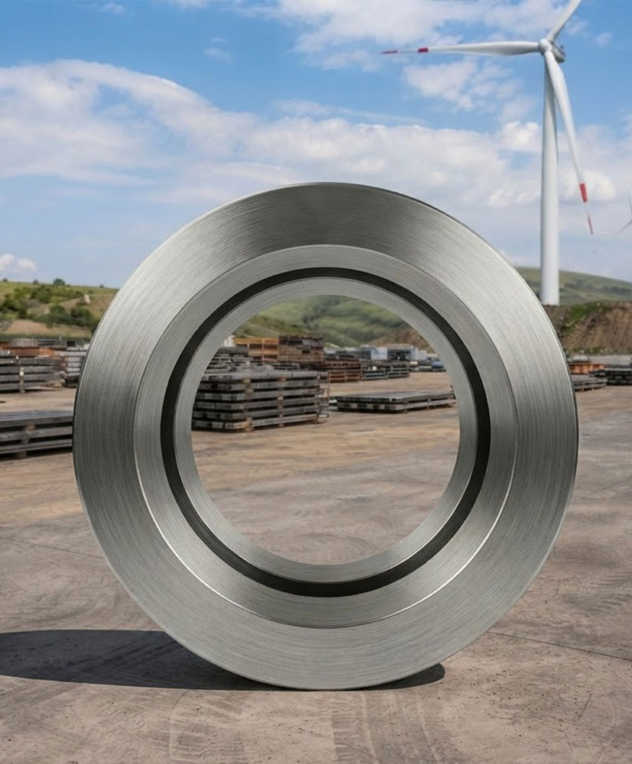
India’s renewable energy expansion — 500 GW by 2030 under the National Renewable Energy mission creates a domestic wind forging opportunity. Suzlon Group and Inox Wind India’s largest domestic wind turbine manufacturers source S355NL tower flanges and 42CrMo4 bearing rings from ring rolling manufacturers. At 3,000–4,000 turbine installations per year, the domestic Indian wind forging demand is approximately 18,000–32,000 individual ring-rolled forgings annually a major domestic opportunity alongside Vinir’s existing export wind market supply.
Vinir Engineering — Capability for this Market
- IBR certified — the mandatory credential for Indian power sector pressure component supply.
- P91 (SA-182 F91, SA-335 P91) open die forgings for supercritical boiler nozzle supply.
- CrMoV steam turbine rotor disc forgings to IS 2004 and EN 10269.
- IS 2004 and ASTM A182 dual certification for domestic and export power sector supply.
- NABL Charpy at elevated temperature (650°C) for CrMoV rotor qualification.
- Boiler feed pump shaft forgings in EN24 and 17-4PH.
- S355NL ring rolling to Ø4,500mm for Suzlon and Inox Wind tower flange supply.
- IBR survey coordination with Lloyd’s Register India and Bureau Veritas India.