
Pressure Vessel Nozzle Forging Supplier for Global Petrochemical and Power
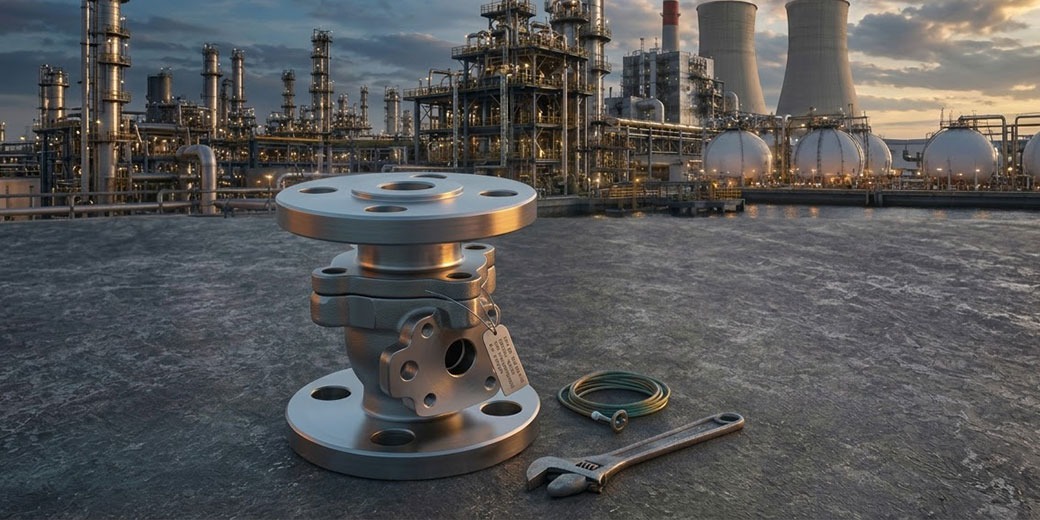
Pressure vessels — the large cylindrical or spherical steel containers that hold gases and liquids at elevated pressure in refineries, petrochemical plants, LNG facilities, and power stations contain multiple forged nozzle connections where piping enters and exits the vessel. Each pressure vessel nozzle forging is an ASME VIII Division 1 or Division 2 compliant component, forged in carbon steel, low alloy steel, stainless steel, or nickel alloy depending on the service fluid. Global demand for pressure vessel nozzle forgings exceeds 100,000 tonnes annually the largest single forging market category by volume. Indian forging manufacturers with AS9100D, NABL accreditation, and ASME material certification capability supply this market globally.
| Service | Material | ASME Grade | Nozzle Size Range |
| General refinery service | Carbon steel | SA-105 / SA-266 Cl.2 | DN25 – DN600 |
| Sour (H₂S) service | Low alloy steel | SA-105 NACE, SA-350 LF2 | DN25 – DN400 |
| Stainless (corrosive) service | 316L austenitic | SA-182 F316L | DN25 – DN400 |
| Cryogenic LNG service | 304L austenitic | SA-182 F304L | DN25 – DN600 |
| High-temperature service | P91 (9Cr-1Mo-V) | SA-182 F91 | DN50 – DN400 |
Pressure vessel nozzle forgings — the forged steel connections between a pressure vessel shell and the inlet, outlet, manway, and instrument nozzle piping are the most common individual forging type in the global petrochemical and refining industry. A single crude distillation column may have 30–60 individual nozzle forgings; a large spherical LPG storage vessel may have 20–40 nozzles; a hydrocracker reactor may have 15–30 nozzles including large-bore feed and product nozzles in P91 alloy steel for 400–450°C service temperature.
ASME VIII Division 1 (Rules for Construction of Pressure Vessels) is the governing code for most industrial pressure vessels. Division 1 specifies that nozzle forgings must meet ASME II Part A material specifications – SA-105 for carbon steel, SA-182 for alloy and stainless steel, SA-336 for high-temperature alloy steel. The material test report (MTR) for each nozzle forging must show all required mechanical properties and chemistry, with the forging manufacturer’s material certification referenced. For Division 2 vessels, 100% UT of all nozzle forgings above a specified size threshold is required.
Large refinery turnaround projects — the periodic 3–5 year shutdown for comprehensive inspection and maintenance create concentrated short-duration demand for replacement nozzle forgings. During a turnaround, corroded or cracked nozzles are cut out and replaced. The procurement timeline is often short 4–8 weeks from order to delivery for turnaround replacement nozzles. Indian forging manufacturers who stock common nozzle forging blanks in standard sizes can respond to turnaround demand faster than forge shops starting from billet.
The global LNG infrastructure expansion — new liquefaction trains in the US (Plaquemines LNG, Driftwood LNG), Australia (Scarborough), and Qatar (North Field expansion) creates substantial cryogenic pressure vessel nozzle forging demand. SA-182 F304L and F316L austenitic stainless nozzle forgings in the DN50–DN600 size range are the primary LNG nozzle category.
Vinir Engineering — Capability for this Market
- API 20B PSL 1–3.
- SA-105 carbon steel nozzle forgings, DN25–DN600.
- SA-182 F316L, F304L, F11, F22, F91 alloy and stainless nozzle forgings.
- SA-350 LF2 low-temperature service.
- NACE MR0175 hardness compliance for sour service.
- NABL Charpy at -46°C and -196°C (cryogenic LNG service).
- PMI on all stainless and CRA forgings.
- ASME VIII material certification format.
- Closed die nozzle forgings DN25–DN300 (1–200 kg).
- Open die rough nozzle forgings DN300–DN600 (200–2,000 kg).
- TPI by Bureau Veritas, Intertek, and SGS.
- Lead time: 6–10 weeks carbon steel; 10–14 weeks stainless and alloy steel.