
Forging Supplier for UAE Oil and Gas: ADNOC and Barakah Nuclear Supply Chain
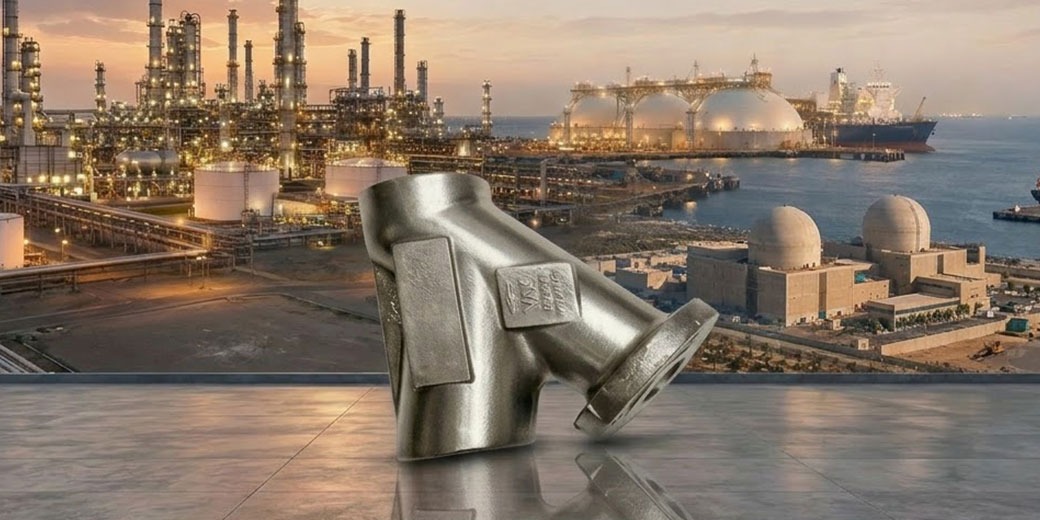
The United Arab Emirates operates the world’s seventh-largest proven oil reserves through Abu Dhabi National Oil Company (ADNOC) and associated companies. ADNOC’s upstream operations, downstream refineries at Ruwais, LNG operations at Das Island, and the Ruwais industrial complex are sustained consumers of API 20B certified valve body forgings, pressure vessel nozzle forgings, and structural fittings. The UAE’s Barakah Nuclear Power Plant the Arab world’s first commercial nuclear facility adds nuclear-grade forging categories. Indian API 20B certified forging manufacturers are well positioned to supply this market at exceptional logistics speed.
| Operator / Company | Facility | Key Forging | Standard |
| ADNOC (ADCO) | Onshore fields — Bu Hasa, Asab, Shah gas | Wellhead valve bodies, pressure housings | API 20B PSL 2/3, ADNOC specs |
| ADNOC Refining (Ruwais) | Ruwais refinery — 922,000 bpd | Pressure vessel nozzles, valve bodies | API 20B, ASME VIII |
| ADGAS (Das Island) | LNG production and export | Cryogenic flanges, A182 F304L/F316L | API 20B PSL 2/3, NACE |
| ENEC / Nawah (Barakah) | Four APR-1400 nuclear units | Nuclear-grade nozzle forgings | KEPIC, ASME Section III equiv |
| ADNOC Drilling | Onshore and offshore well services | Wellhead structural, drill collar forgings | API 20B PSL 2 |
ADNOC — the Abu Dhabi National Oil Company controls the UAE’s entire oil and gas upstream, midstream, and downstream sector. ADNOC’s vendor qualification is managed through the ADNOC Approved Vendors List (AVL) maintained by ADNOC’s Supply Chain Management directorate. The AVL qualification process parallels Aramco’s API 20B license, on-site audit, technical qualification package but applies ADNOC’s own Specification for Materials rather than Saudi SAES. ADNOC’s Supplier Assessment and Qualification (SAQ) process uses Bureau Veritas and Intertek as primary TPI agencies.
ADNOC Refining’s Ruwais refinery — the largest refinery complex in the Middle East with throughput capacity of 922,000 barrels per day is one of the highest-volume single-site consumers of pressure equipment forgings in the world. Valve body forgings in 4130M for HDS (hydrodesulphurisation) service and in Inconel 625 for high-temperature hot hydrogen service are the primary forging categories. The Ruwais expansion investment of $14.4 billion creates new greenfield procurement demand for valve bodies, pressure vessel nozzles, and structural flanges across the new Derivatives Park facility.
The Barakah Nuclear Power Plant — four Korean APR-1400 reactors being operated by Nawah Energy Company is the Arab world’s first commercial nuclear power plant, with Unit 1 operational since 2020 and all four units now generating electricity. Barakah uses KEPIC (Korean Electric Power Industry Code) the Korean nuclear quality standard equivalent to ASME Section III and NQA-1. Indian forging manufacturers who demonstrate KEPIC-compatible quality systems are potentially eligible for Barakah maintenance and life extension component supply.
ADGAS on Das Island — operating LNG production since 1977 and evaluating life extension and potential capacity upgrade requires cryogenic service forgings (A182 F304L and F316L) for LNG storage and loading equipment. New LNG train additions would require new cryogenic flange and valve body forging procurement equivalent to a greenfield LNG train, creating a significant near-term opportunity.
Vinir Engineering — Capability for this Market
- API 20B PSL 1–3.
- A182 F316L and F304L for ADGAS cryogenic LNG service.
- 4130M NACE MR0175 sour service for ADCO Shah gas field.
- Inconel 625 for ADNOC Refining hot hydrogen service.
- NABL Charpy at -196°C for cryogenic qualification.
- ADNOC AVL TPI by Bureau Veritas and Intertek.
- PMI on all CRA components.
- SA-508 Grade 3 nozzle forgings under NQA-1-compatible quality system for Barakah nuclear maintenance consideration.
- Ocean freight Chennai to Abu Dhabi or Ruwais: 6–10 days the fastest international transit available.