
Hastelloy and High-Nickel Alloy Forging for Chemical and Process Industry
Hastelloy C-276 (UNS N10276), Hastelloy C-22 (UNS N06022), Alloy 400 (Monel, UNS N04400), and Alloy 200/201 (commercially pure nickel) are the specialty nickel alloys used in the most aggressive chemical processing, pharmaceutical, flue gas desulphurisation, and nuclear fuel reprocessing environments. Indian forging manufacturers with high-nickel alloy capability controlled-atmosphere heating, alloy-specific die materials, and NABL testing to ASTM B574/B462 specifications are positioned to supply the global chemical process industry at meaningful cost advantage over European and North American specialty forge shops.
| Alloy | UNS | Key Resistance | Primary Application |
| Hastelloy C-276 | N10276 | Oxidising + reducing acids, chlorides | Flue gas scrubbers, pharmaceutical reactors, chemical piping |
| Hastelloy C-22 | N06022 | Higher oxidising resistance than C-276 | Pharmaceutical, nuclear fuel reprocessing |
| Alloy 400 (Monel) | N04400 | Seawater, hydrofluoric acid, alkalis | Marine, HF acid service, salt plant equipment |
| Alloy 200/201 | N02200/201 | Caustic alkalis, very high purity service | Chlor-alkali, food processing, nuclear |
| Hastelloy B-3 | N10675 | Reducing hydrochloric acid, sulphuric acid | HCl handling, chemical synthesis reactors |
Hastelloy C-276 the most widely used corrosion-resistant nickel alloy in the chemical process industry contains 57% nickel, 15.5% chromium, 16% molybdenum, and 4% tungsten. The molybdenum-tungsten combination (total 20%) provides unprecedented resistance to both oxidising and reducing acid environments C-276 is one of very few alloys that resists both concentrated sulphuric acid and concentrated hydrochloric acid simultaneously. Flue gas desulphurisation (FGD) scrubbers which treat power plant stack gases containing SO₂, hydrochloric acid, and chlorides use C-276 for the most severe internal components.
Alloy 400 (Monel) a copper-nickel alloy (approximately 67% nickel, 32% copper) is the standard material for marine service in seawater, hydrofluoric acid handling equipment, and chemical plant components where both nickel and copper provide corrosion benefits. For HF (hydrofluoric acid) alkylation units in petroleum refineries where hydrofluoric acid is used as a catalyst Monel is the mandatory material because HF rapidly attacks all stainless steels but does not significantly corrode Monel. All pressure-containing components in the HF acid section of an alkylation unit must be Monel or higher-nickel alloys.
Alloy 200 and 201 (commercially pure nickel, 99%+ Ni) are specified for the most caustic service: concentrated sodium hydroxide at temperatures above 60°C, where stainless steel and most other alloys experience rapid stress corrosion cracking. Chlor-alkali plants use Alloy 200 for caustic handling piping flanges and valve body forgings. Alloy 201 (low-carbon version, 0.02% max C) is preferred for service above 315°C where high-carbon nickel may experience graphite sensitisation.
Forging high-nickel alloys requires specific process adaptations: the forging temperature window is narrower (Hastelloy C-276 should be forged at 1,065–1,175°C deviating above creates incipient melting risk; below creates excessive flow stress); sulphur contamination during heating must be prevented (sulphur compounds react with nickel grain boundaries creating embrittlement sulphur-free furnace linings or inert gas atmosphere are required); and die materials must resist higher contact pressures from nickel alloy flow stress.
Vinir Engineering — Capability for this Market
- AS9100D.
- Hastelloy C-276 (N10276) and C-22 (N06022) forgings per ASTM B574 solution annealed with rapid quench.
- Alloy 400 (Monel, N04400) forgings per ASTM B564.
- Alloy 200/201 forgings per ASTM B564.
- Sulphur-free furnace environment for all nickel alloy heat treatment.
- NABL OES chemistry to ASTM B574/B564 specified elemental ranges including Mo, W, Cu verification.
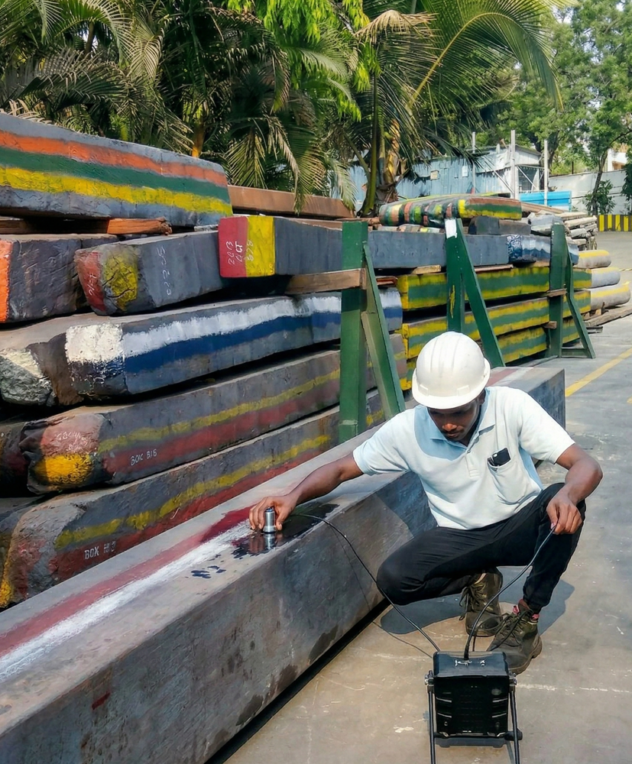
- 100% UT with alloy-specific calibration standards.
- FPI per ASTM E165.
- PMI 100% on all nickel alloy deliveries.
- Closed die forgings 1–500 kg; open die forgings 500–5,000 kg.