
Steel Forgings Manufacturer in India: Carbon, Alloy and Tool Steel
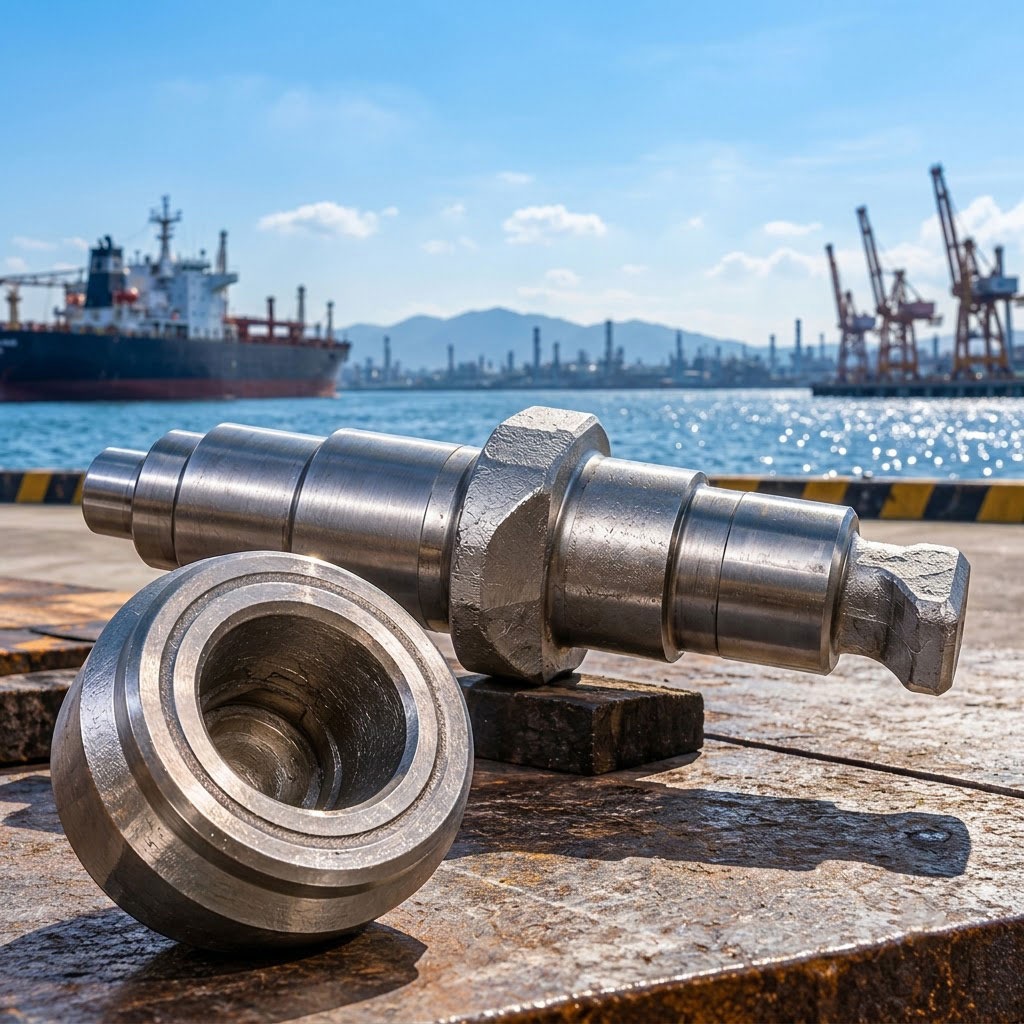
Steel forgings are components shaped from carbon, alloy or tool steel by hot compressive deformation, giving them higher strength, toughness and fatigue life than cast or machined-from-plate parts. Indian steel forging manufacturers supply shafts, flanges, rings, gear blanks, hubs and blocks to the defence, oil & gas, power, rail, mining and heavy engineering sectors. Choosing a manufacturer that controls forging, heat treatment, machining and testing in-house is the most reliable way to get consistent properties.
At a Glance: Common Steel Forging Grades
Steel Family | Typical Grades | Typical Applications |
| Carbon steel | EN8, EN9, C45, ASTM A105, A350 LF2 | Flanges, fittings, shafts, general engineering |
| Alloy steel | EN19 (42CrMo4), EN24 (817M40), 4140, 4340, 4130 | Shafts, gears, high-strength structural parts |
| Low-alloy pressure steel | ASTM A182 F11/F22, SA-508, F6NM | Pressure parts, power and nuclear |
| Spring and armour steels | 45CrNiMoVA and similar | Torsion bars, defence |
| Tool and die steels | H11/H13 type, hot-work grades | Dies, tooling inserts |
| Ultra-high-strength | 300M | Landing gear, aerospace structures |
Carbon Steel Forgings
Carbon steel forgings are the workhorse of industrial supply — used for flanges, fittings, shafts and general mechanical parts. Grades such as ASTM A105 and A350 LF2 are standard for piping components, with LF2 offering impact toughness at low temperatures. Carbon steels are economical, readily available and easy to machine.
Alloy Steel Forgings
Alloy steels add chromium, molybdenum and nickel to achieve higher hardenability and strength after quench and temper. EN19, EN24, 4140 and 4340 are the most widely specified for shafts, gears and high-strength components.
Pressure and Power Steels
Chromium-molybdenum grades such as F11 and F22 and nuclear-grade SA-508 are used where parts operate under pressure and temperature. These grades need controlled heat treatment and full traceability, often under IBR, ASME or PED.
Forging Processes for Steel Components
- Open die forging: large shafts, blocks, discs and custom shapes in low volumes
- Closed die forging: near-net shapes in medium and high volumes
- Ring rolling: seamless rings and flanges
- Radial forging: long shafts, step shafts and hollow tubes
Heat Treatment: Where Steel Properties Are Made
The same grade can deliver very different properties depending on heat treatment. Normalising, annealing, quench and temper, and stress relieving must be matched to the section size and required properties. In-house heat treatment with calibrated furnaces gives the manufacturer direct control over results.
Testing and Certification
Steel forgings for critical applications are supplied with:
- Third-party or customer inspection on request
- Chemical analysis and mechanical test results
- Impact testing where specified
- UT, MT or PT as required
- EN 10204 3.1 or 3.2 certificates
What to Look for in a Steel Forgings Manufacturer in India
- Range of processes, so the route suits your volume
- In-house heat treatment, machining and NDT
- Accredited test laboratory
- Sector certifications relevant to your industry
- Proven experience in your grade and weight range
Why Buyers Choose Vinir Engineering for Steel Forgings
- 42 years of forging carbon, alloy and pressure steels
- Open die forgings up to 15,000 kg, plus closed die, ring rolling and radial forging
- In-house heat treatment, CNC machining, NDT and assembly
- AS9100D across all four manufacturing units, with IBR, ABS and API approvals
- NABL-accredited in-house test lab
- Plants in Bangalore and Hosur serving customers across India and export markets