
Mandrel Radial Forging for Hollow Shafts and Tubes: Wall-Thickness Control, Concentricity and Material Savings
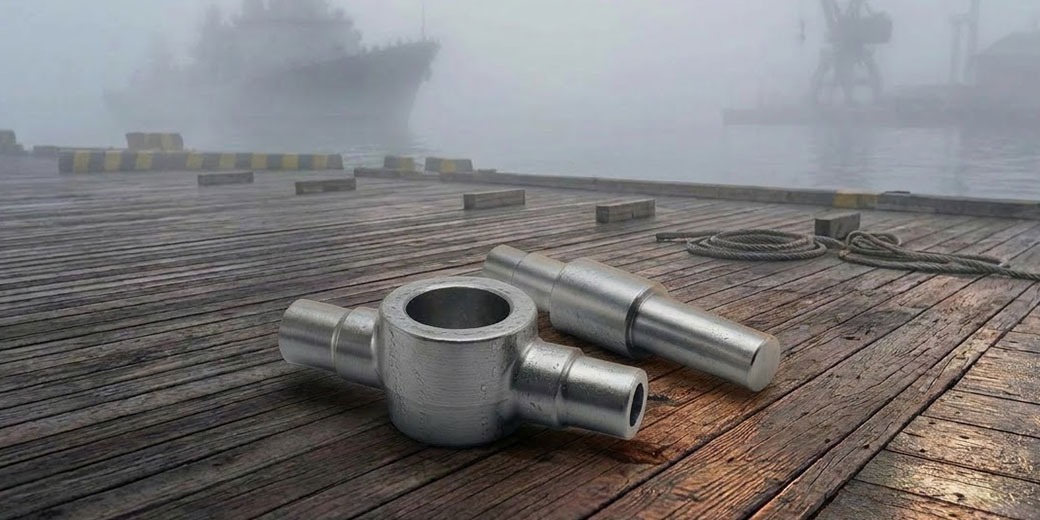
Hollow shafts and tubes present one of the strongest technical and economic applications for radial forging.
If a finished component contains a large central bore, manufacturing the entire part from solid stock means purchasing a considerable amount of material that will eventually be removed during drilling, boring or trepanning.
Mandrel radial forging provides an alternative manufacturing route.
By positioning a mandrel inside the workpiece while external radial dies progressively deform the material, a manufacturer can produce a hollow forged preform much closer to the required outside diameter, inside diameter and wall thickness.
For expensive aerospace, defence, energy, marine and oil & gas alloys, the resulting improvement in material utilisation can significantly influence finished-component economics.
How Does Mandrel Radial Forging Work?
During mandrel radial forging, the mandrel occupies the internal region of the workpiece while the radial forging dies act externally.
As the dies progressively reduce the outside diameter, material flows longitudinally and around the mandrel.
The manufacturing process therefore has to control several dimensions simultaneously:
- Outside diameter: Enough material must remain for final machining while unnecessary excess stock is minimised.
- Inside diameter: The forged bore should remain within the planned machining envelope.
- Wall thickness: Material distribution around the circumference must remain sufficiently uniform.
- Concentricity: The inside and outside diameters need to remain appropriately aligned.
- Component length: Longitudinal material flow changes the length as the cross-section is reduced.
- Axial profile: Different outside diameters can potentially be developed along different sections of the component.
This makes mandrel radial forging considerably more sophisticated than simply reducing the outside diameter of a solid bar.
Why Hollow Radial Forging Can Save Significant Material
Consider a finished hollow shaft with a large central bore.
If the component is manufactured from solid bar, the buyer must first purchase the entire cylindrical volume. The machine shop then spends time and tooling removing the centre.
A hollow forged preform can eliminate a substantial portion of this unnecessary starting material.
The economic benefit becomes particularly important for expensive materials such as titanium alloys, nickel-based superalloys and premium high-strength steels, where raw material can represent a large share of total component cost.
Solid Bar vs Hollow Forging
| Manufacturing Route | Raw-Material Requirement | Internal Machining | Process Complexity | Typical Suitability |
| Machine from solid bar | Highest | Highest | Low | Smaller/simple parts |
| Solid forging followed by boring | High | High | Moderate | Existing qualified solid-forging routes |
| Open-die mandrel forging | Lower | Moderate | Moderate to high | Very large hollow forgings |
| Mandrel radial forging | Potentially lower | Lower | Higher | Long hollow shafts and tubular preforms |
Wall-Thickness Control in Hollow Radial Forging
Wall-thickness variation is one of the most important manufacturing considerations in hollow radial forging.
If the internal mandrel and external deformation are not correctly coordinated, one side of the component may become thicker than the other.
This can create problems later during machining. A component may have sufficient external machining allowance but insufficient material on one side of its internal bore.
For rotating shafts, excessive eccentricity can also complicate balancing and final dimensional control.
Why Hollow Shafts Can Be Structurally Efficient
In many bending and torsional applications, material farther from the centreline contributes strongly to section performance.
This is why a correctly engineered hollow shaft can sometimes achieve useful structural performance at a lower mass than a comparable solid shaft.
However, hollow geometry must always be an engineering design decision.
A forging supplier should not independently convert a solid component into a hollow one simply to save material. Wall thickness, fatigue loading, local interfaces, impact conditions and buckling behaviour all need to be considered by the component designer.
Applications for Mandrel Radial Forging
Mandrel radial forging can be considered for several families of elongated hollow components, including:
- Aerospace hollow shafts and tubular preforms, where weight and expensive material utilisation can be important.
- Defence tubular forgings, where high-strength material and controlled axial geometry may be required.
- Marine transmission shafts, particularly when substantial internal material would otherwise be machined away.
- Power-generation shafts, where rotating mass and internal integrity are important design considerations.
- Oil & gas tubular components, where long high-strength geometries can suit radial working.
- Industrial hollow shafts and tubes, where near-net forging can reduce machining requirements.