
Integrated forging and machining manufacturers in india
Why Integration Matters in Critical Forged Components
In many industrial supply chains, forging and machining are treated as separate activities.
A component is forged at one facility, transported to another vendor for machining, and then routed through inspection and documentation stages independently.
For non-critical, high-volume parts, this fragmented approach may function adequately.
In critical industries — oil & gas, aerospace, defence, nuclear, marine, railways, heavy equipment, and energy systems — fragmentation introduces structural and compliance risk.
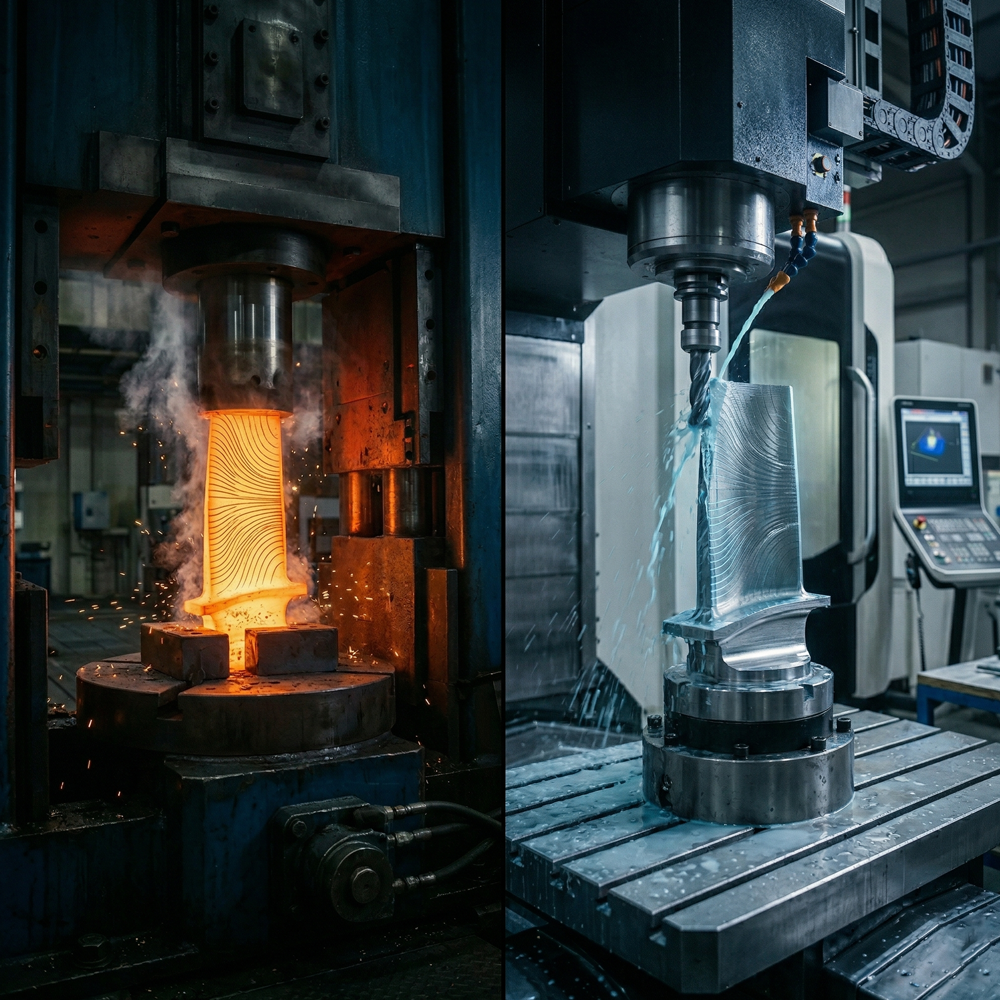
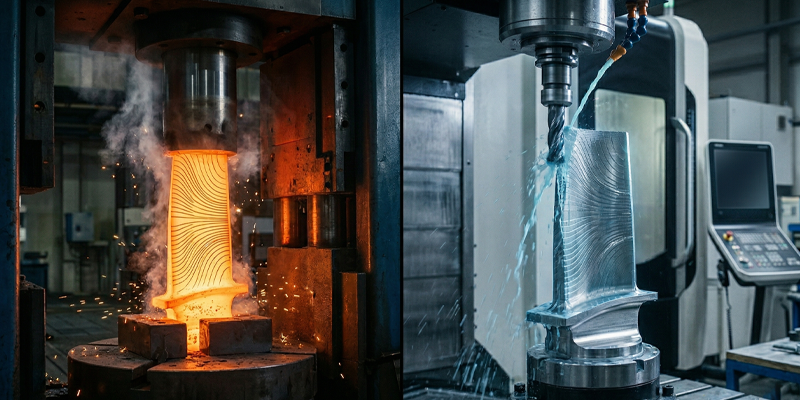
Integrated forging and machining manufacturing reduces this risk by aligning deformation, machining allowances, heat treatment, inspection, and documentation under a unified process architecture.
Integration is not simply logistical convenience. It is structural control.
The Technical Risk of Separating Forging and Machining
When forging and machining are handled independently, several technical challenges may arise.
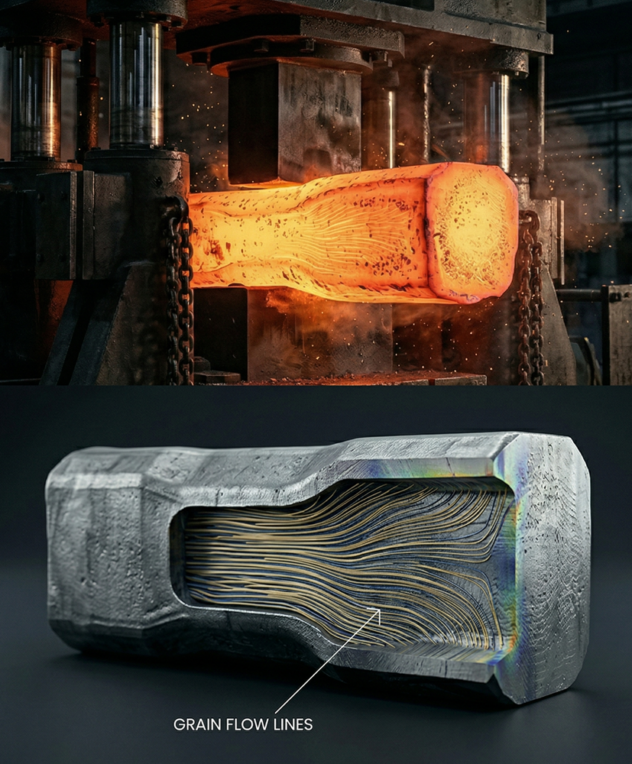
First, grain flow orientation may not be considered during machining strategy. A machining vendor focused solely on dimensional tolerance may remove material in ways that unintentionally weaken load-bearing fiber direction.
Second, traceability continuity may be disrupted during transfer between vendors. Batch-level traceability must remain intact through all stages, particularly in regulated industries.
Third, heat treatment coordination may lack full visibility. Without integrated control, distortion correction and machining allowances may not align with deformation planning.
These gaps are often invisible until inspection, audit, or field performance reveals inconsistency.
Integrated systems reduce these blind spots.
Coordinated Deformation and Machining Allowance Planning
In integrated forging and machining environments, manufacturing planning begins with the final geometry in mind.
Engineering teams evaluate:
- Required grain flow direction
- Reduction ratio targets
- Machining stock allowances
- Heat treatment shrinkage behavior
- Surface finish requirements
- Dimensional tolerance zones
Forging dies and preforms are designed to preserve structural integrity while allowing for precise machining correction.
This coordination improves:
- Dimensional stability
- Material utilization efficiency
- Surface integrity
- Inspection acceptance rates
Structural performance is strengthened when deformation and machining are engineered together rather than sequentially.
Heat Treatment and Machining Synchronization
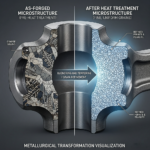
Heat treatment affects hardness, microstructure, and residual stress distribution.
If machining is performed without coordination with heat treatment planning, several risks may emerge:
- Distortion during final cuts
- Surface cracking
- Uneven hardness zones
- Reduced fatigue resistance
Integrated facilities can sequence operations strategically.
For example:
- Rough machining may occur before final heat treatment.
- Finish machining may follow stabilized thermal cycles.
- Stress-relieving treatments may be incorporated between stages.
This alignment improves long-term dimensional and structural reliability.
Traceability Continuity in Integrated Manufacturing
In regulated sectors, traceability must connect:
- Raw material heat number
- Forging batch
- Heat treatment cycle
- Machining stage
- Inspection results
Fragmented supply chains increase the risk of documentation gaps.
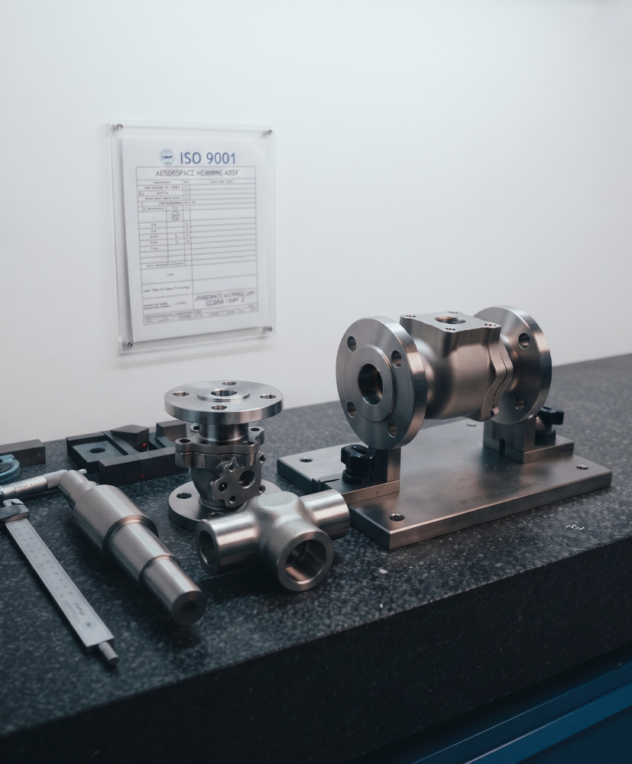
Integrated forging and machining manufacturers in India serving critical industries must maintain centralized documentation systems that preserve traceability across all stages.
Audit resilience depends on documentation continuity.
Inspection and Quality Control Alignment
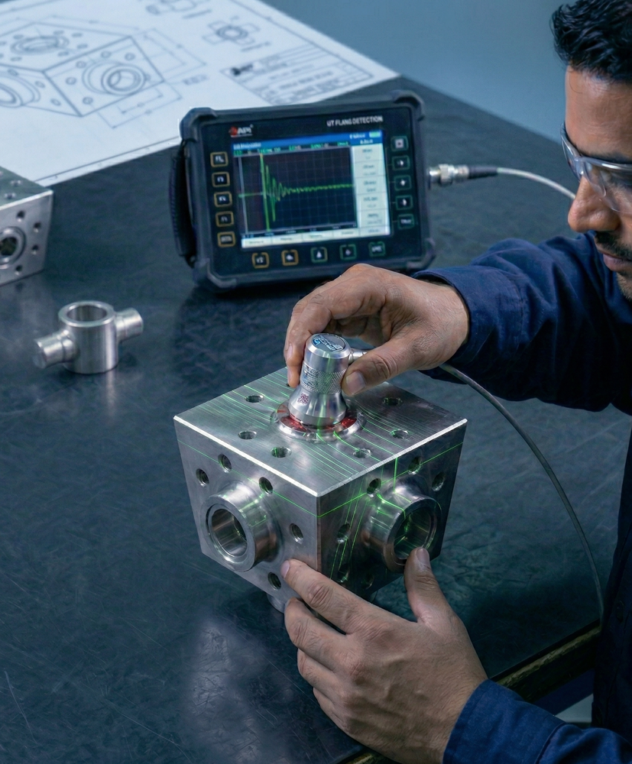
Inspection is more effective when integrated into the manufacturing flow rather than appended at the end.
In integrated environments:
- In-process inspection verifies forging quality before machining begins.
- Dimensional validation occurs at defined checkpoints.
- NDT may be performed both pre- and post-machining where required.
- Corrective loops are faster because engineering and production operate within the same system.
This alignment reduces rejection rates and improves predictability.
Benefits for Global OEMs and EPC Companies
Buyers evaluating integrated forging and machining manufacturers in India often seek:
- Reduced supply chain complexity
- Improved communication efficiency
- Faster engineering collaboration
- Consolidated documentation packages
- Lower coordination risk
For critical components, integration reduces the number of variables that must be externally managed.
It simplifies audit review and strengthens accountability.
Integration in High-Mix, Low-Volume Manufacturing
Integration becomes even more valuable in high-mix environments.
Custom geometries, moderate volumes, and variable specifications demand flexibility across forging and machining stages.
Manufacturers structured for high-mix production can:
- Adapt machining programs to forging variability
- Coordinate tooling adjustments rapidly
- Preserve structural grain alignment
- Align documentation with project-specific requirements
High-volume automotive systems may prioritize throughput efficiency, while integrated high-mix systems prioritize structural control.
Integrated Forging and Machining at Vinir Engineering
Vinir Engineering operates as a fully non-automotive, forge-to-finish manufacturer in India serving critical industrial sectors.
Our integrated manufacturing model emphasizes:
- Coordinated deformation and machining planning
- Documented reduction ratio validation
- Heat treatment and dimensional stability alignment
- Continuous material traceability
- Centralized inspection architecture
- Audit-ready documentation systems
By maintaining forging and machining within a unified framework, Vinir reduces structural risk and improves compliance transparency for oil & gas, aerospace, defence, nuclear, marine, railway, energy, and heavy equipment applications.
If your program requires integrated forged and machined components with traceability continuity and inspection discipline, our engineering team can support technical alignment and supplier evaluation discussions.
Connect with Vinir Engineering to discuss your integrated forging and machining requirements in India.