
Closed Die Forging Tooling Cost: Die Price, Amortisation and Payback
Closed die forging tooling cost is the one-time investment in the dies that shape a forging. It depends on part size, complexity, die material and the number of impressions (blocker, finisher, trim). Tooling is either paid upfront by the buyer or amortised into the piece price over an agreed volume. For buyers, the key question is not “how much do the dies cost?” but “at what volume does closed die forging become cheaper than open die forging or machining from bar?”
At a Glance: Closed Die Tooling Economics
Factor | Effect on Tooling Cost |
| Part size and weight | Larger parts need larger die blocks and heavier presses |
| Geometry complexity | Deep ribs, thin webs and undercuts need more impressions |
| Number of impressions | Preform, blocker, finisher and trim dies each add cost |
| Die material | Hot-work die steels (e.g. H11/H13 type) and die block grades |
| Tolerance requirements | Tighter tolerances need more precise die sinking |
| Expected die life | Higher volumes may require duplicate or insert dies |
What Closed Die Tooling Includes
A closed die forging tool set typically includes:
- Preform or blocker die to distribute material roughly into shape
- Finisher die that produces the final forged geometry
- Trim die to remove flash after forging
- Piercing or punching tools for holes and bores, where required
- Fixtures and gauges for inspection
Not every part needs every die. Simple axisymmetric parts may go straight to a finisher; complex aerospace parts may need several blocker stages.
How Tooling Is Priced
Die cost is driven by die steel weight, die design and simulation time, CNC die sinking hours, heat treatment of the die block, and trial forgings for validation. Forging simulation software is often used for complex parts to optimise material flow and avoid laps before the die is cut.
Upfront Payment vs Amortisation
Upfront tooling payment: The buyer pays for tooling separately, often 50% with the order and 50% on first article approval. Piece prices are then lower, and the buyer typically owns the tooling.
Amortised tooling: Tooling cost is spread across an agreed quantity and built into the piece price. This reduces upfront cash but raises unit price until the amortisation volume is reached.
Shared approach: Part of the tooling is paid upfront, with the balance amortised.
Tooling Ownership and Maintenance
Always clarify:
Whether the dies can be transferred to another supplier
- Who owns the dies
- Who pays for die maintenance and re-sinking
- Expected die life in pieces before refurbishment
- Storage terms if orders pause
When Does Closed Die Tooling Pay Back?
Closed die forging pays back when the savings per piece — from reduced material, reduced machining and faster cycle times — exceed the tooling cost over the programme life. The calculation:
- Tooling cost ÷ (open die or bar-machined unit cost − closed die unit cost) = break-even quantity
If the break-even quantity is well below the expected programme volume, closed die is the right route. If not, open die forging or radial forging may be more economical.
How Design Changes Affect Tooling
Engineering changes after tooling is made can require die modification or new dies. Freezing the design before tooling — or designing the forging with modification allowances — protects your investment. Involving the forging supplier during design (design for manufacturing) often reduces both tooling and piece cost.
Low-Volume Alternatives to Full Tooling
- Open die forging with additional machining
- Simplified or generic dies for families of similar parts
- Radial forging for long axisymmetric parts
- Ring rolling for rings and flanges, which needs minimal product-specific tooling
How Vinir Engineering Supports Tooling Decisions
- In-house die design and manufacturing, giving control over die quality, lead time and maintenance
- Process route comparison across closed die, open die, ring rolling and radial forging before tooling is committed
- Transparent tooling ownership and maintenance terms
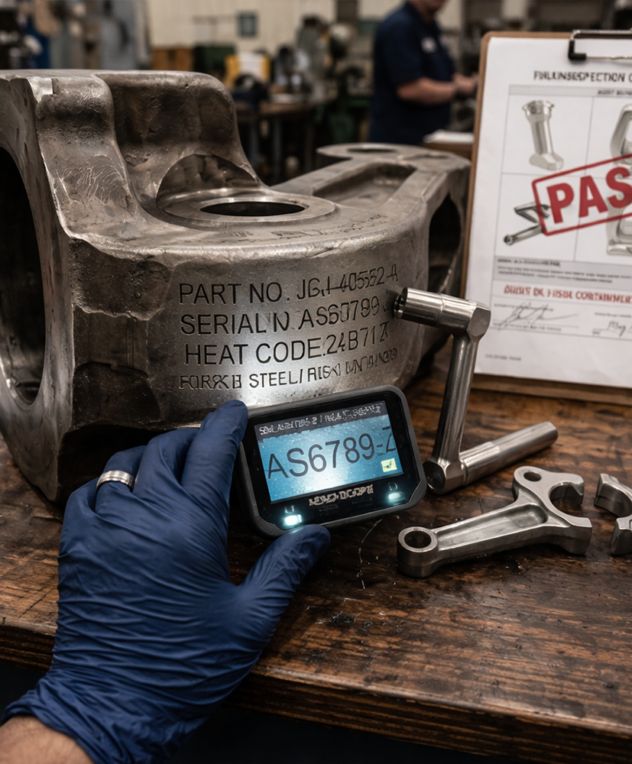
- AS9100D certified across all four manufacturing units, with first article inspection capability to AS9102