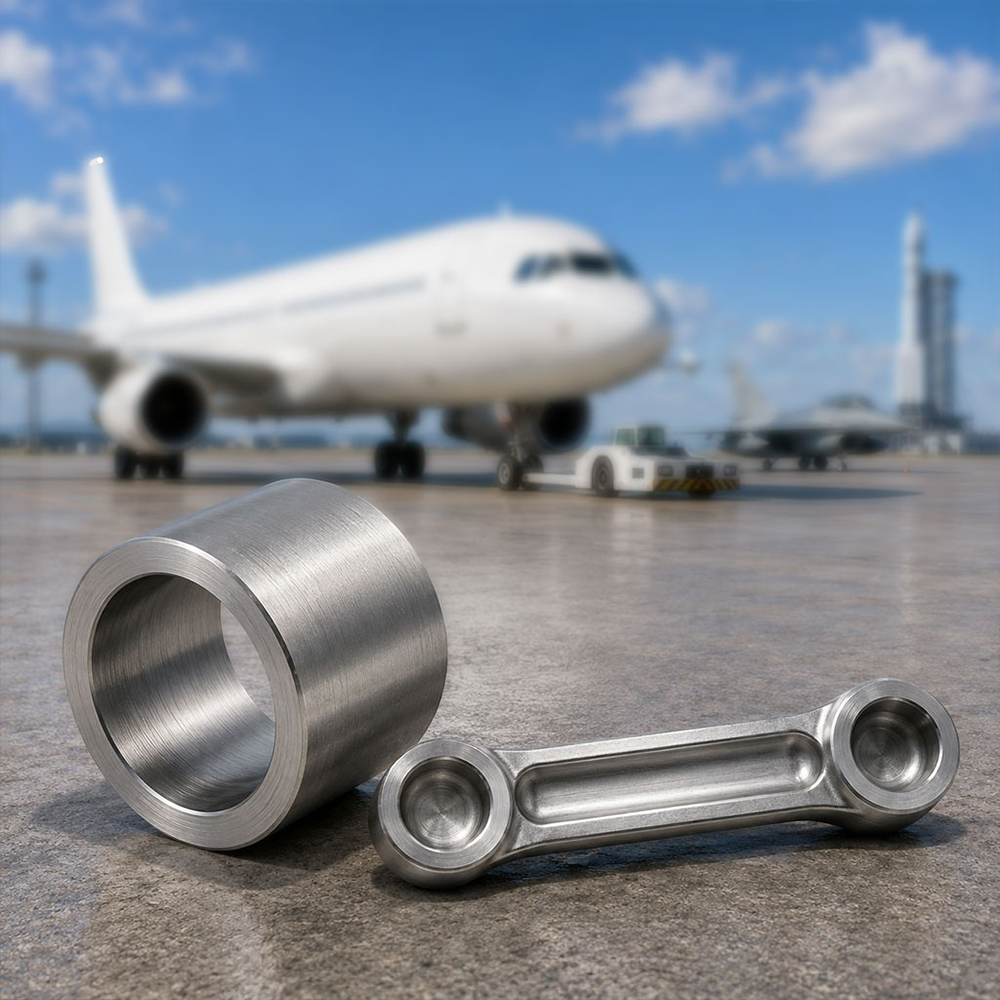
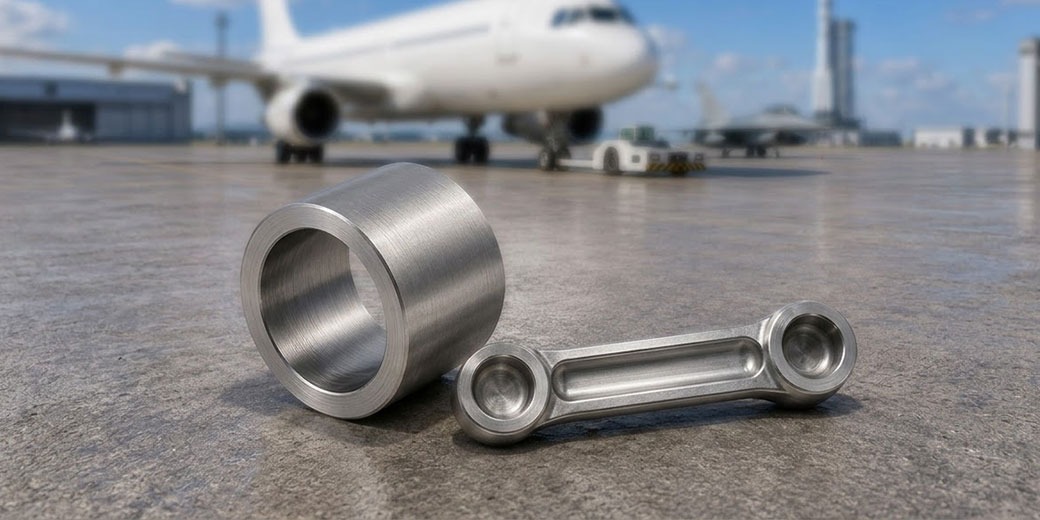
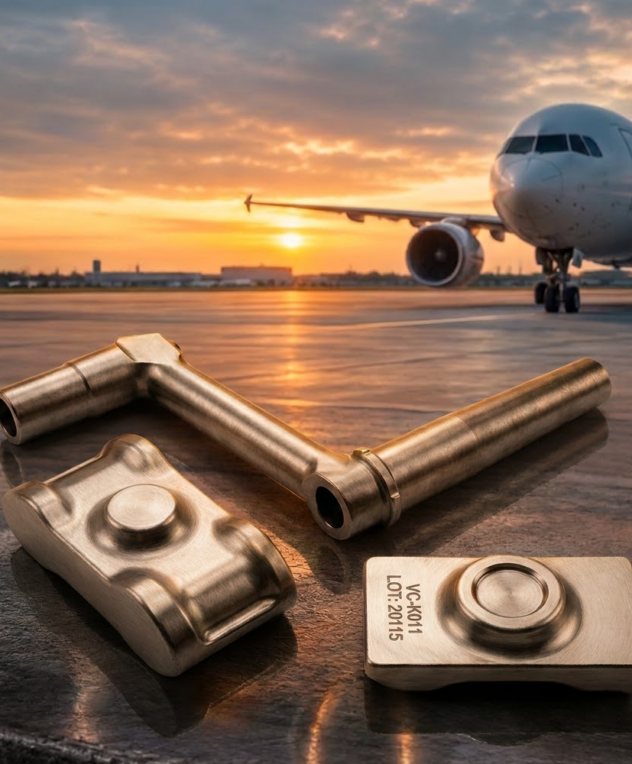
Sweden’s aerospace manufacturing sector — centred on Saab AB (Linköping), GKN Aerospace Sweden (Trollhattan), and Volvo Aero (now GKN Aerospace, also Trollhättan) produces military aircraft, aircraft engine components, and space launcher structural components. The Gripen E/F fighter aircraft, Trent and other Rolls-Royce engine components manufactured at Trollhattan, and the Ariane 6 space launcher structural rings are the primary forging-consuming programmes. Indian AS9100D certified forging manufacturers are positioned to supply the Swedish aerospace supply chain.
Company
Location
Programme
Key Forging
Saab AB
Linköping
Gripen E/F, GlobalEye
Structural bulkheads, wing fittings, Ti-6Al-4V
GKN Aerospace Sweden
Trollhättan
Trent XWB, Trent 1000, Ariane 6
LP turbine discs, turbine structural rings
Saab Dynamics
Linkoping
RBS 15, Carl-Gustaf
Missile body rings, weapon structural
Exova (Element)
Multiple
Material testing
Testing services for aerospace forgings
Saab’s Gripen E/F — Sweden’s next-generation multi-role combat aircraft is the flagship of Sweden’s aerospace industry and a significant export success (Brazil, Czech Republic, Hungary). The Gripen uses Ti-6Al-4V structural forgings for the wing carry-through structure, fuselage bulkheads, and canard structural fittings. Saab applies AS9100D to its supply chain alongside Swedish defence export regulations (ISP – Inspectionen för strategiska produkter) that govern technical data exports from Sweden.
GKN Aerospace Sweden in Trollhättan — formerly Volvo Aero is one of Europe’s most technically advanced aeroengine component manufacturers. GKN Trollhättan produces low-pressure turbine discs, outlet guide vane structural rings, and nacelle structural components for Rolls-Royce Trent engines. The Trent XWB (Airbus A350) and Trent 1000 (Boeing 787) programme forgings at GKN require NADCAP accreditation for heat treatment and NDE – identical to US aeroengine forging requirements, as NADCAP is internationally applied.
The Ariane 6 space launch vehicle — for which GKN Aerospace Sweden produces the upper stage propulsion system structural components — uses Ti-6Al-4V and Inconel 718 structural rings. Space launch vehicle forgings require AS9100D but not NADCAP in most cases — the ESA (European Space Agency) supplier qualification framework differs from the FAA/EASA aeroengine framework. ESA’s ECSS (European Cooperation for Space Standardization) standards govern space launch vehicle component qualification.
Sweden’s FMV (Försvarets materielverk — Swedish Defence Materiel Administration) manages procurement for Swedish Armed Forces programmes including Gripen. FMV applies Swedish export control regulations (similar in principle to German KWKG) for technical data associated with Gripen programme forgings.
Ti-6Al-4V STA forgings with alpha case control – Gripen structural applications.
Inconel 718 double ageing for GKN Trollhättan aeroengine applications.
Ring rolling to Ø4,500mm for Ariane 6 structural rings.
AMS 2750-calibrated furnaces with TUS at relevant temperatures.
NABL-accredited mechanical testing to ASTM and EN methods.
Ocean freight Chennai to Gothenburg: 22–28 days.
Frequently Asked Questions
1.What is the ISP (Swedish Strategic Products Inspectorate) and how does it affect forging supply to Saab Gripen programmes?+–
ISP (Inspektionen för strategiska produkter) is the Swedish government authority that controls exports of strategic products military equipment and dual-use goods from Sweden. For Gripen programme technical data (forging drawings showing structural geometry), ISP export control may apply to transmission of drawings from Sweden to India. The Swedish prime contractor (Saab) manages ISP compliance and determines which Gripen-related drawings require Swedish export authorisation before transmission. Indian forging manufacturers should ensure their Swedish customer has obtained applicable ISP export permissions before receiving Gripen programme technical data.
2.How does GKN Aerospace Trollhättan’s NADCAP requirement for Rolls-Royce Trent components apply to Indian forging suppliers?+–
GKN Trollhättan holds NADCAP accreditation for its own special processes. When GKN procures forged discs and structural rings from external suppliers for Trent XWB and Trent 1000 programmes, they require NADCAP from those suppliers because Rolls-Royce (the engine OEM) requires NADCAP throughout its supply chain for rotating component forgings. An Indian forging manufacturer supplying GKN Trollhättan with Trent programme disc forgings must hold NADCAP AC7102 (heat treatment) and NADCAP AC7114 (NDT) the same requirement as supplying GE Aerospace directly. The NADCAP requirement flows from Rolls-Royce through GKN to the Indian forging supplier.
3.What are ECSS standards and how do they govern Ariane 6 structural forging supply?+–
ECSS (European Cooperation for Space Standardization) is the European space industry’s set of standards, developed under ESA coordination. For Ariane 6 structural forging supply, the relevant ECSS standards include ECSS-Q-ST-70 (materials, mechanical parts, and processes), ECSS-Q-ST-20 (quality assurance), and programme-specific product assurance requirements. ECSS-Q-ST-20 requires a quality management system equivalent to AS9100D. Unlike the aeroengine world, ECSS does not require NADCAP it requires process qualification at the manufacturer rather than accreditation by an independent body. Space launch vehicle forging supply requires AS9100D and process qualification documentation, not NADCAP.
4.What is the Gripen E’s titanium content and what does that mean for forging supply opportunities?+–
The Gripen E uses approximately 30% titanium by structural weight comparable to the F-35 and significantly higher than older generation fighters. This titanium content includes wing carry-through structure, engine frame, canard pivot structure, and major fuselage frames in Ti-6Al-4V. For a production run of 60 Gripen E aircraft (the Brazilian contract plus Swedish and other orders), the total titanium structural forging content represents substantial procurement volume over 5–7 years of production. Indian forging manufacturers qualified for Saab’s Gripen programme supply have access to a sustained production programme rather than a single order.
5.How does the Swedish aerospace supplier qualification timeline compare to US aerospace qualification?+–
Swedish aerospace qualification timelines are generally similar to US timelines 12–24 months from initial capability assessment to first production order, depending on programme criticality. Saab’s supplier qualification process for Gripen structural forgings includes: AS9100D verification in OASIS, on-site capability assessment by Saab’s supply chain quality team (requiring travel to India), qualification test forgings with Saab witness inspection, and approval from FMV for any government-funded programme suppliers. The ITAR-equivalent burden (Swedish ISP export control) is less operationally demanding than US ITAR – no Technology Control Plan requirement making the Swedish qualification process somewhat more streamlined for Indian manufacturers.