
AISI 4130 Forging Supplier for USA from India: Oil & Gas and Pressure-Control Components
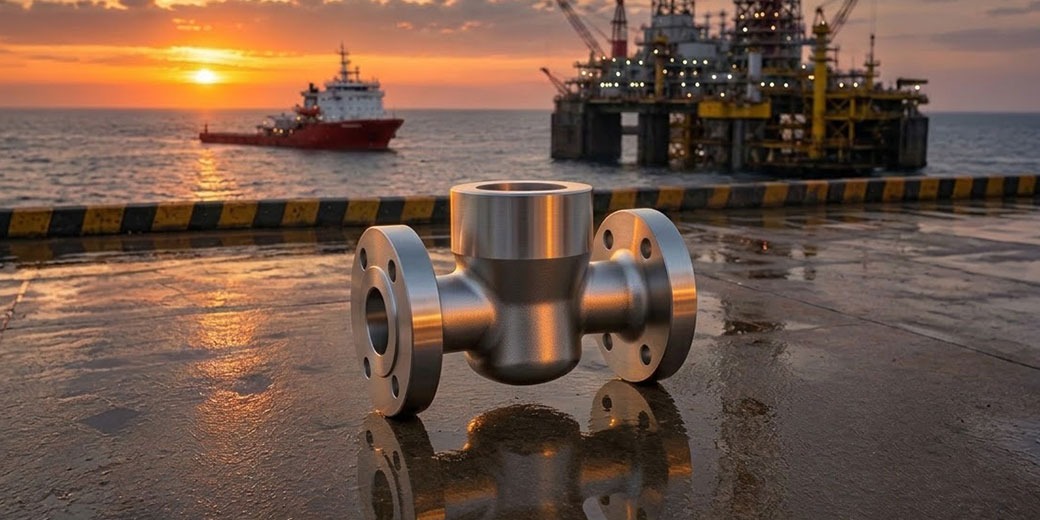
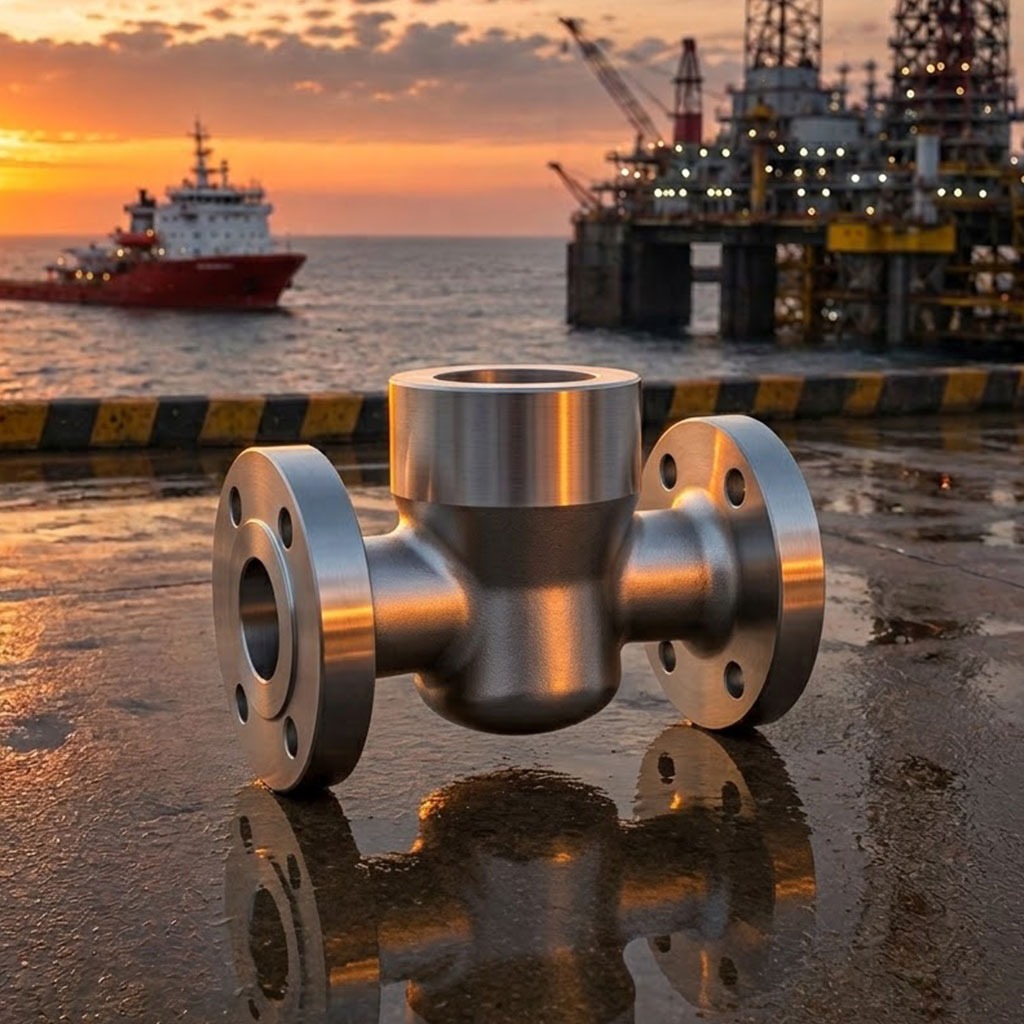
American oil & gas equipment manufacturers rely heavily on low-alloy steel forgings for pressure-containing and load-bearing components. Among these materials, AISI 4130 remains one of the most widely specified chromium-molybdenum steels for wellhead equipment, valve components, pressure housings, connectors, flanges, and other upstream applications.
For US procurement teams evaluating an AISI 4130 forging supplier from India, the decision goes far beyond whether a manufacturer can forge the material. Buyers need confidence in chemistry control, heat treatment, mechanical properties, NDT, hardness, traceability, machining capability, and compliance with the specifications defined on the drawing or purchase order.
For high-mix, low-volume projects, the ability to control the entire forge-to-finish process becomes particularly important.
Why AISI 4130 Is Widely Used in US Oil & Gas Equipment
AISI 4130 is a chromium-molybdenum low-alloy steel valued for its combination of:
- High strength
- Good toughness
- Hardenability
- Fatigue resistance
- Machinability after appropriate heat treatment
- Suitability for large and complex forged sections
These characteristics make 4130 suitable for equipment exposed to high internal pressures, mechanical loads and cyclic operating conditions.
Typical applications include:
- Wellhead bodies
- Christmas tree components
- Choke bodies
- Valve bodies and bonnets
- Pressure housings
- Clamp hubs
- Connectors
- Flanges
- Mandrels
- Structural pressure-control components
The exact material condition and mechanical properties depend on the applicable customer specification, heat treatment route and service environment.
4130 Forging vs Machined Bar
For relatively simple low-load components, buyers may consider machining directly from bar.
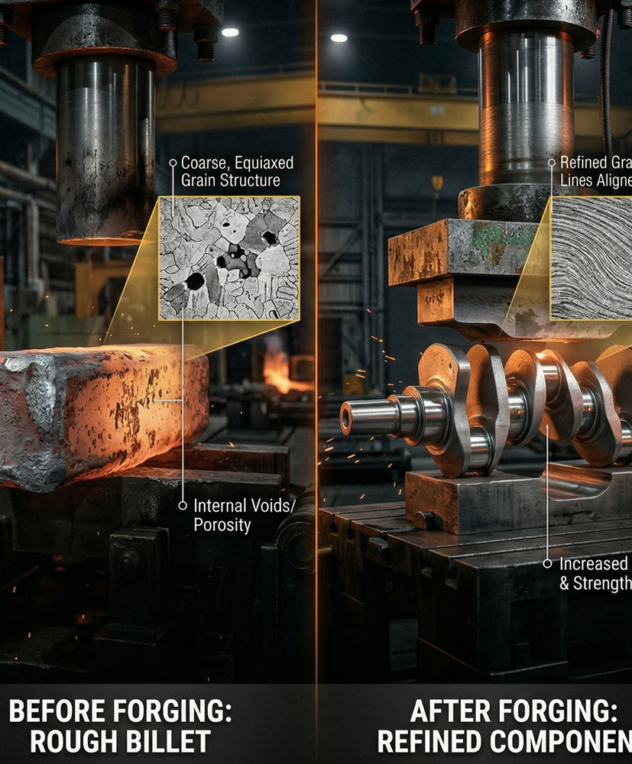
Pressure-critical components are frequently forged because forging can improve internal structural integrity and enable controlled grain flow through the component geometry.
A properly developed forging route can offer:
- Improved fatigue resistance
- Better directional mechanical properties
- Reduced risk of internal discontinuities
- Better material utilisation for near-net geometries
- Greater confidence in critical load-bearing sections
For wellhead and pressure-control components, this becomes particularly important where the component will experience repeated pressure cycles over its operating life.
Open Die and Closed Die 4130 Forging
The appropriate forging route depends on component geometry and volume.
Closed die forging is suitable for repeat components where near-net shape, controlled material flow and reduced machining allowance are important.
Examples include:
- Valve bodies
- Choke bodies
- Compact connectors
- Structural brackets
- High-strength fittings
Open die forging is generally preferred for larger or lower-volume components such as:
- Large pressure housings
- Shafts
- Blocks
- Discs
- Rings
- Heavy flanges
- Custom one-off components
A supplier serving US buyers should therefore be capable of selecting the process based on the component rather than forcing every project into a single forging route.
Heat Treatment of AISI 4130 Forgings
Forging alone does not determine the final performance of 4130.
Heat treatment determines the final combination of strength, hardness and toughness.
Depending on specification requirements, the process may include:
- Normalising
- Austenitising
- Quenching
- Tempering
- Stress relieving where specified
Section thickness is particularly important.
A heat treatment recipe that works for a 50 kg component cannot automatically be applied to a 1,000 kg pressure housing. Large sections require controlled soaking, transfer times, quench severity and tempering to achieve acceptable properties through the section.
US buyers should therefore evaluate whether their supplier controls heat treatment based on actual ruling section thickness, not simply material grade.
Hardness Control for Oil & Gas Service
Hardness is often closely controlled in upstream oil & gas applications.
For sour-service components, excessive hardness can increase susceptibility to environmentally assisted cracking.
The allowable hardness depends on:
- Material condition
- Service environment
- Customer specification
- Applicable NACE / ISO requirements
- Component geometry
- Heat treatment condition
A qualified 4130 forging supplier should therefore treat hardness as a controlled metallurgical output rather than merely a final inspection value.
4130 Forgings for Sour Service
Hydrogen sulphide-containing environments introduce additional requirements.
Components intended for sour-service applications may need compliance with customer requirements based on NACE MR0175 / ISO 15156 or other applicable specifications.
Supplier controls may include:
- Chemistry verification
- Heat treatment documentation
- Hardness mapping
- Tensile testing
- Impact testing where specified
- Microstructure evaluation
- NDT
- Full material traceability
The critical point for US buyers is that standard commercial 4130 and sour-service-qualified 4130 should not be treated as equivalent.
Inspection and NDT
Depending on component criticality, inspection may include:
- Ultrasonic testing
- Magnetic particle testing
- Dimensional inspection
- Hardness testing
- Tensile testing
- Charpy impact testing
- Chemical analysis
- Positive material identification
UT is particularly important for heavy pressure-containing forgings because surface inspection alone cannot identify internal discontinuities.
Forge-to-Finish Supply for US Buyers
A common source of procurement risk occurs when forging, heat treatment, testing and machining are performed by separate suppliers.
Each handoff adds:
- Lead time
- Documentation interfaces
- Traceability risk
- Transportation risk
- Quality coordination requirements
A forge-to-finish supplier can instead manage:
Raw material → forging → heat treatment → testing → machining → final inspection
under one manufacturing framework.
This is especially useful for US buyers sourcing low-volume engineered components from India.
What US Buyers Should Ask a 4130 Forging Supplier
Before placing an RFQ, procurement and engineering teams should evaluate:
- Maximum forging weight and section thickness
- Closed die and open die capability
- Previous 4130 production experience
- Heat treatment furnace capacity
- Quenching capability
- NDT capability
- Mechanical testing
- Material traceability
- CNC machining capability
- Inspection documentation
- Export experience
A supplier should be able to explain how the complete manufacturing route will be controlled before production begins.
AISI 4130 Forgings at Vinir Engineering
Vinir Engineering manufactures high-mix, low-volume forged and machined components for oil & gas, energy, defence, aerospace and other critical industries.
Its forge-to-finish infrastructure includes:
Forging capability extends from approximately 5 kg to 15,000 kg, enabling both smaller pressure-control parts and substantially larger industrial components.
For US buyers developing or transitioning AISI 4130 forged components, Vinir can review drawings, material specifications, heat treatment requirements, testing requirements and machining scope before quotation.