
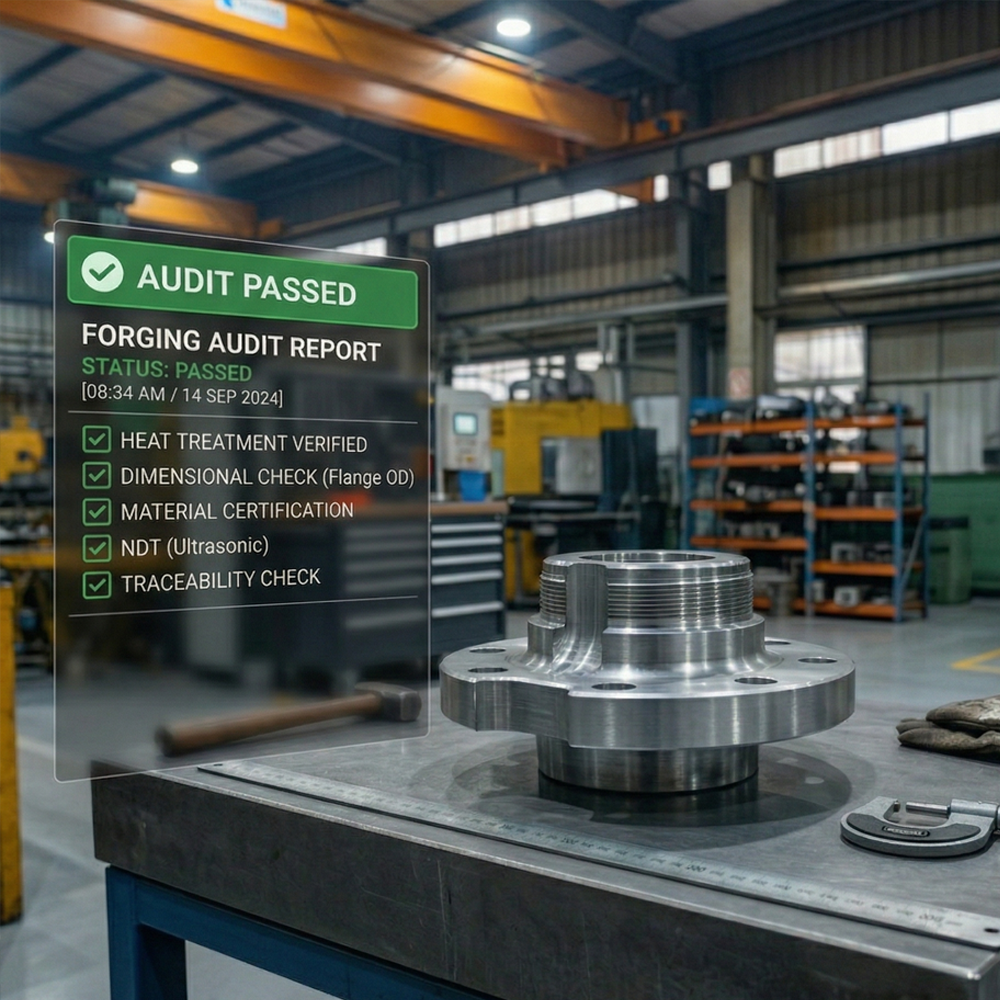
What goes wrong during forging audits and how qualified suppliers avoid ncrs
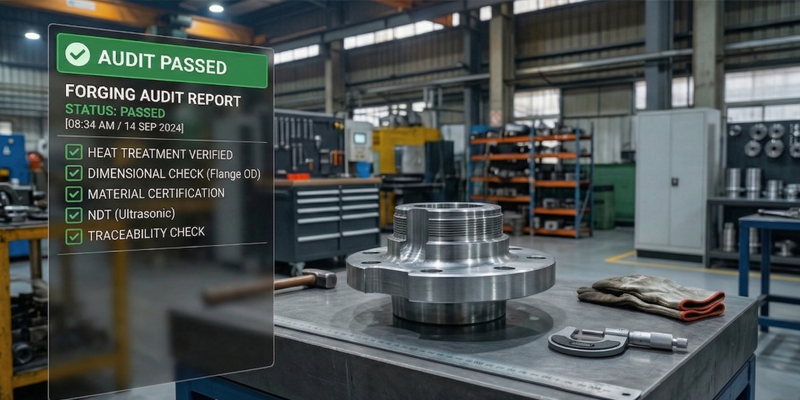
Why Forging Audits Are Designed to Find Weaknesses
Audits in defence, aerospace, oil & gas, and nuclear supply chains are not ceremonial.
They are structured to answer one question:
“Where can this supplier fail under pressure?”
Auditors assume:
- Volumes will change unexpectedly
- Programs will pause and restart
- Personnel will rotate
- Documentation will be stress-tested
Forging audits therefore focus on system resilience, not presentation quality.
Where Forging Audits Most Commonly Break Down
1. Documentation Exists, but Execution Doesn’t Match
Many suppliers maintain:
- Detailed procedures
- Well-written manuals
- Clean audit binders
But auditors compare paperwork against shop-floor reality.
Common findings include:
- Operators following outdated instructions
- Uncontrolled process changes
- Missing revision controls
This gap almost always results in NCRs.
2. Traceability Gaps Appear Between Operations
Traceability failures often occur:
- During heat treatment loads
- Between forging and machining
- At subcontracted operations
Auditors physically trace parts backward.
If identity breaks at any step, the entire batch is at risk.
3. Special Processes Are Poorly Controlled
Heat treatment and NDT generate a high percentage of NCRs.
Typical issues:
- Missing furnace uniformity surveys
- Incomplete NDT procedure linkage
- Operator certification lapses
Auditors treat these as systemic failures, not isolated errors.
4. NCRs Are Closed, but Not Fixed
Corrective action is a major audit focus.
Suppliers fail when:
- Root causes are superficial
- Corrective actions address symptoms only
- Similar NCRs recur across audits
This signals weak process ownership.
Why “Passing Once” Doesn’t Mean Safe
Many suppliers pass initial audits but fail surveillance. Why?
- Audit preparation replaces daily discipline
- Process drift accumulates over time
- New personnel lack system understanding
Qualified suppliers build audit readiness into operations, not calendars.
How Buyers Interpret NCR Severity
Not all NCRs carry equal weight.
Auditors distinguish between:
- Isolated execution errors
- Systemic control failures
Repeated minor NCRs often concern buyers more than a single major issue, because they indicate instability.
How Qualified Suppliers Avoid Audit Failures
Suppliers that perform well in audits:
- Align documentation with real workflows
- Train operators on why, not just how
- Control subcontracting rigorously
- Maintain live traceability systems
- Treat audits as validation, not inspections
This mindset difference is immediately visible to auditors.
How Vinir Operates Audit-Ready by Design
Vinir structures its operations to withstand:
- Scheduled audits
- Surprise audits
- Program-specific deep dives
Through:
- Integrated forge-to-finish systems
- Controlled documentation and revision discipline
- Special process validation
- Proactive NCR and CAPA management
Audit performance becomes a byproduct of daily execution.
FAQ
What is the most common cause of forging NCRs?
Traceability breaks and weak special process control.
Are minor NCRs a serious concern?
Yes, if they repeat or indicate systemic issues.
Can suppliers recover from failed audits?
Yes, but requalification is time-consuming and credibility-impacting. Do auditors inspect physical parts?
Always. Records are verified against real components.