
Super Duplex UNS S32760 Forging Supplier for USA from India: ASTM A182 F55 Oil & Gas Components
UNS S32760 is another major 25% chromium super duplex stainless steel used in severe industrial and offshore environments.
For forging applications it is commonly associated with ASTM A182 Grade F55.
Like S32750, S32760 combines high strength with strong resistance to pitting, crevice corrosion and chloride stress-corrosion cracking. However, its chemistry is not identical.
Outokumpu’s comparison of forging grades identifies S32760 / EN 1.4501 with typical chemistry around 25.4% chromium, 6.9% nickel, 3.8% molybdenum and 0.27% nitrogen, with additional tungsten and copper. In the same data, its PRE value is approximately 42.
That chemistry has helped make S32760 particularly relevant to seawater, offshore, chemical-processing and other aggressive environments.
S32760, F55 and Zeron 100
Buyers may encounter several names referring to closely related material.
UNS S32760 is the Unified Numbering System designation.
ASTM A182 F55 is the forging grade designation commonly associated with S32760.
ZERON 100 is a proprietary trade name associated with an S32760 super duplex composition.
Rolled Alloys identifies ZERON 100 as UNS S32760 and lists ASTM A182, ASME SA182, NACE MR0175 and ISO 15156 among applicable specifications or approvals.
For purchasing purposes, the engineering specification should make clear whether generic ASTM F55 chemistry is acceptable or whether a proprietary material specification is required.
Why Copper and Tungsten Matter
One of the most useful distinctions between S32760 and S32750 is the deliberate use of additional alloying elements.
S32760 typically contains copper and tungsten.
These additions can modify corrosion performance in certain environments.
Rolled Alloys notes that S32760 was developed for aggressive seawater service and describes resistance to warm seawater pitting and crevice corrosion, stress-corrosion cracking in chloride and sour environments and sulfuric-acid attack.
This does not make F55 automatically superior to F53 for every application.
The correct choice depends on the actual chemical environment, design code, product form, fabrication route and customer’s approved material list.
Common Offshore Applications
S32760 is used in equipment exposed to seawater and aggressive process fluids.
Rolled Alloys identifies applications including subsea pipework systems, risers, manifolds, pressure vessels, valves, heat exchangers and seawater/firewater systems.
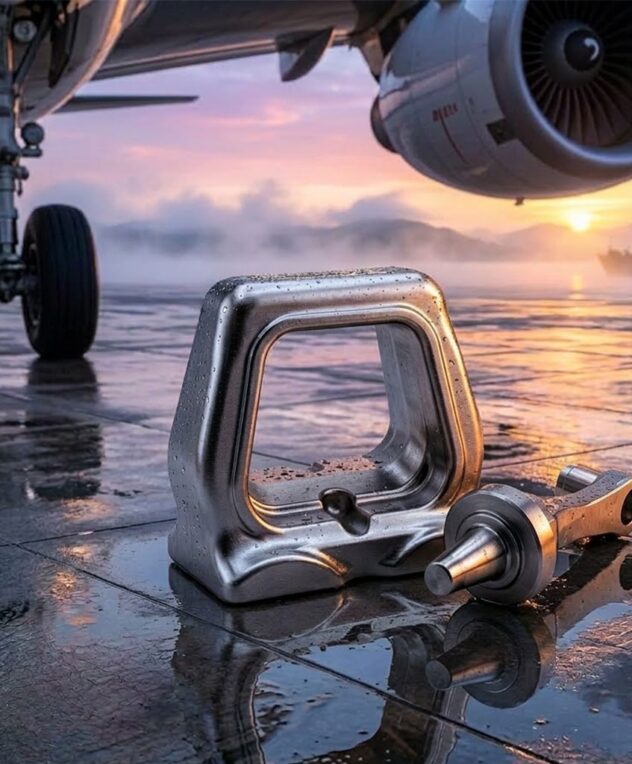
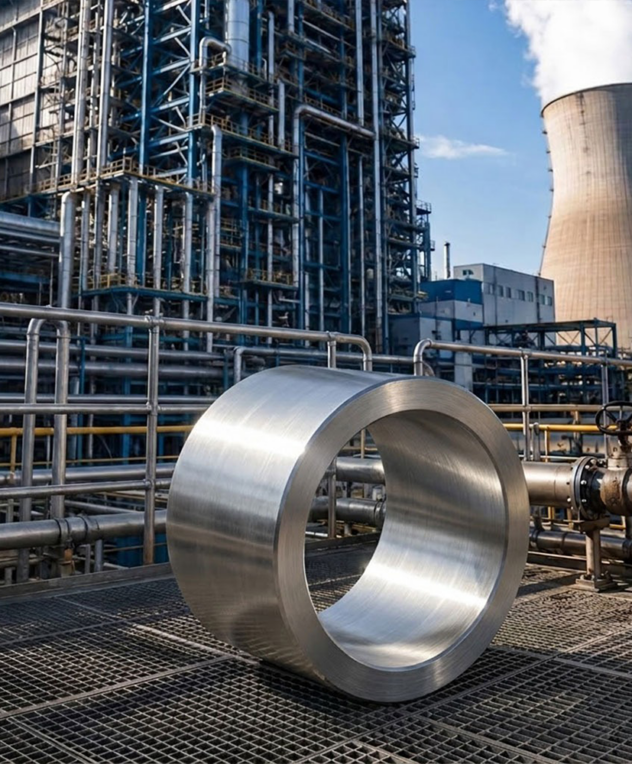
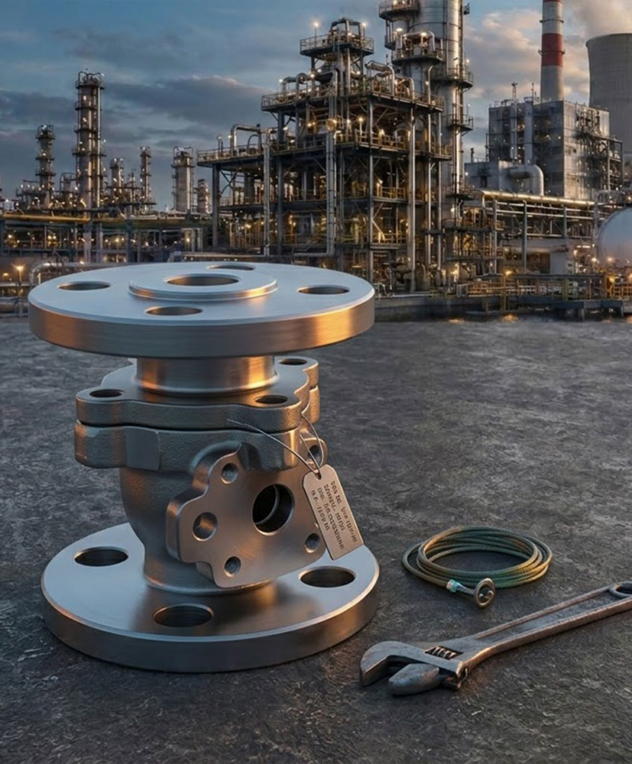
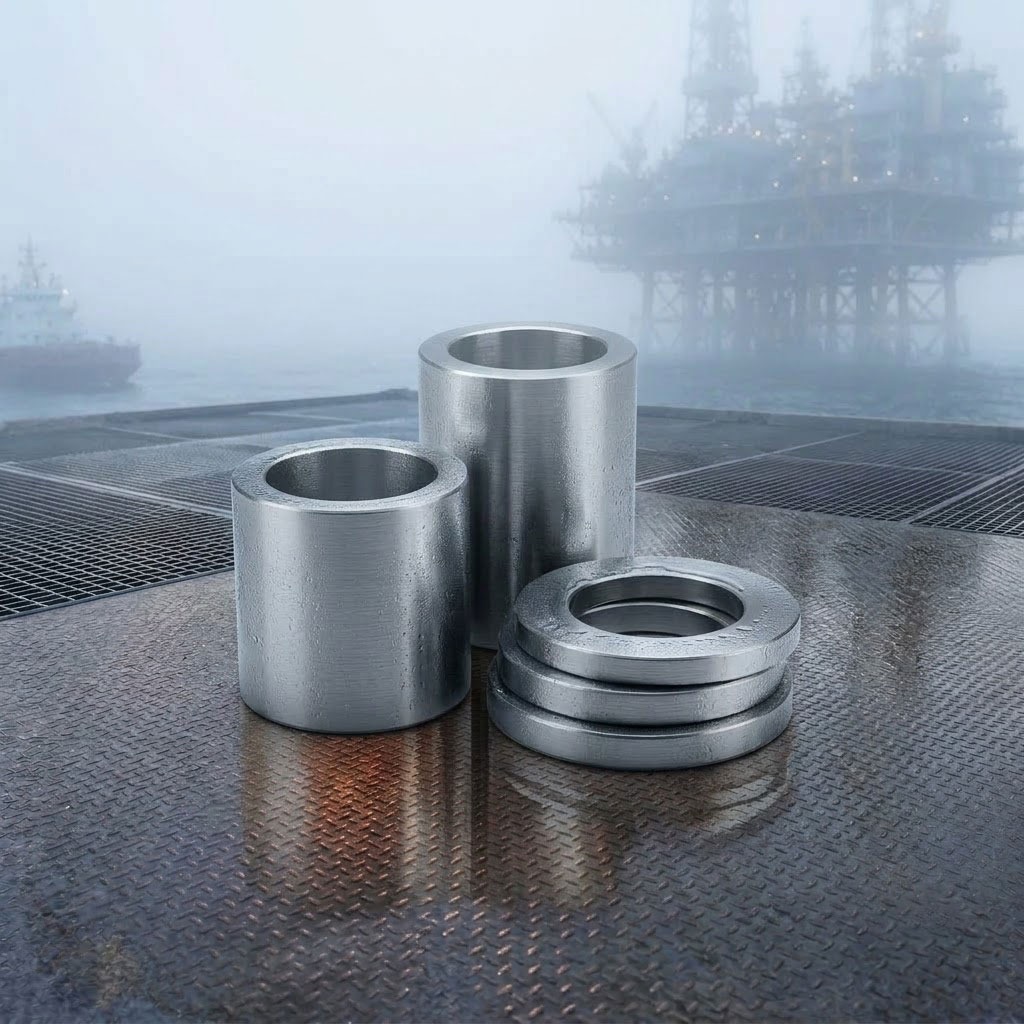
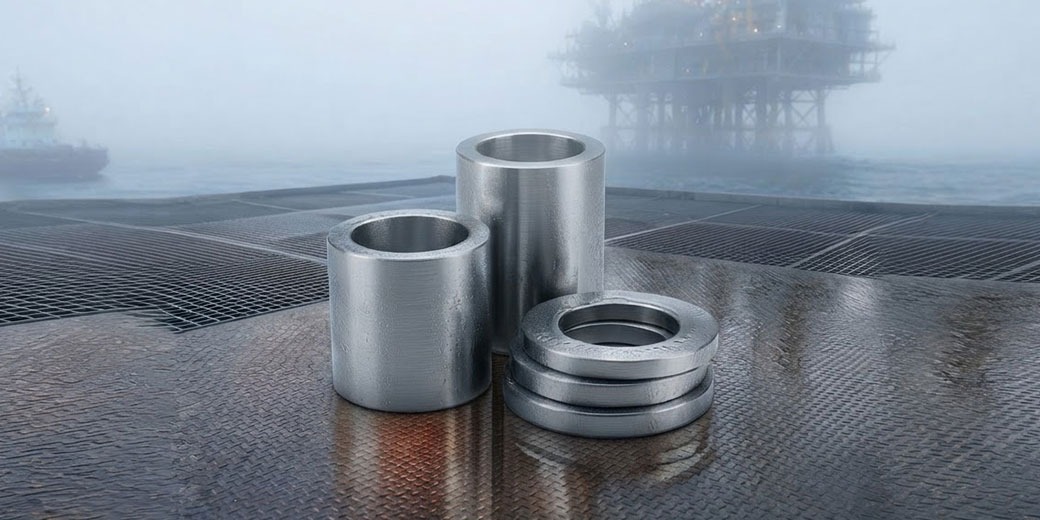
Forged product applications can therefore include valve bodies, hubs, flanges, connectors, blocks, rings and pressure-containing components.
The combination of corrosion resistance and high strength makes the alloy especially useful where component size or weight matters.
ASTM A182 F55 for Forgings
ASTM A182 is a central specification for stainless and alloy steel forgings used in pressure piping applications.
F55 identifies the S32760 super duplex grade within that context.
A purchase order referencing F55 should still define additional project requirements when necessary.
These can include heat-treatment condition, corrosion testing, ferrite measurement, mechanical properties, impact requirements, NDT and documentation.
Oil & gas OEMs frequently add requirements beyond the base ASTM material specification.
Forging S32760
Super duplex forging requires careful management of deformation temperature.
High-alloy stainless steels behave differently from carbon steel under the hammer or press.
Flow stress increases rapidly as temperature decreases, while excessive thermal exposure can affect grain structure or promote unwanted phases.
A forging sequence must therefore balance workable deformation with metallurgical control.
Large-section components may require controlled reheating between deformation stages.
Solution Heat Treatment
After forging, the material requires appropriate solution treatment.
The purpose is to establish the required duplex structure and eliminate unwanted precipitation formed during prior thermal exposure.
Rapid cooling after solution treatment is important.
If a large component cools too slowly through critical temperature ranges, intermetallic phases can form.
This is why quench capacity should be evaluated in relation to maximum component section, not simply furnace volume.
Sigma Phase and Intermetallic Precipitation
Sigma phase is particularly damaging to duplex stainless steel because it is rich in chromium and molybdenum.
Its formation removes these corrosion-resisting elements from the surrounding matrix.
The result can be reduced impact toughness and poorer pitting resistance.
A component can therefore satisfy nominal chemistry requirements while still having compromised performance due to its thermal history.
This is a core reason US buyers should assess a supplier’s actual super duplex heat-treatment procedures rather than relying only on a material certificate.
F55 vs F53
F53/S32750 and F55/S32760 are both 25Cr super duplex grades with PREN values above roughly 40.
Their performance overlaps significantly.
S32760 differs through its copper and tungsten additions, while S32750 is generally based on chromium, nickel, molybdenum and nitrogen without the same deliberate W/Cu chemistry.
Outokumpu lists PRE values of about 43 for S32750 and 42 for S32760, which illustrates why PREN alone cannot determine which alloy is “better.”
Material selection should consider the entire corrosion environment.
Strength of S32760
Rolled Alloys lists a minimum yield strength of 80,000 psi for ZERON 100/S32760.
That high strength is one of the advantages of super duplex compared with conventional austenitic stainless steels.
For pressure equipment, higher allowable strength can create opportunities for weight and wall-thickness efficiency where permitted by the governing design code.
Forged F55 Components at Vinir Engineering
Vinir’s forge-to-finish system supports super duplex components through forging, heat treatment, testing and machining.
For US oil & gas buyers, particularly those sourcing offshore or subsea pressure-equipment components, an RFQ should include complete F55 material requirements and any project-specific corrosion or NDT clauses.
This allows the manufacturing route to be built around the finished component rather than treating corrosion testing as a final administrative step.