
Offshore Steel Forging in India: API Certified Components for Offshore Platforms and Subsea Systems
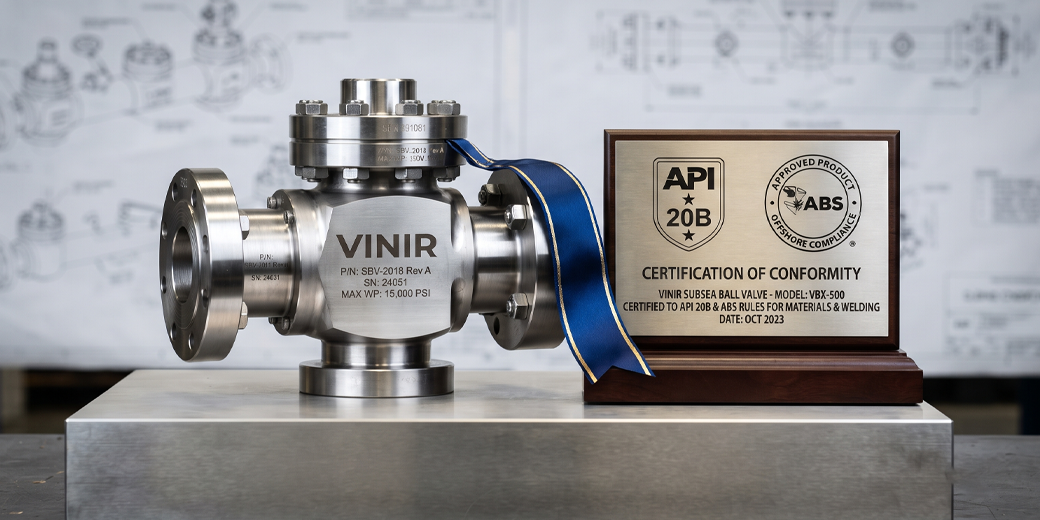
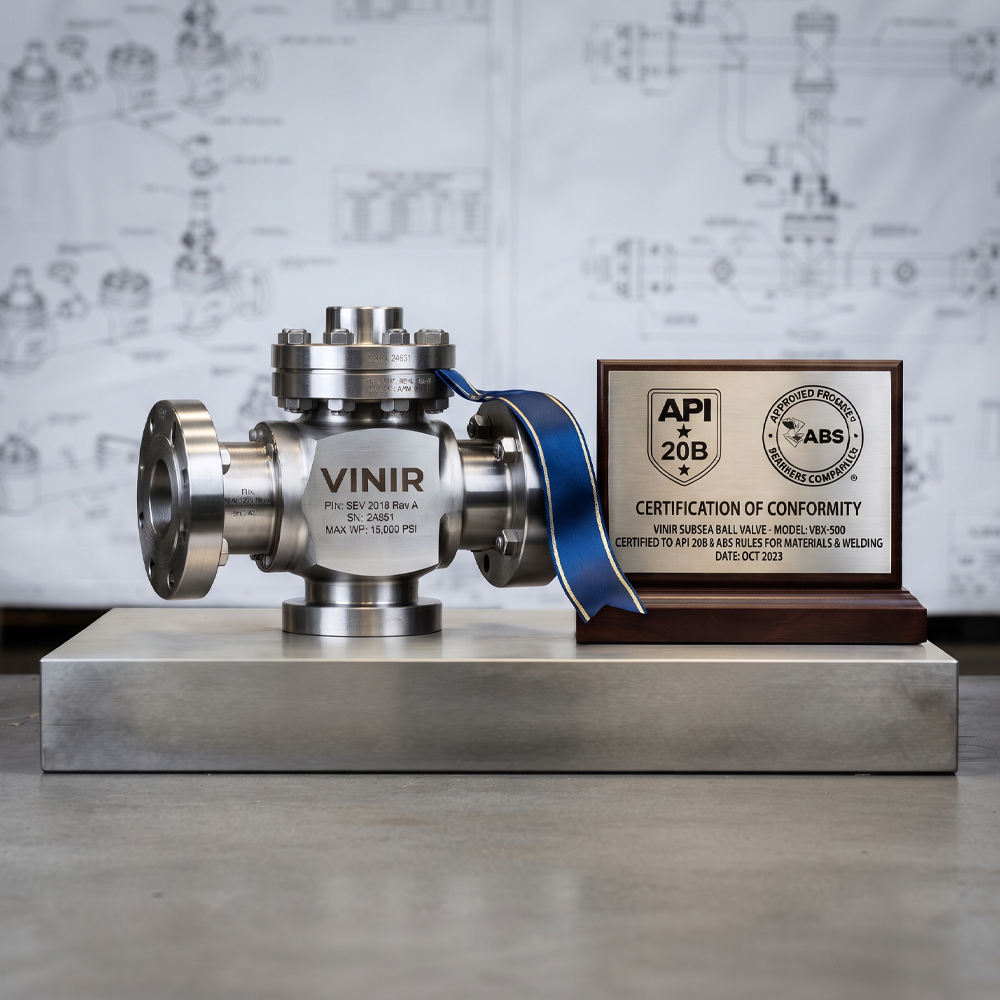
Offshore steel forging covers the manufacture of structurally critical forged metallic components for fixed offshore platforms, floating production units, subsea production systems, drilling rigs, and offshore pipeline infrastructure — structural node connections, riser clamp rings, conductor casing forgings, offshore valve bodies, mooring system components, and subsea tree structural forgings. Offshore forgings operate in one of the most demanding environments in the engineering world: continuous exposure to seawater, cyclic wave and wind loading, variable temperature from -40°C in Arctic fields to +50°C in tropical surface conditions, and internal pressures up to 20,000 psi in subsea production systems. Vinir Engineering manufactures API 20B certified offshore steel forgings in Bangalore and Hosur, holding API 20B, ABS, AS9100D, and IBR certifications across four manufacturing units.
At a Glance: Offshore Steel Forging Requirements
| Parameter | Requirement |
| Primary quality standard | API 20B (forgings), API 20C (CRA forgings) |
| Equipment standards | API 6A (wellhead), API 17D (subsea trees), NORSOK M-630 |
| Structural standard | AWS D1.1, ISO 9001 + classification society rules |
| Classification society | ABS, DNV GL, Lloyd’s Register, Bureau Veritas |
| Sour service | NACE MR0175 / ISO 15156 |
| Key materials | Carbon steel, alloy steel, duplex 2205, super duplex 2507 |
| NDE | 100% UT for structural and pressure-retaining forgings |
| Environmental exposure | Seawater corrosion, cathodic protection compatibility |
| Weight range (Vinir) | 10 kg – 15,000 kg |
The Offshore Environment: Why It Creates Unique Forging Requirements
Offshore steel structures face a combination of loading conditions that does not exist in any onshore application:
Cyclic wave loading — offshore platforms experience wave-induced loading at frequencies of 0.05–0.5 Hz continuously throughout their service life. A platform designed for a 25-year service life experiences approximately 100–300 million wave-induced load cycles. This is a fatigue-governed design regime — static strength is adequate, but fatigue crack initiation and propagation from stress concentrations, weld toes, and surface defects is the governing failure mechanism.
Seawater corrosion with cathodic protection — offshore steel structures are protected from corrosion by impressed current cathodic protection (ICCP) or sacrificial anode systems. These systems create a cathodic potential at the steel surface that prevents corrosion but also produces atomic hydrogen at the surface. High-strength steels above approximately 550 MPa yield strength are susceptible to hydrogen embrittlement under cathodic protection conditions — a phenomenon called Hydrogen Embrittlement by Cathodic Protection (HECP). This limits the maximum allowable yield strength for offshore structural steels.
Variable temperature — from -40°C in Arctic North Sea and Canadian Grand Banks conditions to +45°C surface conditions in the Middle East Gulf. Components that span from below the waterline (at seawater temperature) to the topside deck (at air temperature) experience significant thermal gradients. Low-temperature Charpy impact toughness at -40°C is specified for all structural forgings in cold climate offshore service.
Pressure containment — subsea production systems operate at wellbore pressure — up to 20,000 psi in HPHT fields. The combination of external hydrostatic pressure from the water column (up to 3,000 psi at 2,000 metres depth) and internal well pressure creates complex loading on subsea structural and pressure-retaining forgings.
Offshore Forging Categories and Applications
Structural Node and Tubular Connection Forgings
Offshore jacket structures — the steel space-frame foundation structures of fixed platforms — use tubular steel members connected at nodes. The nodes — where multiple tubular members intersect — are the highest-stress locations in the jacket structure. Ring-rolled forged nodes or forged grouted connection elements at tubular joints are used where the intersection geometry creates stress concentrations that welded fabricated nodes cannot handle within fatigue life requirements.
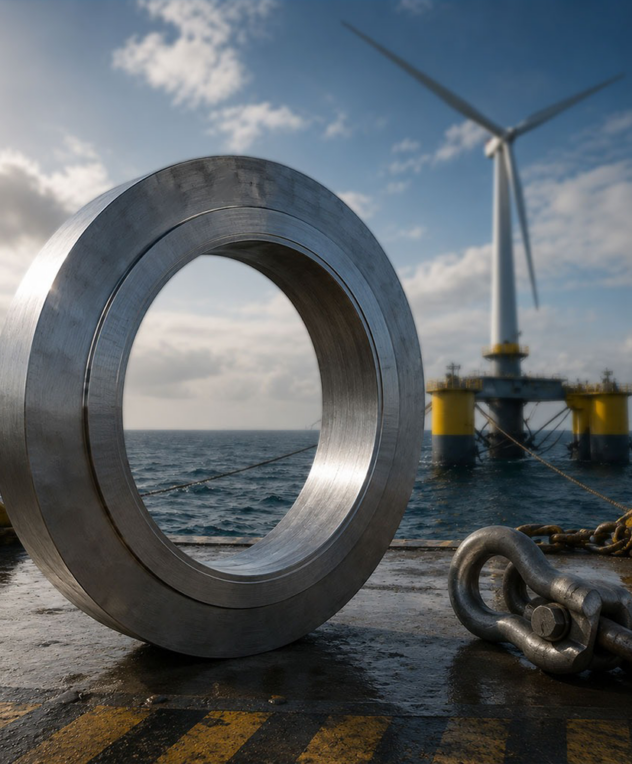
Large-diameter ring-rolled forgings (Ø500mm to Ø3,000mm) in high-strength carbon steel provide the uniform grain flow and clean material required for nodal connection forgings subject to complex multiaxial wave fatigue loading.
Conductor Casing Structural Forgings
The conductor casing — the outermost well casing string that provides structural support for the wellbore at the mudline — uses forged structural connections at the casing head and at the mudline penetration. These forgings must resist the combined bending moments from wave loading on the conductor casing above the mudline and the vertical weight of the wellbore equipment above.
Conductor casing forgings are produced in carbon steel (API 5CT specification or structural equivalents) with full-penetration weld preparations at both ends for butt welding to the adjacent casing sections.
Riser Clamp Ring Forgings
Risers — the flexible or rigid pipes that connect subsea wellheads and pipelines to the surface production facility — are supported at the platform by riser clamp assemblies. The riser clamp ring forgings bear the full weight of the submerged riser pipe plus its contents, plus the dynamic loads induced by wave motion. In some designs, the clamp ring also provides the moment restraint for the riser’s bending motion.
Riser clamp rings are ring-rolled forgings in high-strength carbon steel or alloy steel. The ring inside diameter must match the riser outer diameter closely — tolerances of ±2mm on a 300–600mm inside diameter are typical. The ring height and flange geometry provide the clamping force distribution that prevents damage to the riser pipe from point loading.
Subsea Tree and Manifold Structural Forgings
Subsea Christmas trees and production manifolds are complex assemblies of valve bodies, structural bodies, and pressure housings. The structural forgings that form the tree body and manifold frame must:
- Resist the hydrostatic external pressure at operating depth
- Carry the weight of the tree assembly and the attached tubing hanger load
- Provide the structural connections for valve actuators, control umbilicals, and flow line connections
- Maintain dimensional stability for 20–25 years of unmaintained seawater exposure
Subsea structural forgings are produced in carbon steel (API 6A 4130 material) for the main structural elements and in duplex or super duplex stainless for components in seawater contact or in chloride-bearing production fluid service.
Mooring System Forgings
Floating offshore platforms — FPSOs, semi-submersibles, TLPs, spars — are held on location by mooring systems consisting of chains, wire ropes, or synthetic fibre ropes. The forged components in mooring systems include:
Mooring chain connecting hardware — shackles, swivels, Kenter connecting links, and anchor connectors. These are produced in high-strength alloy steel to Grade R3 or R4 (minimum breaking loads of 827 MPa and 862 MPa respectively) and must pass proof load testing at specified fractions of the minimum breaking load.
Anchor forgings — drag anchors, suction piles, and driven pile tops use forged connectors and structural elements at the highest-load points. These forgings experience the full mooring load during storm events and must resist both static and dynamic peak loads.
Chain fairlead forgings — the fairlead — the structural element that guides the mooring chain from the vessel’s hull to the sea — uses large forged structural bodies in high-strength carbon steel, with internal bearing surfaces that must withstand the chain catenary loads over the mooring system’s 20-year design life.
Offshore Pipeline Flange and Fitting Forgings
Offshore pipeline systems — subsea pipelines, risers, flowlines — use forged flanges and fittings at every connection point. Subsea pipeline flanges must be designed for both internal pressure containment and external hydrostatic pressure. The flange face and ring groove geometry must maintain sealing integrity at the bolting loads achievable with subsea torque tools — different from the pneumatic torquing used in surface flange assembly.
Subsea flange forgings in alloy steel (ASTM A182 F22) for standard service and duplex (F51) or super duplex (F53) for seawater-wetted or corrosive service.
Materials for Offshore Steel Forgings
Carbon and Alloy Steel — Structural Offshore Applications
AISI 4130 / API 6A material class — the standard alloy steel for offshore wellhead and tree structural forgings. Minimum yield strength 75,000 psi (517 MPa) for standard service. NACE MR0175 hardness compliance (22 HRC maximum) for sour service applications.
High-strength structural carbon steel (equivalent to S355, S420, S460) — for structural offshore platform components — jacket nodes, clamp rings, conductor connectors — where the primary requirement is weldability and structural performance rather than corrosion resistance.
ASTM A694 F60, F65, F70 — high-yield carbon steel flanges for high-pressure offshore pipeline systems. F60, F65, and F70 denote minimum yield strengths of 60,000, 65,000, and 70,000 psi respectively.
Mooring chain steels (R3, R4, R4S) — medium carbon alloy steels with controlled chemistry for high-strength mooring chain connecting hardware. Very high strength — minimum breaking loads of 827–862 MPa — combined with adequate toughness for offshore fatigue service.
Duplex and Super Duplex — Corrosion-Critical Offshore Applications
Where seawater contact, high-chloride production fluids, or corrosive service requires corrosion resistance beyond what carbon steel provides, duplex 2205 and super duplex 2507 are specified. The offshore corrosion environment — warm seawater, impressed cathodic protection, and in some cases H₂S in production fluids — makes duplex grades the standard for seawater-wetted subsea valve bodies, pipe fittings, and structural connections.
Classification Society Requirements for Offshore Forgings
ABS Rules for Offshore Structures
The American Bureau of Shipping publishes rules for offshore floating and fixed structures. ABS survey of offshore structural forgings involves:
Material approval — ABS must approve the material specification and the manufacturer for the specific material grade. For structural offshore forgings, ABS Grade specifications apply — Grade 1 through Grade 4 as for marine forgings.
Survey witness — ABS surveyors witness heat treatment and mechanical testing for each lot of ABS-classed offshore structural forgings. The surveyor stamps and signs the ABS material test certificate.
Non-destructive examination — ABS rules specify the UT and MT requirements for structural forgings in offshore applications. For primary structural forgings, 100% UT and 100% MT are the standard requirements.
Installation approval — for forgings that are part of the structure that ABS is classing, the installed forging must be traceable to an ABS-stamped material certificate. A forging without ABS certificate cannot be incorporated in an ABS-classed offshore structure.
NORSOK M-630 for Subsea Applications
NORSOK M-630 (Material Data Sheets for Piping) is the Norwegian standard for subsea production equipment materials, widely applied beyond Norway by operators seeking the most demanding subsea material qualification. NORSOK M-630 requires:
Corrosion testing — for CRA grades (duplex, super duplex), corrosion testing per ASTM G48 Method A or equivalent to verify that the solution annealing has been adequate and no harmful intermetallic phases are present.
Low-temperature impact testing — Charpy impact at -46°C minimum for subsea service where the production fluid or ambient temperature may be below -20°C.
Additional chemistry restrictions — tighter sulphur, phosphorus, and nitrogen limits than standard ASTM specifications for some material grades.
NDE for Offshore Steel Forgings
Fatigue-Sensitive Zone Inspection
Offshore structural forgings are not inspected uniformly — the highest scrutiny is applied to fatigue-sensitive zones. For a structural node forging, the transition from one tubular diameter to another, the weld preparation land, and any geometric discontinuity is a potential fatigue crack initiation site. MT and UT acceptance criteria in these zones are tighter than in the nominal sections.
The fatigue-sensitive zone concept requires that the forging drawing identifies which zones are fatigue-critical and that the NDE procedure specifies zone-specific acceptance criteria. A generic acceptance criterion applied uniformly across the forging is not adequate for offshore structural fatigue applications.
Hydrogen Embrittlement Risk Management in NDE
For high-strength offshore forgings that will be subject to cathodic protection — mooring chain hardware at Grade R3 and R4, high-strength structural nodes — the risk of hydrogen embrittlement during NDE must be managed. Wet MT using aqueous carrier solutions introduces hydrogen at the steel surface. For yield strengths above 550 MPa, ASTM standards recommend using petroleum-based carrier solutions or oil-based MT carriers rather than aqueous solutions to avoid hydrogen charging during inspection.
India’s Offshore Industry and Domestic Demand
India’s offshore oil and gas sector — ONGC Mumbai High, the KG Basin deepwater fields, and the upcoming deep-water blocks under OALP — generates significant domestic demand for offshore steel forgings.
ONGC Mumbai High — India’s largest offshore oil field, operating since 1974 from a complex of fixed platforms. Ongoing maintenance, platform life extension, and the installation of additional wellheads generate continuous demand for offshore structural and pressure-retaining forgings.
ONGC KG Basin — deepwater gas fields at 1,000–3,000 metre water depth. Subsea production systems requiring API 6A PSL 3/4 forgings in 4130 alloy steel and duplex stainless for seawater-wetted components.
Reliance KG-D6 — deepwater gas production resumed with satellite field development. Subsea tree and manifold structural forgings to API 17D and NORSOK M-630 standards.
Indian offshore vessel fleet — ONGC’s offshore support vessel fleet, drilling rig fleet (including Sagar Samrat and Sagar Bhushan), and private offshore operators require structural forgings for vessel maintenance and offshore equipment repair.
Vinir Engineering’s Offshore Forging Capability
Vinir Engineering produces offshore steel forgings under API 20B and ABS certifications across four manufacturing units in Bangalore and Hosur.
Ring rolling to Ø4,500mm — structural node connection rings, riser clamp rings, conductor casing structural rings, and large-diameter offshore flange rings on the Wagner and Banning radial-axial mill.
Open die forging to 15,000 kg — heavy structural forgings, riser base forgings, mooring system fairlead structural bodies, and large nozzle forgings on the 3000T hydraulic press.
Closed die forging 10–1,400 kg — subsea valve bodies, pipeline flanges, mooring chain connecting hardware, and offshore equipment structural fittings.
In-house heat treatment — quench and temper for alloy steel offshore forgings. Solution annealing with rapid quench for duplex and stainless grades. Calibrated furnaces with AMS 2750 equivalent pyrometry. NACE MR0175 sour service hardness verification on all sour-specified components.
ABS survey coordination — established working relationship with ABS surveyors for offshore structural forging lots. Advance notification, dedicated quality contact, all documentation prepared for surveyor review before each visit.
NABL-accredited mechanical testing — tensile, Charpy impact (including at -20°C, -40°C, and -46°C for cold climate offshore), hardness, and chemical analysis.
In-house UT and MT — 100% UT for structural and pressure-retaining offshore forgings. MT all surfaces. Fatigue-sensitive zone inspection with zone-specific acceptance criteria.
Frequently Asked Questions — Offshore Steel Forging India
What makes offshore steel forging different from standard industrial forging?
Offshore steel forgings face a combination of loading and environmental conditions unique to the marine environment: continuous cyclic wave fatigue loading accumulating hundreds of millions of cycles over the platform life; seawater corrosion requiring either corrosion-resistant alloys or cathodic protection; low-temperature Charpy impact requirements for Arctic and cold climate service; and for production system components, simultaneous internal pressure and external hydrostatic pressure. These combined requirements drive fatigue-governed design, stringent NDE with fatigue-sensitive zone focus, mandatory classification society survey, and material selection that balances strength against hydrogen embrittlement risk under cathodic protection.
What is NORSOK M-630 and when does it apply to offshore forgings?
NORSOK M-630 is the Norwegian offshore standard for piping and equipment materials in subsea production systems. It is published by Standards Norway and is widely applied beyond Norway by operators and EPC contractors seeking the most rigorous subsea material qualification standard. NORSOK M-630 applies to subsea production systems — trees, manifolds, flowline components — and adds requirements beyond API 20B baseline including corrosion testing for CRA grades, additional low-temperature Charpy impact requirements, and tighter chemistry restrictions. Indian forging manufacturers supplying to North Sea subsea projects or to international operators specifying NORSOK standards must demonstrate compliance with M-630 in addition to API 20B.
Why does cathodic protection create a hydrogen embrittlement risk for high-strength offshore steels?
Cathodic protection — either impressed current or sacrificial anodes — prevents steel corrosion by maintaining the steel surface at a cathodic potential. At this potential, hydrogen ions in seawater are reduced to atomic hydrogen at the steel surface. Atomic hydrogen can diffuse into the steel lattice and concentrate at stress concentrations and grain boundaries. High-strength steels above approximately 550 MPa yield strength have microstructures susceptible to cracking under this hydrogen concentration when combined with tensile stress — a failure mode called Hydrogen Embrittlement by Cathodic Protection (HECP). This is why offshore structural codes limit the maximum allowable yield strength for cathodically protected structural steel, and why mooring chain steels with their very high strength must be manufactured to specific chemistry requirements that improve hydrogen embrittlement resistance.
What ABS certification is required for offshore structural forgings?
Offshore structural forgings incorporated in ABS-classed offshore platforms and floating units require ABS material certification — the ABS surveyor witnesses heat treatment and mechanical testing for each production lot and stamps the ABS material test certificate. The forging manufacturer must hold ABS manufacturer approval for the specific material grades and product types. Without ABS material certification, the forging cannot be incorporated in an ABS-classed offshore structure and the platform cannot receive its ABS class certificate. ABS Grade specifications for offshore structural forgings align with the structural requirements of the platform design — higher grades for primary structural members and lower grades for secondary structural applications.
Can Indian offshore steel forging manufacturers supply to international offshore operators?
Yes. Indian API 20B and ABS-approved forging manufacturers can supply to international offshore operators and EPC contractors. The ABS material certificate issued by an ABS-approved Indian manufacturer is accepted by any ABS-classed project worldwide. API 20B certification enables supply to API-compliant programmes in the Gulf of Mexico, North Sea, Middle East, and Southeast Asia. For NORSOK-specified subsea programmes, additional NORSOK M-630 qualification is required — Indian manufacturers with established API 20B quality systems have the foundation for NORSOK qualification without starting from scratch.