
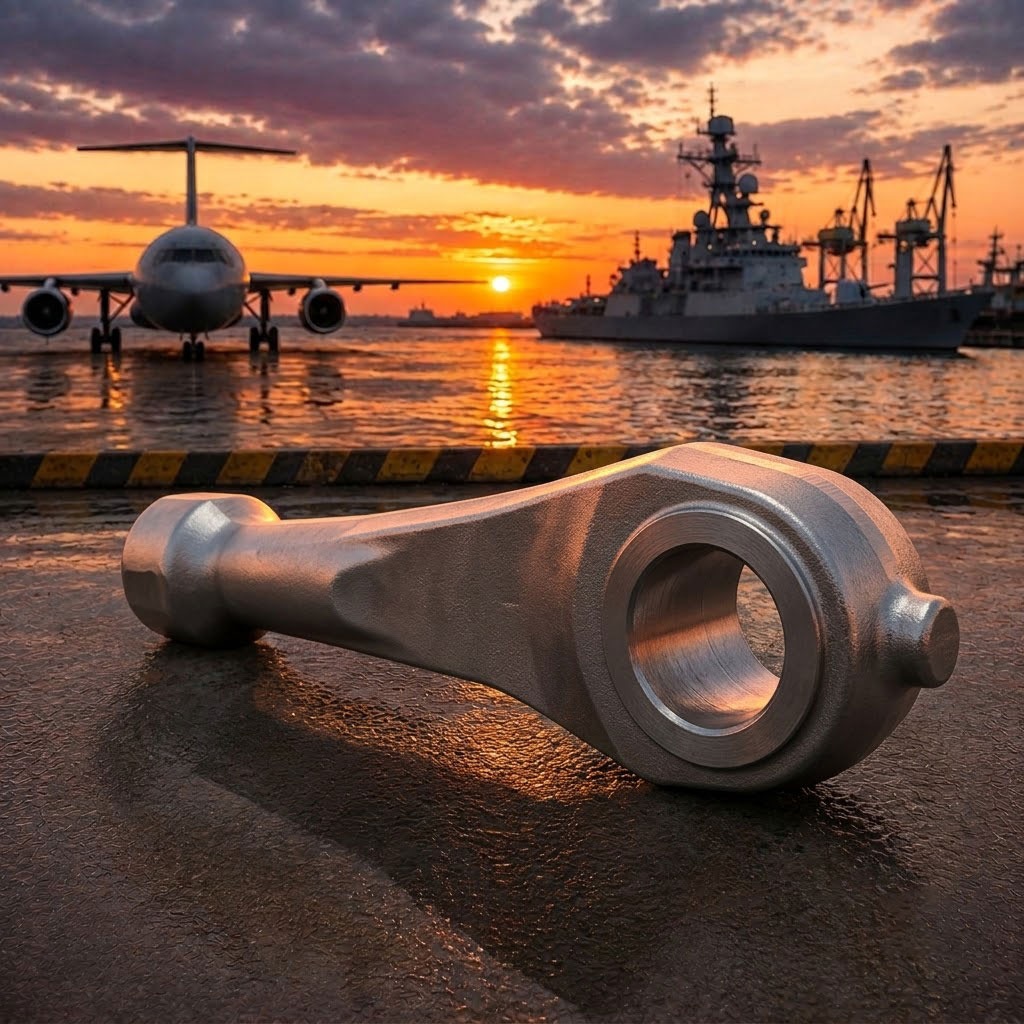
AISI 4340 Forging Supplier for USA from India: Aerospace, Defence & High-Strength Components
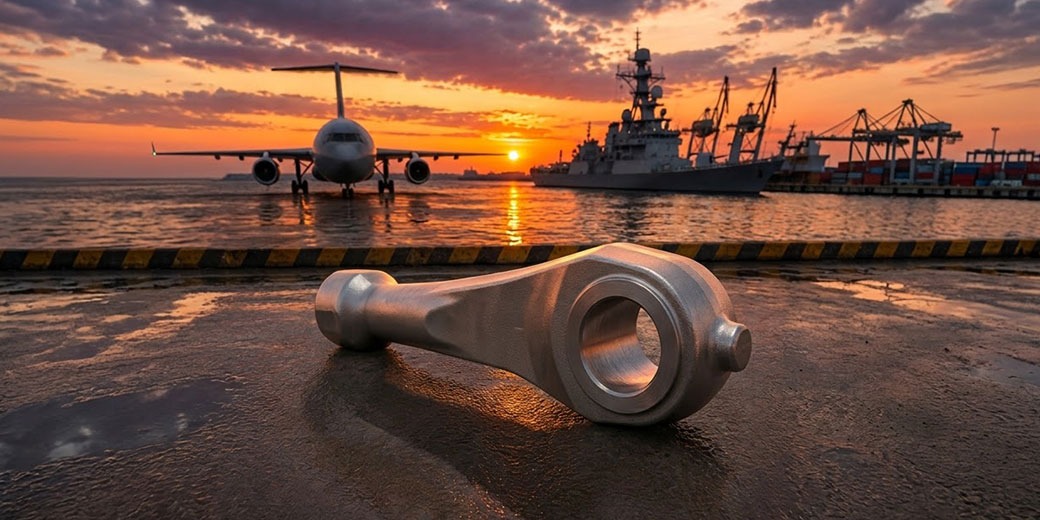
When component design demands high strength, fracture resistance and fatigue performance, AISI 4340 is one of the most recognised nickel-chromium-molybdenum alloy steels.
It is widely used across aerospace, defence, power generation and heavy mechanical systems.
For American procurement teams seeking an AISI 4340 forging supplier from India, supplier qualification must therefore examine far more than forging tonnage.
Material cleanliness, heat treatment uniformity, mechanical properties, NDT, traceability and dimensional control determine whether a 4340 forging is suitable for critical service.
Why 4340 Is Different from Standard Alloy Steels
4340 contains nickel in addition to chromium and molybdenum.
This alloying system provides:
- High hardenability
- Excellent strength
- Strong toughness
- Good fatigue resistance
- Good performance in thick sections
The ability to develop strength through relatively large cross-sections makes 4340 valuable for large critical forgings. Typical components include:
- Aircraft structural parts
- Landing gear-related components
- Shafts
- Rotor components
- Defence equipment parts
- High-strength couplings
- Heavy gears
- Mechanical transmission components
- High-load pins
4340 in US Aerospace and Defence Supply
Aerospace buyers operate under much tighter process-control expectations than general industrial buyers. Depending on the component, requirements may include:
- AS9100D quality systems
- Aerospace material specifications
- Controlled heat treatment
- Pyrometry requirements
- First Article Inspection
- Material traceability
- NDT
- Mechanical testing
- Customer-specific supplier approvals
For US aerospace programmes, supplier qualification therefore evaluates the entire process chain.
Your existing US aerospace cluster already establishes AMS specifications, AS9100D, FAIR and NDT as major buyer considerations.
Heat Treatment Is the Critical Variable
4340 can develop very high mechanical strength after quench and temper heat treatment.
But increasing strength can reduce toughness if the process is not carefully controlled.
The objective is therefore not simply to achieve the highest hardness possible.
The supplier must achieve the specified balance of strength and toughness. Important parameters include:
- Austenitising temperature
- Soak time
- Quench delay
- Quench medium
- Section thickness
- Tempering temperature
- Tempering duration
Large-Section 4340 Forgings
One reason 4340 is valuable is its hardenability.
However, large cross-sections still create metallurgical challenges.
A supplier producing a thick 4340 shaft or structural forging must demonstrate that required properties are achieved not only at the surface but at representative internal locations.
Testing strategy may therefore be linked to:
- Ruling section
- Sacrificial test material
- Prolongations
- Customer-defined coupon locations
4340 vs 4140
Both grades are chromium-molybdenum alloy steels, but 4340 adds significant nickel. The nickel improves hardenability and toughness. As a result, 4340 is often selected over 4140 for:
- Larger sections
- Higher-strength requirements
- Higher fatigue criticality
- Aerospace and defence components
4140 remains a strong engineering choice where extreme toughness and deep hardenability are less demanding.
NDT for Critical 4340 Forgings
Potential inspection methods include:
- Ultrasonic testing
- Magnetic particle inspection
- Fluorescent magnetic particle testing where specified
- Dimensional inspection
- Hardness
- Tensile testing
- Impact testing
- Microstructure inspection
Acceptance criteria should always follow the applicable customer specification rather than a generic internal standard.
Traceability
For defence and aerospace buyers, traceability can extend from finished component back to:
- Raw material heat
- Mill certificate
- Forging batch
- Heat treatment cycle
- Inspection reports
- Mechanical test results
- Machining records
- Final release documentation
This documentation chain becomes particularly important for long-life safety-critical programmes.
Vinir Engineering for 4340 Forgings
Vinir manufactures high-strength alloy steel forgings through closed die and open die processes with in-house heat treatment, machining and testing capabilities.
For US buyers, the company can support high-mix and low-volume programmes requiring engineering review before serial production.stead maintain traceability through the entire manufacturing route.