

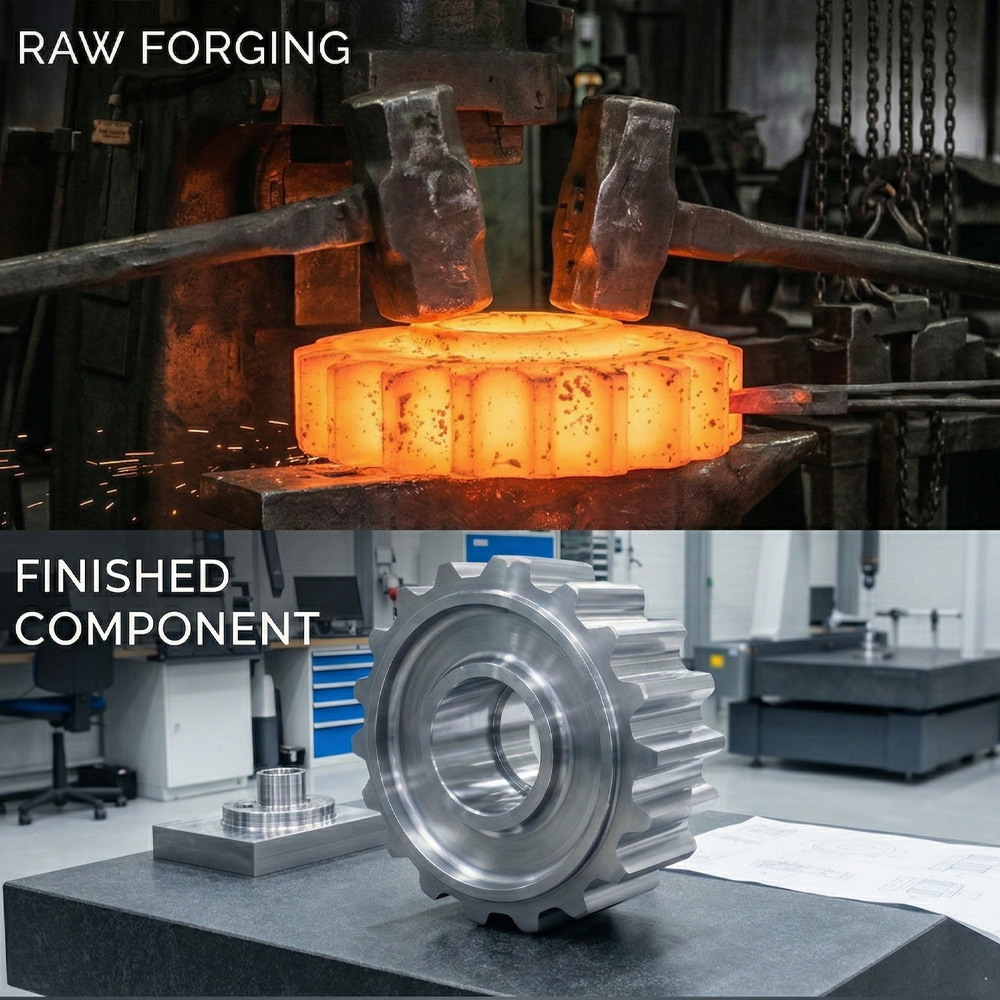
Forge-to-finish traceability: what “audit-ready” actually means in critical forging supply chains
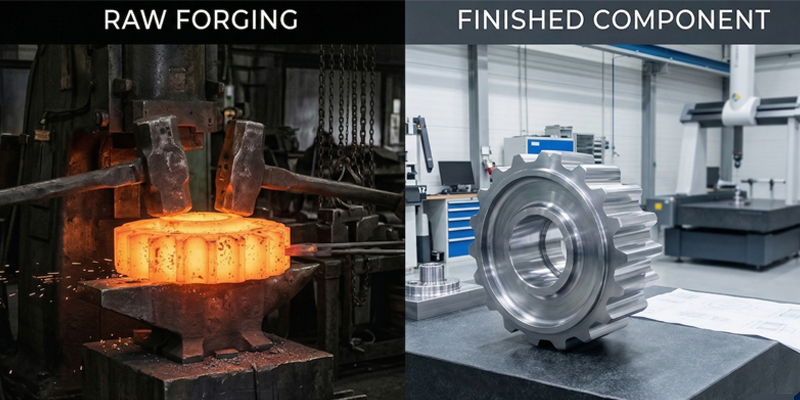
If you supply forged components for Oil & Gas, Defence, Aerospace, Nuclear, or Railways, your biggest differentiator isn’t your press size.
It’s your ability to prove control.
Buyers today don’t just ask:
“Can you manufacture this?”
They ask:
“Can you document everything that happened to this part — from raw material to final dispatch — and defend it in an audit?”
That is what audit-ready traceability means.
This blog breaks down:
- what buyers actually mean by traceability
- what documentation is audited
- how forge-to-finish suppliers gain an edge
- what Vinir should show on the website to win higher-value international RFQs
1) Traceability is not a document — it’s a system
Many suppliers treat traceability as “we have MTCs.”
Buyers treat traceability as:
In high-consequence industries, traceability must be:
- continuous (no gaps)
- batch-linked (not manual guesses)
- auditable (proof-based, time-stamped)
- reproducible (same outcome every time)
2) What buyers audit when they say “show us traceability”
Most buyers audit traceability across 6 checkpoints:
A) Material receipt
They check:
- Heat number system
- Stock segregation
- MTC verification
- Inward inspection records.
What they’re really checking:
Can you prevent raw material mix-ups?
B) Manufacturing route record (the most overlooked item)
They check:
- Process route sheet
- Forging steps logged
- Operation sign-offs
- Operator/process accountability
What they’re really checking:
Can you prove the process you claim you follow?
C) Heat treatment records
They check:
- Furnace calibration
- Heat cycle charts
- Batch linkage
- Hardness verification
What they’re really checking:
Can you prove mechanical properties weren’t “assumed”?
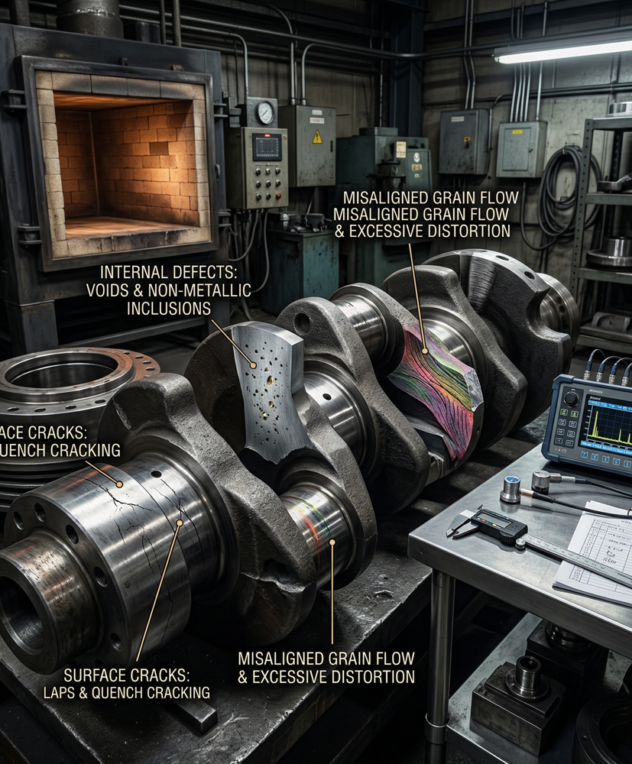
D) Inspection + NDT records
They check:
- Dimensional reports
- NDT reports (UT, MT, PT, RT)
- Acceptance criteria compliance
- Inspector certification validity
- Calibration logs
What they’re really checking:
Can you defend quality outcomes if a failure happens?
E) Machining traceability
They check :
- Re-identification during machining
- Part marking systems
- Process records of machining operations
What they’re really checking:
Do you lose traceability once the forging becomes a finished part?
F) Final dispatch dossier
They check :
- Dossier completeness and consistency
- Release note / compliance declaration
- Document retention policy
- Response time (how fast you can produce the file)
What they’re really checking:
Will you become a supplier risk during audits?
3) The “Traceability Pack” buyers expect from forge-to-finish suppliers
For critical forgings, buyers expect a structured dossier like:
- Material Test Certificate (MTC)
- Manufacturing route sheet
- Heat treatment chart + results
- Mechanical test reports
- NDT reports (as applicable)
- Dimensional inspection reports
- PMI reports (if required)
- Final release certificate
- Non-conformance reports + corrective action history (when requested)
In other words:
Your part must ship with proof.
4) Why forge-to-finish suppliers outperform forging-only suppliers
Suppliers who only forge typically lose traceability at three points:
- When forging moves to machining vendor
- When heat treatment is outsourced
- When inspection is scattered across vendors
This creates:
- Documentation gaps
- Inconsistent test reports
- Slower audit response
- Higher procurement risk
Forge-to-finish suppliers win because:
- Process stays under one system
- Documentation stays consistent
- Traceability does not reset after each vendor handoff
This becomes a competitive moat.
5) Where most suppliers fail traceability audits (even with ISO systems)
Common audit failures:
- missing heat treatment charts
- incomplete route sheets (no sign-off logs)
- no proof of stock segregation
- inconsistent part marking through machining
- NDT done, but calibration logs missing
- test results not linked to batch ID
- documents exist but not structured as a dossier
Buyers treat this as : High risk supplier.

Leave a Reply