
Railway forgings: safety-critical components and long-service structural reliability
Rail Infrastructure Demands Structural Predictability Over Decades
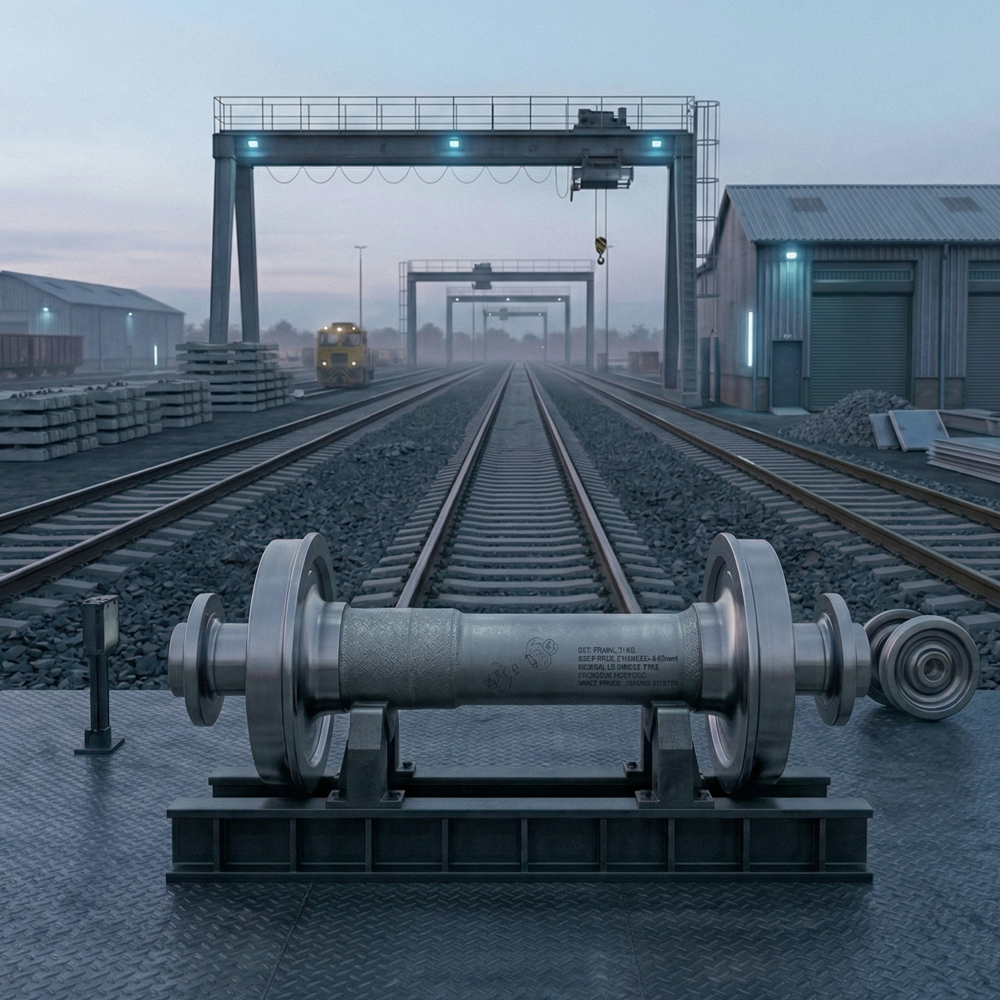
Railway systems are built for longevity. Tracks, rolling stock, axle assemblies, couplings, suspension systems, braking mechanisms, and structural supports operate under repetitive mechanical loading for years — often decades — with limited tolerance for structural failure.
Unlike certain industrial components that may be replaced or inspected frequently, railway forgings are expected to endure sustained cyclic stress, environmental exposure, and impact forces while maintaining dimensional and structural stability.
Failure in railway systems is not merely mechanical — it carries passenger safety implications, regulatory consequences, and operational disruption across entire networks.
For this reason, forged components used in railway applications must meet safety-driven engineering expectations that extend beyond basic mechanical strength.
The Nature of Stress in Railway Forged Components
Railway systems subject forged components to highly repetitive and dynamic loading.
Axles, couplers, suspension components, and structural brackets endure:
- Cyclic bending stress
- Torsional loads
- Vibration-induced fatigue
- Impact from track irregularities
- Variable environmental exposure
Fatigue performance becomes a central engineering concern. Unlike static load-bearing parts, railway components accumulate microstructural damage over time through repeated stress cycles.
Forging reduction ratio, grain refinement, and controlled heat treatment therefore play critical roles in preventing crack initiation and propagation.
Structural predictability under repetition — not just peak load capacity — defines quality in railway forgings.
Material Integrity and Grain Flow in Railway Applications
In forged railway components, grain flow orientation must align with stress paths to enhance fatigue resistance.
For example:
- In axle-like geometries, longitudinal grain alignment improves torsional performance.
- In suspension or coupling components, controlled fiber flow enhances impact resistance.
This alignment is not incidental. It must be engineered during forging.
Reduction ratio discipline ensures that internal discontinuities are closed and grain structure is refined. Insufficient deformation can result in structural heterogeneity, increasing fatigue sensitivity.
Railway standards frequently demand consistent ultrasonic inspection acceptance and mechanical property validation, reflecting the structural demands of long-service operation.
Heat Treatment and Mechanical Property Stability
Railway forgings must maintain stable mechanical properties across years of service under variable temperatures and stress conditions.
Heat treatment controls:
- Hardness range
- Yield strength
- Tensile strength
- Impact energy absorption
- Residual stress balance
Improper thermal processing can introduce brittleness or distortion that only becomes visible under prolonged use.
Because railway components operate in outdoor environments — exposed to moisture, temperature variation, and mechanical shock — stability over time is critical.
Controlled heat treatment documentation and repeatability are therefore essential in supplier evaluation.
Inspection Discipline in Railway Forgings
Railway safety frameworks typically require thorough inspection procedures during manufacturing.
These often include:
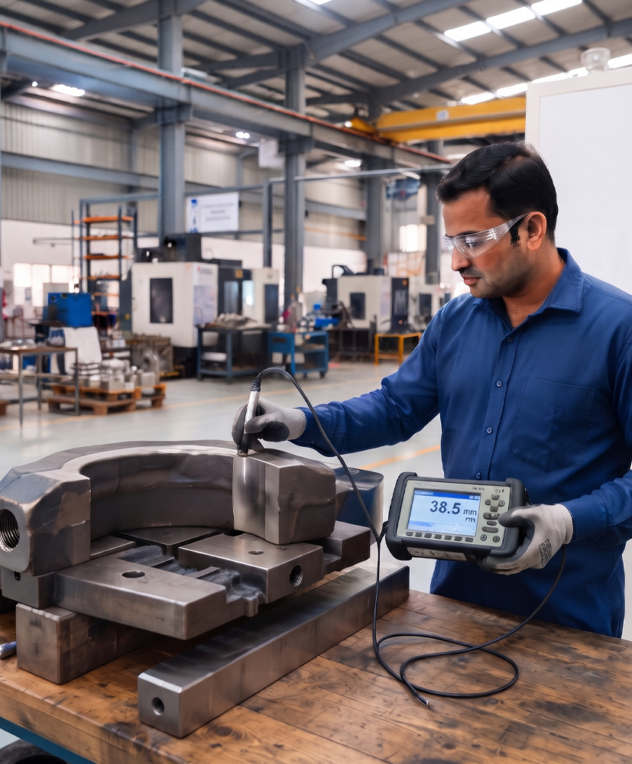
- Ultrasonic testing for internal soundness
- Magnetic particle inspection for surface discontinuities
- Dimensional verification against design tolerances
- Mechanical testing for strength and impact validation
Inspection is not only a quality control measure but a safety assurance mechanism.
Manufacturers must demonstrate consistent inspection coverage and documented acceptance criteria aligned with railway regulatory expectations.
Regulatory and Certification Considerations
Railway components may fall under structured compliance systems such as IRIS (International Railway Industry Standard) or equivalent regional regulatory frameworks.
Such systems emphasize:
- Quality management integration
- Risk assessment procedures
- Supplier traceability
- Corrective action discipline
- Continuous improvement mechanisms
Certification alone is insufficient. Buyers examine how deeply compliance is embedded into operational processes.
For railway forgings, documentation integrity supports long-term safety assurance.
Lifecycle Durability and Spare Part Continuity
Rail networks often operate equipment across extended time horizons.
Forging suppliers must therefore demonstrate the ability to:
- Maintain documentation archives
- Reproduce components for maintenance programs
- Preserve process knowledge across production cycles
- Ensure dimensional consistency in replacement parts
Supplier continuity and manufacturing stability become part of procurement evaluation.
Railway programs value reliability across years more than short-term production speed.
The Role of High-Mix Manufacturing in Railway Projects
Railway projects are rarely standardized at the global level.
Different regions may require:
- Custom geometries
- Varying material specifications
- Unique inspection documentation
- Program-specific compliance alignment
Forging manufacturers structured for high-mix, low-volume production are often better positioned to support such variability without compromising control.
Automotive-optimized production environments may struggle with frequent specification shifts and extended documentation cycles.
High-mix capability enables engineering responsiveness while maintaining structural discipline.
Railway Forging at Vinir Engineering
Vinir Engineering operates as a non-automotive, high-mix, forge-to-finish manufacturer serving safety-critical industrial sectors, including railway applications.
Our systems are structured around:
- Controlled metallurgical processes
- Documented reduction ratio validation
- Integrated heat treatment coordination
- Continuous material traceability
- Structured inspection architecture
- Audit-ready documentation systems
For railway OEMs and infrastructure developers evaluating forging manufacturers, process maturity and structural reliability often outweigh throughput metrics.
If your project requires forged axles, couplings, structural brackets, or fatigue-critical railway components, Vinir’s engineering team can review technical requirements and compliance expectations.
Connect with Vinir Engineering to discuss your railway forging requirements.