
Industrial forging audits explained: what buyers actually verify on-site
Audits Are About Process Discipline, Not Presentation
When OEMs audit a forging manufacturer, they are not looking for polished conference rooms or framed certificates.
They are assessing whether the supplier’s processes are structurally reliable.
In oil & gas, aerospace, defence, nuclear, marine, and heavy industrial sectors, audits determine whether a forging supplier can enter — or remain in — a qualified vendor list.
An audit is not a checklist exercise. It is a systemic evaluation of how consistently a manufacturer can control metallurgy, documentation, inspection, and operational risk.
Understanding what buyers actually verify on-site helps both procurement teams and manufacturers align expectations.
1. The Audit Begins Before the Visit
Long before stepping onto the shop floor, auditors review:
- Certification scope
- Quality manual
- Process flow diagrams
- Control plans
- Previous audit findings
- Corrective action reports
This pre-audit review shapes on-site questioning.
If documentation appears generic or inconsistent, auditors often probe deeper during the visit.
Well-prepared forging suppliers ensure documentation reflects actual shop-floor practices — not theoretical procedures.
2. Raw Material Control and Traceability
One of the first on-site validations typically involves material control.
Auditors verify:
- Heat number traceability
- Raw material segregation
- Identification marking systems
- Mill test certificate verification
- Storage practices
They may physically trace a component backward:
Finished part → Forging batch → Heat treatment record → Raw material certificate
If traceability breaks at any stage, compliance confidence declines immediately.
3. Forging Process Control
On the shop floor, auditors observe:
- Press operation procedures
- Reduction ratio planning
- Die condition and maintenance
- Operator qualification
- Process parameter recording
They may ask:
- How is reduction ratio calculated and documented?
- How is deformation temperature controlled?
- What happens if forging temperature falls below threshold?
- How are dies inspected and maintained?
Forging is not evaluated as a mechanical action, but as a controlled metallurgical event.
4. Heat Treatment Verification
Heat treatment is frequently scrutinized in critical forging audits.
Auditors examine:
- Furnace calibration certificates
- Temperature mapping records
- Soaking time documentation
- Cooling rate control
- Batch traceability
They may request historical records for randomly selected batches.
Any mismatch between recorded data and component marking raises red flags.
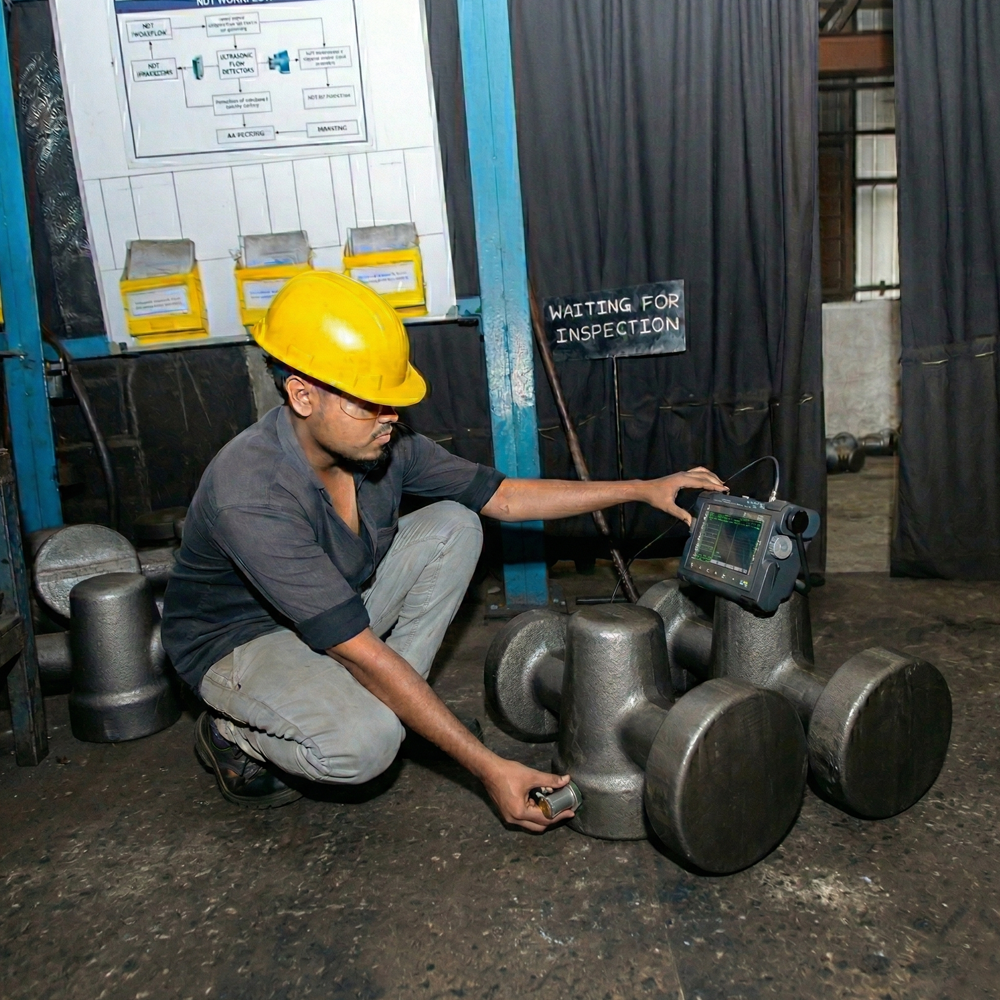
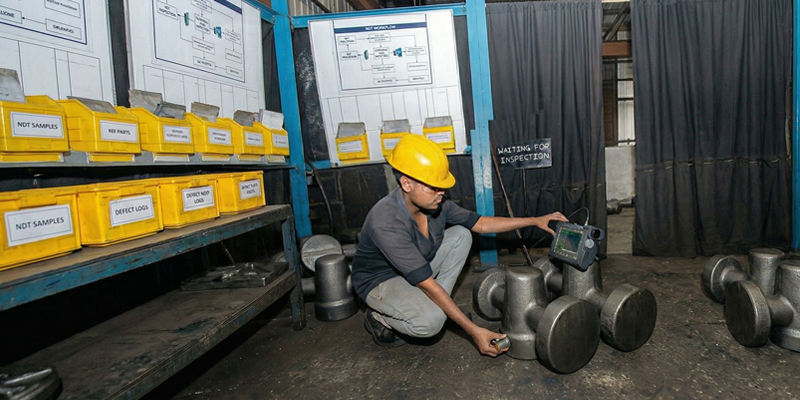
5. Inspection and NDT Systems
Inspection processes must demonstrate:
- Certified NDT personnel
- Calibration logs for inspection equipment
- Defined acceptance criteria
- Stage-wise inspection documentation
- Controlled handling of rejected parts
Auditors often review:
- UT reports
- MPI records
- Mechanical test certificates
- Dimensional inspection sheets
They may question:
- How are inspection plans created?
- How are non-conforming parts isolated?
- How is rework documented?
Inspection discipline reflects system maturity.
6. Non-Conformance and Corrective Action Handling
Every forging manufacturer encounters deviations.
What auditors evaluate is not whether NCRs exist — but how they are handled.
They assess:
- Root cause analysis methodology
- Corrective action implementation
- Preventive action tracking
- Recurrence monitoring
- Management review involvement
A structured CAPA (Corrective and Preventive Action) system demonstrates organizational learning.
7. Documentation Architecture and Data Integrity
Critical industry audits require robust documentation systems.
Auditors review:
- Document control procedures
- Revision tracking
- Record retention policies
- Digital vs physical record integration
- Access control protocols
They verify that documents are:
- Current
- Approved
- Traceable
- Consistent with production reality
Data integrity is central to audit approval.
8. Workforce Competence and Training
Auditors also evaluate human capability.
They may review:
- Operator training records
- NDT certification validity
- Supervisor qualification
- Skill matrix documentation
Competence verification ensures process reliability is not dependent on informal knowledge.
9. Risk Management and Contingency Planning
In long-term programs, auditors evaluate operational resilience.
Questions may include:
- What happens if critical equipment fails?
- Is there backup capacity?
- How is preventive maintenance managed?
- How are supply chain disruptions handled?
This is particularly important in defence and aerospace programs where continuity is essential.
10. What Causes Audit Failures in Forging Facilities
Common issues include:
- Incomplete traceability records
- Undocumented parameter deviations
- Expired calibration certificates
- Inconsistent inspection reporting
- Poor segregation of non-conforming material
- Lack of reduction ratio evidence
These are systemic failures — not isolated errors.
Auditors are trained to detect patterns, not surface compliance.
Why Audit Readiness Reflects Organizational Discipline
Audit readiness is not achieved through last-minute preparation.
It reflects:
- Structured processes
- Clear accountability
- Continuous documentation
- Internal audit discipline
- Leadership involvement
Suppliers serving non-automotive critical industries must maintain audit readiness continuously, not episodically.
How Vinir Engineering Approaches Audit Preparedness
At Vinir Engineering, audit readiness is embedded into operations rather than treated as an event-driven exercise.
Our systems emphasize:
- Continuous material traceability
- Documented reduction ratio validation
- Controlled heat treatment monitoring
- Certified NDT execution
- Structured CAPA implementation
- Integrated forge-to-finish documentation continuity
Serving oil & gas, aerospace, defence, nuclear, marine, and heavy industrial sectors requires disciplined audit architecture.
For OEMs preparing supplier audits or qualifying forging partners, Vinir’s team can support technical discussions, documentation alignment, and structured facility walkthroughs.
Connect with Vinir Engineering to discuss your audit and qualification requirements.