
Radial Forging Supplier in India for USA: Custom Shafts, Hollow Forgings and Forge-to-Finish Components for US OEMs
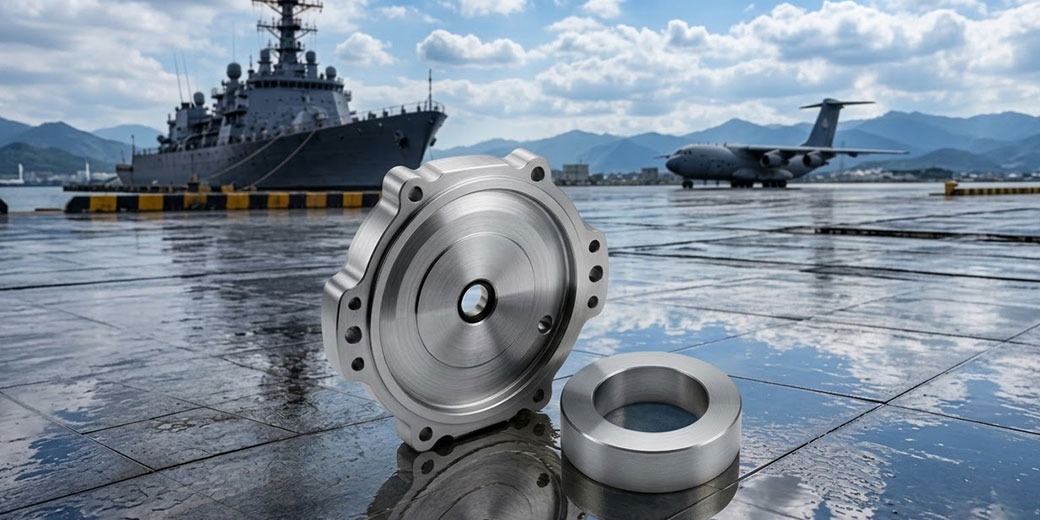
US manufacturers increasingly evaluate Indian forging companies not simply as low-cost sources of rough forgings but as potential forge-to-finish manufacturing partners capable of supplying heat-treated, inspected and machined critical components.
This sourcing model is particularly relevant to radial forging.
Many of the components best suited to radial forging long shafts, stepped bars, tubular preforms and hollow shafts require significant downstream heat treatment, NDT and precision machining before they can enter an OEM’s assembly.
For a US aerospace, defence, oil & gas, energy, marine or heavy-engineering company searching for a radial forging supplier in India, the correct commercial comparison is therefore not simply forging price per kilogram.
The more useful comparison is total delivered component cost, material utilisation, machining requirement, qualification capability, documentation, lead time and supply-chain complexity.
What Components Can a Radial Forging Supplier Manufacture?
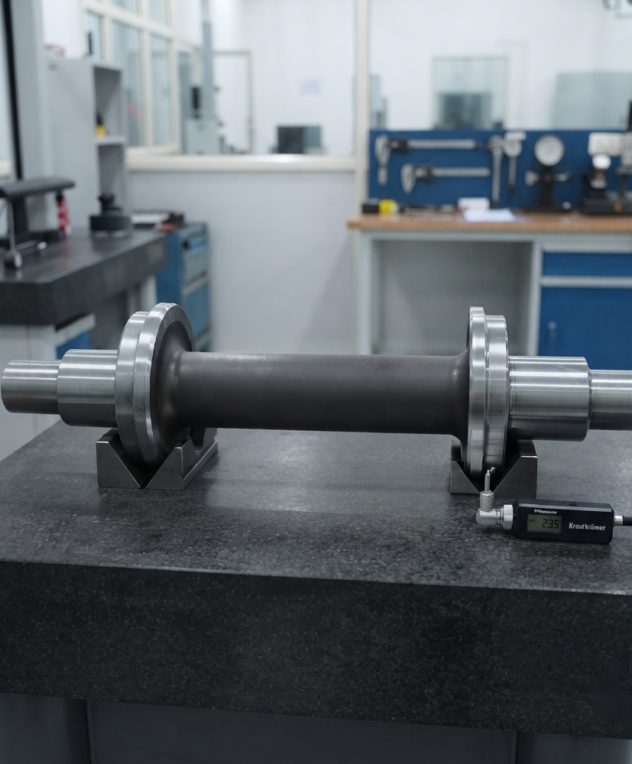
Radial forging is particularly suited to elongated components where the cross-section changes along the primary axis.
Depending on dimensions, alloy and final application, typical component families can include:
- Stepped forged shafts: Different diameters can be produced along the component before final machining.
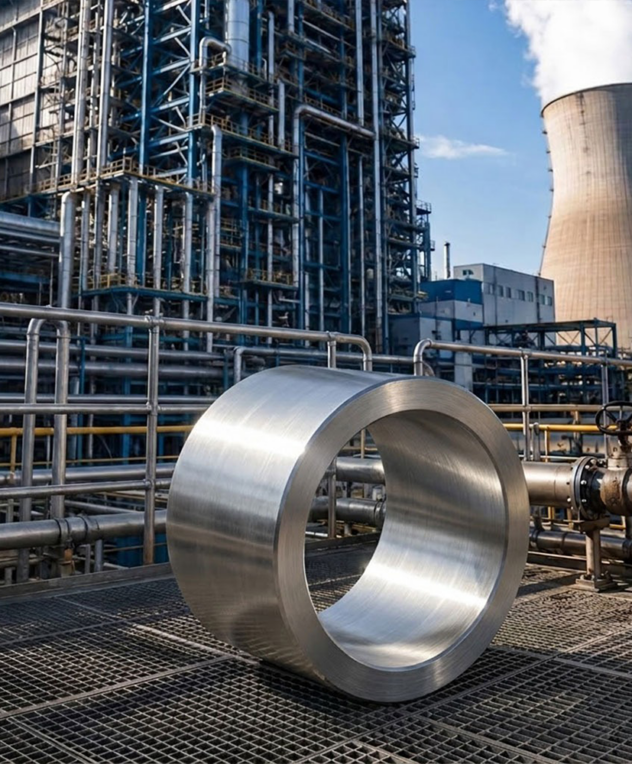
- Heavy-duty industrial shafts: High-strength steels can be processed for energy, mining, marine and industrial applications.
- Hollow forged shafts: Mandrel-based routes can reduce the amount of material that would otherwise be removed from the centre.
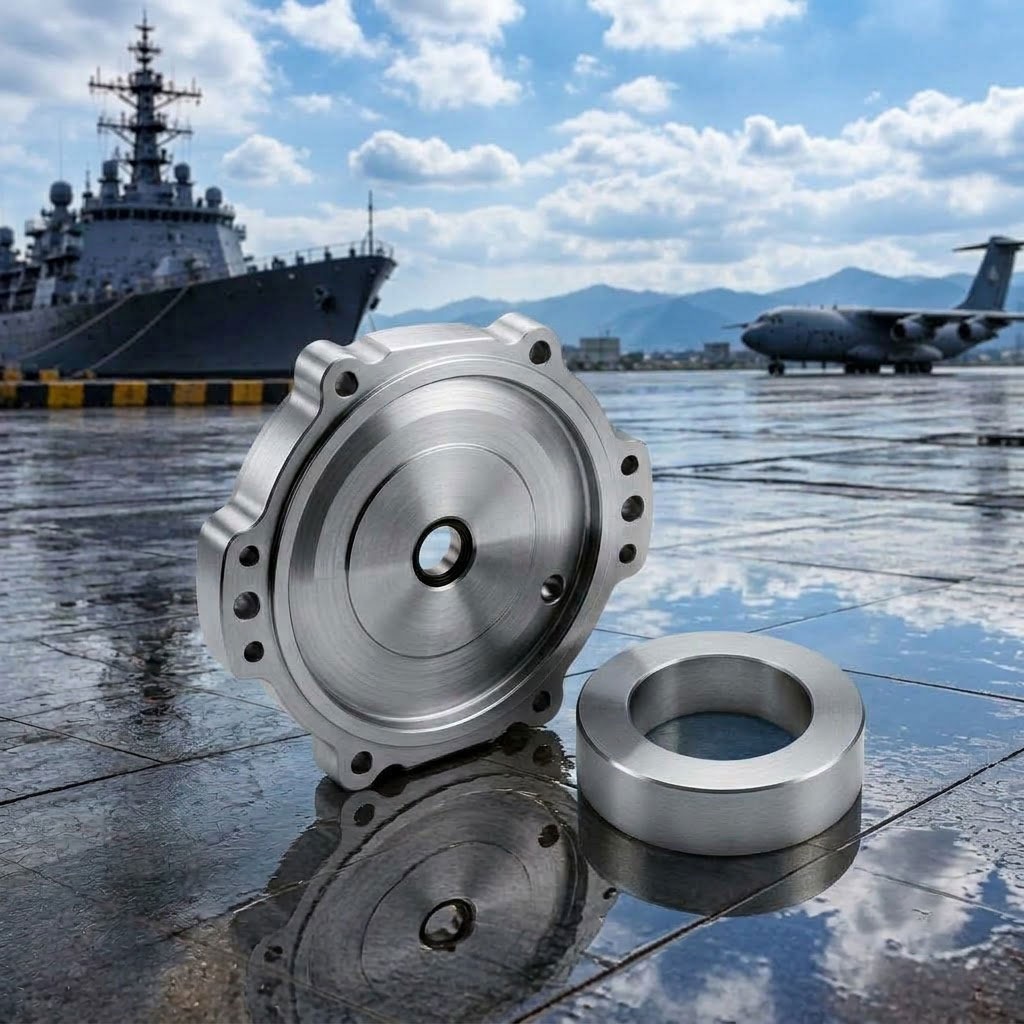
- Aerospace shaft preforms: High-strength steel, titanium and nickel-alloy preforms can be manufactured for subsequent qualified processing.
- Defence tubular and shaft preforms: Radial forging can suit selected long, high-strength geometries.
- Oil & gas components: Long drilling, mandrel, shaft and tubular preforms can be candidates where geometry suits the process.
- Marine and power-generation shafts: Long rotating components can benefit from controlled material distribution.
Not every shaft should be radial forged. Extremely large components may be better suited to open die forging, while complex non-axisymmetric parts may require closed die forging.
A supplier with multiple forging processes can evaluate the drawing rather than forcing the component onto one manufacturing route.
What Should a US Buyer Include in a Radial Forging RFQ?
The accuracy of a quotation depends heavily on the technical information provided.
A complete radial forging RFQ should ideally contain:
- Finished component drawing: This allows the forging engineer to understand where material is actually required.
- Material specification and revision: The exact alloy designation and governing standard should be identified.
- Required material condition: The supplier needs to know whether heat treatment is included and which final condition is required.
- Annual and batch quantities: Production quantity influences tooling, process development and manufacturing economics.
- Heat-treatment requirements: Applicable customer or industry requirements should be flowed down at quotation stage.
- NDT requirements: UT, MPI, PT and other required examinations should be clearly specified.
- Mechanical testing: Tensile, impact, hardness or other tests should be identified where applicable.
- Machining scope: The RFQ should state whether the buyer wants rough forging, proof machining, semi-finish machining or a finished component.
- Documentation requirements: MTRs, NDT reports, inspection reports, FAIR documentation and certificates should be defined before pricing.
- Delivery requirement: Required dates allow the supplier to evaluate material procurement, manufacturing and logistics realistically.
Why the Finished Drawing Helps Reduce Forging Cost
A supplier that receives only rough-forging dimensions cannot fully optimise material distribution.
The finished drawing shows which areas actually require larger diameter, where shoulders and transitions occur and which regions can be forged closer to finished size.
For a stepped radial-forged shaft, this can substantially reduce starting stock and rough machining.
Documentation for Critical Radial Forgings Supplied to US OEMs
For critical applications, the physical component may be only one part of the deliverable.
Depending on the industry, customer and purchase specification, a radial forging documentation package may include:
- Material Test Certificate: Establishes material identity, heat number, chemical composition and reported properties of the starting material.
- Heat-Treatment Record: Links the component to the applicable thermal-processing cycle.
- Mechanical Test Reports: Can document tensile, yield, elongation, impact or hardness results where required.
- Ultrasonic Testing Report: Records the volumetric inspection performed against the applicable acceptance requirements.
- Surface NDT Report: Documents magnetic particle or liquid penetrant examination where specified.
- Dimensional Inspection Report: Demonstrates conformity to the applicable forging or finished-component dimensions.
- Certificate of Conformity: Confirms manufacture against the agreed purchase requirements.
- Traceability Records: Maintain the connection between the finished component, raw-material heat and major manufacturing operations.
Aerospace programmes can require additional documentation such as first-article inspection records and approved special-process certifications.
Rough Forging vs Forge-to-Finish Supply
A US OEM does not necessarily need to purchase the component at the same stage from every supplier.
| Supply Level | Typical Deliverable |
| Rough forging | Forged preform with appropriate cleanup/allowance |
| Heat-treated forging | Forging supplied in specified thermal condition |
| Proof-machined forging | Preliminary machining to establish surfaces or support inspection |
| Semi-finished component | Major machining operations completed |
| Forge-to-finish component | Forging, heat treatment, NDT, machining and final inspection integrated |
The best option depends on the buyer’s internal manufacturing capability, qualification strategy and logistics model.
Why Forge-to-Finish Supply Can Reduce Process Handoffs
Consider a component forged at one company, heat treated at another, inspected at a third and machined at a fourth.
Every transfer creates another scheduling, traceability and quality interface.
An integrated forge-to-finish supplier can reduce the number of handoffs.
It can also create a tighter engineering feedback loop. If machining repeatedly reveals that one section contains excessive stock, the forging preform can potentially be improved. If an inspection surface is difficult to scan ultrasonically, the manufacturing sequence can be reviewed jointly.
This is more difficult when every operation belongs to a separate supply chain.
Lead-Time Factors When Sourcing Radial Forgings from India
Lead time should be considered as a combination of several stages rather than only forging-machine time.
Important contributors include:
- Engineering review and process planning
- Raw-material procurement
- Tooling and manufacturing setup
- Radial forging
- Heat treatment
- Mechanical testing
- NDT
- Machining
- Final inspection and documentation
- Customer approval requirements
- Export packing and international logistics
For a repeat qualified component, many of these activities become more predictable. New aerospace, defence or other critical components may require significantly more qualification time before routine production begins.
Shipping Heavy Radial Forgings from India to the USA
Logistics should be considered during quotation rather than after manufacturing.
Large shafts can create freight challenges because shipping cost is influenced not only by weight but also by overall crate dimensions and handling requirements.
Export planning can therefore include:
- Protective packaging: Machined surfaces may require corrosion protection and physical protection during transport.
- Crate engineering: Long shafts need appropriate support to prevent damage during handling.
- Ocean vs air freight: Delivery urgency and component value influence the most practical mode.
- Batch consolidation: Repeat orders can sometimes be scheduled to improve logistics economics.
- Documentation: Commercial and technical shipment documentation should remain aligned with component traceability.
Why India Can Suit High-Mix, Low-Volume US Forging Requirements
Not every US industrial programme requires automotive-scale production.
Aerospace, defence, energy, marine, mining and specialised oil & gas projects can require comparatively small batches of technically demanding components.
These programmes often place greater emphasis on engineering flexibility, material capability, documentation and process integration than on extreme production volume.
This creates an opportunity for Indian forging suppliers structured around high-mix, low-volume critical-component manufacturing.
Radial Forging and Forge-to-Finish Manufacturing at Vinir Engineering
Vinir Engineering positions itself as an Indian forge-to-finish manufacturer for critical components across aerospace, defence, oil & gas, nuclear, railways, energy, marine and heavy industrial applications.
Its broader manufacturing capabilities include radial forging, open die forging, closed die forging, ring rolling, heat treatment, machining and assemblies.
This wider process portfolio matters because radial forging should only be selected when it is technically appropriate.
A long stepped shaft may be an excellent radial-forging candidate. A very heavy component may require open die forging. A complex near-net component may be better suited to closed die forging, while annular geometry can point toward ring rolling.
For US OEMs, the most useful starting point is therefore a component-level manufacturing review rather than simply requesting a generic radial forging quotation.