
Power plant forgings: structural reliability in thermal, hydro, and energy systems
Power Generation Forgings Operate Under Continuous Load and Thermal Stress
Power plants — whether thermal, hydro, gas-based, or renewable-integrated — rely on forged components that operate under sustained mechanical and thermal loading.
Unlike many industrial parts that experience intermittent duty cycles, power plant forgings are often subjected to:
- Continuous rotational stress
- High operating temperatures
- Pressure fluctuations
- Long service intervals
- Minimal shutdown tolerance
Failure of a turbine shaft, generator component, high-pressure flange, or structural connector can disrupt grid stability and cause substantial operational losses.
For this reason, power plant forgings must demonstrate not only dimensional precision but long-term structural reliability.
Types of Forged Components Used in Power Plants
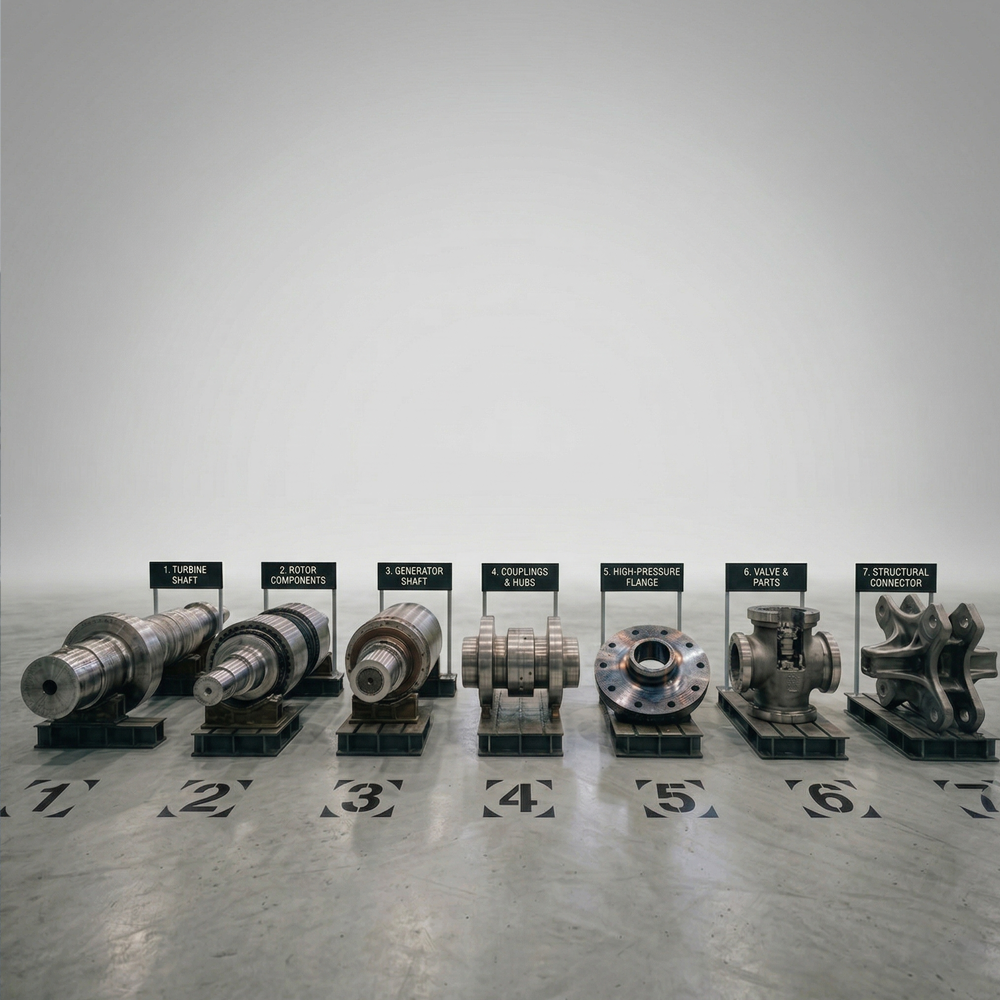
Forged components in power generation systems vary by plant type but commonly include:
- Turbine shafts
- Rotor components
- Generator shafts
- High-pressure flanges
- Couplings and hubs
- Structural load-bearing connectors
- Valve and pressure-retaining parts
Each of these components carries specific metallurgical and mechanical expectations depending on load and environment.
Thermal Power Plants: Managing High Temperature and Creep
In thermal and gas-based power plants, forged components operate under elevated temperatures for extended durations.
This introduces risks such as:
- Creep deformation
- Thermal fatigue
- Microstructural degradation
- Dimensional instability
Material selection and heat treatment must therefore ensure:
- Controlled microstructure
- Adequate creep resistance
- Stable mechanical properties over time
- Predictable expansion behavior
Forging reduction ratio and grain refinement play a key role in maintaining structural stability at temperature.
Hydro Power Systems: Fatigue and Cyclic Load Resistance
Hydroelectric power systems expose forged components to cyclic hydraulic forces and rotational stress.
Critical concerns include:
- Fatigue crack initiation
- Surface stress concentration
- Grain orientation relative to load
- Dimensional balance in rotating parts
Grain flow engineering becomes particularly important in turbine shafts and rotating assemblies.
Controlled deformation ensures fiber alignment along stress paths, enhancing fatigue life.
Pressure Integrity in Energy Infrastructure
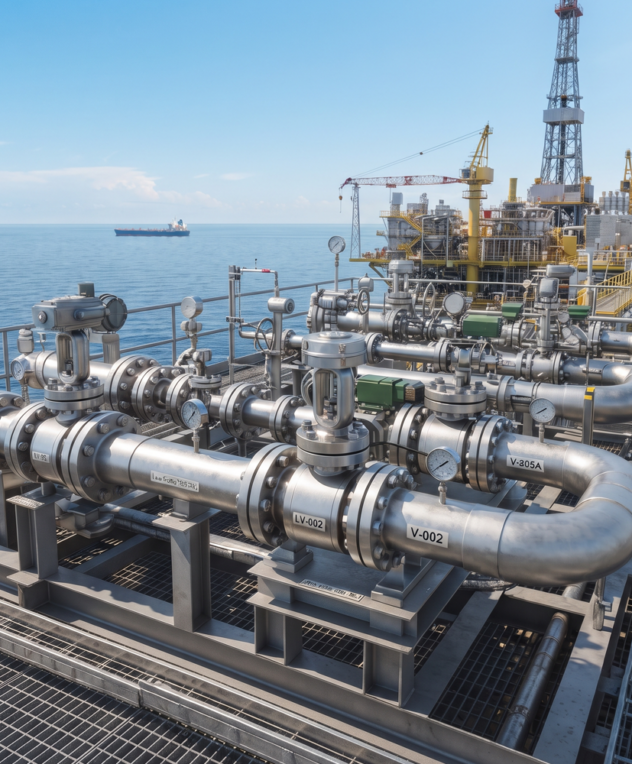
Power generation systems often involve pressure-retaining components such as:
- High-pressure steam flanges
- Valve bodies
- Piping connectors
These components must withstand internal pressure without leakage or fracture.
Adequate reduction ratio during forging improves:
- Internal soundness
- Porosity elimination
- Ultrasonic inspection acceptance
Inspection discipline and documentation validation are central to qualification.
Heat Treatment Stability and Mechanical Property Validation
Heat treatment in power plant forgings determines:
- Yield strength
- Hardness consistency
- Impact resistance
- Thermal stability
Because components may operate continuously for years, mechanical properties must remain stable under long-term exposure.
Auditors and buyers often review:
- Furnace calibration logs
- Heat treatment cycle charts
- Mechanical test certificates
- Batch traceability
Stability over time is more important than peak strength alone.
Inspection and NDT in Power Sector Forgings
Forged components used in energy systems typically undergo:
- Ultrasonic testing for internal soundness
- Magnetic particle inspection for surface discontinuities
- Dimensional verification
- Hardness and mechanical testing
Inspection thresholds may vary depending on plant type and customer specification.
Inspection repeatability reflects supplier reliability.
Lifecycle Expectations and Maintenance Considerations
Power plant infrastructure is built for longevity.
Forging suppliers must consider:
- Long service life
- Maintenance cycles
- Spare part traceability
- Retrofit compatibility
Supplier continuity and documentation retention become important for lifecycle support.
OEMs often evaluate whether forging manufacturers can sustain long-term supply commitments.
Why High-Mix Capability Supports Energy Projects
Energy projects often involve:
- Project-specific designs
- Custom geometries
- Moderate production volumes
- Site-specific specifications
Forging manufacturers optimized for repetitive automotive production may struggle with the variability and documentation depth required for power generation systems.
High-mix, low-volume capability aligns more naturally with project-driven energy infrastructure programs.
Power Sector Forging at Vinir Engineering
Vinir Engineering manufactures forged components for critical energy and power plant applications within a structured, non-automotive forging model.
Our manufacturing systems emphasize:
- Controlled metallurgical processes
- Documented reduction ratio validation
- Integrated heat treatment coordination
- Precision machining alignment
- Continuous material traceability
- Audit-ready documentation architecture
Serving thermal, hydro, and industrial energy systems requires structural discipline rather than throughput optimization.
If your project requires forged shafts, flanges, hubs, or structural components for power generation systems, Vinir’s engineering team can review technical specifications and compliance requirements.
Connect with Vinir Engineering to discuss your power plant forging requirements.