
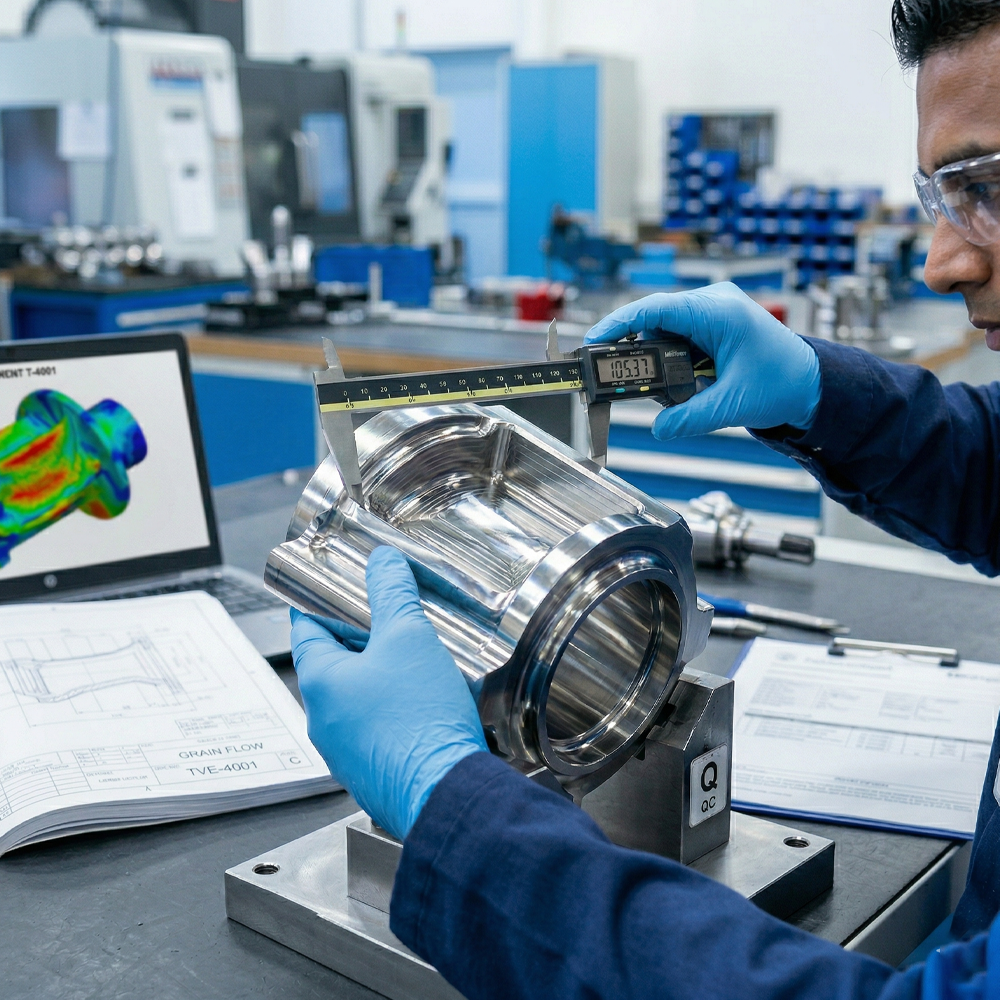
Forging manufacturers in india for critical industries
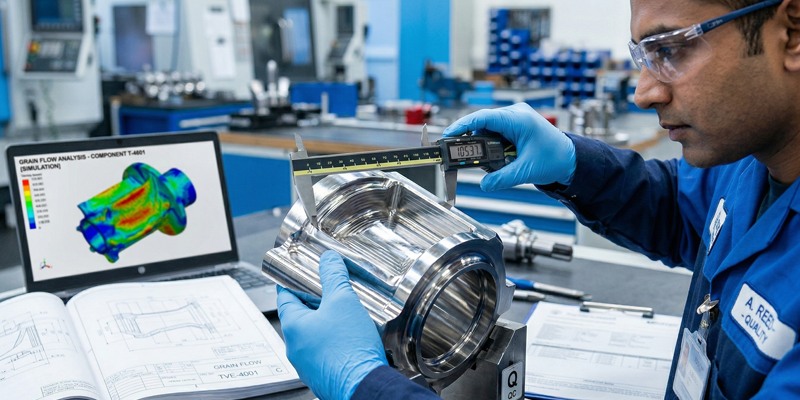
India’s Forging Sector Is Large — But Not Uniform
India is one of the largest forging hubs globally, supplying components across automotive, railways, construction, energy, and heavy industry sectors.
However, the phrase “forging manufacturers in India” covers a wide spectrum of production models.
At one end are high-volume automotive forging suppliers optimized for repetition, tooling efficiency, and throughput.
At the other end are specialized manufacturers structured for critical industries — oil & gas, aerospace, defence, nuclear, marine, railways, and heavy equipment — where compliance, traceability, and structural reliability define capability.
For global OEMs and EPC companies evaluating forging manufacturers in India, understanding this distinction is essential.
What Defines a Critical Industry Forging Manufacturer?
Critical industries operate under:
- Regulatory frameworks
- Multi-layer audit systems
- Strict material pedigree requirements
- Controlled process validation
- Long program lifecycles
Forging manufacturers serving these sectors must demonstrate:
- Metallurgical process control
- Reduction ratio validation
- Grain flow engineering
- Structured heat treatment monitoring
- Certified NDT capability
- Documentation architecture aligned with global standards
Capacity alone does not determine suitability.
Process maturity does.
Manufacturing Capabilities Required for Oil & Gas, Aerospace, Defence, and Nuclear
Different sectors impose different technical expectations.
In oil & gas, manufacturers must comply with API standards and pressure-retaining integrity requirements.
In aerospace, AS9100D-aligned systems, configuration control, and fatigue-oriented grain flow are critical.
In defence programs, qualification cycles are long and supplier continuity matters.
In nuclear applications, regulatory documentation discipline often outweighs production speed.
Forging manufacturers in India serving these industries must operate with high-mix flexibility while maintaining structural consistency.
This combination requires engineering discipline embedded into daily production — not applied selectively.
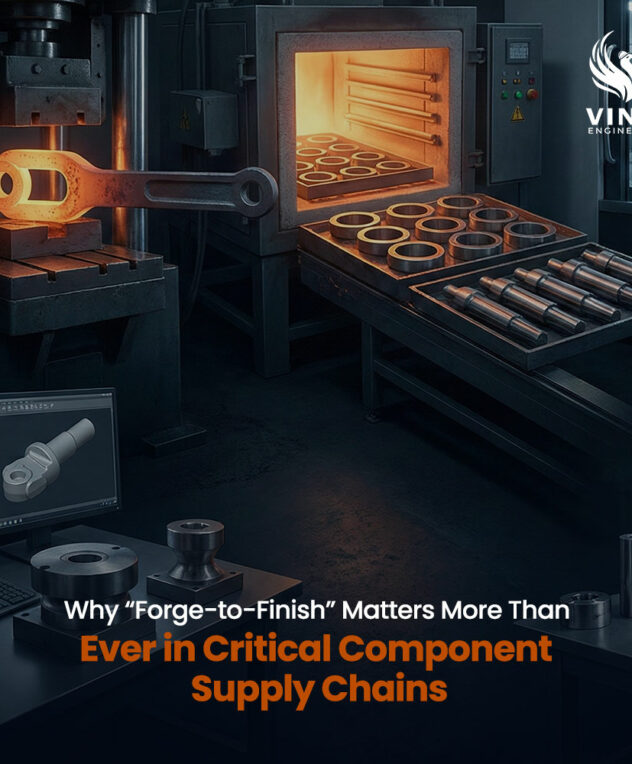
The Importance of Forge-to-Finish Integration
Many critical components require not only forging but also precision machining and inspection alignment.
Integrated forge-to-finish capability allows:
- Coordinated grain flow preservation
- Controlled machining allowances
- Faster corrective loops
- Centralized documentation continuity
- Reduced inter-vendor traceability gaps
For critical industries, integration reduces supply chain risk and improves audit transparency.
Global buyers increasingly evaluate Indian forging manufacturers based on integration maturity rather than standalone press capacity.
Certification Landscape Among Forging Manufacturers in India
Leading manufacturers serving critical industries often align with:
- API (oil & gas)
- AS9100D (aerospace)
- IBR / PED (pressure equipment)
- Industry-specific regulatory frameworks
- ISO quality systems
However, certification presence alone is not decisive.
Buyers examine whether certifications are:
- Embedded into operations
- Supported by process control
- Backed by documented repeatability
- Sustained through surveillance audits
Audit resilience separates marketing compliance from operational compliance.
High-Mix, Low-Volume Capability as a Differentiator
Many critical programs involve:
- Custom geometries
- Variable material grades
- Moderate batch sizes
- Customer-defined documentation requirements
High-volume automotive systems may not easily adapt to this variability.
Forging manufacturers in India structured for high-mix production can better support:
- Engineering collaboration
- Specification changes
- Multi-industry programs
- Qualification-driven timelines
Flexibility without loss of control defines true capability.
Supplier Evaluation Criteria Used by Global OEMs
When evaluating forging manufacturers in India for critical applications, global buyers typically assess:
- Metallurgical engineering depth
- Documentation maturity
- Audit history
- Reduction ratio discipline
- Inspection repeatability
- Financial and operational stability
- Long-term lifecycle support capability
Supplier selection is ultimately a risk decision.
OEMs prioritize reliability over marginal cost advantage in regulated environments.
India’s Strategic Advantage in Critical Forging Supply Chains
India offers:
- Skilled engineering workforce
- Growing certification alignment
- Established export ecosystem
- Competitive cost structures
- Expanding forge-to-finish integration
However, participation in critical industry supply chains depends on structured process discipline — not geographic advantage alone.
Manufacturers that combine metallurgical control, compliance depth, and high-mix adaptability are better positioned to support global programs.
Vinir Engineering: Forging for Regulated and Critical Industries
Vinir Engineering operates as a non-automotive, high-mix, forge-to-finish forging manufacturer in India serving critical industrial sectors.
Our systems are structured to support:
- Controlled metallurgical processes
- Documented reduction ratio validation
- Integrated heat treatment and machining coordination
- Continuous material traceability
- Audit-ready documentation architecture
- Cross-sector compliance alignment
Rather than optimizing for automotive volume throughput, Vinir’s manufacturing philosophy is aligned with regulated, structural, and long-lifecycle industrial programs.
For global OEMs and EPC companies evaluating forging manufacturers in India for oil & gas, aerospace, defence, nuclear, marine, or heavy industrial applications, our engineering team can support technical review, qualification alignment, and compliance discussion.
Connect with Vinir Engineering to discuss your critical forging requirements in India.