
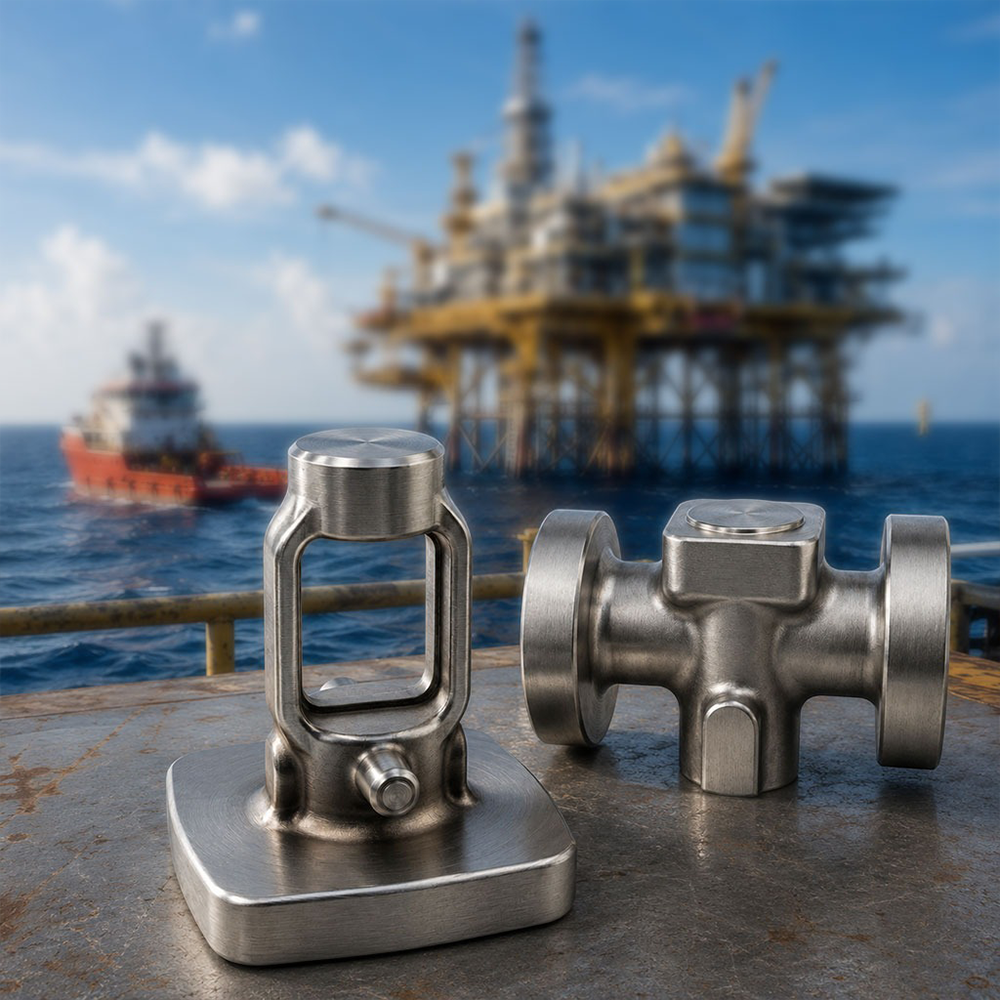
Offshore Structural Forging for US Gulf of Mexico Platforms from India
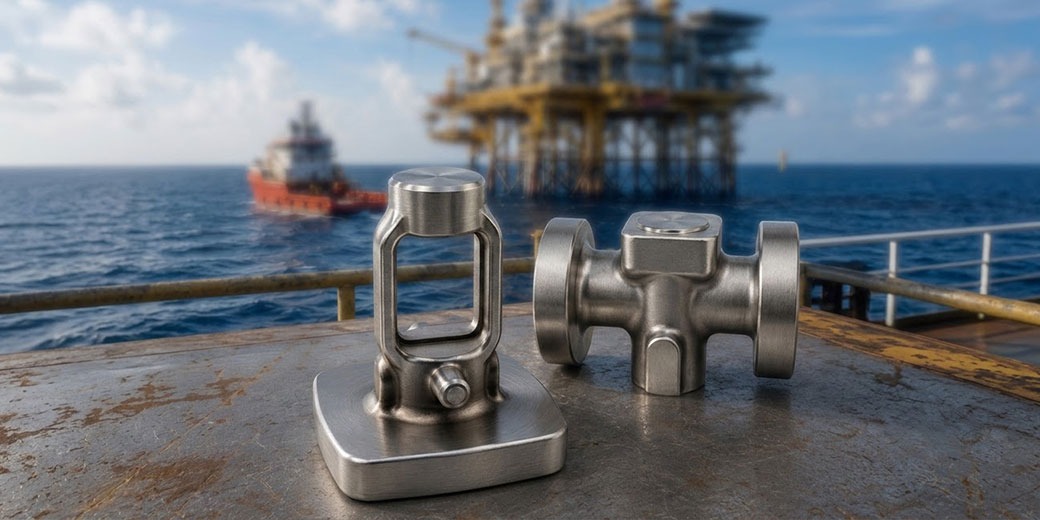
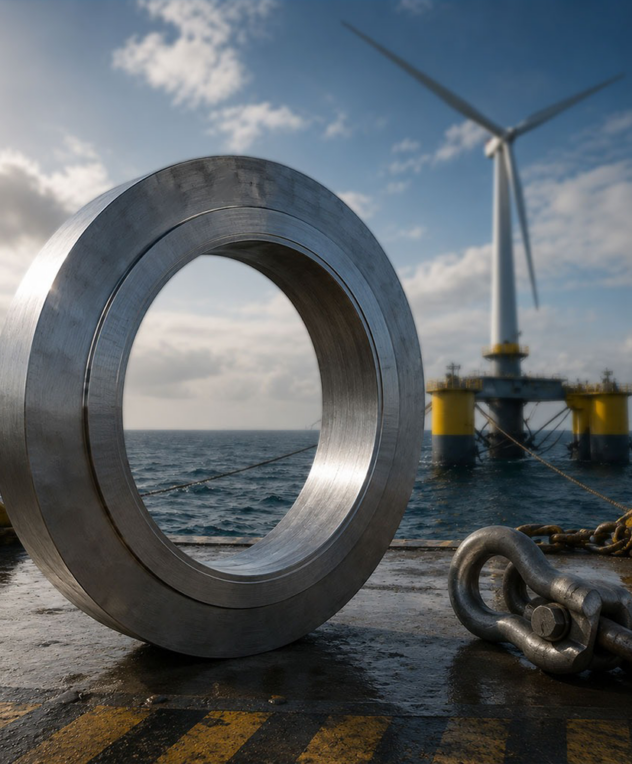
US Gulf of Mexico offshore platforms – jacket structures, topside modules, and floating production facilities use structural alloy steel and stainless steel forgings for hull connections, riser supports, mooring hardware, and piping flanges. Indian API 20B certified forging manufacturers supply GoM platform operators at 20–35% cost advantage.
| Application | Material | Standard | Weight |
| Jacket leg node connection | ASTM A694 F65 | API 2B / AWS D1.1 | 500–5,000 kg |
| Riser clamp ring | S355NL / A694 F65 | DNV OS-F101 | 200–2,000 kg |
| Mooring chain hardware | 30Mn2 Grade R3/R4 | DNV OS E302 | 50–300 kg |
| Topside piping flange | A182 F316L / F51 | ASME B16.47 | 50–2,000 kg |
GoM offshore platform structural forgings — used in jacket leg connections, conductor guide frames, topside module support structures, and riser support clamps are governed by API 2B, AWS D1.1, and DNV/ABS class requirements for floating facilities.
ASTM A694 F65 — minimum yield 65,000 psi (448 MPa) is the standard for high-pressure pipeline flange and structural fitting forgings on GoM platforms. Charpy impact at -20°F (-29°C) is mandatory per ASTM A694 – verifying toughness at the lowest expected GoM ambient temperature.
Duplex stainless for seawater systems: Topside seawater system flanges and fittings use duplex 2205 (A182 F51). NORSOK M-630 corrosion testing (G48 at 22°C) is required by most GoM operators for duplex flanges in seawater service.
Vinir Engineering’s Capability
- API 20B certified.
- A694 F65 and A182 F51/F53 forgings, 50–15,000 kg .
- NABL Charpy at -29°C.
- G48 corrosion test for duplex grades.
- Ring rolling to Ø4,500mm for riser clamp rings.
- TPI by Bureau Veritas and DNV.
- ABS survey for floating facility components.