
Nuclear forging manufacturers: regulatory discipline, documentation architecture, and structural assurance in critical applications
Nuclear Forgings Operate Under Regulatory Oversight, Not Commercial Flexibility
In nuclear applications, forging manufacturing is governed by regulatory discipline rather than market convenience.
Components used in nuclear reactors, pressure systems, containment assemblies, and safety mechanisms must meet stringent structural and documentation requirements defined by international and regional codes.
Unlike other industrial sectors, nuclear manufacturing tolerates no ambiguity in:
- Material traceability
- Process validation
- Inspection documentation
- Deviation management
- Record retention
Failure in nuclear applications carries safety, environmental, and regulatory consequences that extend far beyond operational cost.
For this reason, nuclear forging manufacturers must demonstrate systemic maturity — not just technical capability.
Regulatory Frameworks Governing Nuclear Forgings
Nuclear forgings are typically governed by structured codes such as:
- RCC-M
- ASME Section III
- PED (Pressure Equipment Directive)
- Country-specific atomic energy regulations
These codes define:
- Acceptable material grades
- Mechanical property requirements
- Inspection thresholds
- Documentation retention rules
- Third-party validation expectations
Compliance is not optional — it is mandatory for program participation.
Manufacturers must understand not only the code requirements but also the audit expectations that accompany them.
Material Pedigree and Heat-Level Traceability
Traceability in nuclear forging is absolute.
Each component must be traceable to:
- Raw material heat number
- Melt origin
- Chemical composition verification
- Mechanical property validation
- Heat treatment batch
- Inspection stage documentation
Auditors may physically trace a component through the documentation chain during qualification review.
Any break in pedigree continuity introduces compliance risk.
Nuclear-grade forging suppliers must maintain rigorous identification, segregation, and archival systems.
Deformation Control and Structural Integrity Requirements
Nuclear components often operate under:
- High internal pressures
- Thermal gradients
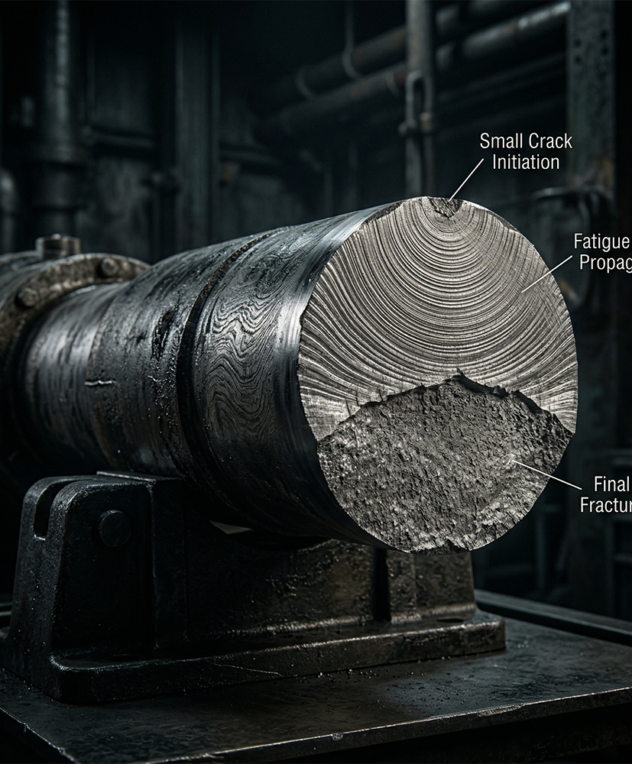
- Long-term cyclic stresses
- Radiation exposure
- Extended service life
To ensure structural assurance, forging processes must achieve:
- Adequate reduction ratios
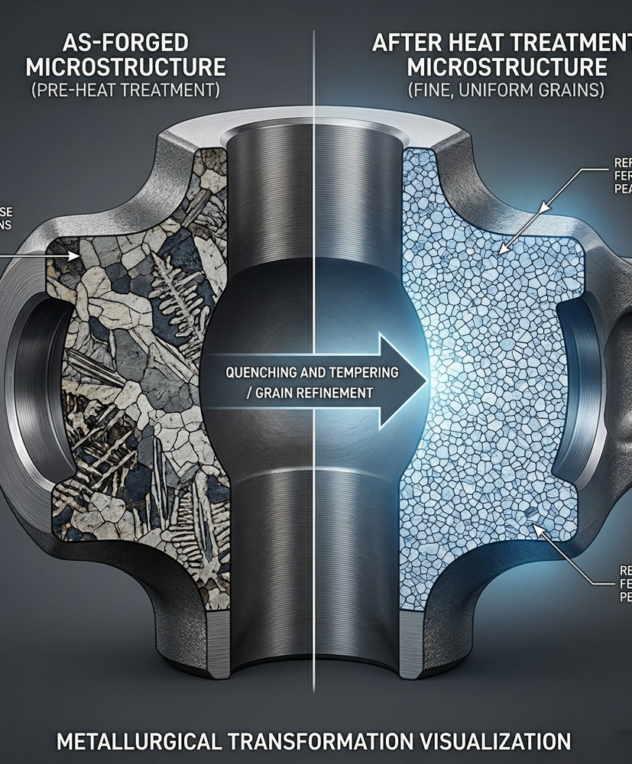
- Uniform grain refinement
- Elimination of internal voids
- Controlled microstructure
Ultrasonic testing thresholds in nuclear applications are often more stringent than general industrial standards.
Process discipline during forging directly influences inspection outcomes.
Heat Treatment Validation and Mechanical Stability
Heat treatment in nuclear forgings must be precisely documented and repeatable.
Validation includes:
- Furnace calibration and mapping
- Soaking time logs
- Controlled cooling records
- Hardness verification
- Impact testing confirmation
Mechanical properties must align with regulatory code requirements.
Documentation must clearly demonstrate that each batch has been processed within approved parameters.
In nuclear programs, documentation is often reviewed years after production during regulatory audits.
Third-Party Inspection and Witness Hold Points
Nuclear forging projects frequently require:
- Independent inspection agencies
- Witnessed mechanical testing
- Stage-wise inspection hold points
- Regulatory oversight approval
Inspection is not simply internal validation — it is externally verified compliance.
Manufacturers must coordinate production planning with inspection scheduling without disrupting process control.
Documentation Architecture and Record Retention
One of the defining characteristics of nuclear forging manufacturing is documentation longevity.
Record retention may extend across:
- Component lifecycle
- Reactor operational duration
- Decommissioning timelines
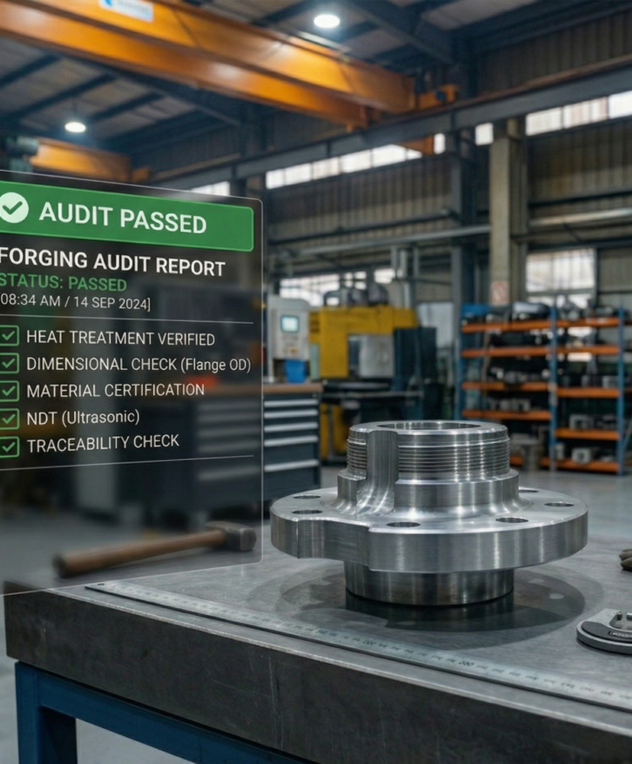
Documentation packages typically include:
- Material test certificates
- Forging process records
- Heat treatment charts
- NDT reports
- Mechanical testing certificates
- Dimensional inspection logs
- Non-conformance and corrective action reports
Document control systems must ensure accessibility, traceability, and integrity over long durations.
Non-Conformance Management in Nuclear Programs
In regulated environments, deviations must be managed with structured transparency.
Manufacturers must demonstrate:
- Root cause analysis methodology
- Corrective action implementation
- Preventive system updates
- Customer communication protocols
Nuclear auditors evaluate whether non-conformances reflect isolated issues or systemic weaknesses.
Process maturity is judged by corrective discipline.
Long-Term Program Stability and Supplier Continuity
Nuclear projects span extended development and operational phases.
Procurement teams evaluate suppliers based on:
- Financial resilience
- Workforce competence
- Equipment maintenance programs
- Succession planning
- Risk mitigation strategy
Supplier stability ensures that documentation and process knowledge remain consistent throughout program duration.
Why Nuclear Forging Requires Specialized Manufacturing Philosophy
Nuclear forging differs fundamentally from high-volume industrial production.
It prioritizes:
- Documentation completeness over speed
- Process validation over output rate
- Audit preparedness over cost minimization
- Long-term structural reliability over throughput
Manufacturers structured for high-mix, regulated environments are better aligned with nuclear program expectations than those optimized for repetitive automotive cycles.
Nuclear Forging Manufacturing at Vinir Engineering
Vinir Engineering operates as a non-automotive, high-mix, forge-to-finish manufacturer structured to support regulated industrial sectors, including nuclear applications.
Our manufacturing systems emphasize:
- Continuous material traceability
- Controlled reduction ratio validation
- Structured heat treatment documentation
- Certified inspection and NDT processes
- Integrated forge-to-finish workflow
- Audit-ready documentation architecture
For EPC companies, OEMs, and project developers evaluating nuclear forging manufacturers, Vinir supports technical alignment discussions, documentation review, and compliance-focused manufacturing planning.
If your program requires structurally reliable forged components with documented regulatory discipline, our engineering team can assist in reviewing specifications and qualification pathways.
Connect with Vinir Engineering to discuss your nuclear forging requirements.