
High-mix, low-volume forging manufacturing: capability vs capacity in critical industries
Why High-Mix, Low-Volume Manufacturing Is Fundamentally Different from Automotive Forging
In heavy industry, not all forging manufacturing models are built the same.
Automotive forging is designed for:
- High-volume repeatability
- Tooling amortization across large batches
- Cycle time efficiency
- Cost-per-piece optimization
By contrast, critical industries such as oil & gas, aerospace, defence, nuclear, marine, railways, and heavy equipment operate under a completely different demand structure.
They require:
- Multiple material grades
- Variable geometries
- Project-specific documentation
- Moderate or low batch volumes
- Long program lifecycles
- Strict compliance and audit frameworks
This is the domain of high-mix, low-volume forging manufacturing.
Understanding the difference between capability and capacity becomes central when selecting suppliers for such programs.
Capacity Is Measured in Tonnage. Capability Is Measured in Control.
Many forging manufacturers highlight press tonnage, maximum forging size, and monthly output capacity.
While capacity indicates how much can be produced, it does not explain how consistently or flexibly it can be produced.
High-mix capability requires structured control across:
- Frequent die changeovers
- Multiple material handling systems
- Diverse heat treatment cycles
- Custom inspection plans
- Variable machining strategies
- Project-specific documentation packages
In high-volume environments, repetition simplifies control. In high-mix environments, variability increases complexity.
True capability lies in managing that variability without sacrificing structural integrity or compliance.
Why High-Mix Forging Is Operationally More Complex
Every time a forging manufacturer switches from one component to another, it introduces engineering and documentation adjustments.
For example:
- A carbon steel oil & gas component may require API documentation and UT thresholds.
- An aerospace structural part may require AS9100D traceability and fatigue-oriented grain flow alignment.
- A defence mobility component may require controlled hardness ranges and impact testing validation.
Each application demands different:
- Material grades
- Heat treatment cycles
- Inspection criteria
- Certification documentation
- Audit expectations
High-mix forging operations must accommodate this diversity without process drift.
This demands disciplined documentation systems and technically competent engineering oversight.
Tooling Strategy in High-Mix Forging
In automotive forging, tooling investments are optimized for long production runs.
In high-mix environments, tooling must be:
- Adaptable
- Modular
- Maintained for intermittent production
- Validated before reactivation
Die wear patterns, alignment precision, and storage protocols must be carefully managed.
Improper tooling discipline in high-mix operations can lead to dimensional deviation or inconsistent grain flow.
Documentation Complexity in Low-Volume Critical Programs
Low-volume production does not mean low documentation.
In fact, the opposite is often true.
High-mix forging programs typically require:
- Project-specific material traceability
- Batch-specific inspection reports
- Customer-defined inspection plans
- Third-party witness documentation
- Extended record retention
Automotive-optimized systems designed for statistical repeatability may not easily adapt to such variability.
High-mix forging requires documentation systems that are flexible yet controlled.
Quality Control Challenges in High-Mix Forging
In repetitive production environments, statistical process control stabilizes output.
In high-mix environments:
- Sample sizes are smaller
- Variability between batches is higher
- Inspection plans are customized
- Material properties vary by grade
This increases the importance of:
- Clear process parameter recording
- Defined reduction ratio calculations
- Controlled heat treatment validation
- Skilled operator training
- Structured corrective action systems
Quality discipline must operate independent of production volume.
Why Critical Industries Prefer Specialized High-Mix Manufacturers
OEMs in oil & gas, aerospace, defence, nuclear, and marine sectors often prefer suppliers specifically structured for high-mix operations.
Reasons include:
- Greater engineering responsiveness
- Better documentation alignment
- Reduced process rigidity
- Stronger audit adaptability
- Closer collaboration during qualification
Capacity-heavy suppliers may struggle with frequent specification variation or small-batch complexity.
Capability-driven manufacturers build systems around precision rather than throughput alone.
Risk Exposure When High-Mix Is Forced into High-Volume Systems
When high-mix programs are processed through high-volume systems, risks may include:
- Incomplete documentation alignment
- Tooling reactivation errors
- Process parameter assumptions
- Delayed audit response
- Reduced engineering involvement
For critical programs, even minor process misalignment can delay qualification or increase rejection rates.
The Strategic Advantage of a Non-Automotive Forging Model
Non-automotive forging manufacturers are often structured around:
- High-mix flexibility
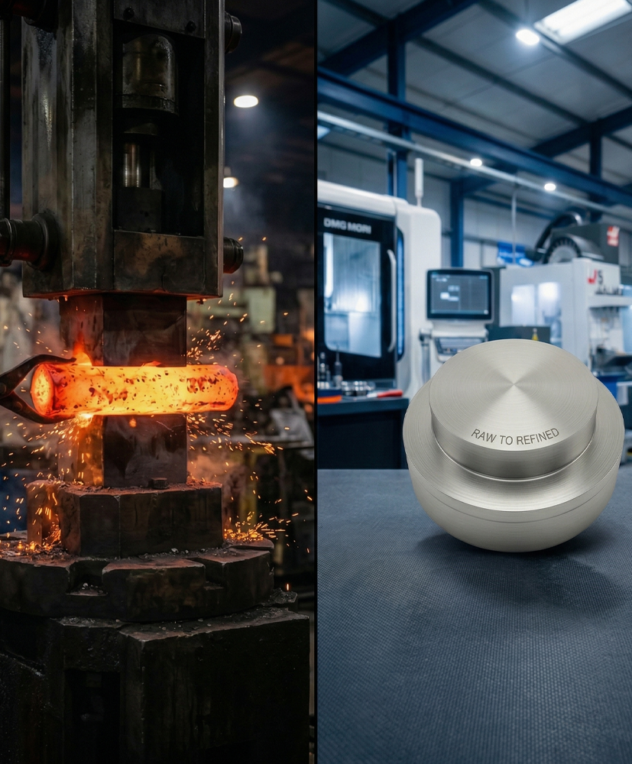
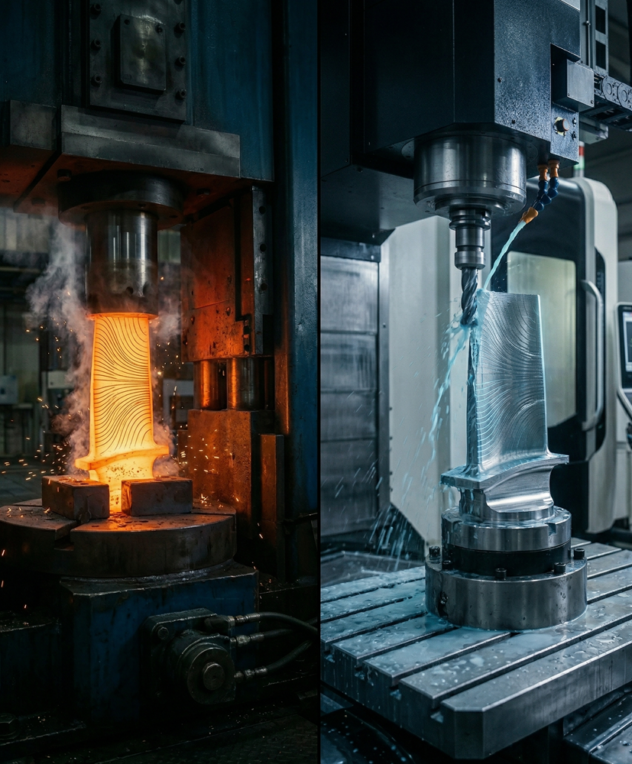
- Integrated forge-to-finish workflows
- Certification-aligned documentation systems
- Close engineering collaboration
- Moderate production volumes with high structural reliability
This model aligns more closely with critical industrial programs than automotive throughput systems.
High-Mix Forging at Vinir Engineering
Vinir Engineering operates as a fully non-automotive, high-mix, forge-to-finish manufacturer serving critical industries.
Our manufacturing systems are designed to support:
- Multiple material grades
- Custom geometries
- Controlled reduction ratio validation
- Integrated heat treatment and machining coordination
- Structured traceability architecture
- Audit-ready documentation
Rather than optimizing for repetitive automotive output, Vinir’s focus is on structural integrity, compliance discipline, and engineering collaboration.
For OEMs evaluating forging suppliers for critical low-volume programs, capability maturity often outweighs press tonnage metrics.
If your project requires custom forged components with certification alignment and documentation control, Vinir’s engineering team can support early technical review and supplier qualification discussions.
Connect with Vinir Engineering to discuss your high-mix forging requirements.